
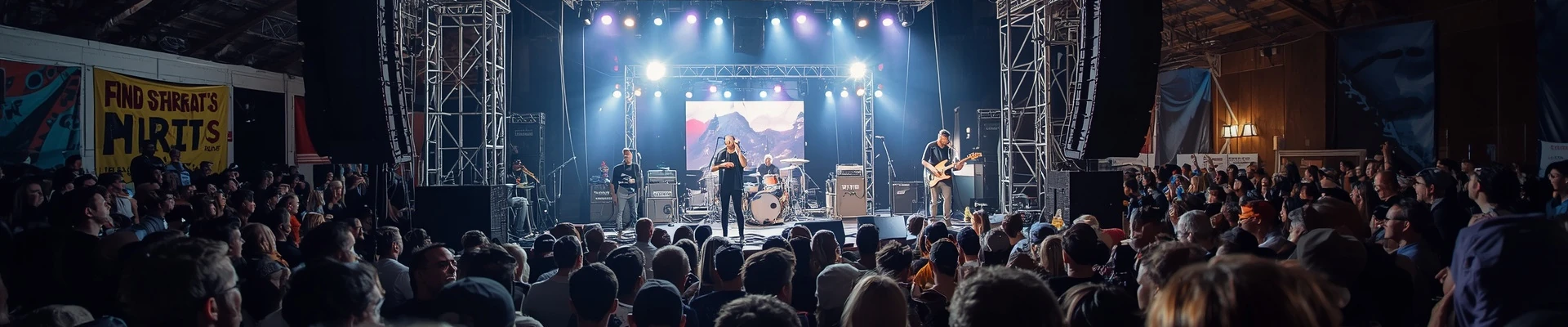
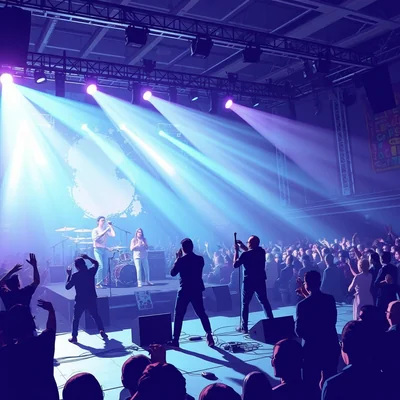


Akron is the seat of Summit County in northeast Ohio, situated at the headwaters of the Cuyahoga River on the Portage Escarpment — the glacially carved ridge that marks the height of land between the Great Lakes and Ohio River drainage basins. With roughly 197,000 residents inside the city limits and more than 700,000 in the broader Akron metropolitan area, it is the fifth-largest city in Ohio and sits 40 miles south of Cleveland, 70 miles east of Columbus, and 130 miles west of Pittsburgh. The city's topography — rolling hills, deep ravines, and the dramatic gorge of the Cuyahoga cutting northward — gave Akron its Haudenosaunee-derived name, meaning "high place." That elevation also supplied the hydraulic power that drove the early industrial economy, and the Ohio & Erie Canal (completed 1832) transformed the village into a regional freight artery. By the early 20th century, Akron had become the Rubber Capital of the World — home to Goodyear Tire & Rubber, Firestone Tire & Rubber, B.F. Goodrich, and General Tire, all headquartered within a few miles of each other, and the polymer chemistry innovations that came out of their labs shaped global manufacturing for a century. The collapse of that industrial base from the 1970s onward remade the city economically and culturally: the departures and the resulting cheap real estate, empty warehouses, and art-school energy gave Akron the conditions for an outsized music scene that has consistently punched far above its weight.
A brief history
The land around the Cuyahoga headwaters was home to the Haudenosaunee (Iroquois), Lenape, and Wyandot peoples before European contact. American settlement began in earnest after the Connecticut Land Company survey (1796), and the village of Akron was platted in 1825 by Simon Perkins and Paul Williams, timed deliberately to coincide with the planned Ohio & Erie Canal. The canal — linking Cleveland and the Lake Erie ports to Portsmouth on the Ohio River — made Akron a transit and processing hub almost overnight. Grain, flour, pork, and whiskey moved through the locks; the city's population leapt from 1,000 in 1840 to 10,000 by 1870. Rubber arrived not by plan but by proximity: when B.F. Goodrich relocated from Melrose, New York, to Akron in 1870 (attracted by investors and a favorable rail location), it set off a cascade. Goodyear was founded in 1898, Firestone in 1900, General Tire in 1915 — all in Akron, all drawing on the same pool of immigrant labor, and all competing for the same engineers and chemists. By 1920, Akron was the fastest-growing city in the United States, its population swelling from 42,000 in 1900 to 208,000 by 1920, fueled by waves of southern Black migration, Eastern European immigration (Hungarians, Poles, Slovaks, Serbs), and Appalachian white migration from West Virginia, Kentucky, and Tennessee. The neighborhoods that resulted — Highland Square, Kenmore, South Akron, North Hill — carried distinct ethnic and musical identities that fed into the city's eventual sound. Post-WWII suburbanization and the slow unwinding of the rubber industry through the 1970s and 1980s gutted the employment base and left the city's built fabric — huge factory complexes, dense working-class bungalows, a downtown of limestone and terracotta office blocks — available for reimagination.
Music identity
Akron's most internationally consequential contribution to popular music sits at the intersection of post-punk, art rock, and blues-rooted garage rock — a tradition that begins with the extraordinary mid-1970s moment when the city, clustered around The University of Akron and a handful of cheap rehearsal spaces, produced an improbable concentration of experimental acts. Devo — formed by Mark Mothersbaugh, Gerald Casale, and their associates from Kent State and the University of Akron, shaped directly by the trauma of the May 4, 1970 Kent State massacre — devised a rigidly conceptual, anti-humanist art-rock in Akron studios before relocating to California, and their influence on electronic music, new wave, and the aesthetics of pop video was enormous. In the same late-1970s moment, Chrissie Hynde — raised in Akron's Fairlawn suburb, a graduate of the University of Akron art department — moved to London, co-founded The Pretenders, and became one of the defining voices of British-American rock for five decades. The clone of their shared scene — the Akron punk and new wave scene of 1977–1981, documented on Clone Records — also produced Chi-Pig, The Waitresses ("I Know What Boys Like"), Tin Huey (whose members included Chris Butler), and a web of bands whose music circulated through the Crypt Records ecosystem years later.
The 21st-century chapter of Akron's music identity is anchored by The Black Keys — Dan Auerbach and Patrick Carney, both Akron natives, who formed in 2001 and recorded early albums in Auerbach's basement in the Merriman Valley area of Akron before moving operations to Nashville. Their blues-derived, deliberately lo-fi two-piece rock — released on Fat Possum Records and Nonesuch — sold millions of records from the early 2010s onward and placed Akron in the mainstream rock conversation. Auerbach's Easy Eye Sound studio in Nashville carries the Akron ethos of raw, room-sound recording, but the city that shaped that sensibility was Akron and its landscape of demolished factories, Salvation Army thrift stores, and battered instrument dealers.
Beyond the two headline acts, Akron has sustained strong scenes in hip-hop (particularly since the 2000s, with artists emerging from the Kenmore and Summit Lake neighborhoods), experimental electronic music (clustered around the Rubber City Music community and the Musica venue), and classic R&B and soul (inherited from the mid-century Black migration communities of South Akron and the Wooster Avenue corridor). The University of Akron School of Music has provided trained musicians and composers to the regional and national scenes for decades. The E.J. Thomas Performing Arts Hall on the UA campus is a major presenter for touring classical, jazz, and world music acts.
Venues and neighborhoods
Akron's live music infrastructure is concentrated in a few distinct nodes. The Goodyear Theater — a 2,500-capacity restored former company auditorium in the old Goodyear complex near downtown — is the city's most atmospheric mid-size venue and hosts national touring rock, R&B, and comedy acts. The Civic Theatre (now the Akron Civic), a 1929 Moorish-revival atmospheric movie palace converted for concerts, is the cultural flagship for the city, hosting everything from alternative rock headliners to the Akron Symphony Orchestra. Musica in the Highland Square neighborhood — a 500-capacity all-ages room that has operated in various incarnations since the early 2000s — is the heartbeat of the indie and experimental scenes. The Matinee serves a similar function in the downtown core. The Agora Ballroom in Cleveland (30 miles north) has historically served as the regional overflow room for acts too large for Akron's own venues but too small for arenas.
Highland Square — the walkable commercial strip along West Market Street near the university — is Akron's creative and bohemian center: record stores (Square Records has been a fixture), coffee shops, independent bars, and vintage clothing retailers cluster here. North Hill carries a dense Southeast Asian immigrant community (particularly Bhutanese, Nepali, and Karen populations that arrived from the 1990s onward) whose musical cultures add South Asian and Southeast Asian textures to the city's sound fabric. Kenmore and Summit Lake on the south and west sides anchor Akron's Black community and its hip-hop and gospel scenes.
Festivals and signature events
Rubber City Rocks is the city's main outdoor rock festival, drawing national touring acts to downtown Akron in summer. The Akron Art Museum's annual Beaux Arts Ball has historically featured local and regional bands as part of its fundraising programming. The Highland Square Oktoberfest is one of the largest neighborhood street festivals in northeast Ohio and includes a consistent live music stage. The Canal Park minor league baseball venue — home of the Akron RubberDucks (Cleveland Guardians affiliate) — hosts summer concerts in its intimate downtown setting. Blossom Music Center, though technically in Cuyahoga Falls (adjacent to Akron's northern border), functions as the de facto amphitheater for the Akron-Cleveland region, hosting major touring acts through the summer shed season under the Cleveland Orchestra's management.
What ties it all together
Akron is a city that has always produced art from dissonance — between its industrial past and post-industrial present, between the Appalachian inflection of its white working-class communities and the deep-blues roots of its Black neighborhoods, between the conceptual art-school provocation of Devo and the stripped-down garage directness of the Black Keys. The common thread across every generation of Akron music — from Chrissie Hynde's sardonic cool to the Waitresses' synth-sharpened pop-art to Dan Auerbach's fuzz-pedal primitivism — is a refusal to dress things up. The city doesn't have the scale or the industry to sustain a scene built on spectacle; what it has is cheap space, smart people, and a post-rubber-industry matter-of-factness that strips music back to its bones. That is Akron's signature, and it has shaped American rock and roll more substantially than its population would suggest possible.