

Norman is the third-largest city in Oklahoma, home to roughly 128,000 residents within the city limits and the seat of Cleveland County, positioned 17 miles south of Oklahoma City along the Canadian River plain. The city's identity is inseparable from the University of Oklahoma — the flagship state research university, founded here in 1890, one year before Oklahoma Territory even achieved statehood, and today enrolling more than 27,000 students on its red-brick South Oval campus. OU dominates Norman's economy, cultural life, and social fabric in the way that large flagship universities do in college towns, and the result is a city that punches well above its population in live music density, creative output, and musical pedigree. Norman sits at the intersection of several deep musical traditions: the Red Dirt country movement that defines contemporary Oklahoma songwriting, the Dust Bowl folk tradition that runs through Woody Guthrie, the blues and gospel circuits of the historic Black community, and a vibrant indie-rock and Americana underground that has sustained clubs, record stores, and studios for decades.
A brief history
The land that became Norman sits on territory belonging to the Chickasaw Nation and other Indigenous peoples of the southern Great Plains before the forced removals of the 19th century. The Land Run of April 22, 1889 — the dramatic opening of the Unassigned Lands to non-Indian homesteaders — produced an instant settlement at the site that would become Norman; thousands of boomers rushed across the starting line at noon, and a tent city was established within hours. The University of Oklahoma was chartered the following year, and Norman's trajectory as a college town was set from the beginning.
Through the early 20th century Norman grew steadily as an agricultural service centre and university community on the southern Great Plains. The surrounding Cleveland County was cotton and wheat country, with Black townships and communities — including Lexington and Purcell — nearby. The Dust Bowl years of the 1930s devastated the surrounding region; the folk tradition of itinerant Oklahomans dispossessed by drought and economic collapse was later crystallized by Woody Guthrie, born in Okemah (about 90 miles northeast of Norman), whose songs about the Okies and the Route 66 migration became cornerstones of American folk music. The folk tradition Guthrie channeled was thoroughly absorbed into Norman's musical atmosphere — the OU campus, the clubs, and the coffeehouses have carried it forward through every generation since.
The postwar decades saw Norman develop the outlines of a self-sustaining music scene around Campus Corner — the commercial district immediately north of the OU campus along Boyd Street — and a network of clubs that drew heavily on the university population. Oklahoma's connection to the Nashville country music establishment via the Tulsa Sound (the slick, funky hybrid of R&B and country that producers in Tulsa refined in the 1970s with artists like Leon Russell and J.J. Cale) shaped the regional sonic vocabulary that young Norman musicians absorbed. By the 1990s a loose network of singer-songwriters and bands working in what would come to be called Red Dirt music — an earthy, Texas-inflected acoustic country-rock style named after Oklahoma's iconic red clay soil — had crystallized around Norman, Oklahoma City, and Stillwater, with Norman's venues playing a central role.
Music identity
Norman's most internationally recognized musical legacy is its role in the genesis of Red Dirt music — a loosely defined genre of independent country, Americana, and roots music that originated in the Oklahoma-Texas corridor and has produced a generation of artists signed to major labels, celebrated on Americana charts, and beloved on the touring circuit. The phrase "Red Dirt" invokes both the literal reddish-brown clay soil of Oklahoma and a philosophy of independent, uncompromising songwriting rooted in place and community. Key figures associated with the Norman scene include Garth Brooks — who enrolled at OU in Norman in the early 1980s, played Campus Corner bars, and was shaped by the college-town songwriting environment before achieving global country stardom — and Cross Canadian Ragweed, the Yukon-and-Norman-connected band that became one of the flagship acts of the Red Dirt movement through the late 1990s and 2000s, with albums like Soul Gravy (2004) and fierce touring loyalty from an Oklahoma fanbase. Brandon Jenkins, Mike McClure (of The Great Divide, whose Break in the Storm and Afterglow are touchstones of Oklahoma roots-rock), and Bob Childers — often credited as the patriarch of Red Dirt — all passed through or based themselves in the Norman-Stillwater corridor.
The city's most storied music institution is Opolis — the beloved independent venue and record store that operated on East Main Street and later West Main Street from 2004 until its closure in 2020, and which served for sixteen years as the beating heart of Norman's independent music community. Opolis hosted hundreds of national touring indie, Americana, folk, and rock acts in an intimate 200-capacity room, operated a vinyl record shop, released music on its own imprint, and embodied the DIY philosophy that defines the best independent venues. Its closure during the COVID-19 pandemic was felt across the national independent music community. The spirit of Opolis lives on in the Deli and smaller clubs on Campus Corner.
The OU School of Music — formally the Weitzenhoffer Family College of Fine Arts — produces classically trained musicians and sustains a serious orchestral and chamber music culture. The Oklahoma Philharmonic has roots in the university ecosystem, and the OU campus auditoriums host major classical and jazz performances. The OU Jazz Lab has a decades-long tradition of producing professional jazz musicians.
Norman has also sustained a solid punk, hardcore, and indie-rock underground through clubs, house shows, and the university record store circuit. Bands like Chainsaw Kittens — the Norman-connected art-punk act whose albums Violent Religion (1990) and Flipped Out in Singapore (1991) were cult milestones of early 1990s alternative rock, with frontman Ty Maland and guitarist Trent Bell cutting confrontational gender-fluid imagery and wire-taut guitar rock years before the mainstream was ready — represent the city's capacity for genuinely avant-garde output. Trent Bell went on to found Bell Labs Recording Studio in Norman, which became one of the most respected independent recording facilities in the state, tracking records for Red Dirt, indie, Americana, and rock artists across the region.
The blues and gospel traditions run through Norman's historic Black community and through the circuit of churches and small clubs that sustained African American musical life in the city through the 20th century. Jimmie "T-99" Nelson, one of the postwar Texas blues shouters, had connections to the Oklahoma circuit. Norman also produced Jimmy Webb — born in Elk City, Oklahoma, but formed by Oklahoma's musical landscape — the prolific pop composer whose songs "Wichita Lineman" (recorded by Glen Campbell), "By the Time I Get to Phoenix", and "MacArthur Park" are among the most performed compositions of the 20th century.
The folk and acoustic tradition at OU has sustained through coffeehouses, the OU Folk Sing events, and the city's connection to the Woody Guthrie legacy. The Woody Guthrie Center is in Tulsa (opened 2013), but the philosophical inheritance — plain-spoken, story-driven songwriting about working people and dispossession — shapes how Norman songwriters think about their craft.
Venues and neighborhoods
Norman's live music scene is concentrated in two corridors. Campus Corner — the stretch of Boyd Street and adjacent blocks immediately north of the OU campus — is the historical centre: a dense cluster of bars, restaurants, and clubs that have served the university community since the 1940s. Current anchor venues on and near Campus Corner include The Deli, a restaurant-bar with a consistent live music program, and a rotating cast of campus-adjacent bars. The Opolis spirit was irreplaceable, but smaller venues like Soundpony and Lost Ogle Presents events have stepped into parts of the void.
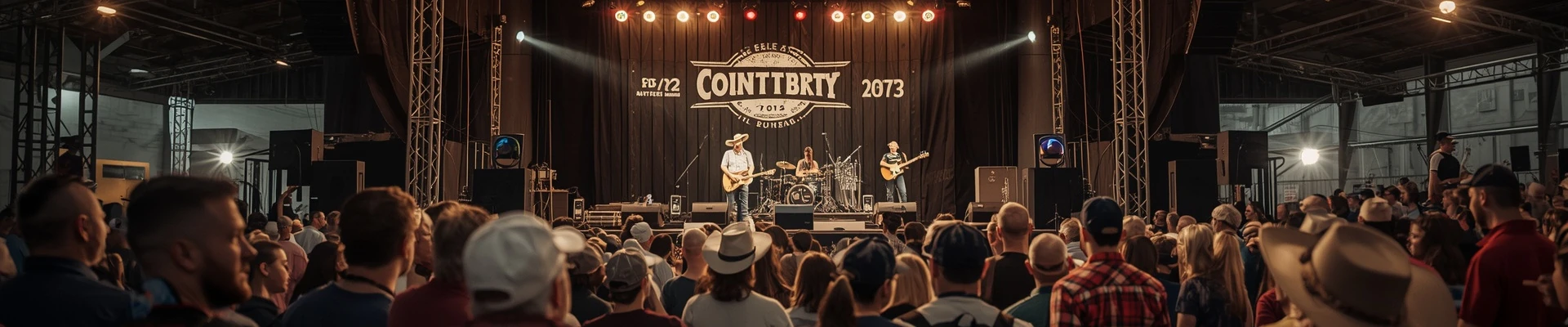
East Main Street and West Main Street — the commercial corridors running through Norman's historic downtown — hold a cluster of independent music venues, arts spaces, and the remnants of Norman's record store ecosystem. The Sooner Theatre, a restored 1929 Art Deco movie palace on East Main, programs larger touring acts and theatrical events in a beautifully preserved house. The Railhead and other honky-tonks on the outskirts of town sustain the country and Red Dirt circuit. OU's Lloyd Noble Center (arena) handles the largest touring acts.
The university campus itself — particularly the Catlett Music Center, the Donald W. Reynolds Performing Arts Center, and the restored Holmberg Hall — anchors the classical and jazz performance calendar. The annual OU Symphony and OU Jazz Ensemble concerts are significant events in the regional classical music calendar.
Campus Corner and the adjacent Classen Curve area are where the indie-rock and Americana underground congregates. The Physical Plant and COOP Ale Works have programmed music in recent years, extending the footprint beyond the traditional campus bar strip.
Festivals and signature events
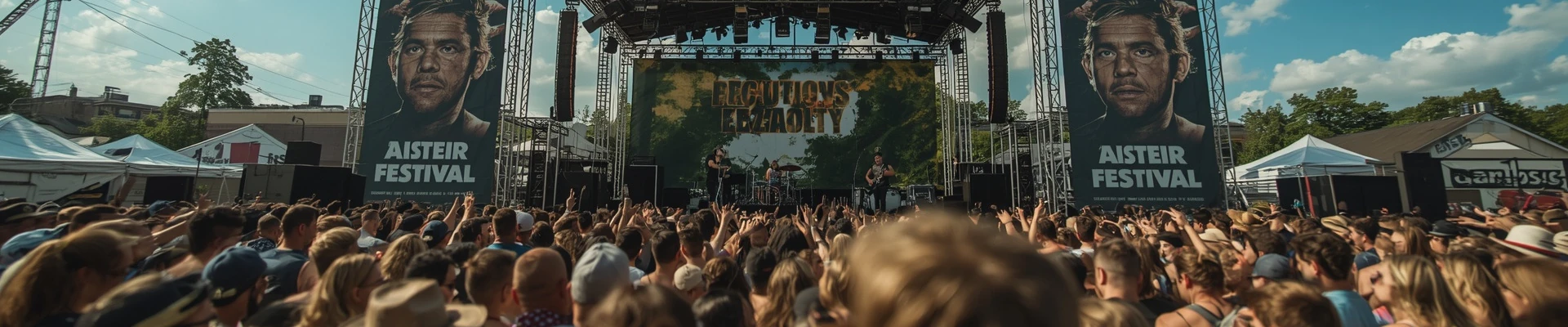
The Norman Music Festival is Norman's flagship outdoor music event — a free, multi-day, multi-stage festival held annually in Downtown Norman since 2008 that showcases hundreds of local, regional, and national acts across rock, country, Americana, folk, electronic, and hip-hop. At its peak the festival drew 70,000–80,000 attendees over a weekend and was recognized as one of the premier free music festivals in the American South. The festival's commitment to free admission, local artist showcasing, and outdoor stage curation made it a model for mid-size city music events and a genuine community institution.
The OU Homecoming is one of the largest university homecoming celebrations in America, and the music programming around it — campus concerts, bar strip events, alumni returns — produces an annual surge in live music that functions as a second music festival in the fall.
The Campus Corner St. Patrick's Day celebration is an annual outdoor music event that dominates the block for a weekend every March, with stages on the street and dozens of bands cycling through the bars and outdoor areas.
The Woody Guthrie Folk Festival in Okemah (about 90 miles away) draws Norman folk musicians and fans each July, sustaining the pipeline between the Dust Bowl tradition and contemporary Oklahoman roots music.
What ties it all together
Norman is a college-town music scene with an unusually deep sonic identity, because the University of Oklahoma sits at the confluence of three powerful Oklahoma musical traditions: the Red Dirt country movement that turned independent songwriting into a regional religion, the Dust Bowl folk tradition that gave Oklahoma its conscience, and the Tulsa Sound's R&B-inflected country-rock that defined the regional palette for a generation. Campus Corner bars where Garth Brooks once played for beer money, Bell Labs tracking Red Dirt records in a converted warehouse, the Opolis stage that gave national acts a real room in a college town — these are the specific, real institutions that make Norman more than a satellite of Oklahoma City. The city's music is built on community loyalty, independent infrastructure, and the steady churn of OU students who arrive, get infected by the scene, and either leave carrying it with them or stay and build it further.