
Oklahoma City is the capital of Oklahoma and the 20th-largest city in the United States, with roughly 681,000 residents inside the city limits and more than 1.5 million across the surrounding metropolitan area. Sitting on the North Canadian River at the geographic center of the state, ringed by red-clay prairie and the rolling tallgrass plains, it is one of the largest American cities by area — sprawling across more than 1,600 square kilometers in a famously low-density, freeway-driven urban form. Oklahoma City's musical identity reflects that geography and demography: a deep red dirt country and Western swing tradition that runs continuously from the Dust Bowl era through Garth Brooks and Reba McEntire's careers; one of the largest urban Native American populations in the United States with a corresponding Indigenous music ecosystem; a thriving 1980s-to-present indie rock scene anchored by the Flaming Lips; a serious gospel and Black music tradition rooted in the historic Deep Deuce neighborhood; and a fast-growing modern hip-hop and Latin music scene fed by the city's expanding immigrant population.
A brief history
The land along the North Canadian was Wichita, Caddo, Kiowa, and Comanche territory before the U.S. government opened the Unassigned Lands of central Oklahoma to non-Native settlement in the Land Run of 1889 — when, on April 22, more than 50,000 settlers raced into the territory at noon to claim 160-acre homesteads. Oklahoma City was founded that day and grew from zero residents to 10,000 within hours. Oklahoma became a state in 1907 with Oklahoma City named the capital in 1910 (replacing Guthrie). The 1928 discovery of oil within the city limits — including the famous well drilled on the State Capitol grounds — turned Oklahoma City into one of the great American oil boom towns through the 1930s and 1940s. The Dust Bowl of the 1930s drove tens of thousands of Oklahoma farm families ("Okies") west to California in one of the great American internal migrations, an experience captured by John Steinbeck in The Grapes of Wrath and by Woody Guthrie — born in nearby Okemah in 1912 — in his lifelong catalog of folk songs about Oklahoma. The 1995 Oklahoma City bombing at the Alfred P. Murrah Federal Building remains the deadliest act of domestic terrorism in U.S. history. The 21st-century MAPS (Metropolitan Area Projects) sales tax–funded redevelopment, the 2008 arrival of the Oklahoma City Thunder (relocated from Seattle), and steady population growth have remade the city's downtown core. Successive waves of migration — Black Southerners during and after the Great Migration, large Vietnamese and Hmong populations after the Vietnam War (Oklahoma City has one of the largest Vietnamese populations in the central United States), and very large Mexican, Salvadoran, Honduran, and Burmese communities since the 1990s — have built a city that is roughly 19% Hispanic, 14% Black, and 6% Native American, with one of the largest urban Native populations in the country.
Music identity
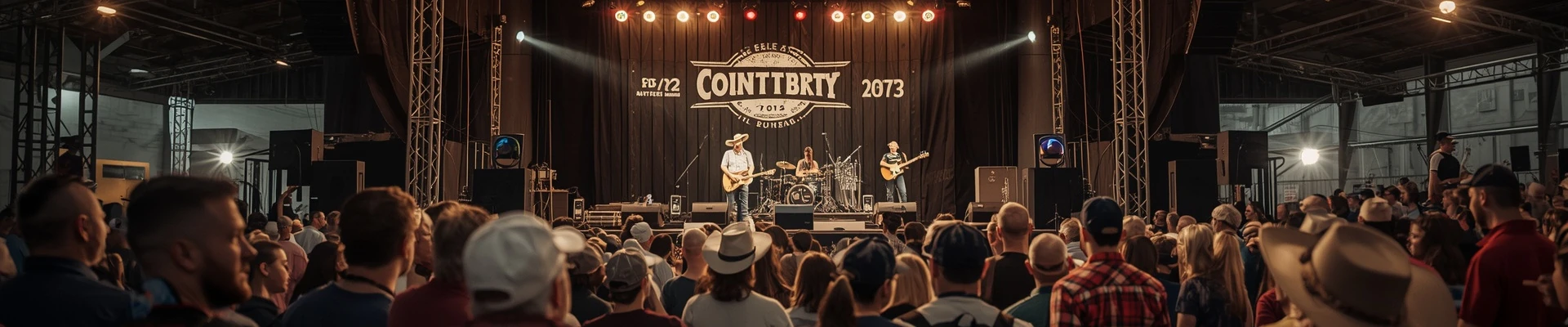
Oklahoma City's modern musical history starts with country and Western swing. Although Bob Wills and his Texas Playboys were headquartered in Tulsa during their prime years (broadcasting from KVOO, 80 minutes northeast), the broader Oklahoma Western swing tradition ran continuously through Oklahoma City's dance halls and ballrooms from the 1930s through the 1950s. Hank Thompson was raised in Waco but built his career through Oklahoma City–area dance halls. Roy Clark, the Hee Haw co-host and country guitarist, lived in Tulsa for decades but played the Oklahoma City circuit constantly. Reba McEntire, born in McAlester, Oklahoma in 1955 and raised on a working ranch in Chockie, attended Southeastern Oklahoma State University and built her early career through Oklahoma City–area honky-tonks and rodeo circuits before becoming one of the best-selling country artists of all time. Vince Gill, born in Norman just south of Oklahoma City in 1957, came up through the city's bluegrass and country circuit and went on to win 22 Grammy Awards and become one of the most respected country and bluegrass musicians of his generation. Garth Brooks, born in Tulsa in 1962 and raised in Yukon (just west of Oklahoma City), came up through the Oklahoma State University circuit and Oklahoma City–area honky-tonks before relocating to Nashville and becoming the best-selling solo artist in U.S. history. Toby Keith, born in Clinton, Oklahoma and raised in Moore (a southern suburb of Oklahoma City), built his career through Oklahoma City clubs before breaking nationally in the early 1990s. Carrie Underwood, born in Muskogee and raised in Checotah, attended Northeastern State University in Tahlequah but moved through the Oklahoma City circuit before her American Idol breakthrough.
The red dirt country subgenre — a looser, rootsier, often Texas-and-Oklahoma-rooted country style associated with Stillwater (an hour north of Oklahoma City) and the Eskimo Joe's scene — runs through Oklahoma City via artists like Cross Canadian Ragweed, Stoney LaRue, Jason Boland and the Stragglers, Mike McClure Band, The Great Divide, Turnpike Troubadours (one of the most acclaimed red dirt acts of the past two decades), Wade Bowen's tour stops, and a current generation including Parker McCollum's tour stops. The genre's institutional center is the Red Dirt Hall of Fame in Stillwater, but Oklahoma City's clubs and dance halls are central to its live circuit.
Oklahoma City has also produced one of the most acclaimed and longest-running American indie rock bands. The Flaming Lips, formed in Oklahoma City in 1983 by Wayne Coyne, Mark Coyne, and Michael Ivins, have built a 40-plus-year catalog that includes some of the most acclaimed indie rock albums of the 1990s and 2000s — The Soft Bulletin (1999), Yoshimi Battles the Pink Robots (2002), and At War with the Mystics (2006). The Lips have remained Oklahoma City–based throughout their career, and Wayne Coyne's continued presence in the city — through The Womb (his Oklahoma City performance space and storefront), the Coyne family's Oklahoma City roots, and his work with the Oklahoma City Museum of Art and the Plaza District — has reshaped the city's contemporary musical identity. Mercury Rev's Oklahoma City connections, The Starlight Mints's Norman-Oklahoma City orbit, Other Lives, Broncho, The All-American Rejects (formed in Stillwater), Power Pyramid, Sports, Lincka, and a thriving current indie scene continue the lineage. Punk and hardcore have a long Oklahoma City tradition through bands working out of clubs across the Plaza District and Bricktown.
Oklahoma City's Black music lineage runs through the historic Deep Deuce neighborhood — the Black music corridor centered on Northeast 2nd Street that, from the 1920s through the 1950s, was one of the most important Black entertainment districts in the south-central United States. Jimmy Rushing, the Count Basie Orchestra vocalist, was born in Oklahoma City in 1901 and came up through Deep Deuce. Charlie Christian, the legendary jazz guitarist who pioneered the electric guitar's role in jazz with the Benny Goodman Sextet, was raised in Oklahoma City and built his early career playing the Deep Deuce circuit before his early death in 1942 at age 25. Don Cherry the trumpeter (not the singer/Hank Williams collaborator) — the avant-garde jazz trumpeter who collaborated with Ornette Coleman and Sun Ra — was born in Oklahoma City. Wanda Jackson, the "Queen of Rockabilly" and one of the foundational rock-and-roll vocalists, was born in Maud, Oklahoma but raised in Oklahoma City and built her career through the city's clubs before recording with Capitol Records in the 1950s.
The city's Indigenous music lineage is one of the most consequential in the United States. Oklahoma is home to 39 federally recognized tribal nations, and Oklahoma City has one of the largest urban Native populations in the country. The city is a major center for powwow drumming, Native gospel and country, Native American flute (through the lineage of artists like R. Carlos Nakai's Oklahoma roots), and contemporary Native hip-hop and rock through artists like Litefoot, Tha Mokoto ('s Oklahoma City connections), and a current generation. Stoney LaRue's Oklahoma City–area roots include Cherokee heritage. Wayne Newton (born in Norfolk, Virginia, but raised partly in Oklahoma) has Cherokee and Powhatan heritage. The Red Earth Native American Cultural Festival in Oklahoma City each spring is one of the largest Native American cultural festivals in the United States.
The 21st century has brought a serious modern hip-hop, Latin, and Asian music wave. Jabee, the Oklahoma City rapper, has built one of the most respected catalogs in the regional hip-hop scene. Kiriko Takemura's tour stops, Original Flow's Oklahoma City roots, and a current generation of trap and indie hip-hop artists continue the lineage. The city's vast Vietnamese community — concentrated along Classen Boulevard's "Asian District" — fuels a thriving Vietnamese pop and karaoke culture. The Latin community fuels regional Mexican, banda, and reggaeton circuits across the city's southwest and west sides. Burmese and Hmong music scenes round out the immigrant ecosystem.
Venues and neighborhoods
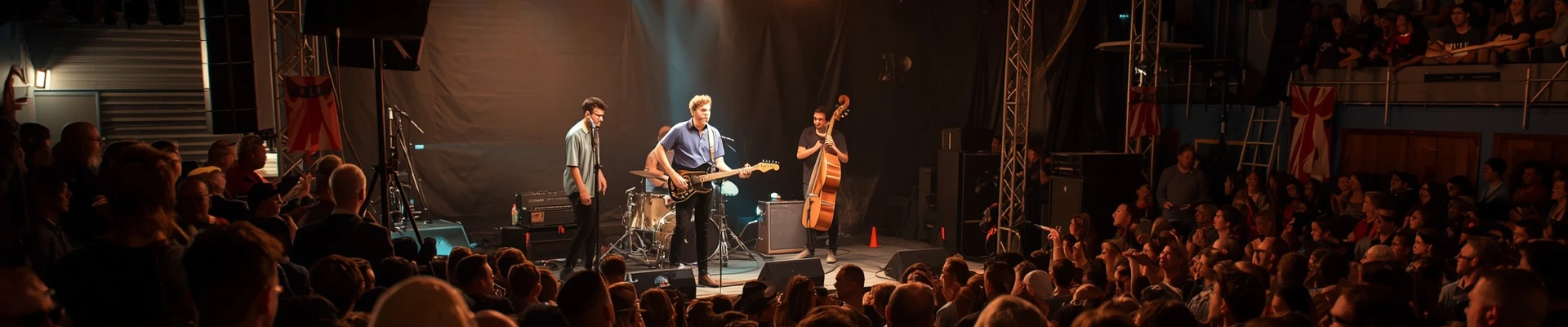
Oklahoma City's venue ecosystem is well-developed. At the top sit Paycom Center (home of the Thunder and the city's largest indoor concerts), The Criterion (a 4,000-capacity venue in Bricktown opened in 2016), the OKC Civic Center Music Hall (home of the Oklahoma City Philharmonic and the Oklahoma City Ballet), the Diamond Ballroom (the legendary southside country and rock venue), and The Zoo Amphitheatre (one of the most beautiful outdoor amphitheaters in the central United States, set in the rolling terrain of the Oklahoma City Zoo). The midsize tier includes The Tower Theatre (a restored 1937 Art Deco theater on NW 23rd Street), the Beacon Drive-In legacy, the Jones Assembly, and the OKC Streetcar Stop. Beneath them is a deep club layer — Tower Theatre, the Womb (Wayne Coyne's storefront performance space), the 51st Street Speakeasy, Blue Note Lounge, Bricktown's Wormy Dog Saloon (a major red dirt and country music venue), the VZD's Restaurant & Club, the Opolis in Norman (the legendary indie rock club just south of Oklahoma City, in operation since 2002), the Blue Door (one of the most respected listening rooms in the central United States, anchoring the city's folk and singer-songwriter circuit since 1994), the 89th Street Collective, and a network of bars and DIY rooms across the Plaza District, Bricktown, the Paseo, Western Avenue, and the Asian District. Latin music has homes at clubs across the city's southwest and west sides.
Different neighborhoods carry different musical identities. Bricktown, the redeveloped warehouse district east of downtown, anchors the country, red dirt, and tourist circuits through Wormy Dog Saloon and a string of bars and venues. The Plaza District along NW 16th Street has emerged in the last decade as the city's primary indie rock and DIY corridor. The Paseo anchors a higher-end art and small-venue circuit. Deep Deuce retains echoes of its historic Black jazz heritage and is now a high-end residential and entertainment district. The Asian District along Classen Boulevard supports the city's Vietnamese music scene. Capitol Hill and the southwest support the city's Latin scenes. Norman, 30 km south and home to the University of Oklahoma, supports a complementary indie and folk scene through the Opolis and the Blue Door's longtime sister venue programming.
Festivals and signature events
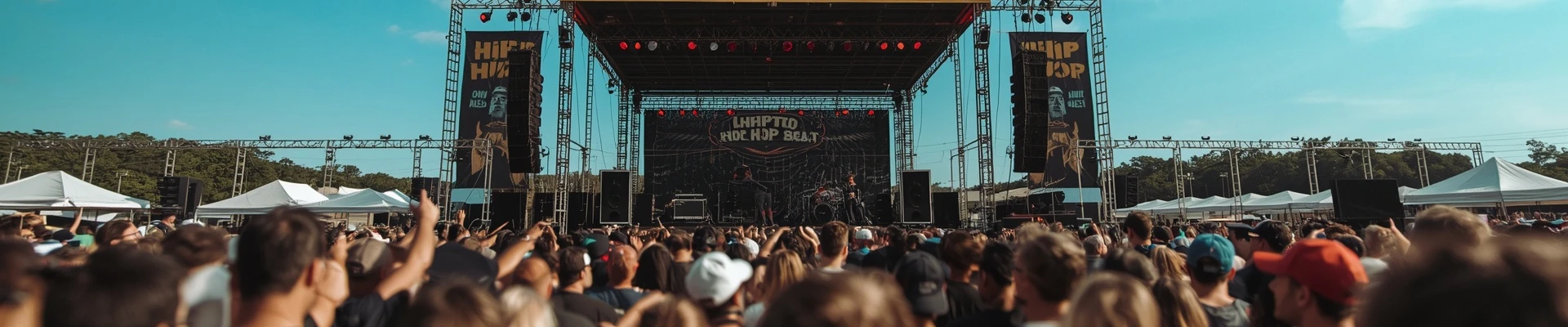
The festival calendar reflects the city's range. Norman Music Festival in late April, founded in 2008 in nearby Norman, has become one of the largest free music festivals in the central United States, drawing more than 80,000 attendees over three days with a heavy emphasis on regional indie, country, and red dirt acts. Rocklahoma in nearby Pryor is one of the largest hard-rock and metal festivals in the central United States. Oklahoma State Fair in September programs major country, rock, and pop acts across multiple stages. Red Earth Native American Cultural Festival, deadCenter Film Festival's music programming, Festival of the Arts, Plaza District Festival, Paseo Arts Festival, OKC Pride, Asian Festival, Festival de las Américas, Cinco de Mayo in Capitol Hill, Día de los Muertos at the Plaza District, and Black Liberation Festival add cultural and community programming. Woody Guthrie Folk Festival in nearby Okemah (the songwriter's birthplace, two hours east) draws on the Oklahoma City audience each July. WinterFest at the BOK Center (in Tulsa) and Cain's Ballroom programming in Tulsa are functionally part of the broader Oklahoma City regional music ecosystem.
What ties it all together is the city's combination of Plains geography, oil and ranching heritage, Indigenous and Black music history, and a 21st-century immigrant boom. Oklahoma City is the city where Charlie Christian invented the role of the electric guitar in jazz, where Reba McEntire and Vince Gill came up through the honky-tonks, where Garth Brooks and Toby Keith built their early careers, where the Flaming Lips have anchored a 40-year indie rock catalog out of a single storefront, where the Red Earth Festival programs one of the largest Indigenous cultural events in America, and where the Blue Door has been programming acoustic singer-songwriters since 1994. It is one of the most underrated music cities in the central United States.