

Bayamón is Puerto Rico's second-largest municipality, with roughly 203,000 residents within its boundaries and sitting at the geographic and economic core of the San Juan–Caguas–Guaynabo Metropolitan Statistical Area — the largest metro in the Caribbean with more than 2.4 million people. Located directly southwest of San Juan along the Bayamón River, flanked to the north by Guaynabo and to the south by Aguas Buenas and Comerío, Bayamón is best understood not as a satellite suburb but as an autonomous urban center that happens to share a seamless urban fabric with the capital. The municipality covers 110 square kilometers of coastal lowlands and interior hills, ranging from the dense commercial corridors of its urban core along Route 2 (the Luis A. Ferré Highway) to the residential sprawl of Bayamón Centro, the industrial zones of Minillas and Hato Tejas, and the quieter agricultural barrios climbing into the Cordillera Central foothills.
Economically Bayamón is Puerto Rico's manufacturing capital — the pharmaceutical, medical device, and petrochemical industries that power the island's export economy are concentrated in its industrial parks. The city center along Calle Degetau and the Plaza de Recreo anchors commercial life. The Bayamón Government Center, the Centro Comercial Las Américas corridor along Route 2, and the Plaza del Sol mall define the retail geography. But behind the industrial and commercial identity lies a deep cultural life that has shaped Puerto Rican music from the mid-20th century through the reggaeton era and beyond.
History
The Taíno people settled the Bayamón River valley long before Spanish colonization. Spanish settlement of the area dates to the 16th century, and the town of San Juan Bautista de Bayamón was formally established in 1768, making it one of the older municipalities on the island. Through the Spanish colonial era, Bayamón grew as an agricultural center — sugar cane, tobacco, and coffee plantations defined the interior barrios, and the Bayamón River provided water power for mills. After the 1898 American takeover and the industrialization of the mid-20th century, Bayamón transformed dramatically: Operation Bootstrap brought manufacturing investment, Route 2 became a commercial artery, and the municipality absorbed enormous population growth as the San Juan metro expanded. By the 1960s and 1970s Bayamón was a fully urban industrial city rather than a market town, and that urban, working-class, mixed-income character has defined its cultural production ever since.
Music identity
Bayamón's music identity is plural and layered. The municipality sits within a Puerto Rican musical ecosystem that encompasses the full range of island traditions — bomba, plena, salsa, merengue, bolero, and jíbaro (mountain folk music, specifically the seis and aguinaldo forms) — but its most internationally visible contributions have come through popular music.
The city's most celebrated cultural son is Roberto Clemente, who was born in the Bayamón barrio of Carolina (historically part of the broader Bayamón area, now its own municipality) — a reminder that the municipal boundaries of greater Bayamón have shifted, and the cultural geography of the east San Juan corridor is complex. But within the contemporary boundaries, Bayamón has produced or nurtured several key figures in Puerto Rican popular music.
The salsa connection runs through the broader San Juan metro in which Bayamón is embedded — El Gran Combo de Puerto Rico, the legendary salsa orchestra founded in 1962, rehearsed and performed across the metro including Bayamón's working-class neighborhoods, and the city's dance halls and social clubs were part of the circuit that sustained salsa as a living community music through the 1970s and 1980s. Cheo Feliciano (born in Ponce but a lifelong San Juan metro figure), Ismael Miranda, and the full Fania-era roster moved through the Bayamón entertainment scene. The local Orquesta Riverside and neighborhood dance bands performed at the clubs, school dances, and festivals that kept Puerto Rican popular music alive between the concert-hall level and the living room.
Reggaeton gave Bayamón some of its most internationally recognized voices. Wisin (Juan Luis Morera Luna, born in Cayey but a Bayamón-area figure) and Yandel (Llandel Veguilla Malavé, from the Bayamón metro corridor) — the duo Wisin & Yandel — became one of the most commercially successful acts in Latin music history, with albums like Pa'l Mundo (2005) and Los Extraterrestres (2007) establishing them as the architects of the reggaeton golden age. Their sound — melodic hooks over dembow rhythms, bilingual bridges, cinematic production — pushed reggaeton from street mixtapes to international pop radio. Nicky Jam (Nick Rivera Caminero, raised in the Bayamón corridor during his formative years in Puerto Rico before relocating to Medellín and staging a career comeback) contributed to the reggaeton lineage before achieving global fame with "El Perdón" with Enrique Iglesias and his Netflix series Nicky Jam: El Ganador.
Farruko (Carlos Efrén Morales Reyes, from Bayamón) is one of the most commercially important reggaeton and Latin trap artists of his generation — his collaborations with Pitbull ("Lejanía"), J Balvin ("Sunset"), Bad Bunny, and Jhay Cortez, and his widely discussed public conversion to evangelical Christianity (which altered his musical output), have made him a constant presence in Latin music conversations since the early 2010s. Jhay Cortez (Jesaaelys Mary Aponte Torres, born in Bayamón in 1993) is one of the most critically acclaimed singer-songwriters to emerge from Puerto Rico's millennial generation — his collaboration with J Balvin and Bad Bunny on "Con Quien" and his debut album Famouz established him as a key figure bridging reggaeton, R&B, and pop. Lunay (Emmanuel Herrera Batista, from Bayamón) is among the young generation of romantic reggaeton artists who have made Bayamón a node in the contemporary Puerto Rican pop ecosystem.
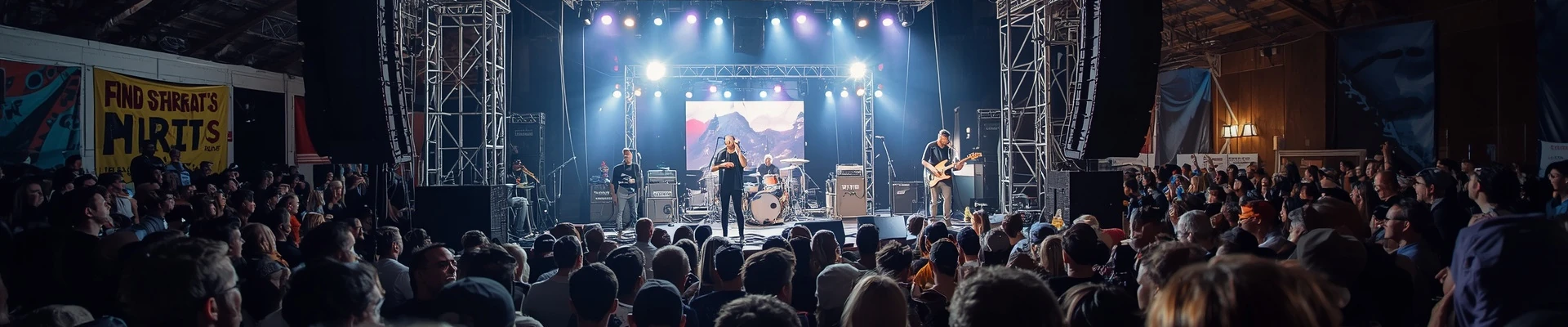
In rock and alternative, the broader San Juan metro has a significant scene, and Bayamón has contributed to it. The Bayamón Municipal Coliseum and local venues have hosted rock acts alongside reggaeton events, and the municipality's young population sustains an active local band ecosystem. Puerto Rican indie and rock acts from the 2000s–2010s wave — including bands connected to the Santurce indie scene — have members who grew up in Bayamón.
Jíbaro music — the Puerto Rican mountain folk tradition of the seis (a six-verse poetic form sung to cuatro and guitar accompaniment) and aguinaldo (the Christmas carol tradition) — connects Bayamón's interior barrios to the Cordillera Central folk heritage. Municipal festivals and school programs maintain this tradition alongside the dominant popular music ecosystem.
Venues and neighborhoods
Bayamón's venue infrastructure is anchored by the Bayamón Municipal Coliseum (Coliseo Municipal de Bayamón, also known as the Ruben Rodriguez Coliseum — a mid-size arena that hosts concerts, boxing events, and community events), the Plaza de Recreo de Bayamón (the central plaza that serves as the hub for outdoor festivals and performances), and the Parque de las Ciencias (Science Park), a major recreational complex that hosts the annual Maratón de Bayamón and outdoor concerts.
The commercial strip along Route 2 through Bayamón contains entertainment venues, sports bars, and clubs that serve the city's dense residential population. Bayamón Centro (the urban core around the plaza and Calle Degetau) anchors the traditional festival and community music life. The Hato Tejas and Minillas industrial zones contain rehearsal spaces and recording studios that serve the broader San Juan metro. The residential neighborhoods — Santa Rosa, Royal Town, Los Frailes, Jardines de Caparra — sustain a grassroots music culture of home studios, neighborhood block parties, and school-based musical programs.
Festivals and signature events
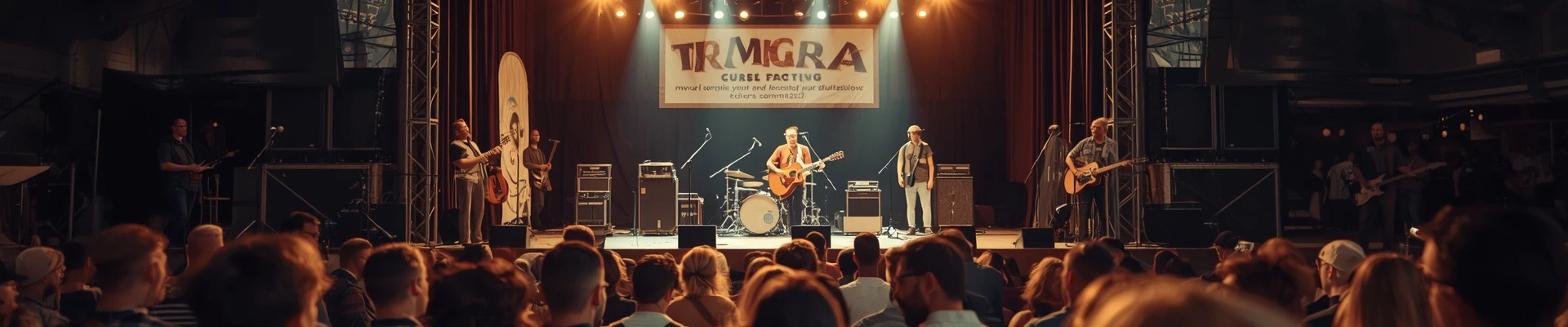
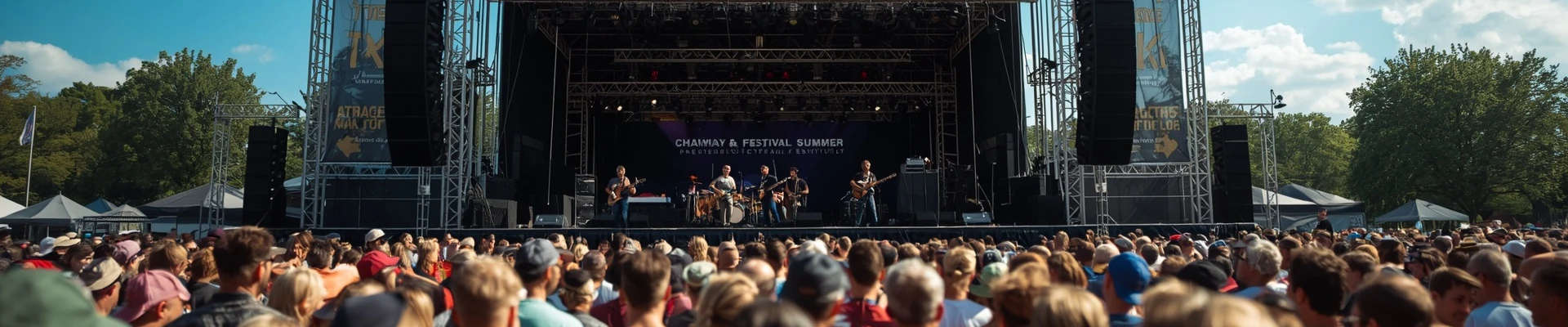
Bayamón's festival calendar reflects its dual character as a traditional Puerto Rican municipality and a modern metropolitan node. Las Fiestas Patronales de Santiago Apóstol (the patron saint festival, held in late July) is the municipality's signature annual event — multiple days of live music, food, carnival rides, and community celebration in the Plaza de Recreo, programmed with both traditional Puerto Rican music (plena, salsa, jíbaro) and contemporary popular acts. Carnaval de Bayamón (held in the spring) brings costumed parades and music across several days. The Maratón de Bayamón draws thousands of participants and features live music programming along the route. Municipal cultural programs through the Instituto de Cultura Puertorriqueña's Bayamón branch maintain regular concerts, educational events, and bomba and plena demonstrations.
The broader metropolitan ecosystem means that San Juan's Fiestas de la Calle San Sebastián, Heineken Jazzfest, Festival Casals, and the programming at the Coliseo de Puerto Rico (El Choliseo) in Hato Rey are all accessible within 20 minutes of Bayamón — the metro functions as a single cultural market, and Bayamón residents participate fully in it.
What ties it all together
Bayamón is not a city that markets itself as a music capital — it is too embedded in the San Juan metro, too industrial in its economic identity, and too oriented toward the practical business of being a working city of 200,000 people. But its music is inseparable from Puerto Rico's most commercially consequential modern sound. Wisin & Yandel built reggaeton's golden age from the Bayamón corridor. Farruko and Lunay and Jhay Cortez continued the lineage. The salsa orchestras rehearsed in its social clubs. The jíbaro tradition lives in its school festivals. The patron saint fiestas fill the Plaza de Recreo every July with plena and salsa and the smell of pernil and chicharrón — which is, after all, how the city earned its most enduring nickname. La Ciudad del Chicharrón is not a music city because it staged the right festivals or built the right arenas. It is a music city because its people have made music — popular, devotional, political, and celebratory — as naturally as any other part of daily life.