
Salt Lake City sits at the base of the Wasatch Front at roughly 1,288 metres (4,226 feet) above sea level, cradled between the Wasatch Range to the east and the vast salt flats and Great Salt Lake to the northwest. It is the capital and largest city of Utah, home to about 215,000 residents in the city limits and more than 1.2 million in the greater Wasatch Front metropolitan area. The city was founded in 1847 by Brigham Young and the early members of the Church of Jesus Christ of Latter-day Saints — the LDS Church, whose world headquarters dominate Temple Square at the centre of the city — and for most of its history the church's presence has shaped everything from liquor licensing to concert curfews to the all-ages ethics of the local music scene. The result is one of the more paradoxical music cities in North America: a deeply religious capital that has, almost precisely because of the limitations that religious culture imposed on conventional bar-based nightlife, cultivated one of the most devoted all-ages underground music communities in the country.
A brief history
The Ute, Shoshone, and Goshute peoples had inhabited the basin and its surrounding valleys for thousands of years before the 1847 arrival of the LDS pioneers, who named the site after the inland sea to the northwest. The Utah War of 1857–58, the completion of the Transcontinental Railroad at Promontory Summit (about 100 kilometres north of the city) in 1869, and Utah statehood in 1896 marked the major turning points of the territorial period. The mining booms of Park City and Bingham Canyon, the completion of the Kennecott Copper Mine (one of the largest open-pit copper mines in the world, visible from the western Wasatch), and the growth of the University of Utah gave the city an economic base beyond the church. The 2002 Winter Olympics — which brought the Delta Center (now Delta Center/United Center), the E Center (now Maverik Center), and significant infrastructure — marked Salt Lake City's global coming-out moment. The city is today a major tech hub — the "Silicon Slopes" corridor stretching from Provo to Ogden has attracted companies including Adobe, eBay, Goldman Sachs Technology, Qualtrics, and dozens of startups — and a centre for outdoor recreation industries, healthcare, and finance.
Music identity
Salt Lake City's most famous musical institution is the Tabernacle Choir at Temple Square (formerly the Mormon Tabernacle Choir), founded in 1847 and now comprising 360 volunteer voices. The Choir has broadcast its weekly Music and the Spoken Word programme continuously since 1929 — the longest-running continuous network broadcast in history — and has recorded more than 180 albums, earned multiple Grammy Awards, and performed at U.S. Presidential inaugurations. The acoustics of the Salt Lake Tabernacle, built between 1863 and 1875 with a lattice-arch roof engineered without nails, remain among the most celebrated in the world. Utah Symphony, founded in 1940 and now one of the most financially stable orchestras in the American West, anchors the classical infrastructure alongside Utah Opera and Ballet West.
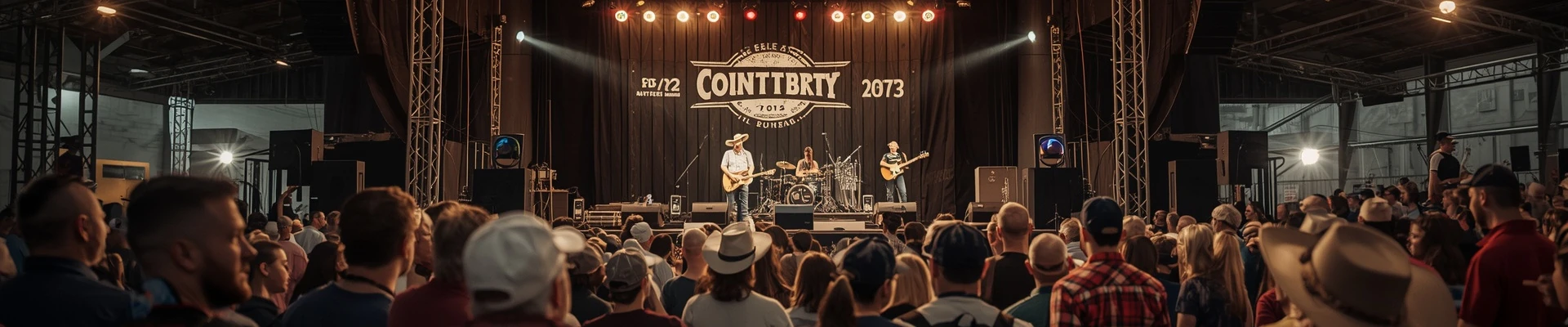
The secular music story is just as distinctive. Because Utah's liquor laws historically prohibited minors in licensed venues — the Zion Curtain provisions that required alcohol to be mixed behind a wall, the strict club licensing requirements — Salt Lake City developed a powerful all-ages venue culture that became the primary engine of its rock underground. Kilby Court, a converted carriage house at 741 South 330 West opened in 1999 by Todd Rundgren's long-time collaborator Todd Rundgren — actually by local promoter Tommy Tran and later run by several operators — became one of the most celebrated DIY all-ages venues in the country, launching or supporting nearly every significant Salt Lake band of the 2000s and 2010s. Kilby Court's 200-person capacity, $10 ticket prices, and willingness to book national touring acts alongside Salt Lake residents created the crucible for two decades of local music. Velour Live Music Gallery in adjacent Provo (about 70 kilometres south) extended the all-ages philosophy further and became the anchor of the Provo-based indie rock scene.
The rock underground that emerged from this infrastructure is remarkable for a city of Salt Lake's size. Neon Trees, formed in Provo in 2005, built a national alternative rock career through Picture Show (2012) and the single "Animal." The Used, from Orem (just south of Provo), became one of the defining post-hardcore bands of the 2000s with their self-titled debut (2002) and In Love and Death (2004) on Reprise Records. Imagine Dragons, formed in Las Vegas but assembled from members of several Utah bands including students at Brigham Young University and the University of Utah, built the biggest rock career to emerge from the Intermountain West in a generation. Neon Trees and Imagine Dragons each spent formative years on the Utah circuit. Fictionist, The National Parks, Joshua James, Mindy Gledhill, and American Authors (whose members came up through the Utah independent scene) extended the indie and folk-rock lineage. David Archuleta, the American Idol runner-up and Utah native, and Donny and Marie Osmond — who launched their careers in Ogden and became two of the defining pop figures of the 1970s television era — represent the mainstream pop lineage.
The hardcore and metal circuit is equally notable. Every Time I Die toured Salt Lake City regularly and the city's hardcore scene fed acts like Crook & The Castles, The Last Ten Seconds of Life, and a rotating cast of local hardcore and metalcore acts through Kilby Court, The Complex, and Club Vegas (later Club X). The Slug Magazine collective, founded in 1989, became the institutional backbone of the Salt Lake underground — documenting local bands, local venues, local labels, and local culture through print and online editions that remain essential primary sources for Salt Lake music history. KRCL 90.9 FM, founded in 1979 as a community radio station, has programmed indie, folk, punk, and roots music continuously and remains one of the most beloved community stations in the Mountain West. X96 (KXRK 96.3 FM), a commercial alternative rock station, was the commercial voice of the Salt Lake alternative scene through the 1990s and 2000s.
Hip-hop in Salt Lake City has its own coherent lineage. Watsky — born in San Francisco but with deep Utah roots — built a national career as a rapper and spoken-word artist. Local acts including Athletic Mic League, Optiks International, Merkules, and a network of producers and beatmakers anchored by the Kilby Court and Urban Lounge circuits have kept a hip-hop presence. Electronic music — particularly underground house and techno — runs through a network of warehouse parties, W Lounge, and promoters connected to the national touring circuit. Stereolab, Built to Spill, Modest Mouse, and other indie icons have deep Salt Lake City touring histories that span the Kilby Court–Urban Lounge corridor, regularly selling out in a city that punches well above its weight for indie touring stops.
Venues and neighborhoods
The venue pyramid spans from arena to DIY. Delta Center (18,000 capacity), home of the Utah Jazz and the city's biggest shows, has hosted everyone from U2 to Taylor Swift to Bruce Springsteen. Maverik Center in suburban West Valley City (about 15 kilometres from downtown) holds about 12,000 and handles mid-size arena tours. Utah First Credit Union Amphitheatre (formerly USANA Amphitheatre), a 20,000-seat outdoor shed in West Valley, handles summer amphitheatre tours. Moving down the scale: Kingsbury Hall at the University of Utah (1,930 seats) books major folk, jazz, world, classical, and mid-size rock acts. The Complex (3,000 capacity) at 536 West 100 South handles hip-hop, EDM, and mid-size rock. The Depot in the Gateway district (1,000 capacity) has been a key rock and alternative room. Urban Lounge at 241 South 500 East — the city's most important small rock club, opened in 1999, capacity roughly 350 — has been the living room of the Salt Lake rock underground for more than two decades, booking nearly every significant touring indie, punk, metal, and alternative act through its doors. Kilby Court at its original 741 South 330 West location (capacity 200) remains a pilgrimage destination for the national all-ages circuit. The Gallivan Center, an outdoor downtown venue, hosts summer festivals and ticketed concerts. Red Butte Garden Amphitheatre at the University of Utah (2,400 capacity) books roots, folk, world music, and soft rock with the Wasatch Range as a backdrop — one of the most beautiful outdoor venues in the American West. Abravenal Hall (now Abravanel Hall) is home to the Utah Symphony.
Neighborhoods anchor different scenes. Downtown Salt Lake City — particularly the Granary District south of 900 South and the Broadway Corridor along 300 South — holds the heaviest concentration of live-music bars and clubs. The Avenues, the historic Victorian neighbourhood northeast of downtown, supports coffee-house folk and singer-songwriter culture. Sugar House, the historically bohemian neighbourhood southeast of downtown, has supported indie and roots venues. The University of Utah campus area anchors Kingsbury Hall, the Red Butte Garden, and a student-driven circuit. Provo (the second-largest city in the metro, about 70 kilometres south) carries its own entire music ecosystem through Velour, BYU-adjacent indie, and a scene so distinctive it has spawned multiple national acts.
Festivals and signature events
The festival circuit reflects the city's dual identity. Twilight Concert Series at the Gallivan Center — a summer series that has run since 1992 — brings subsidised outdoor concerts (often $5 or less admission) featuring major national indie, alternative, and hip-hop acts to a downtown audience of up to 10,000 per night. It has become one of the most cost-effective summer music series in the American West, routinely booking artists like Alt-J, Neutral Milk Hotel, Chance the Rapper, and The Head and the Heart. Utah Arts Festival (late June) combines visual art, theatre, and music at Library Square. Craft Lake City DIY Festival (August) centres independent and DIY makers but includes a significant music programming strand. Sundance Film Festival — based in Park City about 50 kilometres east — generates significant music programming through parties, showcases, and music-supervision networking in January. Electric Candy, various Kilby Block Party editions, and a strong network of promoters and bookers keep the touring circuit well-served.
The Mormon Tabernacle Choir Christmas Concert at the Conference Center (21,000 capacity) — one of the largest single-week ticketed events in Utah — sells out months in advance each December, bringing together orchestral, choral, and solo programming in the largest performance hall in the Mountain West.
What ties it all together
Salt Lake City's defining musical paradox is that its religious culture and its underground culture are not opposites but co-authors. The LDS Church's emphasis on youth programming, the strong choral tradition running through seminary programs and ward meetinghouses, and the all-ages necessity created by restrictive liquor laws have produced generations of young musicians who learned to play in church halls, formed bands in suburban garages, and found their first audiences at Kilby Court and Urban Lounge rather than in bars. The result is a city where the Tabernacle Choir and the Used are not anomalies but two expressions of the same deep communal investment in music — a mountain city that has produced, improbably, one of the most tenacious independent music cultures in the American West, shaped as much by altitude and isolation as by faith and rebellion.