

West Jordan is a city in Salt Lake County, Utah, sitting roughly 15 miles south of Salt Lake City along the valley floor of the Great Salt Lake Basin. With approximately 112,000 residents, it is the fourth-largest city in Utah and one of the fastest-growing municipalities in the Mountain West, having expanded dramatically from a farming and industrial corridor in the mid-20th century into a dense residential and commercial suburb. The city occupies a wide swath of the valley between the Jordan River (which runs north–south through the county before emptying into the Great Salt Lake) and the base of the Oquirrh Mountains, with the Wasatch Range rising dramatically to the east. The valley's bowl geography — ringed by mountains on three sides — creates the acoustic and visual environment that has shaped the region's sense of place for every community that has lived here, from the Ute and Goshute peoples who inhabited the valley for centuries to the Mormon pioneers who arrived in 1847 and the subsequent waves of immigrant labor who built its infrastructure.
A brief history
The land that became West Jordan was settled by members of The Church of Jesus Christ of Latter-day Saints in the late 1840s and early 1850s, who established farming communities along the Jordan River's irrigation-friendly banks. The river — named by early Mormon settlers after the Jordan River in the Holy Land — had been a boundary marker, trade route, and water source for Indigenous peoples for millennia before European settlement. The settlement of West Jordan Township was officially established in 1849, making it one of the oldest continuous communities in Utah. Through the late 19th and early 20th centuries, the area developed as an agricultural and small-industry zone supplying the larger Salt Lake City market. The Kennecott Bingham Canyon Mine — one of the world's largest open-pit copper mines, operating in the Oquirrh Mountains just southwest of the city — has been a dominant economic presence since the early 1900s, shaping both employment patterns and the environmental character of the southern Salt Lake Valley. West Jordan was incorporated as a city in 1941.
The post–World War II decades brought rapid suburbanization as Salt Lake City's expanding population pushed south along the I-15 corridor. The opening of TRAX light rail in the early 2000s — which now runs through West Jordan connecting it to downtown Salt Lake City, the airport, and Provo — accelerated commercial development, particularly around the Jordan Landing mixed-use district, which became one of the largest retail and entertainment centers in the state. West Jordan's population has roughly tripled since 1980, drawing transplants from across the United States as well as immigrant communities from Polynesia (particularly Tonga and Samoa), Mexico, Central America, and increasingly from refugee populations arriving in Utah through Salt Lake City resettlement programs.
Music identity
West Jordan sits within the Wasatch Front music ecosystem — the continuous urban chain stretching from Ogden through Salt Lake City down to Provo — and its music identity cannot be fully separated from this regional context. The valley operates as a single interconnected scene in which bands form in Provo, record in Salt Lake City, and play shows across all three cities without treating municipal boundaries as meaningful distinctions. Within this context, West Jordan contributes a specific suburban energy: bands that form in bedroom studios and church gymnasiums, that play the city's community events and work their way up to venues in the broader metro, and that reflect the cultural mix of a community more ethnically and religiously diverse than Salt Lake City's historic core.
The LDS musical tradition has deep roots in the region and in West Jordan specifically. Mormon choral music — institutionally centered on the Tabernacle Choir at Temple Square in downtown SLC but extending into ward and stake choirs throughout the county — has shaped the vocal culture of the valley for generations. West Jordan's own congregations sustain a tradition of choral singing, hymn arrangement, and instrumental music that flows between the sacred and the secular. Several musicians who have crossed into nationally visible careers began in this tradition, including Alex Boyé — the British-Ghanaian pop singer who became a prominent performer based in the SLC area — whose polished, gospel-inflected pop style reflects the way LDS musical training translates into professional entertainment contexts.
The Polynesian community in West Jordan is one of the largest and most cohesive in the continental United States. Tongan and Samoan communities, many of them LDS, have been settling in the Salt Lake Valley since the 1960s and 1970s, and their musical culture — rooted in Polynesian choral traditions, string band music, and increasingly in hip-hop and R&B inflected with Pacific Island sensibilities — has contributed a distinctive strand to the regional sound. West Jordan's Polynesian community has produced musicians who navigate between traditional Polynesian performance contexts and American popular music forms with unusual fluency. Hip-hop, in particular, has become a primary vehicle for Polynesian-American expression in the SLC suburbs, with crews and individual artists from West Jordan and neighboring Kearns and Taylorsville representing a strand of Mountain West hip-hop rooted in Pacific Islander experience.
The broader Utah punk and alternative rock tradition that produced Neon Trees (from Provo) and the SLC indie rock circuit runs through West Jordan via the garage-band-to-venue pipeline that has operated across the Wasatch Front since the 1980s. The Mormon church's long-standing restrictions on alcohol consumption — which historically prevented many SLC venues from obtaining liquor licenses — produced a distinctive venue landscape of all-ages clubs and private-club workarounds that made the Utah punk and hardcore scene structurally different from scenes in other parts of the country. Bands from West Jordan and the southern Salt Lake suburbs fed into this circuit, playing the legendary Kilby Court (the beloved outdoor all-ages venue in SLC) and a series of church gymnasiums and community halls that constituted the DIY circuit of the 1990s and 2000s. Bingham High School and Copper Hills High School — two of the largest high schools in Utah, both located in West Jordan — run substantial music programs and have produced a consistent pipeline of musicians entering the professional and semi-professional circuits.
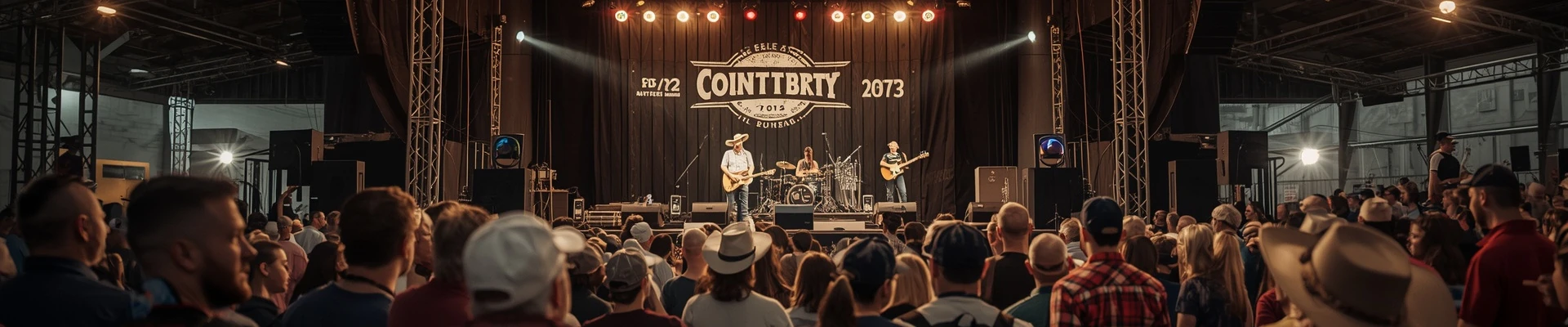
Country and Americana have a quiet but steady presence in the valley's southern suburbs. The agricultural roots of communities like West Jordan and South Jordan sustain a country music culture that parallels the urban rock circuit — country dance bars and the influence of neighboring rural Utah communities feed a scene that is consistently active even if it rarely commands national attention.
Venues and neighborhoods
West Jordan's live music infrastructure is primarily neighborhood-level — community centers, churches, parks, and commercial bars rather than major dedicated concert venues. The city's most significant concert infrastructure is nearby: the USANA Amphitheatre (approximately 18,000 capacity) sits just northwest in West Valley City, but draws its audience heavily from West Jordan and the broader southern Salt Lake Valley. For residents of West Jordan, USANA is the accessible outdoor amphitheatre — where major touring rock, pop, country, and hip-hop acts play when they come through the Wasatch Front.
Within the city, the Jordan Landing commercial district includes restaurants and entertainment spaces that program live acoustic and occasional full-band shows. Community parks including Veterans Memorial Park and the Jordan River Parkway program summer outdoor concerts and festivals. The Jordan Valley YMCA and community recreation centers program youth performance events. For full-service live music, West Jordan residents navigate north to the SLC venue cluster: Kilby Court (the beloved all-ages outdoor room), The Commonwealth Room (1,200 capacity), The Depot, The Beehive, and The Eccles Theater for larger bookings.
The Polynesian cultural organizations in West Jordan operate their own performance spaces — community halls, church cultural halls, and event centers — that program traditional Polynesian music, dance, and contemporary Polynesian-American performance outside the mainstream venue circuit.
Festivals and signature events
West Jordan's festival programming is community-focused. WJ Founder's Day celebrates the city's history with outdoor programming and live music. The Jordan Landing Summer Concert Series programs local and regional bands for the commercial district's outdoor space. The broader Wasatch Front festival circuit — including Utah Arts Festival (SLC), the Twilight Concert Series at Pioneer Park (SLC), and the Provo Rooftop Concert Series — draws West Jordan residents into the regional music calendar. Polynesian cultural festivals organized by the Tongan and Samoan community organizations program traditional and contemporary Pacific Islander music and dance. Fiesta Days features outdoor programming with live music from the city's diverse communities.
What ties it all together
West Jordan is a city defined by its position at the intersection of several currents that make the Wasatch Front musically interesting: the LDS choral tradition that has shaped the vocal culture of the entire valley; the Polynesian-American community that has brought Pacific Islander music into the Mountain West; the suburban punk and indie rock pipeline that sends bands from garage studios up through the SLC venue circuit; and the outdoor amphitheatre logic that makes the entire southern Salt Lake Valley a single concert market. The city does not have a defining venue or a famous local sound the way Nashville or Detroit do — but it has a musical life shaped by the same forces that have made the Wasatch Front one of the most culturally active corridors in the Mountain West, and its Polynesian hip-hop scene represents one of the most genuine and underreported musical communities in the American interior. West Jordan is a place where the sacred and secular, the traditional and the contemporary, and the immigrant and the established all compete and collaborate within a community still figuring out what it wants to be.