

Burnaby is the second-largest city in Metro Vancouver and the third-largest in British Columbia, with roughly 249,000 residents within its municipal boundaries and sitting at the geographic and logistical heart of the Lower Mainland. Bordered by Vancouver to the west, New Westminster and the Fraser River to the south, Coquitlam and Port Moody to the east, and Burrard Inlet to the north, Burnaby occupies the ridge between two bodies of water and the plateau of Burnaby Mountain, which rises above the inlet and hosts Simon Fraser University — one of the architecturally and culturally distinctive universities in Canada. Though Burnaby is frequently absorbed into the broader "Vancouver" identity in cultural conversation, it has produced a disproportionate share of the region's music, is home to two major post-secondary institutions, and contains one of the most ethnically diverse populations in Canada — a city where Korean, Chinese, Cantonese, Mandarin, Punjabi, Tagalog, and dozens of other languages are heard daily in commercial corridors like Kingsway and North Road.
A brief history
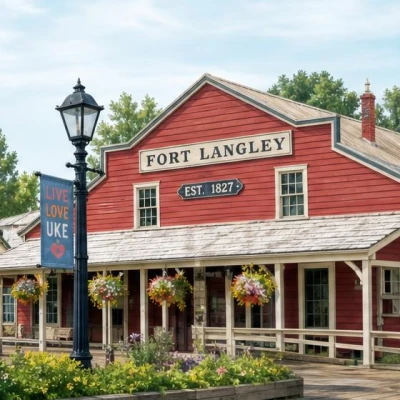
The area that became Burnaby was home to the Tsleil-Waututh (People of the Inlet) and Musqueam and Squamish peoples before European contact. The Hudson's Bay Company's Fort Langley trading post and the Royal Engineers' surveying of the region in the 1850s and 1860s opened Burnaby to colonial settlement. The municipality was incorporated in 1892, growing alongside the BC Electric Railway interurban lines that connected it to Vancouver and New Westminster. A devastating fire in 1923 destroyed much of Burnaby's early commercial infrastructure; the postwar period saw rapid suburban expansion, and by the 1960s Burnaby had become a dense bedroom community anchored by the 1965 opening of Simon Fraser University on Burnaby Mountain — one of the great acts of architectural ambition in Canadian public education, designed by Arthur Erickson and Geoffrey Massey. The 1960s and 1970s brought waves of immigration: Italian and Portuguese communities first, followed by South Asian (particularly Punjabi and Gujarati) communities in the 1970s and 1980s, then an enormous influx of Hong Kong Chinese in the 1980s and 1990s preceding the 1997 handover, and Korean immigration concentrated particularly from the 1990s onward. Today Burnaby is among the most diverse municipalities in Canada, with visible minorities constituting over 65% of the population. Metrotown — the regional shopping and transit hub anchored by Metropolis at Metrotown, one of the largest malls in Canada — is the commercial and transit centre of the Lower Mainland outside downtown Vancouver.
Music identity
Burnaby's most internationally recognized musical contribution is Sarah McLachlan, who was born in Halifax but raised in Burnaby from her early teens, attended Lord Byng Secondary (in Vancouver) but formed her musical identity in the Lower Mainland and launched her career through Nettwerk Records — the Vancouver independent label co-founded by Terry McBride that became one of the most important independent music companies in Canada, releasing McLachlan's Touch (1988), Solace (1991), Fumbling Towards Ecstasy (1993), and Surfacing (1997). Nettwerk itself — while headquartered in Vancouver — was built in large part through McLachlan's commercial breakthrough and its Burnaby artist and production connections. McLachlan's Lilith Fair, the touring festival she founded in 1997 and which became the highest-grossing touring festival in North America that year, was a direct product of the Nettwerk / Greater Vancouver infrastructure.
Chad Kroeger, the co-founder and frontman of Nickelback — one of the best-selling Canadian rock acts in history — was born in Hanna, Alberta but spent significant formative years in Burnaby. Nickelback's rise from the BC Interior through Abbotsford and into the broader Vancouver market followed the same regional infrastructure of venues, radio stations, and independent promotion that Burnaby musicians have navigated for decades.
Burnaby's connection to the indie and alternative circuits of the 1990s and 2000s runs through Nettwerk's ecosystem: Delerium, the ambient-electronic project of Nettwerk co-founders Bill Leeb and Rhys Fulber (both with strong Lower Mainland ties), achieved international chart success in the late 1990s and early 2000s. Skinny Puppy, the pioneering industrial-electronic act formed in Vancouver by Nivek Ogre and cEvin Key — key figures in the Nettwerk orbit — are among the most influential Canadian electronic acts internationally and performed extensively throughout the Burnaby and Vancouver circuit. Front Line Assembly followed a similar industrial-electronic path with deep Greater Vancouver roots.
The contemporary hip-hop scene has a strong Burnaby footprint. Merkules (Mitchell Rowland), the Canadian battle rapper and mixtape artist born and raised in Burnaby, has built one of the largest independent hip-hop catalogs in Canada through a relentless release schedule and internet-first strategy. The Punjabi hip-hop and bhangra scenes centred on the South Asian communities of Burnaby, Surrey, and the Fraser Valley — artists like Jazzy B, whose career traces directly through the Surrey/Burnaby Punjabi diaspora corridor — connect Burnaby to a global Punjabi music network spanning the UK, India, and North America. The Korean-Canadian community in Burnaby, particularly concentrated around Edmonds, supports a thriving K-pop cover and performance culture, independent Korean-language recording, and a circuit of karaoke venues and Korean community concert events. The Cantonese and Mandarin music scenes — through karaoke businesses on Kingsway and North Road, community concert series at the Burnaby Village Museum, and touring acts from Hong Kong and Taiwan routing through the Metro Vancouver market — are among the most active in North America outside Toronto and Los Angeles.
The classical and educational infrastructure is anchored by Simon Fraser University's School for the Contemporary Arts — one of the leading contemporary arts schools in Canada, with a music program oriented toward experimental, electronic, and interdisciplinary practice — and British Columbia Institute of Technology (BCIT), which contributes a technical and audio production stream to the city's creative workforce. Douglas College (headquartered in New Westminster but with a strong Burnaby student population) supports a music program feeding the regional live circuit.
The jazz and blues scenes flow through Greater Vancouver's shared club and festival infrastructure. Burnaby Blues and Roots Festival at Deer Lake Park has been one of the most attended outdoor music events in Metro Vancouver — drawing artists like B.B. King, Allen Toussaint, Mavis Staples, and Bonnie Raitt over its 30-year run through the 1990s and 2000s.
Venues and neighborhoods
Burnaby's venue geography is shaped by its size and transit corridors. The largest standalone venue is Swangard Stadium, a multi-use outdoor stadium used for large-scale events. Deer Lake Park — Burnaby's most beloved greenspace, ringed by the Shadbolt Centre for the Arts, the Burnaby Art Gallery, and Burnaby Village Museum — hosts outdoor festival and concert programming including the Burnaby Blues and Roots Festival site. The Shadbolt Centre for the Arts is the city's primary performing arts facility, with the Studio Theatre and the Mainstage used for music and theatre programming.
The live bar and club circuit runs through shared Lower Mainland venues — Burnaby musicians play The Rickshaw Theatre in East Van, The Commodore Ballroom in downtown Vancouver, The Vogue Theatre, and the network of pub venues across the Lower Mainland, then graduate to Rogers Arena for arena-scale touring. Within Burnaby itself, the Metropolis at Metrotown area anchors entertainment consumption. Korean karaoke (norebang) venues run through the Edmonds and Kingsway commercial corridors. South Asian bhangra and music events fill community halls, the Burnaby Arts Centre, and the Cameron Recreation Centre.
The neighborhoods carry distinct sonic identities. Burnaby Mountain / SFU — the university plateau — anchors the experimental, electronic, and interdisciplinary music scene through SFU's School for the Contemporary Arts. Metrotown is the transit and commercial hub. Edmonds anchors Korean-Canadian cultural life. Kingsway — the diagonal arterial running northeast through Burnaby to New Westminster — is the Cantonese, Vietnamese, and South Asian commercial corridor. North Burnaby (above the Trans-Canada Highway) connects to the more Anglo-Canadian pub and bar scene through Brentwood and Hastings corridors.
Festivals and signature events
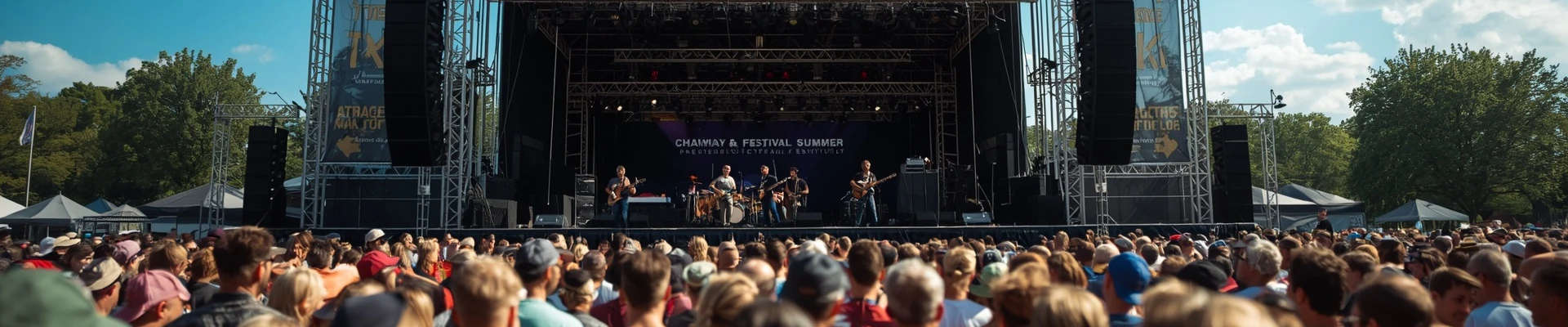
The Burnaby Blues and Roots Festival at Deer Lake Park — which ran annually from the early 1990s through the mid-2010s — was the headline event: a two-day outdoor festival drawing 15,000–20,000 attendees per day with nationally and internationally recognized acts. The Deer Lake Park outdoor concert series continues seasonal programming. The Burnaby Village Museum outdoor stage hosts summer concert series. Simon Fraser University's School for the Contemporary Arts mounts concerts, recitals, and experimental music events year-round. Lunar New Year concerts and events through Burnaby's Cantonese, Mandarin, and Korean communities are among the most attended cultural events in the city, concentrated around Kingsway venues and community halls. Vaisakhi events through the Punjabi-Sikh community bring bhangra and kirtan programming to gurdwaras and community spaces. K-pop cover competitions, community talent shows, and touring act performances run through the Korean community centre circuit and the larger Chan Centre / Vancouver venues.
What ties Burnaby together musically is the same diversity that defines it demographically: no single sound or scene dominates. The city is simultaneously the home of Sarah McLachlan's Lilith Fair origins and Merkules's underground hip-hop hustle, of Deer Lake's blues tradition and Kingsway's Cantonese karaoke, of SFU's electronic music experimentalism and the Punjabi bhangra halls of Edmonds. Burnaby is the city that doesn't impose a single identity on its musicians — and its residents, drawing from Korea, China, South Asia, the Philippines, and across Canada, have built a musical life that reflects the full breadth of that plurality. In a region where Vancouver takes most of the cultural credit, Burnaby quietly produced the artists, labels, and institutions that made it happen.