

Chilliwack sits in the heart of the Fraser Valley, 100 kilometres east of Vancouver, where the broad, flat valley floor meets the steep walls of the Cascade Mountains to the south and the Coast Mountains to the north. The Fraser River bisects the region, and the city's skyline is defined by the distinctive flat-topped silhouette of Vedder Mountain and the snow-capped peaks beyond. With a municipal population of roughly 101,000 — and a broader Census Metropolitan Area approaching 120,000 — Chilliwack is the Fraser Valley's largest city and a regional centre for agriculture, light manufacturing, retail, and government services. It is an easy drive from Abbotsford (30 km west) and Hope (60 km east), sitting at the intersection of the Trans-Canada Highway and the Lougheed Highway. The surrounding agricultural land — protected under British Columbia's Agricultural Land Reserve — produces berries, corn, dairy, and hops; the city itself has grown steadily as Vancouver's urban sprawl pushes east and younger families seek more affordable housing in the valley.
History and Stó:lō Territory
Chilliwack is built on the unceded traditional territory of the Stó:lō Nation — the People of the River — whose ancestors have lived along the Fraser River for thousands of years. The Stó:lō are a confederacy of Coast Salish peoples with deep cultural, spiritual, and economic ties to the Fraser River and its salmon runs. The name Chilliwack itself is derived from the Halq'eméylem word Ts'elxwéyeqw, meaning "valley that narrows at the head." Stó:lō Nation governance continues today, with several First Nations within the traditional territory — including Ts'elxwéyeqw Tribe, Shxwhá:y Village, Skowkale, Soowahlie, Squiala, Tzeachten, and Yakweakwioose — maintaining their governments, cultural programs, and land interests alongside the City of Chilliwack.
Anglo-Canadian settlement arrived in the mid-19th century, fuelled by the Fraser River Gold Rush of 1858 and subsequent agricultural development. The District of Chilliwack was incorporated in 1873, and the City of Chilliwack was incorporated in 1999 when the district municipality and the former city amalgamated. The Fraser Valley remained predominantly agricultural through most of the 20th century, but since the 1990s Chilliwack has urbanized rapidly as the lower mainland's housing costs pushed growth east along Highway 1.
The Canadian Armed Forces maintained a significant presence at CFB Chilliwack (Canadian Forces Base Chilliwack) from 1942 until 1997, when the base was closed and the land converted to a mixed residential and commercial development — the largest land transfer of its kind in Canadian Forces history at the time. The base's closure was a significant economic disruption, but Chilliwack's growth since the late 1990s has more than compensated through retail, construction, and service-sector expansion.
Music Identity
Chilliwack's greatest contribution to Canadian and international music is the band that bears the city's name. Chilliwack — the rock band — was formed in 1969 as a successor to The Collectors, a Vancouver-based psychedelic band. Founder and primary creative force Bill Henderson shaped the group's melodic rock sound, which combined classic rock guitar work with strong vocal harmonies and an accessible pop sensibility. Chilliwack the band had no formal connection to Chilliwack the city — Henderson and the original members were from the Vancouver area, and the name was chosen for its sound rather than its geography — but the association has endured for more than five decades.
The band's commercial peak came in the late 1970s and early 1980s. "Fly at Night" (1977) became one of the most beloved Canadian rock anthems of its era and remains a fixture on classic rock radio. "My Girl (Gone, Gone, Gone)" (1981) was a top-10 hit in Canada. The album Wanna Be a Star (1981) and the broader catalogue from this era — recorded at Little Mountain Sound in Vancouver — established the band's place in the Canadian Classic Rock canon alongside peers like Bachman-Turner Overdrive, Loverboy, and Trooper. The band has reunited and performed periodically over the decades, and their music remains popular in British Columbia.
The actual city of Chilliwack has a music scene proportionate to its size and geography — a compact but genuine community of local musicians, venue operators, and music educators. Because the city sits in the Fraser Valley corridor between the major music markets of Vancouver (100 km west) and even Abbotsford, many Chilliwack musicians integrate into the broader Lower Mainland scene rather than building exclusively local careers. That said, the city has its own distinct live music infrastructure and a community that sustains regular programming across genres.
Country and classic rock are the dominant genres in the city's bar and venue circuit, reflecting the broader demographics of the Fraser Valley agricultural community. Bluegrass and roots music have a following among the rural and small-city population. The Indigenous music tradition of the Stó:lō people — including the distinctive style of waila (a social dance music tradition rooted in the Catholic fiddle and accordion music brought by missionaries, adapted by the Stó:lō and other Salish peoples into a community institution) — has a presence in community cultural events. Gospel and Christian contemporary music reflect the strong faith community in the valley; multiple large evangelical and Pentecostal congregations sustain active worship music programs.
The South Asian community — particularly Punjabi Sikhs, whose presence in the Fraser Valley is substantial and growing — sustains bhangra, Punjabi folk, and South Asian pop scenes through cultural events, gurdwara programs, and community celebrations. The Latin American community, which has grown alongside the agricultural labour sector, contributes cumbia and regional Mexican music to the cultural mix.
Several Chilliwack-area musicians have achieved regional or national profiles. The folk-country singer-songwriter tradition in the Fraser Valley has produced a steady stream of performers who build careers across the Lower Mainland and British Columbia touring circuit. Local bands cycle through the pub and bar circuit, playing original rock, country, and cover sets for the city's working-class audience.
Venues and Neighborhoods
The main commercial and entertainment core of Chilliwack runs along Vedder Road and the downtown core near Yale Road. The downtown corridor has seen significant redevelopment effort over the past two decades, including arts and cultural investment.
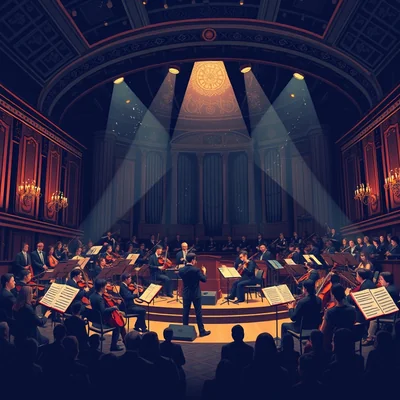
The Chilliwack Cultural Centre is the anchor cultural facility — a 773-seat performance hall that opened in 2007. It programs touring performing arts, local orchestra concerts, comedy shows, and community events year-round. The Fraser Valley Symphony, which performs in venues across the valley including the Cultural Centre, represents the classical music tradition. The Cultural Centre also houses a smaller 200-seat studio theatre that programs more intimate productions.
The pub and bar circuit provides the live music club layer. The Maple Hotel and several other downtown establishments host local and touring cover bands and original acts. The city's military history means there is a strong veteran and working-class bar culture that feeds the live music crowd. The Sardis neighbourhood (the former CFB Chilliwack area, now heavily residential) and Vedder Crossing are suburban neighborhoods that feed the broader entertainment economy.
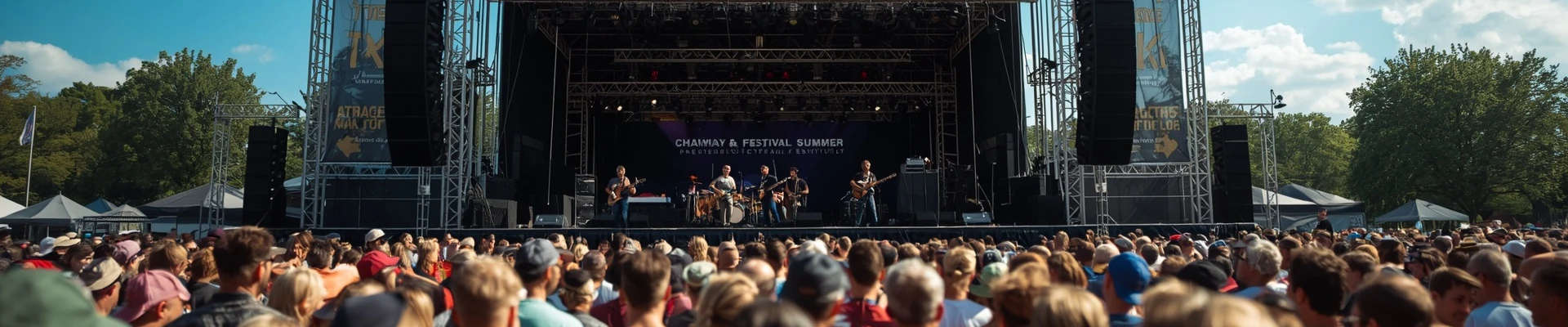
Outdoor festivals use Garrison Crossing — the mixed-use development on the former CFB Chilliwack lands — and Chilliwack's parks, including Majuba Hill and the Harrison Mills area nearby, which hosts the Harrison Festival of the Arts (technically in Harrison Hot Springs, a short drive east, but drawing heavily from the Chilliwack regional audience).
Festivals and Signature Events
Yarrow Outdoor Bluegrass Festival — held at the Yarrow Agricultural Centre in the community of Yarrow, just southwest of Chilliwack — is one of the most beloved small-city bluegrass and roots festivals in British Columbia, drawing musicians and fans from across the province to celebrate acoustic music in an agricultural setting.
The Chilliwack Fair (Fraser Valley Exhibition) at the Tradex exhibition grounds in nearby Abbotsford (historically linked to the broader valley fair tradition) represents the agricultural fair music tradition — grandstand concerts, local performers, and the broad country-and-classic-rock repertoire that fits the family-fair demographic.
The Stó:lō Nation cultural events, including powwows and cultural celebrations at various First Nations communities in the territory, represent the Indigenous cultural calendar — open in varying degrees to the broader public and sustained primarily for community cultural revitalization.
Rotary Club of Chilliwack and local service organizations program summer community concert series in parks, including Gyro Park along the waterfront. The Chilliwack Summer Festival programming runs through the warmer months. The Country Music Jamboree tradition in the broader Fraser Valley finds expression in local events and club nights.
Harrison Hot Springs — 35 kilometres east of Chilliwack — hosts the Harrison Festival of the Arts each July, one of British Columbia's oldest and most beloved outdoor performing arts festivals (founded 1973), drawing world music, folk, jazz, and roots acts to the lakeside venue. Though technically a separate community, Harrison is deeply tied to Chilliwack's cultural orbit and many Chilliwack residents consider it part of their regional cultural calendar.
What Ties It Together
The defining musical signature of Chilliwack is a Fraser Valley mix of working-class roots, country, and classic rock pragmatism — the sound of a city that takes its music seriously without pretension, in venues and communities where live music is a genuine social institution rather than an industry product. The city's most internationally famous musical connection is its accidental namesake: the band Chilliwack recorded some of the most beloved anthems in Canadian classic rock history, and "Fly at Night" continues to be the most-played piece of music associated with this community. The actual local scene is compact but genuine — sustained by the Chilliwack Cultural Centre, the pub circuit, the Yarrow bluegrass tradition, the Stó:lō cultural programs, the South Asian community events, and the steady participation in the broader Lower Mainland music ecosystem. Chilliwack is not a music industry city; it is a music-loving city, and that distinction matters here in the valley.