

Geography and Setting
Coquitlam occupies the northeastern shoulder of Metro Vancouver, pressed between the ridge of Burke Mountain to the north, the Coquitlam River to the east, and the flatlands of Burnaby and Port Coquitlam to its south and west. The city covers roughly 122 square kilometres — a dramatic range of terrain that drops from dense urban towers in City Centre through quiet residential hillsides to forested wilderness at Pinecone Burke Provincial Park. Lougheed Town Centre and the City Centre node cluster around the SkyTrain's Millennium Line, which arrived in 2016 and accelerated Coquitlam's transformation from a sprawling suburb into a transit-oriented city.
Together with Port Coquitlam and Port Moody, Coquitlam forms the Tri-Cities, a loosely defined community of roughly 300,000 people. The Tri-Cities identity is real enough that local musicians, promoters, and venues often market to "the Tri-Cities" as a single audience. The area sits about 25 kilometres east of downtown Vancouver, close enough to feel Vancouver's cultural gravity but distant enough to sustain its own creative ecosystem.
History and Demographics
Coquitlam's name derives from a Halkomelem word meaning "small red salmon," reflecting the Indigenous heritage of the Kwikwetlem First Nation, whose territory encompasses much of the area. The Kwikwetlem are a Sto:lo and Coast Salish people who have lived along the Coquitlam River and Pitt Lake for millennia; the Nation's growing cultural presence — through language revitalization, public art installations, and community events — shapes a thread of Indigenous artistic expression that runs through the city's cultural programming today.
European settlement began in earnest in the late nineteenth century, driven by logging and the Fraser Valley's agricultural economy. The twentieth century brought waves of immigration that transformed Coquitlam's character: Chinese-Canadian families became one of the city's largest communities, followed by significant Korean-Canadian, South Asian (primarily Punjabi), Filipino-Canadian, and Iranian-Canadian populations. This demographic layering created a city of distinct cultural micro-worlds — Vietnamese restaurants next to Korean karaoke bars next to Punjabi music shops — that feed into Coquitlam's music life in ways both direct and ambient.
The Music Scene
Coquitlam has never produced a single sound that travels the world under its name, but it has been a quiet incubator for Metro Vancouver talent and a reliable stop for touring artists who can't quite fill Rogers Arena but draw well in the suburbs. The city's music ecosystem operates in productive tension between the pull of downtown Vancouver — where the established venues, labels, and scenes cluster — and the need to sustain something local for a population that increasingly lives, works, and socializes east of Boundary Road.
The Hard Rock Casino Vancouver
The most consequential live-music infrastructure in Coquitlam is the Hard Rock Casino Vancouver in the Lougheed district. Its Hard Rock Live venue seats roughly 1,000 and books a consistent calendar of rock, country, hip-hop, and R&B touring acts — artists who might headline the Commodore Ballroom in Vancouver or fill the mid-tier rooms across North America. Acts in the 500–1,500-seat range find Hard Rock Live a natural stop, and for Coquitlam residents it means major touring music without the commute into Vancouver. The casino complex also hosts ShoBar, a smaller lounge stage that books local and regional acts on a near-nightly basis.
Festival du Bois
The most distinctive annual music event in Coquitlam is Festival du Bois, a francophone roots and world music festival held each spring at Mackin Park. Organized by Fête Francophone de la Colombie-Britannique, Festival du Bois draws Franco-Columbian and Quebec artists alongside international francophone performers — Acadian folk, Louisiana zydeco, African soukous, Caribbean zouk. The festival is deliberately intimate (capacity in the low thousands), deeply community-rooted, and one of the few events in the Lower Mainland that foregrounds francophone British Columbia's cultural life. For musicians from Quebec or France touring western Canada, Festival du Bois is a genuine anchor date.
Venues and Performing Arts
The Evergreen Cultural Centre in City Centre is Coquitlam's flagship multi-disciplinary arts venue, with a 350-seat theatre that programs everything from folk and jazz to classical and world music. It is not primarily a rock venue, but it has hosted singer-songwriters, chamber jazz ensembles, and culturally specific performances that reflect the city's multicultural character.
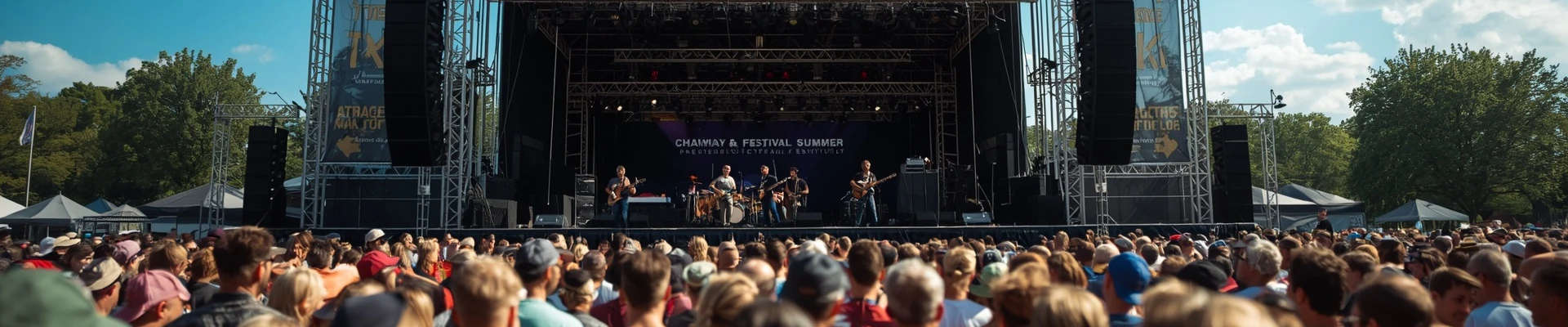
Town Centre Park becomes an outdoor concert destination in summer, hosting free music events tied to Coquitlam Canada Day celebrations, the Kaleidoscope Festival, and various community multicultural events. The scale is modest — local and regional acts rather than national headliners — but the programming reflects genuine civic investment in public music life.
Korean karaoke (norebang) establishments are concentrated along North Road and in the Lougheed commercial corridor, reflecting the city's large Korean-Canadian community. These are not concert venues but they represent a live-music culture of their own — one that sustains songwriting circles, K-pop cover acts, and immigrant musical practices that rarely surface on mainstream venue calendars.
The YMCA of Greater Vancouver in Coquitlam and various community centres — Poirier Community Centre, Maillardville Community Centre — host smaller performance events, youth music programs, and cultural celebrations. Maillardville, the oldest French-speaking community in western Canada, has its own annual events that connect to Festival du Bois's francophone thread.
Artists and Local Talent
Lights (Valerie Anne Poxlad), the Canadian synthpop artist who built one of the most devoted cult followings in early-2010s indie pop, grew up in the Fraser Valley region and spent formative years in the Tri-Cities area before relocating and breaking through with her debut EP on Nettwerk Music Group. Her sound — crystalline synthesizers, confessional lyrics, science-fiction imagery — found an audience far larger than her suburban origins suggested possible and established her as a genuine Canadian pop export.
The Tri-Cities have produced a steady flow of rock, metal, and punk acts who've passed through the Vancouver indie circuit. Bands in the alternative and post-punk space have used Coquitlam rehearsal spaces and recorded at studios in the greater Metro area before finding their footing on the Vancouver scene. The city's relatively affordable (by Vancouver standards) studio and rehearsal infrastructure supports this creative pipeline.
Korean-pop cover bands and original K-pop inspired acts have emerged from Coquitlam's Korean-Canadian community, performing at cultural festivals, Korean church events, and local showcases. As K-pop's global influence has grown, these acts have moved from cultural celebrations into mainstream performance contexts — a trajectory visible at events like the Coquitlam Multicultural Festival.
The Indo-Canadian Music Connection
Coquitlam's large Punjabi-speaking population sustains a vibrant Bhangra scene that intersects with both traditional folk practice and contemporary fusion. Local Bhangra dance teams compete at regional and national levels. Punjabi folk and devotional music fills gurdwaras throughout the city. The Indo-Canadian wedding circuit — a major economic driver for South Asian musicians across Metro Vancouver — employs Coquitlam-based performers regularly, and some of the region's most sought-after dhol players, tabla performers, and Punjabi pop vocalists are based in the Tri-Cities.
Music Education and Youth Pipeline
School District 43 (Coquitlam) runs one of the stronger school music programs in Metro Vancouver, with competitive concert bands, jazz ensembles, and choirs across its secondary schools. Pinetree Secondary, Centennial Secondary, and Gleneagle Secondary have all produced musicians who've gone on to professional careers. The district's commitment to music education — even under perennial budget pressure — sustains the pipeline that feeds local venue calendars and Vancouver's broader music community.
Coquitlam Community Music School provides private instruction across instruments and styles, serving the suburban family market that is Coquitlam's demographic core. The school feeds into district programs and community ensembles, including the Coquitlam Concert Band and various orchestral and choral organizations.
Festivals and Signature Events
Festival du Bois (spring, Mackin Park) — premier annual event, francophone roots and world music, 20+ years of history.
Kaleidoscope Festival (spring, Town Centre Park) — multicultural arts festival with live music performances representing the city's many communities.
Coquitlam Multicultural Festival — community celebration featuring live music from South Asian, East Asian, Southeast Asian, and Eastern European cultural organizations.
Canada Day at Town Centre Park — the city's largest single-day public gathering, featuring local and regional acts on a main stage.
Lights at the Museum (seasonal, Coquitlam Heritage) — holiday events with choral and instrumental performances at heritage sites in the Maillardville district.
What Ties It All Together
Coquitlam's defining musical characteristic is cultural multiplicity in a suburban frame — a city where no single sound dominates because the population itself is a mosaic of communities, each sustaining its own musical traditions alongside a shared appetite for mainstream touring acts. The Hard Rock Casino Vancouver provides the commercial anchor; Festival du Bois provides the francophone roots thread; Korean norebang culture, Punjabi Bhangra, and multicultural festival stages fill in the rest. What emerges is not a scene with a branded sound but something arguably more durable: a city where music is woven into community life across a dozen cultural registers simultaneously. For artists growing up in Coquitlam, Vancouver is always close — but so is a community audience that's genuinely diverse in its tastes, its languages, and its musical inheritance.