

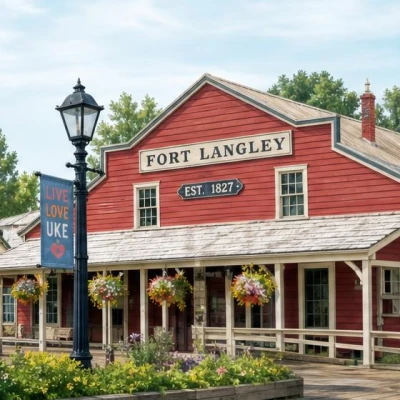
Delta is a district municipality of roughly 102,000 people occupying the southwestern corner of Metro Vancouver, straddling three distinct communities across the Fraser River delta lowlands. Ladner — the historic core and municipal seat — is a heritage fishing village where Victorian-era cannery buildings and boat-lined sloughs give the district its oldest identity. Tsawwassen ("facing the sea") occupies the southwestern tip of the municipality, anchoring the BC Ferries terminal that links the Lower Mainland to Vancouver Island and the Gulf Islands and giving Tsawwassen its role as Metro Vancouver's westernmost gateway. North Delta is the largest and most suburban of the three communities, a post-war residential expanse of modest bungalows and strip malls that adjoins Surrey to the north and east.
Delta sits at the intersection of several major geographic and cultural forces. To the north across the Fraser River lies Richmond, to the east across the Nordel Way corridor lies Surrey, and to the west lies the Strait of Georgia. The municipality's low-lying topography — much of it at or below sea level, protected by the Agricultural Land Reserve — has kept large-scale commercial and industrial development at bay, preserving Delta's character as a bedroom community with an outsized agricultural footprint. The Tsawwassen First Nation, whose traditional territory covers much of the southwestern corner of the municipality, signed a landmark treaty in 2009 — the first urban treaty in British Columbia — and has since developed the Tsawwassen Mills shopping centre and a growing mixed-use precinct on its treaty lands that has reshaped commerce in the southern part of the municipality.
History
The delta lands have sustained Coast Salish peoples — principally the Tsawwassen First Nation and the Musqueam Nation — for thousands of years, with the Fraser River delta providing extraordinary abundance in salmon, waterfowl, and marine life. European settlement accelerated after the Fraser River Gold Rush of 1858 brought miners through the territory, and the establishment of Ladner's Landing in the 1860s by brothers William and Thomas Ladner — who set up farms and a cannery operation on the south arm of the Fraser — gave the district its founding identity as an agricultural and fishing community. The salmon canning industry boomed through the late 19th century, making Ladner one of the most productive cannery centres in the province. The Great Northern Railway reached the district in 1902, and the George Massey Tunnel (completed in 1959) under the south arm of the Fraser finally connected Delta to Richmond and Metro Vancouver by highway, triggering the North Delta suburban expansion that dominated the second half of the 20th century.
The municipality of Delta was officially incorporated in 1879. Through most of the 20th century it remained a predominantly agricultural and blue-collar bedroom community, its three sub-communities remaining functionally distinct — separated by farmland, industrial strips, and the natural geography of the delta. The BC Ferries terminal at Tsawwassen (opened 1960) and the Tsawwassen Ferry Causeway became defining infrastructure, making the community a transit hub while keeping the surrounding land locked in agricultural use. The late 20th century brought a more diverse population — South Asian families from the Punjab, particularly in North Delta — that shifted the municipality's cultural character substantially.
Music identity
Delta's most internationally consequential contribution to recorded music is one of the most unexpected geographic facts in Canadian rock history: Bryan Adams, who became one of the best-selling rock artists of the 1980s and 1990s with albums like Reckless (1984) and Waking Up the Neighbours (1991), grew up in North Delta. Adams attended Argyle Secondary School in North Vancouver (after his family relocated from Delta), but his formative teenage years were spent in North Delta, and he has cited the suburb's ordinariness as part of what drove his ambitions. His collaborator Jim Vallance — the co-writer of "Summer of '69," "Run to You," "Somebody," and dozens of other Adams hits — is another Delta connection; Vallance developed his songwriting partnership with Adams in the early Vancouver music scene that Delta youth fed into. The two represent perhaps the most commercially successful songwriting partnership in Canadian rock history, and their collaboration grew out of the suburban Vancouver ecosystem that North Delta exemplified.
Beyond Adams, Delta's music scene is primarily a feeder into the broader Vancouver and Surrey ecosystems rather than a self-contained scene. The municipality's youth population has produced a steady stream of musicians who developed in Delta before moving into Vancouver's club circuit. The South Asian community — substantial in North Delta and growing in Tsawwassen — sustains a Punjabi bhangra and South Asian pop scene through cultural associations, gurdwaras, and private events that echoes the much larger scene in neighbouring Surrey. The Tsawwassen First Nation cultural programming includes traditional Coast Salish song and dance through its cultural centre and community events, maintaining living connections to the musical traditions of the delta peoples.
The district's geographic position at the southern edge of Metro Vancouver makes it a natural route for touring acts driving between the US border (Peace Arch crossing at White Rock/Surrey is 20 minutes east) and Vancouver proper. The BC Ferries connection to Vancouver Island means that musicians travelling between Victoria and Vancouver often pass through or overnight in Delta, giving the community an incidental transit role in the regional music circuit.
Delta's rock heritage beyond Bryan Adams is modest but present. The local pub and bar scene through the 1980s and 1990s — the Ladner Hotel, the North Delta Inn, and other neighbourhood pubs — provided live music stages for cover bands and local original acts cycling through the suburban Lower Mainland circuit. The broader Fraser Valley country and classic rock scene flows through the municipality, with the agricultural communities of Ladner and the working-class neighborhoods of North Delta sustaining a taste for country, classic rock, and blues that distinguishes Delta somewhat from the more cosmopolitan tastes of its Metro Vancouver neighbours.
Venues and neighborhoods
Delta's live music infrastructure is modest relative to its population, reflecting its identity as a bedroom community rather than an entertainment destination. Ladner anchors the district's most atmospheric small-venue environment — the village's heritage buildings and waterfront sloughs provide a picturesque backdrop for small pubs and restaurant stages. The Ladner Hotel (now operating under various names and configurations) has historically hosted live music in its pub. The Sungod Recreation Centre in North Delta hosts community events, concerts, and cultural performances. The Tsawwassen Springs development includes a golf resort with event programming. The Tsawwassen First Nation cultural facilities host traditional and contemporary Indigenous cultural events.
The absence of a purpose-built concert venue of any significant size means that Delta residents typically travel to Surrey (the Bell Performing Arts Centre), Richmond (the Richmond Gateway Theatre), or Vancouver proper (the Commodore Ballroom, Orpheum, Rogers Arena) for ticketed live music. This dependence on neighbouring cities' infrastructure is characteristic of Metro Vancouver's bedroom-community ring, where car access to the highway network — Delta sits at the junction of Highway 99 (to BC Ferries and the US) and the Trans-Canada corridor — makes nearby cities readily accessible.
North Delta is the district's largest community and most active suburban music corridor, with a cluster of pubs, restaurants, and small event spaces along Scott Road and the 72nd Avenue commercial strip. Ladner Village — the heritage core — is compact and walkable by Delta standards, with its pub, restaurant, and marina anchoring a neighbourhood that draws day-trippers from across Metro Vancouver for its heritage atmosphere. Tsawwassen is the most affluent and suburban of the three communities, with its entertainment centred around the Tsawwassen Mills mall complex and the Tsawwassen Springs resort.
Festivals and signature events
Delta's community event calendar is modest but community-spirited. The Delta Farmland and Wildlife Trust programming, the Tsawwassen Farmers Market, the Ladner Village Market (the weekly summer farmers market along the heritage village's main street), and Delta's Christmas Spirit community celebrations form the backbone of the annual event cycle. The Tsawwassen First Nation hosts cultural events — including traditional songs, dances, and gatherings — through its Celebration Centre. The Delta Tri-Cities Association organizes multicultural programming, and the South Asian community in North Delta supports Vaisakhi celebrations and Punjabi cultural events. The Reifel Bird Sanctuary — one of the most important migratory bird sanctuaries in North America, located on Westham Island within Delta's agricultural zone — attracts naturalist events and community gatherings through the fall crane and snow goose migrations.
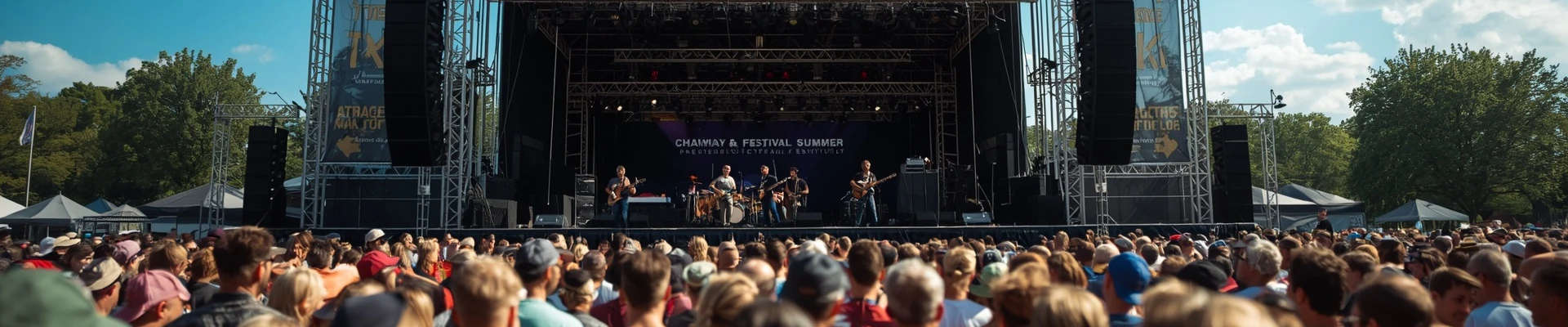
The annual Delta Agricultural Fair (historically one of the oldest community fairs in the Lower Mainland) celebrates the district's farming identity. The Fort to Fort Trail along the Fraser riverbank hosts community walks and events connecting Ladner to the broader Fraser river heritage trail network. Canada Day celebrations at Sungod Recreation Centre bring the North Delta community together for an outdoor concert and festival format that is the municipality's largest annual live music event.
What ties Delta together musically is the tension between its agricultural quietness and its proximity to one of Canada's most active music cities. Delta is Metro Vancouver's most rural municipality — the Agricultural Land Reserve locks vast swaths of the district into farmland — yet it is 40 minutes by car from downtown Vancouver and 30 minutes from Surrey's growing music scene. That in-between quality produced Bryan Adams: a suburban kid who absorbed the ordinariness of North Delta and turned it into some of the most commercially successful rock anthems of the 1980s. Delta's music identity is ultimately inseparable from that heritage — the suburban delta as creative pressure, the agricultural edge of the metropolis as the condition of ambition — even as the district's growing South Asian community, its First Nations cultural resurgence, and its steady supply of young musicians feeding into Vancouver's scene continue to write new chapters of a musical story that is quieter, but not silent.