

The Township of Langley sits in the heart of the Fraser Valley, about 45 kilometres southeast of downtown Vancouver, straddling the broad floodplain of the Fraser River and running south toward the Canada–United States border at Douglas Crossing. Its neighbour to the west is Surrey; Abbotsford lies to the east; the City of Langley — a separate, much smaller municipality entirely surrounded by the Township — sits at its urban centre near 200th Street. Together, the Township and the City of Langley contain just over 160,000 people, though the Township alone accounts for more than 130,000. The area is one of the fastest-growing in British Columbia: the Willowbrook district, Walnut Grove, Willoughby, and Brookswood have added tens of thousands of residents in the past decade as Metro Vancouver's suburban frontier pushes southeast.
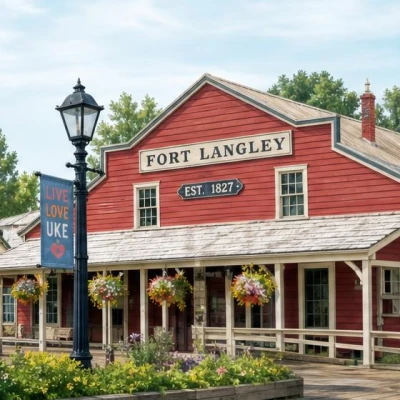
The Township's economic identity is double-tracked. Its western and northern fringes remain tied to agriculture — the Fraser Valley is some of Canada's most productive farmland, and Langley has historically been defined by dairy, poultry, berry farming, and the equestrian culture of a scattered rural municipality. Its eastern and southern reaches are rapidly suburbanizing with logistics warehouses, light industrial parks, big-box retail corridors, and residential subdivisions. Fort Langley — the historic village at the northern end of the Township, on the banks of the Fraser — is the most visited heritage district in the region, anchored by the Fort Langley National Historic Site, and it functions as the cultural and symbolic heart of both the municipality and, in a real sense, of British Columbia itself.
A brief history
Long before the fur trade, the lower Fraser River valley was Kwantlen, Katzie, Matsqui, and Semiahmoo territory — Coast Salish peoples whose villages, fisheries, and trade routes defined the valley economy for thousands of years. The Kwantlen (sometimes spelled Kwantlen Nation or Kwantlen First Nation), whose name means "tireless runner," maintained significant villages along the Fraser near the site of present-day Fort Langley. The Matsqui, Sumas, and other Stó:lō-affiliated peoples ranged through the valley's southern reaches.
In 1827, the Hudson's Bay Company established Fort Langley on the south bank of the Fraser as a trading post and provisioning depot for its Pacific operations. By the 1850s, as the Fraser River Gold Rush brought tens of thousands of prospectors through the valley, Fort Langley became the entry point for British colonization of the mainland. On November 19, 1858, Governor James Douglas proclaimed the mainland colony of British Columbia at Fort Langley — making the site the literal birthplace of the province and one of the most significant historical locations in Canadian Pacific history. The Fort Langley National Historic Site, administered by Parks Canada, preserves the reconstructed fort and tells this story in one of the most visited sites in BC.
The Township of Langley was incorporated in 1873, making it one of the oldest municipalities in British Columbia. Through the 19th and early 20th centuries it developed as an agricultural community — particularly noted for its berry and dairy farming — and as the eastern hinge of the Trans-Canada Highway corridor. Post-WWII suburbanization gradually transformed the western portions of the Township, but Langley retained its rural character through the 1970s and 1980s more than many neighbouring communities. The 1990s and 2000s brought rapid change: Trinity Western University in Langley City drew thousands of students annually; the South Asian community began settling in force, particularly in the Willoughby and Walnut Grove areas; and the logistics and warehousing industry expanded dramatically along the Highway 1 corridor.
Music identity
Langley's music identity is shaped by three intersecting forces that rarely synthesize into a single scene but collectively make the municipality far more musically productive than its suburban profile implies.
Christian and university music
Trinity Western University (TWU), a private Christian liberal arts university in the City of Langley, is the most consequential cultural institution in the municipality's music life. TWU's music program graduates worship leaders, session musicians, and composers who circulate throughout the Lower Mainland's church music and Christian recording industries. The university's Reimer Student Centre hosts regular concerts; the TWU Choral ensembles and orchestral program compete and perform regionally. Langleys' evangelical megachurches — Willowbrook Community Church, Journey Church, and a network of South Asian-Canadian evangelical congregations — field professional-grade worship music programs that draw heavily from TWU graduates and students. This Christian music ecosystem is structurally similar to what Abbotsford produces through Columbia Bible College: a steady output of worship pop, sacred choral music, and CCM that circulates within the BC church music market.
On the secular university side, TWU has hosted touring folk, indie, and acoustic acts in the Reimer Student Centre and the McMillan Theatre. The student population creates a reliable mid-week concert market that draws acts touring between Vancouver and the Interior.
Punjabi-Canadian and South Asian music
The Township's South Asian community — predominantly Punjabi Sikh, heavily concentrated in the Willoughby, Murrayville, and Walnut Grove areas — is one of the fastest-growing in Metro Vancouver and operates as a direct extension of the Surrey Punjabi music ecosystem described above. The Gurdwara Sahib Dasmesh Darbar in Willoughby is one of the largest gurdwaras in the Township and a major site for shabad kirtan and community music events. Bhangra dance teams from Langley compete at the same competitions as Surrey and Abbotsford crews. The Vaisakhi celebrations draw participation from across the south Fraser Valley. Punjabi wedding season — May through October — drives a banquet hall and live music economy that runs parallel to but rarely intersects with the Township's other music scenes.
South Asian pop and Punjabi-Canadian recording artists who are based in Surrey and Abbotsford regularly play Township venues; the Langley Events Centre (LEC) — the municipality's flagship arena — has hosted Bollywood acts and Punjabi touring concerts as part of its mainstream programming. Diljit Dosanjh, Gurdas Maan, and other major Punjabi touring acts have played LEC as part of wider Lower Mainland swings.
Country, rock, and the Fort Langley folk corridor
Langley carries a deeper country music tradition than most Metro Vancouver municipalities — a legacy of its agricultural history, its large farming families, and its geographic alignment with the rural east rather than the urban west. The Cloverdale Rodeo circuit (just across the Surrey line) has always drawn Langley audiences, and the Langley Country music scene runs through a network of bars, community halls, and outdoor events. The Country-themed venue circuit along the 200th Street corridor and in Fort Langley village has hosted regional country and roots acts for decades.
Fort Langley village itself is the most atmospheric music venue in the municipality — a heritage streetscape of brick storefronts, the restored fort, and the Fraser River at the north end that makes an unusually evocative backdrop for outdoor concerts. Parks Canada and the Township program summer outdoor concerts on the Fort Grounds as part of the Fort Langley Summer Concert Series, drawing folk, bluegrass, roots, and acoustic pop acts. The Bedford Channel — the slough that runs through Fort Langley — frames an annual summer festival atmosphere. The Langley Heritage Society and the Fort Langley Community Improvement Society coordinate much of the village's live music programming.
The City of Langley has historically supported a small but determined indie and alternative rock scene through its commercial corridor along Fraser Highway and 203rd Street. Venues in the City have hosted touring indie acts, punk shows, and metal nights that serve the Township's younger population. The Cascades Casino complex (now rebranded as Hard Rock Casino Vancouver — though it is located in Langley) provides larger entertainment programming with touring cover acts, tribute bands, and occasional name touring artists.
The Langley Ukulele Ensemble, one of BC's most unusual community music phenomena, has grown from a school program into one of the largest ukulele ensembles in North America — hundreds of players, multiple touring configurations, international residencies, and a community music philosophy that has made Langley a low-key ukulele capital.
Venues and neighborhoods
The Langley Events Centre (LEC) at 20699 Langley Bypass is the Township's flagship arena (capacity approximately 5,000 in concert configuration), serving as both the home of the Langley Rivermen junior hockey team and the primary touring concert venue for the municipality. LEC programs country, pop, Punjabi, and rock touring acts and represents the largest indoor concert option in the south Fraser Valley outside of Abbotsford's entertainment centre. The Township of Langley Community Recreational Programs maintain community centres with performance spaces across Walnut Grove, Willoughby, Aldergrove, and Brookswood that host smaller events, youth programs, and community concerts.
Fort Langley village anchors the most distinctive live music geography in the Township. The Bedford Regency Theatre in the village has hosted intimate shows; the outdoor Fort Grounds host summer concerts through Parks Canada; the Glowbal Fort Langley and adjacent patio venues have live music on summer weekends. The village functions as a destination rather than a neighborhood music hub — a short-drive touring audience from Surrey, Abbotsford, and Vancouver treats it as a pastoral retreat with live music.
City of Langley's commercial strip along 203rd Street and the Fraser Highway intersection historically carried the City's bar and live music venues. The Murrayville Community Hall and Brookswood Community Hall function as community concert spaces for the Township's more rural southern reaches.
Festivals and signature events
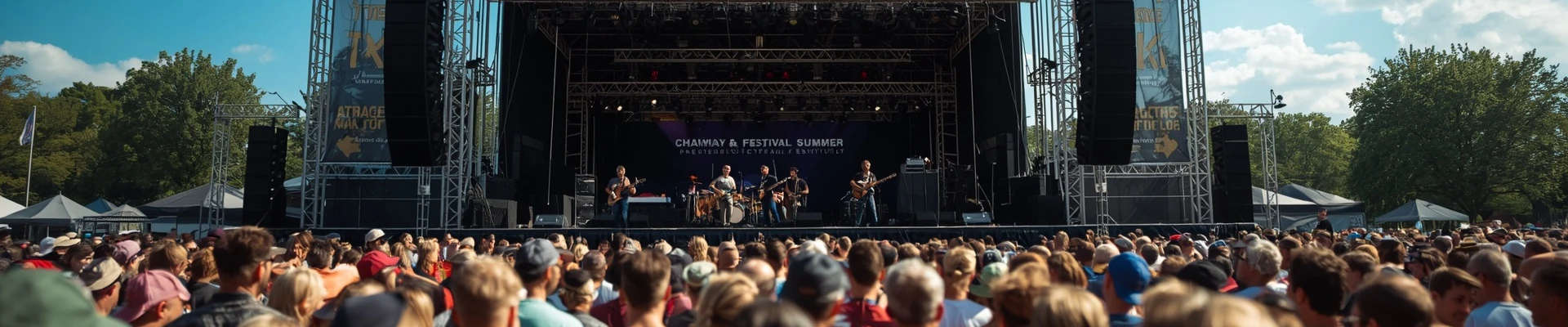
Langley Summer Concert Series at Fort Langley is the Township's flagship annual music series — outdoor concerts on the Fort Grounds through July and August, drawing folk, roots, bluegrass, and acoustic pop acts in one of BC's most scenic settings. The series is co-produced with Parks Canada and draws audiences from across the Lower Mainland.
Langley Good Times Cruise-In (September) — one of the largest classic car shows in Canada, held at the Township's Exhibition Park in Aldergrove — programs live rockabilly, country, and classic rock acts on a large outdoor stage alongside the car show. The event draws tens of thousands of visitors over its weekend run.
Fraser Valley Bald Eagle Festival (November) in Harrison Hot Springs draws audiences from the wider valley; Langley's contribution to the regional music calendar extends through country rodeo events at the Cloverdale Fairgrounds (just across the Surrey border) and FVDED in the Park (at Holland Park in Surrey), which Langley audiences attend in large numbers.
Trivia Nation and open-mic circuits at venues in Fort Langley and the City create weekly live music programming throughout the year. Willowbrook Mall has hosted community concert events. Trinity Western University runs a campus concert series through the academic year.
What ties it all together
Langley's musical identity is ultimately shaped by history, geography, and rapid growth running in three directions at once. The Fort Langley National Historic Site — where British Columbia was proclaimed in 1858 — anchors a heritage and folk music tradition that reflects the Township's agricultural and settler roots. The Trinity Western University campus feeds a Christian music ecosystem that is substantive and professionally organized. The sprawling South Asian community, growing fastest in Willoughby and Walnut Grove, connects Langley to the Punjabi-Canadian music capital that Surrey has become — with gurdwaras, bhangra teams, and Punjabi concert programming already embedded in the Township's cultural life. And the country and roots tradition that ran through this farming community for a century still echoes in the Fort Langley concert series, the Cruise-In stages, and the honky-tonk sensibility of the Fraser Highway bars. What ties it together is less a unified sound than a shared geography — the broad, agricultural, historically freighted valley that makes Langley, despite its rapid suburbanization, feel more like a place with deep roots than the bedroom community its highway interchanges might suggest.