

Richmond sits on Lulu Island and Sea Island at the mouth of the Fraser River, wrapped by the North Arm and Middle Arm of the river on three sides and separated from the City of Vancouver to the north by a few minutes of bridge and tunnel. It is part of Metro Vancouver — the regional district of 2.5 million people — and is home to Vancouver International Airport (YVR), one of the busiest airports in Canada, which sits on Sea Island within Richmond's boundaries. The city covers roughly 130 square kilometres, sits almost entirely at sea level (much of it originally tidal marshland reclaimed through dyking in the late nineteenth century), and has a population of approximately 210,000. What makes Richmond internationally notable is its demographic character: more than half the city's population identifies as ethnically Chinese, making it one of the highest concentrations of Chinese-Canadians of any city in North America and one of the most Chinese cities — in terms of daily language, commercial culture, and community infrastructure — outside of China, Hong Kong, and Taiwan. That demographic fact shapes everything about Richmond's cultural life, including its music.
A brief history
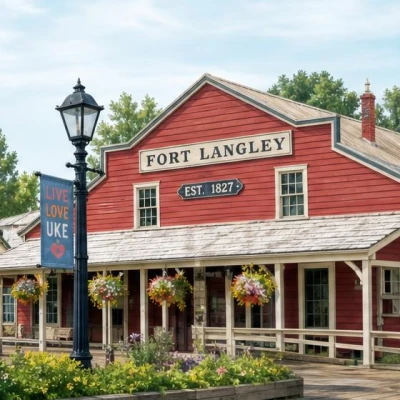
The land Richmond occupies has been home to the Musqueam (xʷməθkʷəy̓əm), Tsawwassen, and Katzie First Nations for thousands of years; the Fraser River delta was among the most abundant salmon-fishing territories on the Pacific Coast. European settlement began in earnest in the 1880s when Japanese and British fishermen — and soon cannery workers from China — established the community of Steveston at the southern tip of Lulu Island, centred on the salmon-packing industry. At its height in the early twentieth century, Steveston was the largest salmon-canning site in the world, and its cultural mix of British, Japanese, and Chinese workers gave it a multicultural character long before the term existed in Canadian policy. Richmond was incorporated as a municipality in 1879 and remained largely agricultural and industrial — canneries, peat farms, berry fields — until the postwar suburban boom of the 1950s and 1960s brought residential development across the island.
The decisive demographic shift came after Canada adopted its point-based immigration system in 1967 and accelerated through the 1980s and 1990s when Hong Kong residents, anticipating the 1997 handover to China, emigrated in large numbers to Canada. Metro Vancouver — and Richmond in particular — was the preferred destination for tens of thousands of Hong Kong families. A second wave followed from Taiwan, and a third from mainland China in the 2000s and 2010s. By the 2021 census Richmond was 54% Chinese by ethnicity, with Cantonese and Mandarin spoken in the majority of homes. The commercial corridor along No. 3 Road through City Centre became one of the most concentrated strips of Chinese-language retail, dining, and entertainment in North America. The Aberdeen Centre, Parker Place, Yaohan Centre, and Richmond Centre malls collectively transformed the city's downtown into an environment that functions in Chinese as naturally as in English.
Music identity
Richmond does not have a single internationally dominant musical export in the way that neighbouring Vancouver does, but its music culture is layered, specific, and rooted in its community demographics in ways that make it distinctive within the Canadian landscape.
The most consequential element of Richmond's music identity is its role as a hub for Chinese-Canadian pop and entertainment. The city's Cantonese-speaking community has sustained a robust live music circuit tied to Chinese New Year celebrations, community banquets, karaoke culture, and the touring networks of Hong Kong and Taiwanese pop artists. River Rock Casino Resort's Show Theatre (a 900-seat venue that opened in 2004 as part of the casino complex on the riverfront) has brought major Cantopop and Mandopop touring acts — artists of the stature of Jacky Cheung, Sandy Lam, Aaron Kwok, and numerous others — to Richmond on a regular basis, filling shows that sell out entirely within the Chinese-Canadian community and that receive essentially no coverage in the English-language press. For tens of thousands of Richmond residents, the Show Theatre's touring schedule is the primary concert-going experience of their year. The casino complex's broader entertainment programming has made River Rock one of the most active mid-size touring venues in Metro Vancouver.
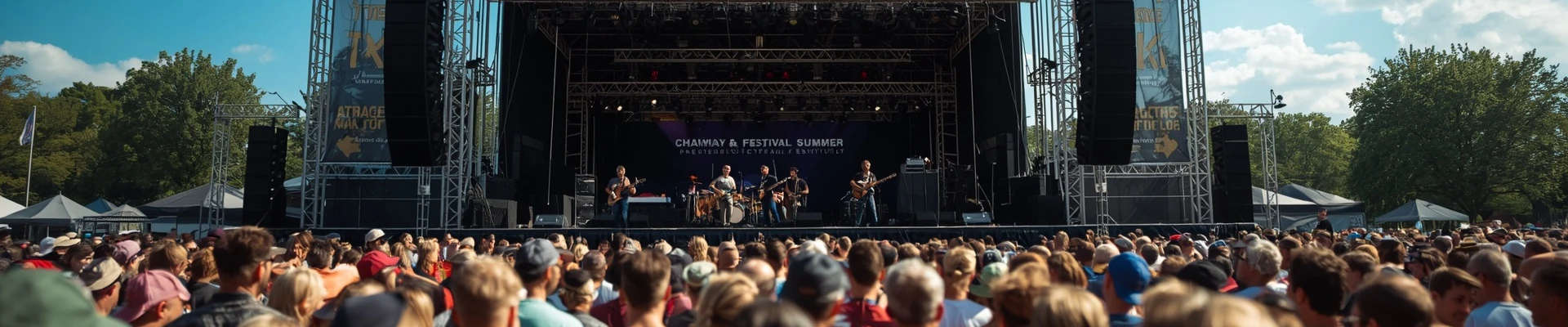
The second strand of Richmond's music identity is Celtic and folk rooted in the historic fishing village of Steveston. The British fishing families who settled Steveston in the 1880s established a community that retained its maritime-working-class cultural character long after the canneries closed. The annual Steveston Salmon Festival — running since 1946 and held each Canada Day — has programmed folk, country, and Celtic acts for decades on an outdoor stage in Steveston Community Park, drawing tens of thousands of attendees from across Metro Vancouver. Local folk clubs and session groups have maintained a Celtic music tradition in Richmond that, while modest in scale, represents a genuine continuity with the settlement era.
Richmond's most internationally prominent individual music export is Phil X (Phillip Xenidis), the Canadian guitarist born and raised in Richmond who has served since 2016 as the touring and recording guitarist for Bon Jovi, one of the world's best-selling rock acts. Phil X developed his playing on the Metro Vancouver club circuit through the 1990s and 2000s, built a reputation as a session guitarist and YouTube personality with his series of guitar demos, and earned a permanent position in Bon Jovi after standing in for Richie Sambora. His trajectory — Richmond suburb → Vancouver club circuit → global arena rock — is a testament to the reach available to a musician who masters their instrument thoroughly.
The broader indie rock scene in Richmond is inseparable from Metro Vancouver's: bands move between Richmond, Vancouver, Burnaby, and Surrey without the scene fragmenting by city. Venues in Richmond host shows on the Metro Vancouver touring circuit, and Richmond-raised musicians — graduates of the Hugh Boyd Secondary and McMath Secondary music programs and of Kwantlen Polytechnic University's music program — feed into the broader regional scene. The Prophouse Café era of the 2000s, the Media Club and Rickshaw Theatre circuit in Vancouver, and the contemporary programming at smaller Richmond venues all draw on the same community of musicians.
Richmond has also been home to several recording studios that serve the Metro Vancouver market. The city's lower commercial rents (relative to Vancouver) have made it attractive for studio builds, and a number of producers and engineers working on Canadian and international projects have based operations in Richmond's industrial zones.
Venues and neighborhoods
Richmond's venue landscape is shaped by its suburban geography and its demographic character. At the top sits River Rock Casino Resort Show Theatre (900 capacity), the city's flagship mid-size concert venue, dominant in the Cantopop and Mandopop touring circuit and also active with mainstream pop, comedy, and country acts. The Gateway Theatre (650 seats) on No. 3 Road in City Centre is the city's flagship performing arts venue, a professional producing and presenting house that programs drama, musical theatre, dance, and music — with a particular emphasis on work by and for Asian-Canadian artists. The Gateway's mandate has made it one of the most important venues for Asian-Canadian cultural expression in the country.
The Richmond Cultural Centre — part of the City of Richmond's arts infrastructure — houses a library, gallery, and performance spaces that program community concerts and events. The Minoru Complex (including the Minoru Chapel and surrounding parkland in the inner city) hosts community performances and outdoor events. Steveston Community Park anchors the folk and outdoor festival circuit in the south of the city.
The city's live music bar scene is less concentrated than Vancouver's but not absent: venues along Bridgeport Road, in the City Centre commercial strip, and around the Aberdeen area program local and regional acts. The Chinese-language karaoke lounges scattered through Parker Place, Aberdeen Centre, and the surrounding commercial fabric constitute a parallel live music ecosystem — one that's rarely indexed in English-language venue directories but sustains an enormous amount of musical activity.
Steveston (the historic fishing village at the southern tip of the island) is Richmond's most distinctive neighborhood, with its heritage waterfront, converted cannery buildings at Gulf of Georgia Cannery National Historic Site, and its concentration of independent restaurants and pubs that program live music for the local folk and roots scene. City Centre (centred on the intersection of No. 3 Road and Westminster Highway) is the commercial and civic heart of the city, home to the major malls, the Gateway Theatre, and the highest concentration of Chinese-language commercial activity. Bridgeport (the northern area near the Canada Line station and YVR) is the most transit-connected district and increasingly active for nightlife.
Festivals and signature events
Richmond World Festival (held annually in summer at Minoru Park) is the city's flagship multicultural music festival, programming artists from Chinese, South Asian, Filipino, Korean, Japanese, and other traditions that reflect the city's diverse population. The festival has run for over 20 years and represents one of the most genuinely multicultural lineups of any festival in Metro Vancouver.
Steveston Salmon Festival (Canada Day, since 1946) anchors the folk and outdoor entertainment calendar with live music, salmon barbecue, and community events at Steveston Community Park. Chinese New Year celebrations — which in Richmond are among the largest outside of Asia, including the Richmond Night Market programming, the Aberdeen Centre performances, and multiple community-hall events — bring Cantopop, traditional Chinese music, and contemporary Asian-Canadian acts to multiple venues across the city simultaneously.
The Richmond Night Market (running each summer since 2000 at the Bridgeport area near the Canada Line terminus) is Asia's largest night market outside of Asia according to its own promotional materials; regardless of the precise ranking, it is a massive event drawing hundreds of thousands of visitors over its summer season, with live entertainment — pop acts, cover bands, and cultural performances — as a central part of the experience.
What ties it all together
Richmond's defining musical signature is the productive tension between two distinct cultural inheritances — the British-maritime folk tradition of Steveston and the Chinese diaspora pop culture of City Centre — co-existing in a city that has never fully resolved them into a single dominant identity but has instead let both flourish on their own terms. The River Rock Show Theatre's Cantopop sellouts and the Steveston Salmon Festival's folk stage represent not competing visions of the city but parallel truths about a place built by multiple waves of migration, each sustaining its own musical life within a shared geography. Phil X's trajectory from Richmond suburb to Bon Jovi arena rock adds a third dimension — the Metro Vancouver indie rock pipeline that treats city boundaries as irrelevant. What Richmond makes clear is that music cities don't require a single dominant scene; they require the conditions — density, immigration, community institutions, accessible venues — for multiple scenes to sustain themselves simultaneously. Richmond has those conditions, quietly and without fanfare, in a city that rarely gets credit for the cultural depth it actually contains.