

Vancouver is the largest city in British Columbia and the eighth-largest in Canada, with roughly 662,000 residents inside the city limits and more than 2.6 million across the surrounding Metro Vancouver region, which includes Burnaby, Surrey, Richmond, Coquitlam, Langley, and the North Shore municipalities. Sitting on a peninsula between the Strait of Georgia and the Coast Mountains, ringed by Stanley Park, the Burrard Inlet, and English Bay, dominated by the snow-capped peaks of the North Shore Mountains that rise directly out of the harbour, it is one of the most geographically dramatic cities in the world and the cultural and economic capital of the Canadian Pacific Northwest. Vancouver is a major port, the third-largest film and television production centre in North America (often called "Hollywood North"), and one of the most ethnically diverse cities in Canada — with one of the largest Chinese, Filipino, Indian, Korean, Iranian, and Vietnamese populations in the country. Vancouver's musical identity reflects that geography and demography: a deep punk and hardcore lineage at the foundational Smilin' Buddha Cabaret in the 1970s, a long Black bluegrass and gospel tradition through Hogan's Alley, an outsized commercial rock catalogue from Bryan Adams to Nickelback, a thriving electronic and DIY scene, and a fast-growing immigrant music ecosystem.
A brief history
The land around the Burrard Inlet was Musqueam, Squamish, and Tsleil-Waututh Coast Salish territory for thousands of years before the British Royal Navy explored the coast in the late 18th century and small European settlements developed in the 1860s and 1870s. The town of Granville, nicknamed "Gastown" after the saloon-keeper "Gassy Jack" Deighton, was renamed Vancouver in 1886 to honor Captain George Vancouver, days before the city was nearly destroyed by the Great Vancouver Fire. The 1887 arrival of the Canadian Pacific Railway and the city's role as Canada's principal Pacific port drove rapid 20th-century growth. Expo 86 put Vancouver on the global map; the 2010 Winter Olympics cemented its international profile. Successive waves of migration — Chinese workers brought to build the railroad and their descendants in Vancouver's century-old Chinatown, large Japanese-Canadian and Punjabi-Canadian communities through the early 20th century, postwar Italian and Greek waves, very large Hong Kong and Taiwanese arrivals through the 1980s and 1990s, and steady streams from mainland China, the Philippines, India, Iran, Korea, and the wider Pacific Rim since the 1990s — have built one of the most polyglot cities in North America.
Music identity
Vancouver's most internationally famous musical export is the wave of commercial rock that came out of the city in the 1970s and 1980s. Bryan Adams, born in Kingston but raised in part in Vancouver and based there for decades, built one of the best-selling rock catalogues in Canadian history through Cuts Like a Knife (1983), Reckless (1984), and a 40-year career run from his Vancouver studio The Warehouse. Loverboy, formed in Calgary in 1979 but quickly Vancouver-based, became one of the most successful Canadian arena rock acts of the early 1980s. Trooper, Prism, Heart's Vancouver years (the Wilson sisters lived and recorded in Vancouver in the early 1970s before relocating to Seattle), Streetheart, Doug and the Slugs, and a long lineage of Canadian classic-rock acts came up through Vancouver clubs and Mushroom Studios. Skinny Puppy, formed in Vancouver in 1982 by Nivek Ogre and cEvin Key, became one of the most influential industrial bands in the world. Front Line Assembly, Numb, Delerium, and the broader Canadian industrial scene ran heavily through the city. Michael Bublé, born and raised in Burnaby just east of Vancouver, came up through the city's jazz and big-band circuit and became one of the best-selling crossover-jazz artists of the 21st century. Nickelback, while formed in Hanna, Alberta, has been Vancouver-based for decades and recorded much of its catalogue at Vancouver-area studios.
Vancouver's punk and hardcore lineage is unusually consequential. The Smilin' Buddha Cabaret in Chinatown — known to several decades of Vancouver musicians simply as "the Buddha" — was the city's foundational punk venue from the late 1970s through the 1980s. DOA (Disorderly Conduct of America), formed in Vancouver in 1978 by Joey "Shithead" Keithley, became one of the foundational hardcore bands in the world; the term "hardcore" itself is widely credited to the title of their 1981 album Hardcore '81. Subhumans, Pointed Sticks, The Modernettes, Slow, The Young Canadians, The Dishrags (the Vancouver all-female punk band, one of the first in Canada), D.B.S., Strawberry Wine, and a generation of Vancouver punk acts ran through the Buddha and the Commodore Ballroom. Bif Naked, born in India and raised in Manitoba, built her career out of Vancouver's punk scene through the late 1980s and 1990s. NoMeansNo (formed in Victoria but constantly playing Vancouver) and The Smugglers continued the lineage. Black Mountain, Pink Mountaintops, Destroyer, The New Pornographers, A.C. Newman, Neko Case's Vancouver ties, Carolyn Mark, and a thriving 2000s indie scene around the Mint Records and Scratch Records labels and clubs like Pat's Pub and the Cobalt built the modern Vancouver indie identity. The Tea Party (formed in nearby suburbs but Vancouver-active), Theory of a Deadman (Vancouver-based), Default (Vancouver-based), and a deep post-grunge lineage continue the rock tradition.
The 21st century has remade the city again. Carly Rae Jepsen, born and raised on Mission, B.C. and a constant Vancouver presence, became one of the most acclaimed Canadian pop artists of the 2010s through "Call Me Maybe" (2011) and Emotion (2015). Nelly Furtado is Victoria-born and Toronto-based but built her early career through the Vancouver-Victoria circuit. Mac DeMarco, while raised in Edmonton, briefly attended high school in Vancouver. Bedouin Soundclash and the Vancouver reggae and dub scene continue a deep regional lineage. Manila Grey (Filipino-Canadian R&B duo from Vancouver), bbno$ (Vancouver rapper), JJ Lin's Vancouver tour stops, Tommy Genesis (Vancouver rapper and visual artist), and a current generation of trap, indie, and electronic artists fill the city's clubs. Diana Krall, born in Nanaimo on Vancouver Island and a longtime Vancouver-area musician, became one of the most acclaimed jazz vocalists of the 21st century. Devon Cole, Royal Tusk, Dear Rouge, and a deep current indie scene continue the lineage.
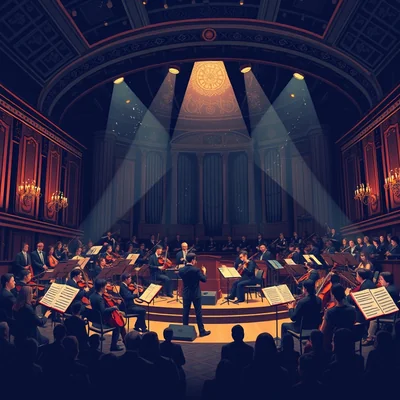
Vancouver's vast immigrant communities fuel some of the most distinctive musical scenes in Canada. Punjabi-Canadian music — particularly through Surrey and the surrounding Lower Mainland — has produced one of the largest Bhangra and Punjabi pop scenes outside of Punjab itself. Artists like Karan Aujla, Jazzy B, Sidhu Moose Wala's tour stops, Diljit Dosanjh's Vancouver concerts, and a long lineage of Punjabi-Canadian artists fill arenas and banquet halls across the region. Cantopop and Mandopop scenes are deeply rooted in Vancouver's Chinese-Canadian communities; major Hong Kong and Taiwanese touring acts route through the city constantly. Filipino-Canadian music runs through Vancouver's substantial Filipino community. K-pop and J-pop have major Vancouver tour markets. Persian (Iranian) music — Vancouver has the largest Iranian-Canadian population, particularly in North Vancouver and West Vancouver — runs through community halls and event spaces. Latin music has homes at clubs across East Vancouver. Indigenous music — including Coast Salish drum-and-song traditions, Métis fiddle, and contemporary Indigenous hip-hop and folk through artists like Snotty Nose Rez Kids (Haida) and a thriving urban Indigenous scene — runs through community halls, friendship centres, and festival stages. The Vancouver Symphony Orchestra, Vancouver Opera, Early Music Vancouver, and the VSO School of Music anchor the classical and contemporary tradition.
Venues and neighborhoods
Vancouver's venue ecosystem is well-developed. At the top sit Rogers Arena (home of the Canucks and the city's largest indoor concerts), BC Place (host of stadium tours), the Pacific Coliseum at the PNE, Doug Mitchell Thunderbird Sports Centre at UBC, the Queen Elizabeth Theatre, Orpheum Theatre (home of the Vancouver Symphony, a 1927 Vaudeville house and one of the most beautiful concert halls in Canada), the Vogue Theatre, the Commodore Ballroom (the legendary 1929 ballroom on Granville Street, one of the most beloved mid-size venues in Canada), and the PNE Amphitheatre. The midsize tier includes the Imperial, the Rickshaw Theatre (in Chinatown, on the site of the original Smilin' Buddha and one of the best small rock rooms in Canada), the Biltmore Cabaret, the Wise Hall, and the Hollywood Theatre. Beneath them is a deep club layer — the Rickshaw, the Biltmore, the Cobalt (the long-running Main Street punk and metal bar), Pat's Pub, the Wise Hall, Fox Cabaret, Penthouse Nightclub (one of the city's oldest jazz and burlesque clubs, in operation since 1947), Black Lab, Khatsahlano Café, Guilt & Co., Pyatt Hall at the VSO School, and a network of bars and DIY rooms across Main Street, Mount Pleasant, Commercial Drive, the Downtown Eastside, Gastown, and Chinatown. Indigenous music has homes at the Vancouver Indigenous Music Awards programming and a rotating circuit of community spaces. South Asian music has homes at Bell Performing Arts Centre in Surrey and at banquet halls across the Lower Mainland. Stanley Park's Malkin Bowl, the Rio Theatre, and the VanDusen Garden anchor the outdoor and festival circuits.
Different neighborhoods carry different musical identities. Main Street and Mount Pleasant anchor the indie rock, punk, and DIY scenes. Chinatown anchors a smaller cluster of clubs and the historic Rickshaw/Buddha lineage. Commercial Drive anchors a mixed Italian-, Latin-, and indie-music corridor. Gastown anchors a higher-end bar and listening-room circuit. The Downtown Eastside retains a complex music history that includes punk, jazz, and the city's deepest poverty-and-art tensions. Granville Street anchors the city's largest concert venues and the Commodore Ballroom. East Vancouver broadly anchors the city's working-class and immigrant music scenes. Surrey, just southeast of Vancouver across the Fraser, anchors the Punjabi-Canadian music scene. Richmond, just south of Vancouver, anchors the Cantopop and Mandopop scene. North Vancouver anchors the Persian-Canadian scene. The Sunshine Coast and Vancouver Island support folk and roots scenes that draw on the broader Vancouver music economy.
Festivals and signature events
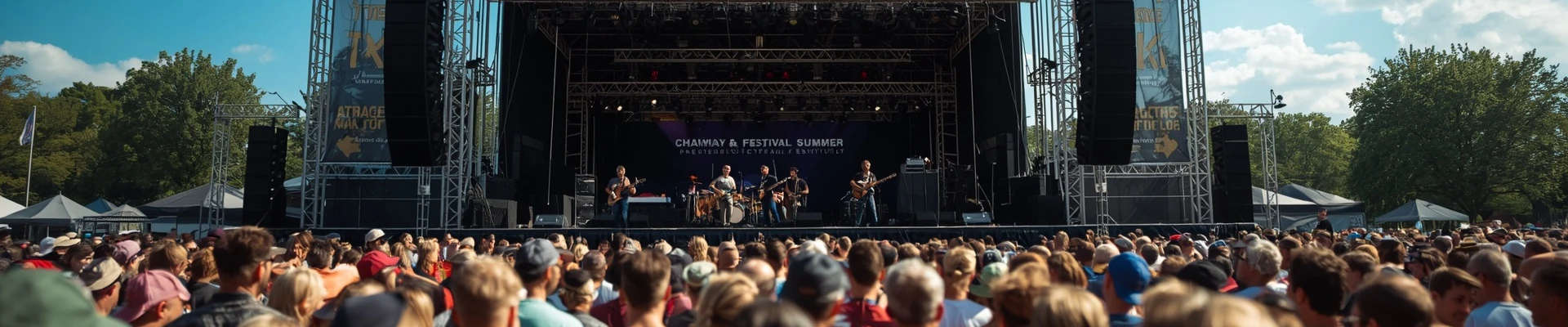
The festival calendar reflects the city's range. Vancouver Folk Music Festival at Jericho Beach Park each July, founded in 1978, is one of the largest folk festivals in Canada. Vancouver International Jazz Festival in late June, founded in 1986, is one of the largest jazz festivals in North America, programming hundreds of free and ticketed shows across more than 40 venues over 10 days. Pacific Coliseum's programming, Bumbershoot's Vancouver-area tour stops, FVDED in the Park in Surrey (the Lower Mainland's flagship hip-hop and electronic festival), Khatsahlano Street Party on West 4th Avenue, Pacific National Exhibition (PNE) Summer Night Concerts, Rifflandia's Victoria edition (drawing on Vancouver audiences), Music Waste Festival, New Forms Festival (electronic and experimental), Fortune Sound Club's programming, Skookum Festival at Stanley Park's legacy, Vancouver Mural Festival's music programming, Vancouver Pride, Punjabi Mela, Cherry Blossom Festival's music programming, Indian Summer Festival, Powell Street Festival (Japanese-Canadian), Italian Day, and Carnaval del Sol add cultural and community programming. Bass Coast (in Merritt) and Shambhala (in Salmo) draw heavily on the Vancouver electronic music audience.
What ties it all together is the city's combination of geographic spectacle, immigrant diversity, film-industry stability, and a punk-and-indie scrappiness that has long run beneath the postcard image. Vancouver is the city where DOA helped name and shape hardcore at the Smilin' Buddha Cabaret, where the Commodore Ballroom has programmed almost every major touring rock act in North America for nearly a century, where Bryan Adams built one of the best-selling rock catalogues in Canadian history out of his Warehouse studio, where Skinny Puppy founded the modern industrial sound, where Carly Rae Jepsen and Michael Bublé came up through the Lower Mainland's pop and jazz circuits, where Surrey is one of the largest Bhangra music capitals in North America, and where the Vancouver Folk Music Festival turns Jericho Beach into one of Canada's great summer cultural events.