

Victoria is the capital of British Columbia, sitting at the southern tip of Vancouver Island on the Lekwungen (Songhees and Esquimalt) territories. With roughly 290,000 people in the city and about 420,000 across the Capital Regional District, it is one of Canada's smaller provincial capitals but one of the most culturally dense cities on the Pacific coast — a mild maritime climate, an outsized university presence, a deep Indigenous history, and a scenic geography that has drawn artists and musicians for more than a century. Victoria sits 100 kilometres south of Vancouver by ferry and seaplane across the Strait of Georgia, which gives it the character of a city that is connected to but genuinely independent from its larger neighbour across the water.
A brief history
The area was home to the Lekwungen-speaking peoples — the Songhees and the Esquimalt First Nations — for thousands of years before European contact. The Hudson's Bay Company established Fort Victoria in 1843 as a fur trade post, and the city became the colonial capital of Vancouver Island in 1849 and then of the unified Colony of British Columbia in 1866. The Fraser Canyon Gold Rush of 1858 turned Victoria briefly into the primary supply point for tens of thousands of prospectors en route to the mainland, seeding its early commercial identity. After Confederation in 1871, Victoria was passed over for the Canadian Pacific Railway terminus in favour of Vancouver, a decision that permanently set the two cities on divergent growth trajectories — Vancouver exploded into an industrial port, while Victoria developed a more measured, government-and-tourism-driven economy. That slower growth preserved Victoria's walkable, compact scale and created the conditions for a dense arts and music culture relative to its size.
The presence of the University of Victoria (founded 1963) transformed the city's cultural metabolism, seeding successive generations of musicians, artists, and writers and anchoring a serious music conservatory tradition through the UVic School of Music. The Songhees and Esquimalt First Nations' continuous presence in the city, alongside Saanich, Tsartlip, and other Coast Salish peoples, grounds a deep Indigenous cultural and musical current that runs through the CRD's communities.
Music identity
Victoria's most internationally famous alumna is Nelly Furtado, born in Victoria in 1978 to Portuguese Azorean immigrants. Furtado's blend of pop, trip-hop, folk, and R&B — first on Whoa, Nelly! (2000) and then through her global crossover Loose (2006) and the single "Promiscuous" — brought Victoria a degree of international name recognition that no other artist from the city has matched. Her bilingual and multicultural background is quintessentially Victorianese: the city's Portuguese, South Asian, Chinese, Filipino, and East African communities all sustain their own musical microcultures alongside the dominant anglophone scene.
The indigenous bedrock of Victoria's music is Coast Salish. The Songhees and Esquimalt Nations hold their own ceremonial traditions, and the city's Indigenous arts and music networks — including events at the Songhees Wellness Centre and the First Peoples Cultural Council's programming — connect the urban scene to reserve communities across Vancouver Island. Tanya Tagaq, the Inuk throat singer and experimental artist, has performed and recorded in Victoria, and the city's universities and venues have made it a stop on the national Indigenous contemporary music circuit.
Victoria's rock and indie lineage runs deep for a city its size. 54-40, the Vancouver-associated but Victoria-influenced post-punk and alternative rock band, has deep roots in the BC circuit Victoria fed. Default, the Vancouver Island–rooted rock band, built one of the more commercially successful Canadian rock careers of the early 2000s. Limblifter and members of the influential 1990s Victoria indie scene shaped the BC alt-rock canon. The Bills built a beloved Vancouver Island folk-rock following. The 2000s and 2010s gave rise to a serious indie and folk community: Said the Whale emerged from Victoria's folk circuit before making Vancouver their base, winning the Polaris Prize in 2011 and remaining one of the most recognized west coast indie folk acts. The Crackling, The Zolas (Victoria-adjacent), Hey Ocean! (who spent significant time in the city), and a consistent circuit of singer-songwriters working out of the UVic and Camosun College communities have kept the indie current flowing.
Jazz has an unusually strong foothold in Victoria given the city's size. Hermann's Jazz Club, one of the oldest dedicated jazz venues in western Canada (opened 1972), has been a proving ground for BC jazz talent for more than five decades and has hosted international touring artists from Oscar Peterson to Diana Krall. The city's jazz scene is sustained by the University of Victoria's jazz program, a deep community of professional players, and the annual TD Victoria International JazzFest, which has run since 1987 and draws international headliners alongside a packed local and regional showcase circuit.
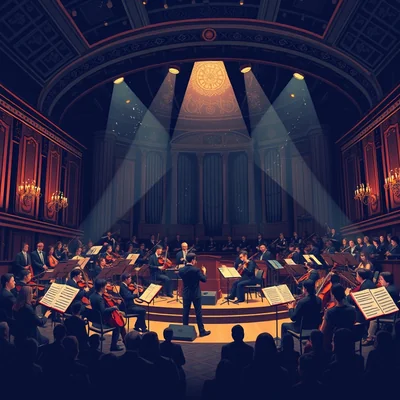
The folk and acoustic tradition runs through Rifflandia, the city's largest rock festival (now retired from its original format but influential through its 2008–2016 run), and through the Victoria Folk Music Society, the Lucky Bar acoustic nights, and a coffee-shop and house-show circuit anchored by the Fernwood, Fairfield, and James Bay neighbourhoods. The Victoria Symphony (founded 1941) and the Pacific Opera Victoria anchor the classical tradition, with the Symphony's outdoor Symphony Splash concert in the Inner Harbour each summer drawing tens of thousands.
Metal and heavier music have a consistent home in Victoria's club scene, with El Kartel, The Upstairs (in its various incarnations), and a rotating circuit of bands working the western Canadian touring circuit. Punk runs through decades of Victoria youth culture, with Deep Cove and the Fernwood DIY scene sustaining a lineage from the 1980s post-punk era through the modern hardcore and emo circuits. Hip-hop has grown substantially in Victoria over the 2010s and 2020s, with a small but committed community of producers and MCs working out of recording studios in Cook Street Village and the downtown core.
Venues and neighborhoods
At the top of Victoria's venue pyramid sits the Save-On-Foods Memorial Centre (now Q2 Centre), the 7,000-capacity arena in Saanich that books national and international touring acts across pop, rock, and country. The mid-level is anchored by the McPherson Playhouse (a 750-seat 1914 Carnegie library conversion in the heart of downtown), the Royal Theatre (1,400 seats, home of the Victoria Symphony and Pacific Opera), the CCPA at the Conservatory (the Victoria Conservatory of Music's performance hall), and St. Andrew's Presbyterian Church (one of the finest acoustic rooms in the city for choral and chamber music). Club-level venues include Capital Ballroom (500 capacity, the city's most important indie rock room since its 2015 opening), Lucky Bar (250 capacity, long-running indie and alternative bar on Fort Street), Hermann's Jazz Club (the city's dedicated jazz venue since 1972), Sugar Night Club, Paparazzi Nightclub, and The Mint. The University of Victoria campus hosts concerts at Farquhar Auditorium and in the Student Union Building's performance spaces. The Roxy and The Lio serve the younger rock and electronic circuit.
Neighborhood character matters in Victoria's scene. Fernwood, the dense inner residential neighbourhood north of downtown, is the spiritual home of the city's independent and alternative music community — with the Fernwood NightMarket programming, the Fernwood Inn, the Roxy on Johnson Street, and a history of house shows and DIY spaces. James Bay, the southernmost residential neighbourhood adjacent to the Inner Harbour, supports a folk and singer-songwriter culture through its coffee shops and community halls. Cook Street Village in Fairfield supports acoustic and jazz through its café and restaurant circuit. Downtown anchors the club and large-venue tier, with the blocks between Government Street and Douglas Street housing the bulk of the city's commercial music economy.
Festivals and signature events
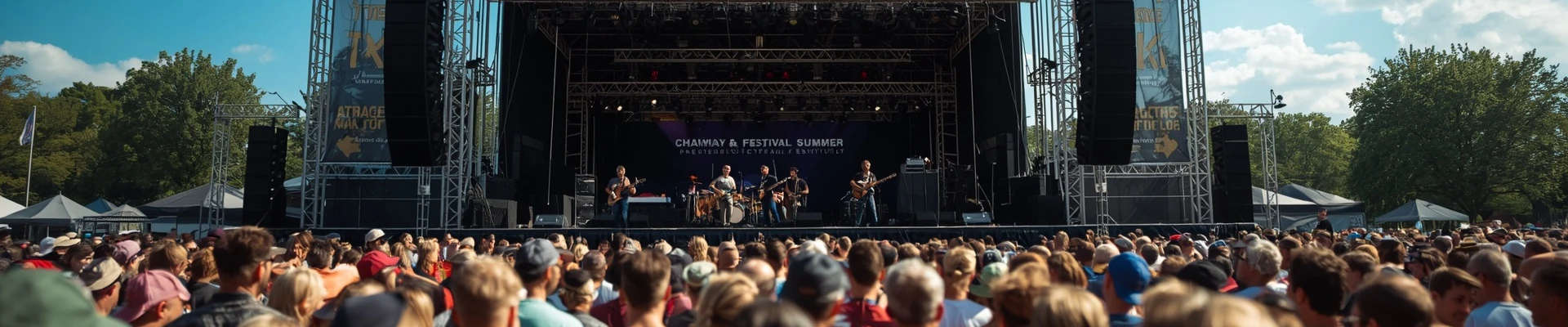
TD Victoria International JazzFest each June and July is the flagship annual event — seven days of programming across indoor and outdoor stages, spanning jazz, blues, world music, and Latin, with free outdoor concerts on the Inner Harbour causeway and ticketed shows at Hermann's and the McPherson. Rifflandia ran from 2008 to 2016 as the city's largest rock and indie festival, hosting two stages and programming the full spectrum of indie, electronic, and rock at the Victoria Conference Centre and surrounding blocks. Victoria Symphony's Symphony Splash, the free outdoor concert from a barge in the Inner Harbour each August, is one of the most distinctive concert experiences on the west coast and draws 40,000–60,000 spectators to the waterfront. Victoria Folk Music Society's concert series runs through the year. Sàturnalia, a local arts and music festival, and Rifflandia's successor events in the smaller-venue programming tier continue the tradition. Victoria Ska & Reggae Festival programs Caribbean-diaspora music annually. Vikes Live at UVic and Camosun Presents keep the student concert circuit active. Pride Victoria programs music through July. First Peoples Festival presents Indigenous music and ceremony on the Inner Harbour.
What ties Victoria together musically is the combination of a truly walkable compact geography, a sustained university presence that regenerates the scene every four years, the natural draw that the mild climate and scenic Pacific coast provides for artists choosing where to live, and the ferry distance from Vancouver that keeps the city genuinely its own thing rather than a suburb. This is the city that gave the world Nelly Furtado's multicultural pop and Hermann's five decades of jazz; where Said the Whale built a Polaris-winning folk-pop career before heading east; where the Victoria Symphony plays from a barge in the harbour; where Lekwungen ceremonial music and Portuguese-Canadian folk memory coexist a few blocks from Lucky Bar's indie rock nights. It is one of the most complete small music cities in Canada.