

St. John's is the capital and largest city of Newfoundland and Labrador, Canada's youngest province and its oldest corner of European settlement. The city occupies a dramatic natural harbour on the Avalon Peninsula — the most easterly point of the North American mainland — surrounded by the North Atlantic on three sides and bounded inland by a ring of barrens, bogs, and rocky hills that define its austere geography. With a population of roughly 110,000 in the city proper and about 230,000 in the broader Census Metropolitan Area, St. John's is small by national standards but immense in cultural weight. It sits closer to London than to Vancouver, on the same longitude as Reykjavik, and carries a distinct Atlantic identity shaped by five centuries of fishing, Catholicism, Irish immigration, and isolation from the Canadian mainland that only ended with Confederation in 1949. What emerges from that history is a city with a sense of place — and a musical voice — unlike anywhere else in the country.
A brief history
Europeans first entered the harbour in 1497, and permanent settlement followed through the 16th and 17th centuries as English and later Irish fishing families built seasonal and then year-round communities around the cod trade. John Cabot is the most mythologized early visitor; the harbour was known to the Portuguese, Basques, and French as well. By the 1600s a permanent British colonial presence was established, and St. John's became the administrative and commercial hub of Newfoundland — the "Oldest City in North America" by several definitions (though the claim has never gone unchallenged). The Great Fire of 1892 destroyed most of the downtown, and the rebuilt rowhouse streetscapes of Gower Street, Duckworth Street, and the Battery neighbourhood — painted in the bright Jelly Bean colours now iconic in tourism imagery — date from the post-fire reconstruction. Through the 19th and early 20th centuries St. John's existed as the capital of a dominion unto itself, Newfoundland never having joined Canada; the city's politics, economy, and culture remained oriented toward Britain and the Grand Banks cod fishery rather than toward Ottawa or Toronto. The 1949 Confederation referendum was close and bitterly contested — Joey Smallwood's pro-Canada side won by a narrow margin — and some sense of Newfoundland as a distinct place rather than merely a Canadian province has never fully dissolved.
The collapse of the northern cod moratorium in 1992 devastated the outport communities that had sustained the province's rural identity, accelerating migration to St. John's from the outports and reshaping the city's population. The offshore oil industry — Hibernia (1997), Terra Nova (2002), White Rose (2005) — transformed St. John's economy, bringing Alberta-style boom conditions, higher wages, and a younger professional demographic. The city has spent the 21st century navigating the post-cod, post-oil identity question: what does Newfoundland mean when it can no longer rely on the fishery or the boom?
Music identity
St. John's is one of Canada's most distinctively musical cities, and its sound is rooted in the Irish-English folk tradition that arrived with the island's settlers and was preserved through the relative isolation of the pre-Confederation years. Newfoundland traditional music — mummers' songs, shanties, kitchen party reels, and a vast body of original composed song in the folk idiom — is not merely a heritage artefact here; it is an active, living practice. The tradition flows from the outports into the city, and every generation of St. John's musicians has had to decide how to relate to it — whether to play it straight, rock it up, satirize it, or escape it entirely.
The most internationally consequential figure in St. John's music history is Ron Hynes (1950–2016), whose song "Sonny's Dream" has become the closest thing Newfoundland has to a national anthem — a beautiful, heartbreaking account of a mother's attachment to a son who will never leave the land. Hynes was the principal songwriter of The Irish Rovers-contemporary era and a foundational figure of the Newfoundland singer-songwriter tradition. His influence on every subsequent generation of St. John's writers — Great Big Sea, The Ennis Sisters, Amelia Curran, Hey Rosetta! — is impossible to overstate.
Great Big Sea (formed 1993 in St. John's: Alan Doyle, Bob Hallett, Séan McCann, and Sean Power) is the city's most successful export — a band that took the Newfoundland folk tradition, electrified it, added Celtic-punk energy, and toured it to arena-scale audiences across Canada for two decades. Their albums Up (1995), Play (1997), and Something Beautiful (2004) brought jigs, reels, and traditional Newfoundland songs to generations of Canadians who had never heard them before. Alan Doyle has continued as a solo act; Séan McCann has built a solo career focused on mental health advocacy. The band's influence on St. John's's sense of itself as a musical community has been profound.
The broader folk and roots tradition has produced a remarkable concentration of talent relative to the city's size. Amelia Curran — the St. John's-based singer-songwriter — won the Juno Award for Adult Alternative Album (2012) and earned widespread critical respect for her spare, emotionally precise songwriting. Hey Rosetta! (formed 2005, led by Tim Baker) built a devoted national following with their orchestral indie-folk — sweeping strings and woodwinds wrapped around hook-driven songs that earned them multiple Juno nominations and a devoted coast-to-coast fanbase. Their albums Into Your Lungs (2008) and Second Sight (2011) are landmarks of 21st-century Canadian indie folk. The Ennis Sisters — Maureen, Karen, and Teresa — have carried the Celtic and Newfoundland traditional torch to widespread audiences, winning Canadian Folk Music Award recognition and international Celtic circuit attention.
Beyond the folk tradition, St. John's has sustained a rock and alternative scene of notable vitality for a city its size. Shanneyganock and Figgy Duff carried folk-rock through the 1980s. The 1990s and 2000s brought a wave of indie rock acts centred around venues like The Ship Pub and later CBTG's Bar (now long gone) and the emerging downtown bar circuit. The Novaks, Booming Mechanical Bird, Destroyer of the local sense — the scene has been continuously generative. Stilts (one of the more recent acts to earn attention beyond the island) and a broader community of indie, punk, and experimental musicians have kept the underground scene alive. Todd Manning and the St. John's jazz community provide a separate but active strand of the scene.
The country and bluegrass tradition is present but smaller — Newfoundland's roots music owes more to the Celtic-Atlantic tradition than to the American country stream, though crossovers exist. The Irish and English ballad tradition that underlies both traditions means the connections are organic. The Labrador connection brings in a Métis and First Nations musical dimension — Innu, Inuit, and Métis music from Labrador is represented in the cultural landscape if not always prominently in the city's club scene.
The city's recording infrastructure — Riverview Studios and a cluster of independent recording operations — has grown with the scene. SaltWire and regional media have historically covered the local scene, and VOCM (the dominant local radio station) has been a vehicle for Newfoundland traditional and country music. CBC Music and NL have given significant national exposure to Newfoundland acts.
George Street and the venue landscape
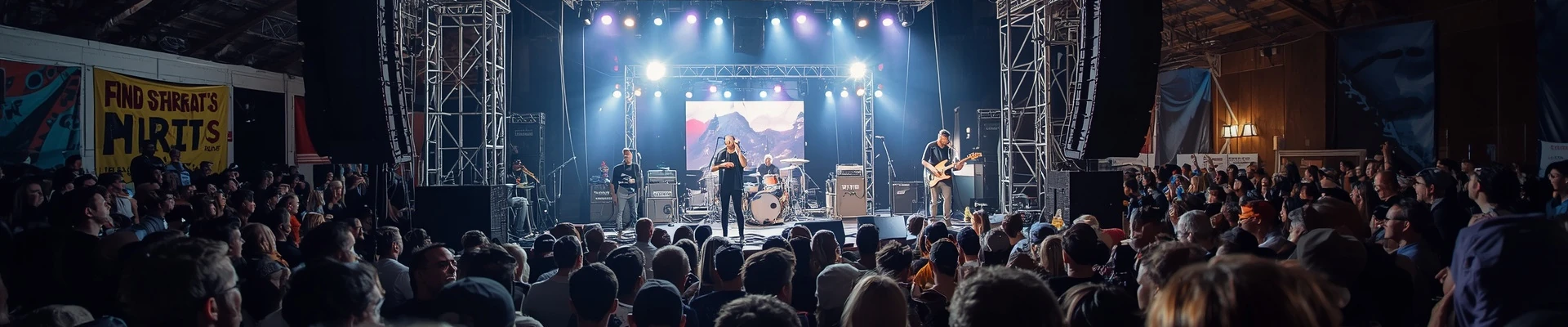
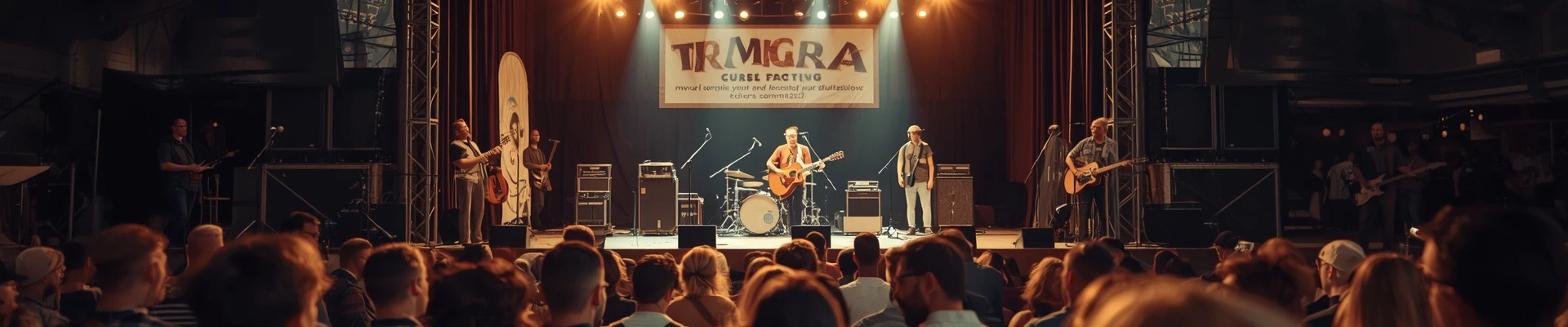
George Street — the one-block pedestrianized entertainment strip in downtown St. John's — is the most famous bar street in Canada by bar-per-block ratio, and its claim to that distinction is credible: more licensed establishments per foot than any comparable street in the country. The strip anchors the city's live music ecosystem and is the setting for one of Canada's most beloved street festivals. Venues along and around George Street include Christian's Bar, Trapper John's, Club One, O'Reilly's Irish Newfoundland Pub, and The Sundance Saloon — a mix of cover band venues, traditional music rooms, and bars that program touring acts. The scale is intimate; this is a city where a 400-person capacity is a significant venue.
The Ship Pub (on Duckworth Street) has been the most important venue for original music in St. John's for decades — a small, low-ceilinged bar that has launched more Newfoundland careers than anywhere else in the province. The Rocket Bakery, The Levee, and various community halls and arts spaces fill out the indie-circuit below the commercial bar tier. Mile One Centre (now Newfoundland Power Place after naming rights changes) is the city's major arena — 6,200 capacity — and hosts the primary touring acts when volume justifies the space. The LSPU Hall (Resource Centre for the Arts) is the city's premier performing arts venue for theatre and music in the 200-400 seat range, a crucial incubator for original work. The Arts and Culture Centre provides a larger proscenium space.
The city's neighbourhood geography concentrates music activity in the downtown core — along George Street, Duckworth Street, Water Street, and the adjacent blocks. The Battery neighbourhood (perched above the narrows at the harbour entrance) is one of the most photographed streetscapes in Canada and hosts occasional outdoor events. Quidi Vidi Village — the tiny fishing village preserved within city limits — has the Quidi Vidi Brewery (established 1996), which programs live music and has become a cultural anchor in its own right. The Eastern Suburbs (Mount Pearl, Paradise) provide bedroom community context but little live music infrastructure.
Festivals and signature events
George Street Festival — held every summer, typically in late July/early August — is the most famous music festival in Newfoundland, packing George Street with stages, food vendors, and tens of thousands of visitors across multiple days. The lineup is a mix of Newfoundland traditional and contemporary acts alongside national touring names. It is the city's defining summer cultural event and a pilgrimage for Newfoundlanders scattered across the country (the Alberta oil patch community, in particular, coordinates vacations around it).
The Festival of New Dance (one of the oldest contemporary dance festivals in Canada, held in St. John's) intersects with the music community through collaboration and commissioning. Sound Symposium is the city's most experimental music event — a biennial festival of new and electroacoustic music that has run since 1983, maintaining an international reputation in the contemporary music community. Ship to Shore Folk Festival has brought folk and roots music to Quidi Vidi Village. Nickel Independent Film Festival crosses into music through programming and events. Royal St. John's Regatta — the oldest continuous sporting event in North America (held since 1826) — is the city's grandest community gathering and includes musical programming. St. Patrick's Day is celebrated with particular intensity in this historically Irish Catholic city, with George Street and the surrounding bars running events for weeks.
What ties it all together
St. John's is a city that knows what it sounds like — and that specificity is rare. The Newfoundland traditional music tradition, the Irish-Catholic folk sensibility, the kitchen party ethos, the outport diaspora, the isolation, the humour, the weather — all of it produces a musical identity that cannot be replicated anywhere else in Canada. From Ron Hynes writing the most beautiful song about staying put that anyone has ever written, to Great Big Sea making the world dance to jigs it didn't know it needed, to Hey Rosetta! stringing an orchestra through indie-folk at a scale that should have been impossible in a city this size, to the ongoing creative community sustaining itself in the bars of George Street and the intimate stage of The Ship Pub — St. John's makes music that belongs to a place. In an era when music is increasingly placeless, that is something genuinely worth noting.