





Ajax sits on the north shore of Lake Ontario, roughly 35 kilometres east of downtown Toronto in Durham Region. Incorporated as a town in 1955 — named after HMS Ajax, the British warship whose gun-assembly ordnance plant anchored the community during the Second World War — it has grown steadily from a wartime industrial settlement into one of the more diverse municipalities in the Greater Toronto Area (GTA). The 2021 census counted approximately 130,000 residents in the town proper, with the broader Durham Region passing one million. Ajax borders Pickering to the west and Whitby to the east, with Lake Ontario forming its southern boundary. The Duffins Creek valley cuts through the western portion of the municipality, giving the town a greenbelt spine that separates the older downtown core from the newer suburban crescents spreading north.
The economy has shifted decisively from the wartime munitions legacy into the service, logistics, and commuter-residential patterns typical of the 905 belt. The GO Train line through Ajax (on the Lakeshore East corridor) connects to Union Station in under an hour, and that commuter link has made Ajax a destination for Toronto workers seeking larger homes at lower prices — a pattern that accelerated sharply after 2015 as Toronto housing costs pushed families east along the lake. The demographic composition of those families — heavily Caribbean-Canadian, South Asian, West African, and Filipino — is what has most shaped Ajax's cultural identity, and its music scene most directly.
A brief history
The Ajax ordnance factory, built in 1941 on former farmland, employed 9,000 workers at its peak manufacturing artillery shells for the Allied war effort. When the plant closed in 1945, the federal government converted the site into housing for returning veterans and their families — an unusually deliberate act of community planning that gave Ajax its distinctive grid street layout in the downtown core. In the postwar decades, Ajax was a working-class and middle-class bedroom community for workers in the automotive plants of Oshawa and the industrial yards further west. The General Motors plant in Oshawa dominated regional employment for decades, and Ajax's fate tracked closely with the fortunes of that anchor employer.
Through the 1980s and 1990s, Ajax began its demographic transformation. Caribbean immigration — primarily from Jamaica, Trinidad and Tobago, Guyana, and Barbados — accelerated as families moved east from Toronto's northwest quadrant (Brampton, Etobicoke, North York) and from newer landing communities. South Asian families — largely Punjabi, Tamil, and Guyanese Indo-Caribbean — followed similar patterns. By the 2000s, Ajax was majority-minority by most metrics, with over 50 percent of residents identifying as visible minorities. That demographic reality is not background texture to the town's music culture; it is the music culture.
Music identity
Ajax does not have a single defining genre in the way that Detroit has techno or New Orleans has jazz, but it has a deep and organically community-rooted music life built around dancehall, soca, reggae, Afrobeats, bhangra, and Tamil pop, with a younger generation of hip-hop, R&B, trap, and drill artists building careers that often transcend the suburb's modest profile.
Dancehall and soca are the heartbeat of Ajax's Caribbean communities. The town's community centres — particularly the Ajax Community Centre on Harwood Avenue and the McLean Community Centre in the northeast — host sound system nights, soca fetes, and carnival-adjacent events tied to the broader Durham Region Caribbean calendar. The annual Durham Region Caribbean Carnival, which includes Ajax in its rotation, draws artists from across the GTA. Jamaican sound system culture — with its selector battles, dub plates, and live toasting — has a genuine foothold here, fed by families who brought those traditions from Kingston and Montego Bay in the 1980s and 1990s. Reggae, especially roots and one-drop, travels the same community circuits; the Christian reggae tradition (gospel reggae, praise reggae) runs through Ajax's numerous Pentecostal and Seventh-Day Adventist congregations, many of which double as performance venues.
Bhangra and Punjabi pop have grown with the Punjabi community concentrated in Ajax's northern residential neighbourhoods. Bhangra competitions and cultural events tied to Vaisakhi celebrations bring the community together annually. Tamil cinema music — film songs from Kollywood — plays continuously through the Tamil diaspora's cultural events and temple functions. The Abirami Cultural Association and similar Tamil cultural organizations in Durham Region (with Ajax membership) organize performances and competitions that connect youth to classical Carnatic music, bharatanatyam dance, and Tamil pop.
Hip-hop and R&B represent the scene that has attracted the most attention from outside Ajax. A generation of artists — many of them children of Caribbean or African families who settled in the 905 belt — have built careers operating between Ajax, Pickering, Oshawa, and Toronto. The town's proximity to Scarborough (the Toronto neighbourhood most closely associated with Drake's career and the broader Toronto drill and trap wave) means the sonic influence of that scene reaches Ajax continuously. Local producers and MCs have worked with artists across the Durham corridor, and Ajax acts regularly surface on Toronto indie labels and streaming playlists. The Duffins Creek area and residential courts off Taunton Road have produced a cluster of young hip-hop voices documented on SoundCloud and in regional freestyle circuits.
Afrobeats and Afro-Caribbean fusion have grown sharply with the West African community — largely Nigerian, Ghanaian, and Congolese families who arrived from the late 1990s onward. Community events tied to Nigerian Independence Day, Ghanaian cultural organizations, and Afro-Caribbean fusion nights at Ajax venues have created a growing platform for this sound. The fusion between Afrobeats and the Caribbean dancehall tradition — already deeply blended in Toronto's cultural landscape — finds particular expression in Ajax's mixed Caribbean-African social spaces.
Ajax has also produced a smaller but real indie rock and folk tier. Artists who grew up in Ajax and later moved to Toronto's indie circuit — drawn by the town's relative quiet and cheaper practice spaces — form a thin but genuine thread. The Ajax Town Band and municipal concert programming through the Rotary Park Bandshell (a lakefront performance space used in summer months) provide a more formal context for orchestral, concert band, and family-friendly programming.
Venues and neighbourhoods
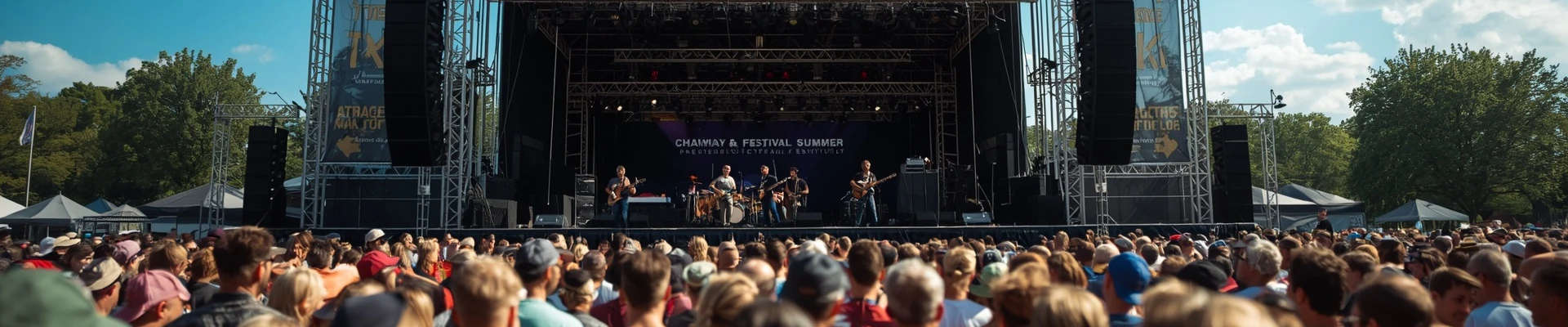
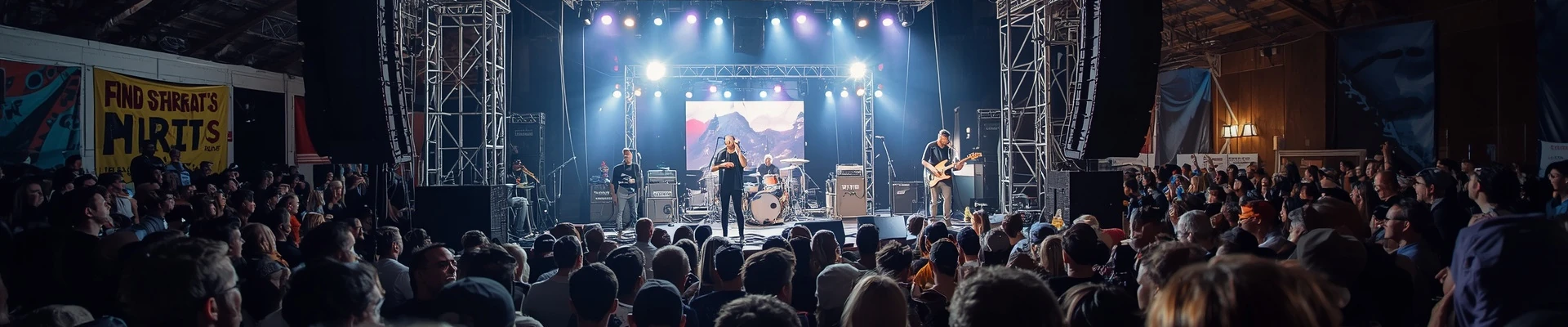
Ajax lacks the density of Toronto's live music infrastructure, but it has a working circuit of community spaces and some commercial venues. The Ajax Community Centre (Harwood Avenue South) is the town's most versatile large-capacity space — used for concerts, fetes, bhangra events, and soca nights. The McLean Community Centre serves the northeast quadrant. The Rotary Park Bandshell at the lakefront provides a free outdoor stage during summer season — the town's most publicly accessible live music setting.
The Lakeridge Health Ajax Pickering Hospital fundraiser circuit and the Ajax Legion (Royal Canadian Legion Branch 488) provide older social club performance contexts: cover bands, tribute acts, and community dances. The Ajax Public Library and the Ajax Community Hub (Church Street South) have hosted acoustic and youth-oriented performance programming.
The commercial bar and restaurant tier — chains and independents along Kingston Road and the Harwood commercial strips — provides irregular live music, mostly cover bands and acoustic sets attached to weekend dining trade. There is no single dedicated live music club in Ajax comparable to Toronto's indie venues, which pushes original music acts toward community-hall rentals or the commute into Toronto for proper stage time.
Downtown Ajax (the historic core south of Highway 401 near the GO station) is the densest commercial area but has not yet developed a dedicated arts or music corridor. The area around Westney Road South and Bayly Street hosts a cluster of restaurants and small businesses serving the Caribbean and South Asian communities, and these commercial strips generate informal music programming through community events and food festivals.
Festivals and signature events
Ajax hosts several signature events that anchor the music calendar. The Ajax Waterfront Festival, held annually at Rotary Park on the Lake Ontario shoreline, is the town's highest-profile summer event — free outdoor concerts, family programming, and local artist showcases. The Ajax Winter Lights festival (December) incorporates musical performance into its public programming. The Ajax Ribfest on the waterfront draws large crowds with live cover bands and tribute acts.
The Durham Caribbean Carnival programming that touches Ajax connects it to a wider regional celebration drawing tens of thousands of participants from across the Durham municipalities. Individual cultural organization events — Nigerian Independence Day celebrations, Vaisakhi bhangra competitions, Tamil cultural showcases tied to Pongal or Thai Pusam — run through the year across the town's community centres.
Ajax Arts Forum and related municipal cultural programs have expanded public art and performance programming in recent years, and the town's Cultural Master Plan (adopted 2019) set a formal framework for expanding music infrastructure. The results have been incremental but real: more outdoor programming, youth music workshops, and a growing focus on multicultural performance in municipal event planning.
What ties it all together
Ajax is a town that sounds like migration. Its music is not rooted in a single scene or era but in the continuous layering of communities that arrived with musical traditions already formed — dancehall and soca from Jamaica and Trinidad, bhangra and Tamil pop from the South Asian diaspora, Afrobeats and gospel from West Africa, hip-hop and R&B from the Toronto-adjacent 905 corridor. What makes Ajax distinctive is not any single musical institution but the density and authenticity of that community-driven culture, operating in rec halls, church basements, community centres, and backyards largely outside the mainstream music industry's gaze. For a generation of Durham Region artists, Ajax is where you're from — and increasingly, where you're building something.