
Burlington sits at the narrow western end of Lake Ontario, tucked between the Niagara Escarpment to the south and the lake's shoreline to the north. Administratively part of Halton Region, it shares a border with Hamilton to the west and Oakville to the east, placing it at the core of the Greater Golden Horseshoe — the densely populated arc that curves around the western lakeshore from Oshawa through Toronto and Niagara. With roughly 187,000 residents in the city proper, Burlington ranks among Ontario's mid-tier cities: large enough to support a genuine venue circuit and year-round festival culture, yet compact enough that its music community retains the closeness and cross-pollination of a scene where everyone knows everyone.
The city's geography is defined by two facts. First, Spencer Creek and the La Salle Park waterfront give Burlington an unusually scenic urban edge — the lake is ever-present, and the backdrop it provides has shaped the aesthetics of the city's signature outdoor events. Second, the QEW corridor runs straight through Burlington's commercial spine, making it one of the most accessible cities in the region for touring acts routing between Toronto and the Niagara Peninsula or Hamilton. Burlington has never been a capital of any single genre, but its convenience to Hamilton's legendary heavy-music scene, its proximity to Toronto's industry infrastructure, and its own deep pool of suburban rock and pop talent have made it a quiet but persistent contributor to Canadian music.
Historical foundations
The land now called Burlington was home to the Haudenosaunee (Iroquois) Confederacy and the Mississauga Anishinaabe peoples, who occupied the north shore of Lake Ontario for centuries before European contact. The British Crown acquired the territory through the 1784 Haldimand Proclamation and subsequent treaties. European settlement accelerated after the War of 1812 — the Battle of Burlington Heights was fought just west of the present city boundary, and the town of Burlington grew steadily as a regional agricultural and mill centre throughout the 19th century.
By the mid-20th century, Burlington had transformed from a quiet lakeside town into a fast-growing residential suburb of both Hamilton and Toronto. The completion of the QEW in the 1940s and 1950s, the Burlington Skyway Bridge in 1958, and later Highway 407 locked Burlington permanently into the commuter orbit of the Greater Toronto Area. That suburban identity — prosperous, family-oriented, middle-class — is both Burlington's demographic reality and the cultural pressure against which its most interesting musical voices have always pushed.
Music identity
Burlington's most internationally visible contribution to Canadian music is Alexisonfire, the post-hardcore quintet that formed across the Hamilton–Burlington–St. Catharines corridor in 2001. While the band is routinely claimed by Hamilton, founding members grew up in Burlington, and the band's formative years were rooted in Burlington and St. Catharines house shows before Drive-Thru Records and then Vagrant Records propelled them to international tours. Their landmark records — Crisis (2006) and Old Crows / Young Cardinals (2009) — established the band among the defining voices of Canadian post-hardcore. Dallas Green, the guitarist whose side project City and Colour became one of Canada's most commercially successful acoustic-folk acts of the 2000s and 2010s, grew up in St. Catharines but lived and worked through the Hamilton–Burlington corridor during the band's rise.
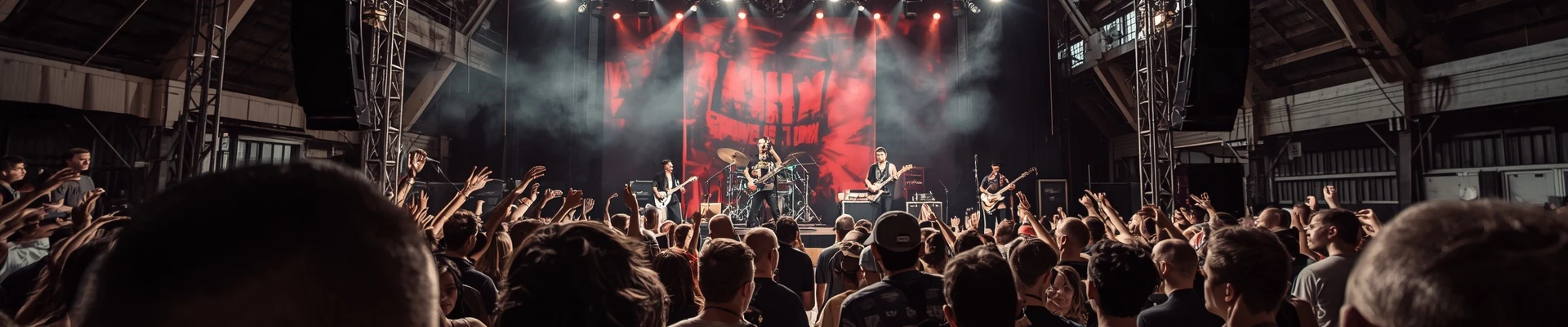
The broader Hamilton–Burlington axis produced a dense heavy-music scene across the 2000s and 2010s. Silverstein — the melodic hardcore band formed in Burlington in 2000 — became one of the most consistent acts in North American post-hardcore over two decades, releasing eleven albums and maintaining a touring schedule that outlasted most of their contemporaries. Their longevity is a Burlington story: a group of suburban kids who built a career methodically, largely outside the Toronto industry spotlight, leveraging early internet fandoms and the Warped Tour circuit into a genuinely international following. Burlington's contribution to the Warped Tour era of Canadian rock is outsized relative to its size.
Pop and country have also found fertile ground in Burlington. Tyler Shaw, the pop vocalist who broke nationally with "Kiss Goodnight" in 2013 and subsequently signed with Sony Music Canada, grew up in Burlington. Jason Blaine, the country singer-songwriter who represented Canada at the Canadian Country Music Association Awards, is another Burlington native. The city's proximity to Toronto's music industry — a 45-minute drive on the QEW — has allowed a steady pipeline of singer-songwriters and pop acts to build local followings in Burlington before pursuing label deals in the city.
Jazz and blues have a quieter but persistent presence. The Burlington Performing Arts Centre (BPAC), opened in 2011, introduced a dedicated presenting organization that regularly books jazz, world music, and acoustic acts in a purpose-built 720-seat venue — filling a gap that Burlington lacked for decades. Before BPAC, jazz in Burlington existed primarily in the supper-club and restaurant-bar register; the venue gave the city a proper presenting infrastructure that changed what touring acts were willing to route through.
Venues and neighborhoods
The Brant Street corridor in downtown Burlington is the city's live-music heartbeat. The strip running from the waterfront north toward Lakeshore Road concentrates the city's bar venues, restaurants with live programming, and independent record shops. The Dickens Pub, a long-running British-style pub on Brant Street, has been a reliable anchor for blues, classic rock, and folk acts for decades. Pepperwood Bistro on Plains Road hosts a weekly live-music program that skews toward acoustic, jazz, and folk — one of the more consistent listening-room experiences in the city.
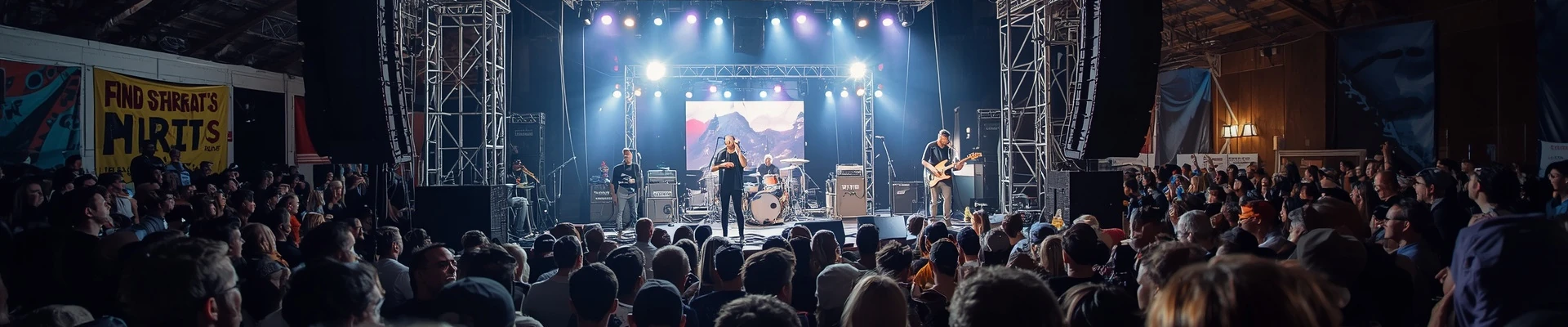
The Burlington Performing Arts Centre on Elgin Street is the city's largest dedicated music venue, operating at 720 seats and booking a mix of national touring acts, local showcases, and festival overflow. It shares programming duties with Le Commensal and other presenter organizations that route acts through the Hamilton–Burlington corridor. For heavier acts, the city's proximity to Hamilton — specifically to venues like Bridgeworks and the Casbah — means Burlington's own venue circuit concentrates on mid-size and acoustic formats, with larger touring acts typically playing Hamilton or Mississauga instead.
Aldershot GO Station and the surrounding area forms a secondary commercial node with some live-music presence, particularly for weekend programming at bar venues catering to the commuter demographic. The Spencer Smith Park waterfront is the outdoor event anchor: its grassy expanse and lake backdrop serve as the primary site for the city's signature outdoor festivals.
Sound of Music Festival
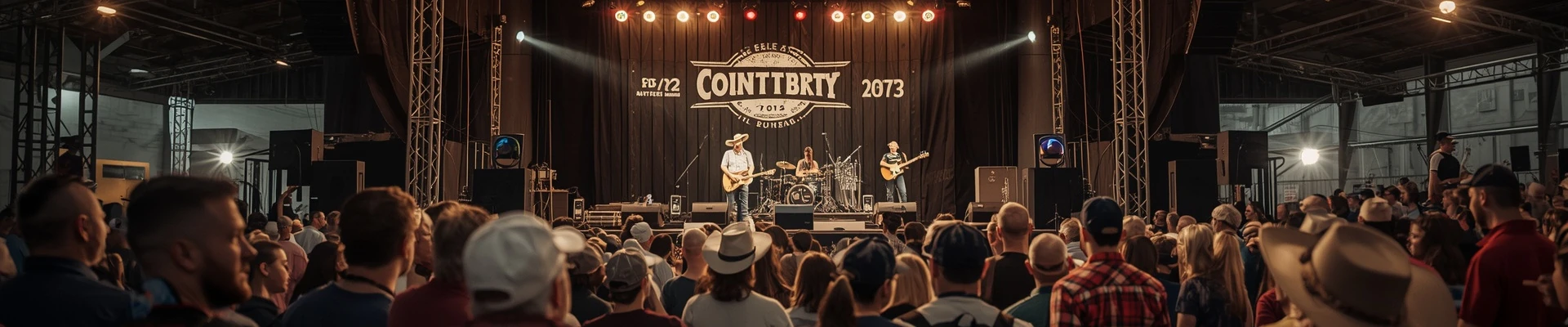
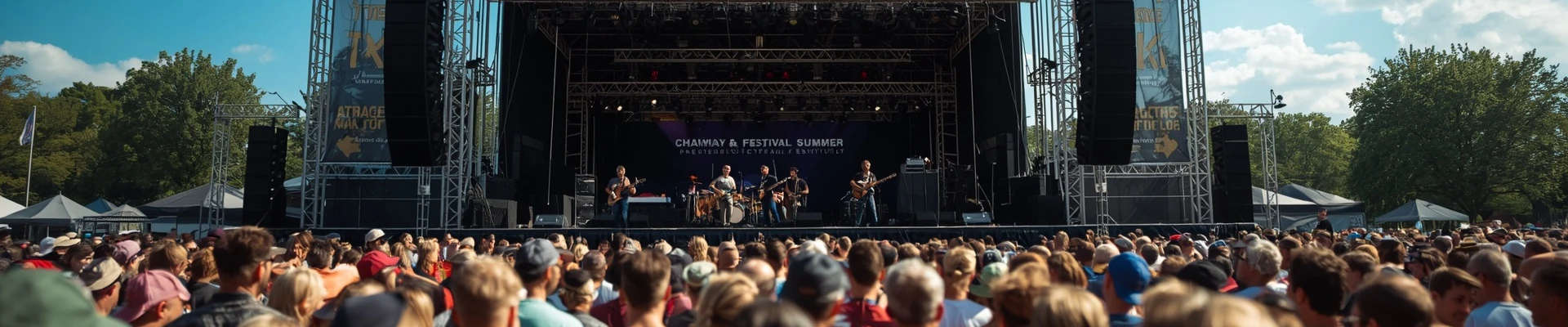
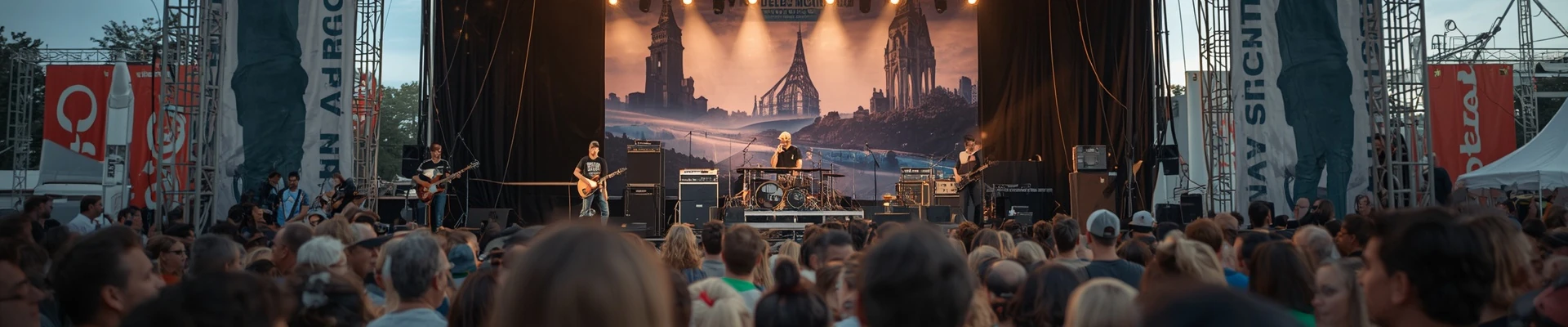
No cultural institution matters more to Burlington's music identity than the Sound of Music Festival, held annually in June at Spencer Smith Park and throughout the downtown core. Founded in 1980 — making it one of Ontario's oldest continuous outdoor music festivals — Sound of Music has grown into what organizers and the city claim is Ontario's largest free music festival, drawing crowds reported to exceed 200,000 visitors across a multi-day run. The festival is free-admission, funded by sponsorships and the city, and distributed across multiple outdoor stages. The programming spans rock, pop, country, jazz, blues, and world music, with main-stage headliners from national touring acts alongside local and regional talent on secondary stages.
Sound of Music Festival is Burlington's single most significant cultural moment of the year — it shapes the city's self-image, drives enormous economic activity, and provides Burlington's music community with its highest-profile platform. Local acts that perform on the festival's smaller stages regularly use the exposure as a launching point, and the festival's multi-genre scope means it attracts an unusually broad cross-section of the city's population. For a city of Burlington's size to sustain a free outdoor festival of this scale for over four decades is genuinely remarkable, and it defines Burlington's cultural identity more than any other single fact.
Demographic textures
Burlington's population is predominantly white and middle-class, with a demographic profile that skews older than many GTA suburbs. The city has grown more diverse in the 21st century — South Asian communities, particularly families from the Punjab and Gujarat, have grown significantly in the Aldershot and north Burlington neighborhoods — but Burlington lacks the dense immigrant music ecosystems found in Brampton or Mississauga. The city's demographic profile shapes its scene: strong in classic rock, blues, country, and pop; less developed in hip-hop, reggae, or electronic club culture. The nearest fully developed hip-hop and R&B scene is Hamilton's, accessible in twenty minutes and heavily integrated into Burlington's youth culture.
The Lebanese and Italian diaspora communities have been present since the mid-20th century, and their influence is visible in the city's restaurant and hospitality culture, which in turn shapes the live-music programming at the bar venues that anchor the Brant Street corridor.
Labels, studios, and infrastructure
Burlington lacks a major label presence or flagship recording studio infrastructure of its own — its proximity to Toronto means acts typically record in Toronto studios or in Hamilton's growing studio cluster rather than building home facilities in Burlington. Hamilton Sound Studios (Hamilton) and the broader Toronto studio corridor serve Burlington's professional acts. The city has a healthy home-studio culture driven by the post-hardware generation of producers and songwriters, but no single room has anchored Burlington's professional recording identity the way a Grant Avenue Studio (Hamilton) anchors the neighboring city.
Independent music infrastructure in Burlington is strongest in artist management and booking, where proximity to Toronto agents and managers has allowed several Burlington-based acts to navigate the industry without relocating. Silverstein's career in particular demonstrated that a Burlington act could maintain international touring commitments while keeping its operational base in the city.
What ties it all together
Burlington's musical signature is the sound of suburban ambition — acts that grew up in the subdivisions off Guelph Line and Appleby Line, who formed bands in basements and rehearsed in church halls, who drove to Hamilton for the heavy shows and to Toronto for the industry meetings, and who built careers by being relentlessly good in spaces that never asked them to be anything other than exactly what they were. Silverstein and Alexisonfire (and the broader post-hardcore constellation that surrounds them) are Burlington's most enduring musical legacy. The Sound of Music Festival is its most visible annual statement. Between those two poles — the working act who grinds it out across two decades, and the lakefront festival that fills Spencer Smith Park with 200,000 free-admission visitors every June — Burlington's music scene finds its character: modest in scale, serious in craft, and consistently more productive than a prosperous suburb on the western end of Lake Ontario has any obvious reason to be.