



Cambridge occupies a distinctive position in Ontario's urban geography: it is not a city that grew organically from a single core, but a municipality stitched together in 1973 from three separate towns — Galt, Preston, and Hespeler — each with its own commercial centre, its own river-mill heritage, and its own civic identity. The result is a city of roughly 130,000 people spread across distinct urban nodes connected by the Grand River and its tributaries, sitting squarely in the heart of Waterloo Region in Southwestern Ontario. Kitchener and Waterloo are twenty minutes to the northwest; Toronto is 80 kilometres to the east; Hamilton is 50 kilometres to the southeast. Cambridge is close enough to all three to draw from their music economies, and far enough from the largest to sustain its own.
The Grand River and its tributary the Speed River run through the city in converging courses that shaped its entire economic history. Textile mills, foundries, and later automotive-parts plants were the backbone of Cambridge's 20th-century economy. Toyota Motor Manufacturing Canada operates one of the company's most productive North American plants in Cambridge, employing thousands; the auto-parts supply chain extends through the whole region. That manufacturing heritage — generations of shift workers, union halls, community clubs — is the silent substrate beneath Cambridge's social music culture: the legions of bands that played the local taverns and halls were not playing to a university crowd but to factory workers, tradespeople, and their families.
A brief history
The territory around the Grand River was home to the Haudenosaunee (Six Nations) and later the Mississauga Ojibwe before European settlement. The Haldimand Tract — a vast land grant along the Grand River given to Six Nations as compensation for Revolutionary War displacement — runs through this region; Six Nations of the Grand River, the largest First Nations reserve in Canada by population, is located just 30 kilometres south of Cambridge near Brantford. The cultural and musical traditions of Six Nations — including powwow drumming, hand-drum circles, and contemporary Indigenous artists — resonate through the wider Grand River corridor.
Galt (named for Scottish author John Galt, who helped found the Canada Company) was established in the 1820s and grew rapidly through the mid-19th century as a textile and foundry centre. Its core of grey limestone buildings — still intact along the Grand River in what is now called Old Galt — is one of the most architecturally complete examples of mid-Victorian Ontario commercial fabric surviving in Canada. Preston developed slightly later as a mill and furniture-manufacturing town, and Hespeler was the smallest of the three, anchored by woollen mills along the Speed River. The amalgamation in 1973 that created Cambridge was contentious — the distinct communities maintained fierce local identities, and that inward-facing localism has never entirely dissolved.
Through the late 19th and early 20th centuries, Cambridge's working-class population sustained a rich social club and fraternal lodge culture: the Galt Legion, the Polish Hall, the German Club (reflecting the large German and Polish immigrant communities who came to work the mills and foundries), and a circuit of church halls that hosted dances, brass bands, and choral societies. This is the musical infrastructure that preceded the tavern rock circuit of the 1960s and 1970s.
Music identity
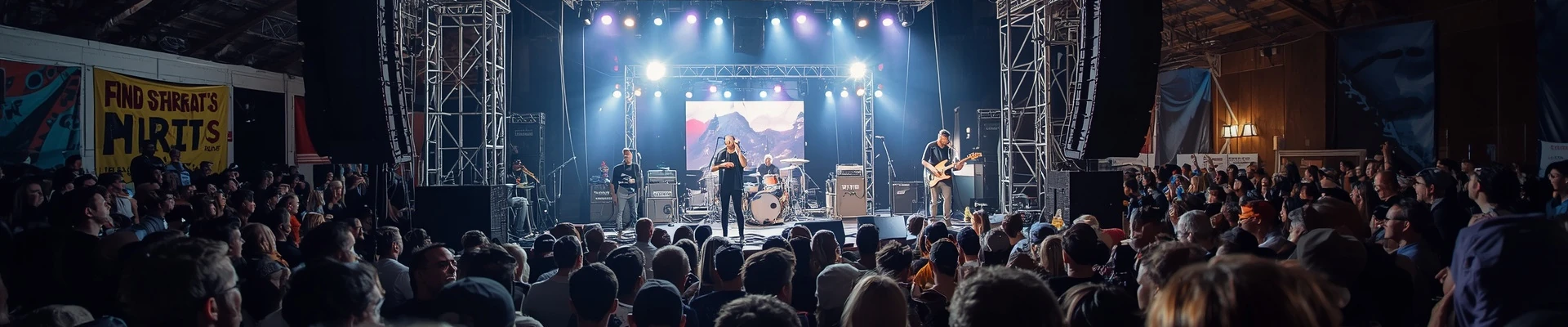
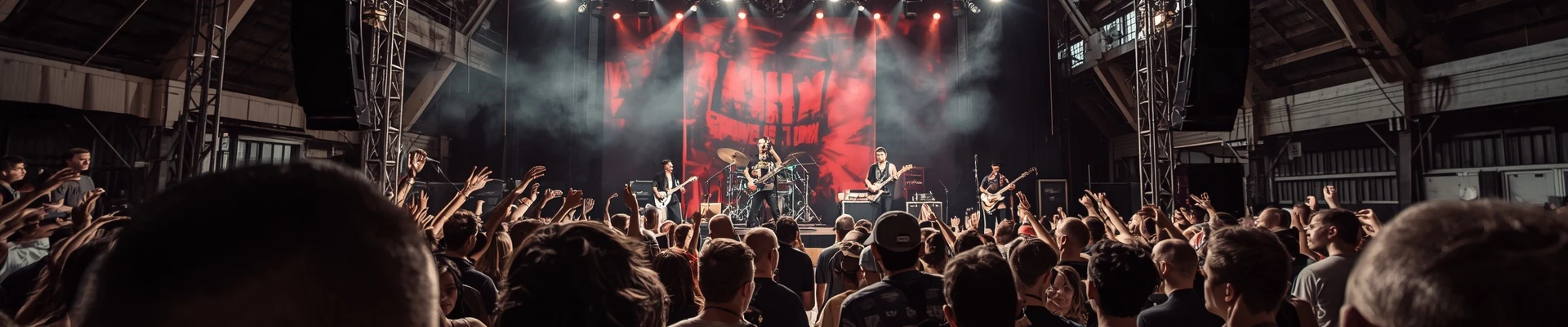
Cambridge does not have a sound that carries a name the way Detroit has techno or Nashville has country. Its musical contribution is quieter and more diffuse — generations of working-class musicians feeding into the broader Southern Ontario touring circuit, bands formed in high school playing the regional pub and tavern system, and a small but persistent independent scene that draws sustenance from the density of musicians in Waterloo Region as a whole.
The Waterloo Region music scene — which spans Cambridge, Kitchener, Waterloo, and the surrounding communities — has produced artists of genuine national significance. The Tragically Hip, who hailed from Kingston, played the Waterloo Region circuit constantly and treated it as home territory. Big Wreck, the hard-rock band led by Ian Thornley, built part of their regional base from the Waterloo pub circuit. The Glorious Sons have played Cambridge venues. But Cambridge's own native contribution tends to emerge through individuals rather than scenes: local musicians who left for Toronto or Montreal and found success (and whose Cambridge origins became footnotes), and a steady flow of working-class songwriters who never left but built deep community reputations.
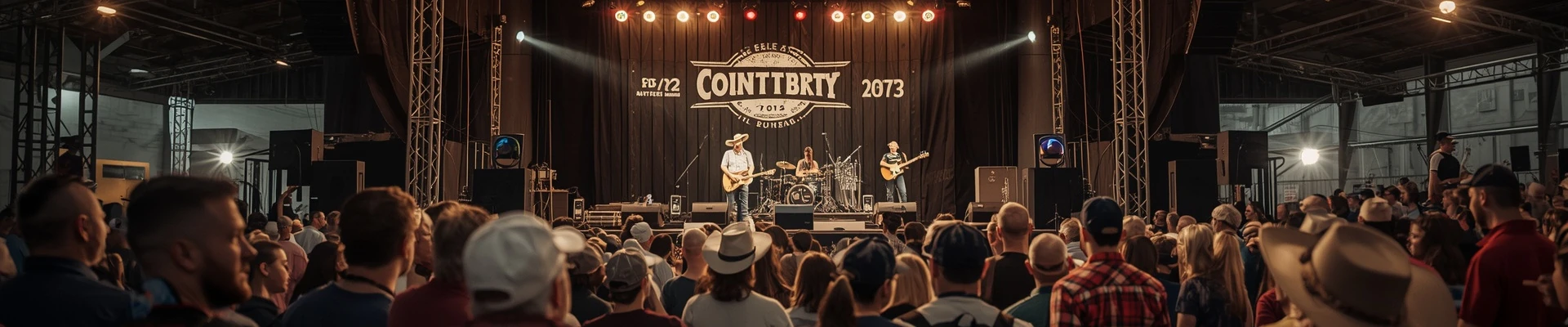
The country and classic rock tradition is probably the dominant live-music culture of Cambridge's pubs and halls. Bands playing covers of The Eagles, Tom Petty, Tragically Hip, Johnny Cash, and Garth Brooks fill the regional tavern circuit. The folk and acoustic scene — supported by a population with Scottish, Irish, German, and Polish roots — runs through community halls, the Cambridge Centre for the Arts, and informal sessions. The Polish community sustains polka and folk music through the Polish Alliance and community events in the Preston area; the German community contributes brass and folk traditions.
Cambridge's South Asian community — particularly Punjabi and South Indian families who arrived from the 1980s onward as the region's tech and manufacturing sectors grew — has introduced Bhangra, Bollywood, and Carnatic music to the city. The Sikh gurdwaras in Cambridge are cultural music centres, particularly for kirtan (devotional singing). The growing South Asian community event circuit — wedding performers, dholak players, and Bollywood DJs — is one of the more economically active music niches in the city today.
Cambridge also sits adjacent to the significant music output of Six Nations of the Grand River — Indigenous artists including Derek Miller (blues, rock, multiple Juno awards) have drawn on the Grand River corridor in their work, and the region's First Nations cultural events have a musical presence that Cambridge venues occasionally host.
The classical and choral tradition runs through the Kitchener-Waterloo Symphony (which serves the entire region), through local church choirs, and through the Cambridge Community Orchestra. Grand Philharmonic Choir, one of Ontario's major choral ensembles based in Kitchener, draws singers from across Cambridge. Cambridge's school music programs have an outsized reputation — the band programs at several secondary schools have produced regionally recognized ensembles.
Venues and neighborhoods
Cambridge's venue landscape reflects its distributed geography. There is no single entertainment district equivalent to what Kitchener's King Street corridor offers — instead, live music is spread across the three historical town centres and a handful of surviving community spaces.
The Cambridge Centre for the Arts (in Old Galt, along the Grand River) is the city's most visible arts venue, programming local concerts, theatrical performances, and community events in a heritage building near the river. The Dunfield Theatre Cambridge (formerly the Hamilton Family Theatre) is the performing arts anchor for the city — a purpose-built 330-seat venue that programs music, theatre, and touring productions throughout the year.
The Old Galt core along the Grand River — particularly around Main Street in Galt — sustains a small collection of bars and restaurants with live acoustic music: singer-songwriters, folk duos, jazz trios. The limestone streetscape and pedestrian-scale streets make Old Galt Cambridge's most atmospheric venue neighbourhood. The Cambridge Mill Restaurant (in a restored 1839 millhouse directly on the Grand) occasionally hosts private events with live music.
In Preston, the legacy of the tavern circuit is represented by a handful of sports bars and community venues along King Street East, which historically hosted cover bands for decades. Hespeler has a community hall circuit. The Cambridge Arenas (the city operates several arena facilities) host concerts and community events. The Polish Hall in Preston and the German Club on Eagle Street in Cambridge remain active for community events and cultural programming.
The Waterloo Region's broader venue ecosystem — The Aud (Kitchener Memorial Auditorium, 7,600 capacity), Elements nightclub, The B-Side, Maxwell's Music House, and The Registry Theatre in Kitchener and Waterloo — functions as an extension of Cambridge's music infrastructure. Cambridge musicians and audiences cross freely into Kitchener-Waterloo for shows, and touring artists playing the Waterloo Region typically appear at the larger Kitchener rooms.
Festivals and signature events
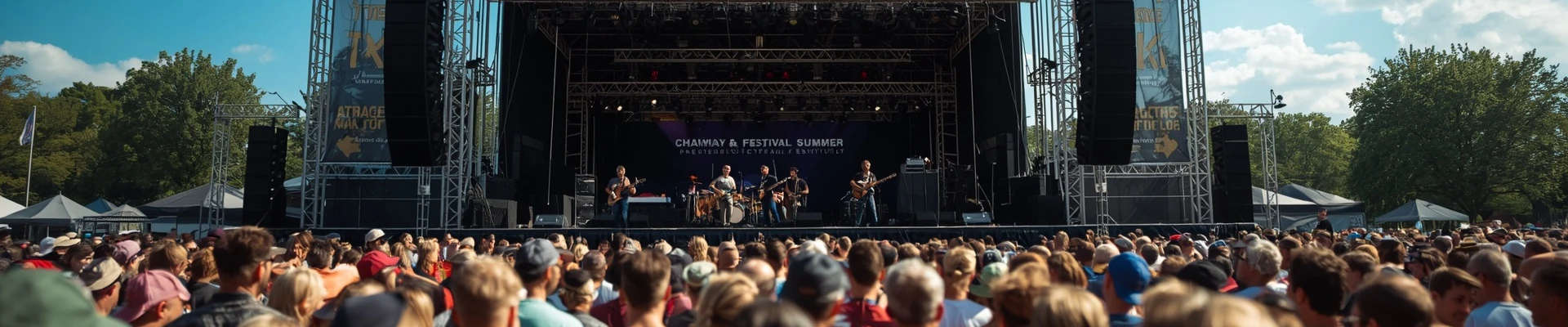
Cambridge does not host a signature music festival on the scale of major Ontario cities, but several recurring events carry community significance. The Cambridge Ribfest (held at Riverside Park along the Grand River) programs local and regional live music alongside its signature culinary draw, typically pulling 60,000–80,000 visitors over the Victoria Day weekend. The festival's outdoor stages have hosted tribute acts, regional bands, and occasional national touring artists.
Doors Open Cambridge programs heritage site access and occasionally pairs events with live music in the Old Galt core. The Cambridge Fall Fair (one of Ontario's older agricultural fairs, running since the mid-19th century) includes live entertainment programming. Cambridge's Canada Day celebration at Riverside Park features community music on outdoor stages. The SCENE Music Festival in Kitchener occasionally features Cambridge-based artists. Six Nations Pow Wow gatherings near Brantford draw from the broader Grand River corridor community, with drumming and cultural music programming.
What ties it all together
Cambridge is not a city that has tried to build a music brand, and that honesty is its defining characteristic. It is a working-class river city that has always had music — not a scene built on ambition or hipster geography, but a persistent social fabric of community halls, pub stages, church choirs, and school bands. The three merged towns that make up Cambridge have never fully dissolved into a single identity, and that distributed texture means the city has multiple music communities rather than one: the folk sessions in Old Galt, the cover bands in Preston's pubs, the kirtan circles in the gurdwaras, the powwow drums from Six Nations forty minutes south, the classical ambitions of the choral societies. Cambridge's contribution to Ontario music is quiet and aggregate — a region that has always produced musicians, always supported live music in its halls and pubs, and always remained more interested in actually playing than in talking about the scene.