


Greater Sudbury — officially the City of Greater Sudbury (Ville du Grand Sudbury) — sits in the heart of the Canadian Shield in Northern Ontario, roughly 390 kilometres north of Toronto and 390 kilometres west of Ottawa. With a population of approximately 166,000, it is the largest city in Northern Ontario and the regional hub for a vast territory spanning hundreds of kilometres in every direction. The city was created in 2001 through the amalgamation of the old City of Sudbury with surrounding municipalities: Nickel Centre, Capreol, Onaping Falls, Rayside-Balfour, Valley East, and Walden — a consolidation that tied together a collection of mining towns, francophone villages, and suburban corridors into a single administrative unit that covers more than 3,600 square kilometres of boreal forest, lakes, and Precambrian rock. The landscape is defined by the Sudbury Basin, a 60-kilometre oval depression created by a 1.85-billion-year-old meteorite impact — one of the largest impact structures on Earth — which concentrated the world's most significant deposits of nickel, copper, and cobalt and made the region the foundation of the global mining industry for more than a century.
A brief history
Nickel was discovered in the Sudbury region in 1883 during the construction of the Canadian Pacific Railway, and the subsequent development of the International Nickel Company of Canada (Inco) — eventually renamed Vale Canada — and the Falconbridge Nickel Mines turned the Sudbury Basin into the most important mining district in North America. By the early twentieth century the area supported a dense constellation of company towns — Copper Cliff, Coniston, Falconbridge, Levack, Chelmsford, Blezard Valley — each organized around a smelter or mine headframe. The roasting of sulphide ores burned off vegetation across hundreds of square kilometres by the mid-twentieth century, giving the region its famous "moonscape" reputation and prompting NASA to train Apollo astronauts on the stripped rock barrens near town in 1971. A landmark land reclamation program begun in the 1970s replanted more than ten million trees and reversed much of the damage; the landscape today is a mosaic of regenerating boreal forest, some 330 lakes within city limits, and pink granite outcrops.
The Franco-Ontarian community — centred on the former municipality of Valley East and the Sudbury neighbourhood of Flour Mill — has been a defining cultural force since the nineteenth century. Sudbury was one of the key nodes in the Franco-Ontarian cultural renaissance of the 1970s and the birthplace of the Ontario French-language arts movement that produced Théâtre du Nouvel-Ontario, Prise de parole (one of Canada's most important French-language literary publishers), and a generation of French-language artists who built careers in Ottawa, Montréal, and beyond. That bilingual identity — English industrial rock city and French-Ontario cultural capital — runs through every dimension of the city's social and artistic life.
The Anishinaabe communities of the region — including Atikameksheng Anishnawbek (formerly Whitefish Lake First Nation), Wahnapitae First Nation, and Métis Nation communities — predate European settlement by thousands of years and maintain distinct cultural and musical traditions.
Music identity
Sudbury's musical reputation is carried above all by Stompin' Tom Connors, the Cape Breton-born troubadour who cemented his identity as Canada's most beloved folk-country songwriter during his years performing at the Townhouse Hotel in Sudbury in the late 1960s and early 1970s. Connors wrote "Sudbury Saturday Night" — arguably the most famous song ever written about Canadian working-class bar culture — at a table in the Townhouse, and the song became the defining anthem of blue-collar Northern Ontario. Connors' complete identification with the Canadian working class and his refusal of American commercial pressure (he famously returned his Juno Awards in 1978 to protest what he saw as the awards' American bias) made him a totemic figure in Canadian roots music, and Sudbury is the axis of that mythology.
Beyond Connors, Sudbury has punched well above its weight in Canadian rock and metal. Econoline Crush, the Vancouver-based industrial rock band fronted by Trevor Hurst (a Sudbury native), scored major Canadian radio hits through the mid-to-late 1990s with albums like Affliction (1995) and The Devil You Know (1997). Protest the Hero, one of the most technically acclaimed progressive metal and metalcore bands in Canada, emerged from Whitby, Ontario — but their early career was deeply connected to the Northern Ontario circuit and they draw significant support from Sudbury's metal scene. Finger Eleven, the Burlington-formed rock band that broke through with "Paralyzer" (2007), has longtime ties to the Ontario club circuit that runs through Sudbury. The city has also produced its own wave of metal and hard rock talent through the underground: Divinity, the Sudbury progressive death metal band that released critically noted records on Tribunal Records, is one of the most respected exports of the local heavy scene.
The Franco-Ontarian music tradition in Sudbury is one of the most important in the country outside Quebec. Garolou — a French-Canadian roots band formed in Sudbury in the mid-1970s — was one of the foundational acts of the Franco-Ontarian folk revival, blending traditional Quebec folk with English-language rock influences in a way that was simultaneously asserting a distinct identity for French Ontarians. CANO (Co-opérative des artistes du Nouvel-Ontario), formed in Sudbury in 1975, was the flagship act of the Franco-Ontarian cultural movement — their fusion of Québécois folk, rock, Latin, and African rhythms and their explicitly political Franco-Ontarian identity made them one of the most important bands in the history of French-language Canadian music outside Quebec. Marcel Aymar, André Paiement (the playwright and singer-songwriter who was one of CANO's central figures), and the broader circle of artists connected to Théâtre du Nouvel-Ontario built a French-language artistic community that informed the cultural lives of Franco-Ontarians across the province. Robert Paquette, a Sudbury-born singer-songwriter, built one of the most respected solo careers in Franco-Ontarian music through the 1970s and 1980s. More recently, Stef Paquette has carried the tradition of Franco-Ontarian folk-pop with warmth and commercial appeal, and Sunny Savage (of Franco-Ontarian heritage) has built a country and folk career out of the region.
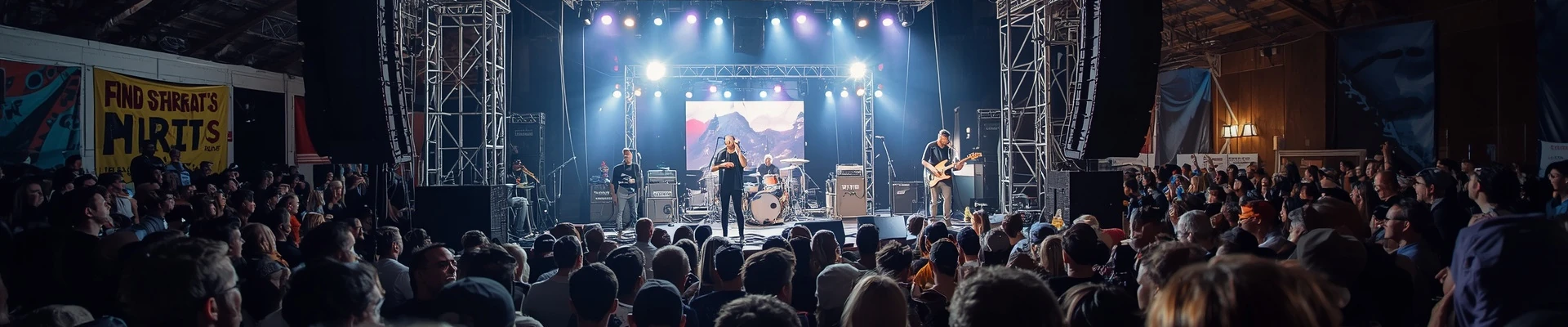
The working-class rock and country tradition runs through the city's hotel bars and Legion halls — a tradition anchored by Stompin' Tom but expressed in a dense network of cover bands, original rock acts, and country artists who work the Northern Ontario circuit of bars and community events. Sudbury's mining-town culture — shift workers, union halls, long winters, a tradition of hard drinking and hard music — created an audience for loud, unpretentious rock that persists in venues like the Towne House Tavern (successor to the original Townhouse Hotel), the Rock of Ages club, and the city's arena and rink-hall circuit. Indigenous music is present through powwow circuits, community events, and the growing visibility of Anishinaabe and Métis artists, though the formal infrastructure for Indigenous music programming in Sudbury trails larger cities.
Laurentian University's music program — now disrupted by the university's 2021 insolvency restructuring — trained a generation of local musicians, and the Sudbury Symphony Orchestra and Sudbury Theatre Centre anchor the classical and performing arts ecology. Collège Boréal and La Slague (the bilingual youth arts organization) continue to cultivate the next generation of French-language artists.
Venues and neighborhoods
The venue landscape reflects the city's size and geography. At the top sits Sudbury Arena (now operating as the home of the Sudbury Wolves of the OHL), capable of hosting mid-level touring acts, and the Meridian Sudbury Theatre (formerly the Grand Theatre), a 600-seat heritage venue that anchors the performing arts calendar. Cambrian Arena and Gerry McCruden Community Centre handle mid-size community events. The working club circuit includes the Towne House Tavern — the spiritual successor to the Townhouse Hotel where Stompin' Tom played — the Minnow Lake Community Centre, the Elm Street bar district, and a rotating roster of Legion halls, hotel lounges, and community recreation centres.
Geographically, Downtown Sudbury — centred on Durham Street, Elgin Street, and the Civic Square area — holds the core of the live music scene. The Flour Mill neighbourhood, Sudbury's historic French-Canadian working-class district to the northwest of downtown, sustains much of the Franco-Ontarian cultural life. New Sudbury (the postwar residential expansion to the east) supports the city's commercial and arena circuit. Copper Cliff, the company town built by Inco to the west of the city centre, retains a distinct identity and community hall circuit. Lively (formerly Walden), Chelmsford (Valley East), and Capreol each maintain their own small live music ecosystems.
Festivals and signature events
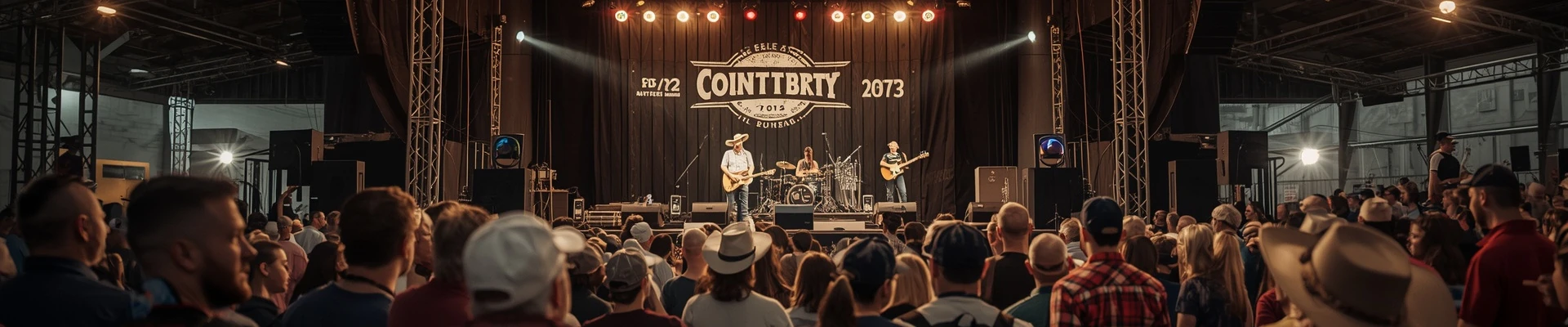
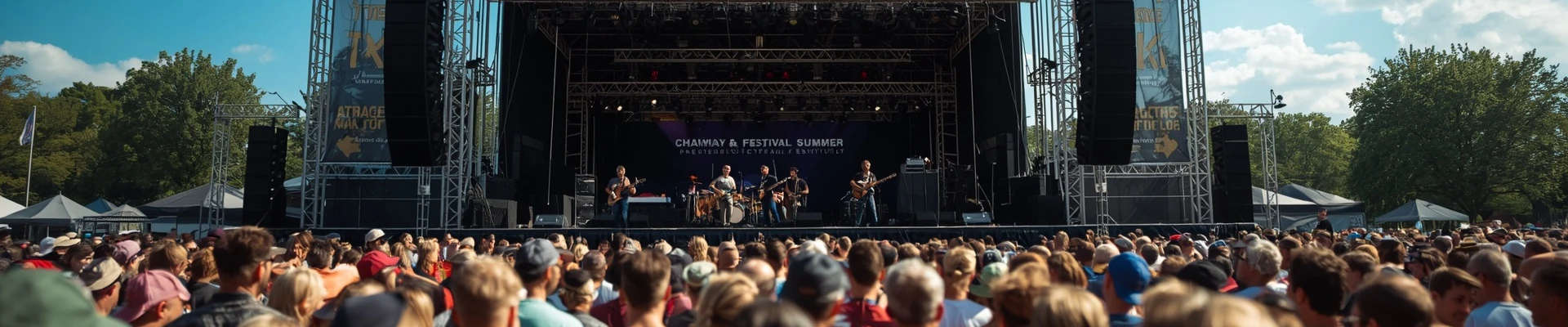
The signature annual event is the Northern Lights Festival Boréal — a bilingual outdoor folk and roots festival held each July on the shore of Ramsey Lake in downtown Sudbury. Founded in 1972, it is one of the oldest folk festivals in Ontario and one of the defining cultural events of Northern Ontario, drawing artists from across Canada and beyond for a weekend of outdoor programming. The festival's bilingual mandate — with French and English programming given equal weight — reflects Sudbury's bilingual identity and has made it a platform for Franco-Ontarian artists across five decades.
Sudbury Rocks!!! marathon and the Blueberry Festival in Capreol add community events. Ribfest Sudbury, Sudbury Pride, the Sudbury Multicultural Folk Arts Association festival, and the Franco-Fête (a community francophone celebration) round out the calendar. The Nickel City Pop Fest and various arena and amphitheatre concerts bring larger touring acts through the summer season.
What ties it all together is the combination of geographic isolation, resource-economy identity, and bilingual cultural depth that has always distinguished Sudbury from southern Ontario cities of similar size. This is a city where the bar music tradition is a living institution rather than a nostalgic relic — where Stompin' Tom's "Sudbury Saturday Night" is not just an oldie but an accurate description of how Friday and Saturday nights still work in the old hotel bars and Legion halls; where CANO's Franco-Ontarian cultural politics are not a historical curiosity but the direct ancestor of today's French-language arts infrastructure; and where the shadow of the Superstack, the moonscape reclamation, and the mine headframe speaks to a particular Northern Ontario character — hard, self-sufficient, and musically rooted in the bones of Precambrian rock.