

Guelph sits in the Grand River watershed of southwestern Ontario, about 100 kilometres west of Toronto and 28 kilometres east of Kitchener-Waterloo. Founded in 1827 by the Canada Company and its Scottish-born agent John Galt, the city was laid out with a distinctive radial street plan centred on a limestone bluff above the Speed River — a design that gives the downtown its compressed, walkable, and slightly eccentric character. With roughly 143,000 people in the city proper and approximately 165,000 in the census metropolitan area, Guelph has grown steadily since the mid-twentieth century without losing the density and civic personality that distinguish it from the suburban sprawl surrounding its neighbours. The presence of the University of Guelph (founded 1964 from the Ontario Agricultural College) and Conestoga College's Guelph campus continuously seeds the population with young people who stay, and the city's strong manufacturing base — Sleeman Breweries, Co-operators Insurance, and a significant pharmaceutical and food-processing sector — keeps a working adult economy running alongside the student ecosystem.
History and character
The Royal City nickname derives from the charter granted by King George IV. The city's limestone Victorian and Edwardian architecture, particularly around the Church of Our Lady Immaculate on the hill above the Speed River — a neo-Gothic limestone basilica completed in 1888 that dominates the skyline — gives Guelph a visual identity unlike any other Ontario city its size. The downtown's compact blocks, the Baker Street area, and the Stone Road corridor have sustained independent retail, bars, and music venues through economic cycles that flattened similar-sized communities elsewhere. The city's immigrant communities — South Asian, East Asian, West African, Latin American, and Eastern European — have grown substantially since the 1990s and sustain musical cultures that weave through the local scene without always announcing themselves in promotional contexts.
The Speed River and the Eramosa River converge in the downtown, and the trail systems along both banks function as civic connectors that reinforce Guelph's identity as a walkable, slightly alternative, deeply community-oriented place. That character translates directly into the music scene: Guelph has produced an unusual density of self-managed artists, independent labels, and DIY venues for a city of its size, and the community support for local music is genuine and persistent across generations.
Music identity
Guelph's most internationally consequential musical contribution is The Tragically Hip — not as a home base (the Hip were from Kingston), but as a constant touchstone for how Guelph musicians and audiences understand what distinctively Canadian rock sounds like. The city has produced or adopted a remarkable number of artists who exist in that tradition: guitar-forward, lyrically intelligent, emotionally direct, and unashamed of their Canadianness.
The figure who most embodies Guelph's musical identity is Dave Clark of The Pursuit of Happiness, who used Guelph as a base during a significant portion of that band's career in the 1980s and 1990s. Chixdiggit, the Calgary-rooted pop-punk band, recorded formative sessions in the area. But Guelph's deepest seam is its connection to the Canadian indie rock explosion of the 1990s and 2000s. Cuff the Duke formed in Guelph in 2000 and built a critically admired career in alt-country and indie rock, releasing seven albums and becoming one of the University of Guelph-circuit bands that proved a non-Toronto Ontario city could sustain a national music career. Sam Cash and the Romantic Dogs and Kalle Mattson — the latter a Sault Ste. Marie-born songwriter who built his career from Guelph outward — represent the folk and roots thread.
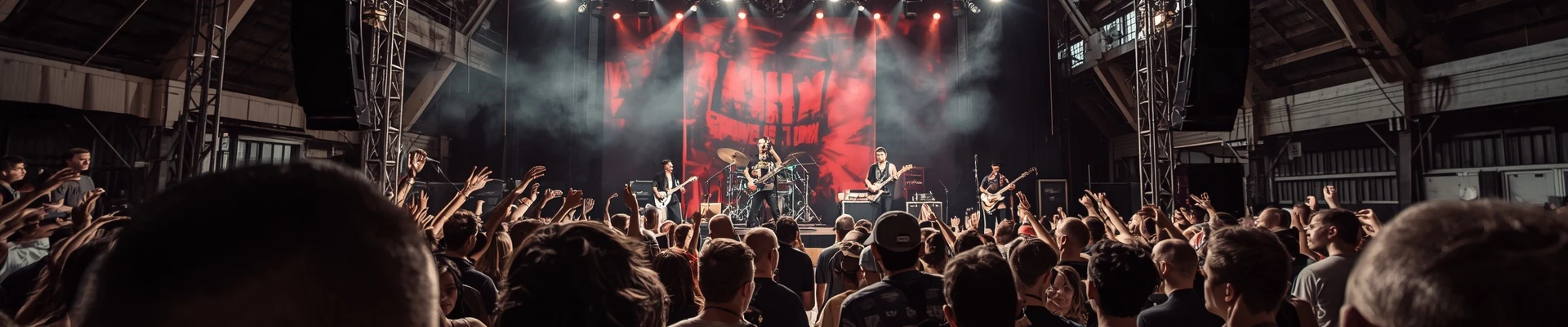
Metal has deep roots. Sacrifice, the pioneering Canadian thrash metal band, emerged from the broader Golden Horseshoe circuit that passed through Guelph. The city's heavy scene runs through The Warehouse shows of the 1990s through to contemporary doom and progressive metal acts. Barn Burning and a succession of technically demanding metal and punk bands have kept the heavy end of the spectrum alive across decades.
The experimental and avant-garde thread is unusually strong for a mid-size Ontario city. The Guelph Jazz Festival — founded in 1994 — is the engine here. The festival, organized around Guelph Contemporary Music and the work of founder Elliott Lefko and later Mike Clements and Ajay Heble of the International Institute for Critical Studies in Improvisation at the University of Guelph, has brought Cecil Taylor, Anthony Braxton, Pauline Oliveros, William Parker, and hundreds of the world's leading improvisers to the Royal City every September. The festival has won the Governor General's Performing Arts Award for voluntarism and community building, and it has made Guelph something unique: a city where free jazz and experimental improvisation are genuinely part of the civic identity, not just a niche within it. Kyle Brenders, Nick Fraser, and a constellation of Toronto and Guelph-based improvising musicians have used the festival as a lab and a platform.
The folk and singer-songwriter tradition is sustained by a coffee-shop and listening-room circuit that rewards subtlety and craft. The late Guelph Entertainment Centre programming and the Silence nightclub era of the 1990s and early 2000s embedded a listening culture for acoustic and roots music. Hillside Festival, which has run since 1987 on Guelph Lake Island, is the canonical expression of this — a three-day camping festival in July that programs folk, roots, world, and indie music across three stages, with a community-cooperative organizing model that has made it one of the most respected mid-size festivals in Canada. Hillside has programmed Sarah Harmer, Blue Rodeo, Feist, Broken Social Scene, Hawksley Workman, Ani DiFranco, and dozens of artists who are central to the Canadian folk-to-indie spectrum.
Electronic music has grown significantly through the 2010s and 2020s. The University of Guelph's proximity to Waterloo's tech sector and the presence of a young professional population have supported club nights, producer communities, and a small but serious electronic scene in the downtown bars and at The Pheasant Plucker and The Brass Tap.
Venues and neighborhoods
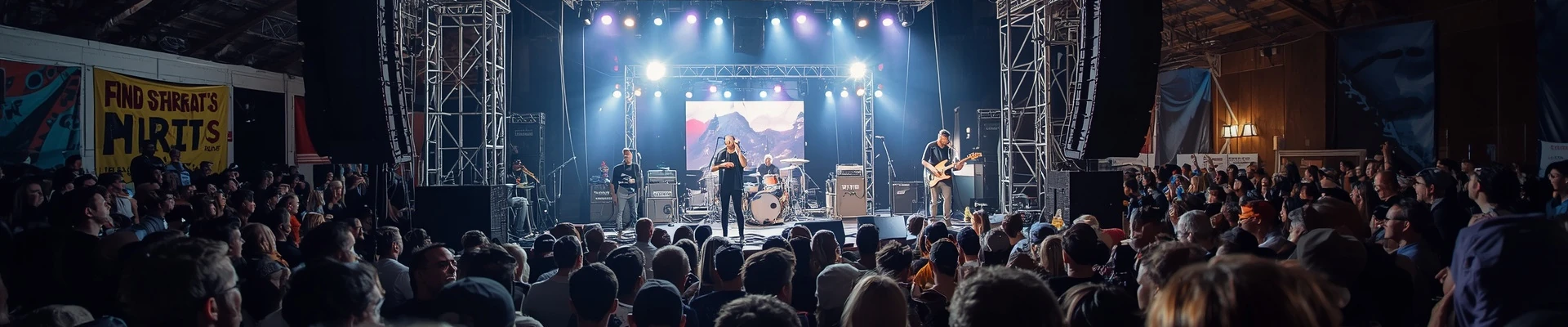
The top of Guelph's venue pyramid is The Sleeman Centre (5,000–6,500 capacity), the downtown arena shared between Guelph Storm OHL hockey and mid-tier touring concerts — the kind of venue that books national acts who sell out 3,000-seat rooms. The mid-level is anchored by The Bookshelf Cinema and Cafe (250 capacity, beloved for its eclectic programming in a converted book-and-film space on Wyndham Street), The University Centre at UofG (large multipurpose hall), and MacLaughlin Hall at UofG for classical and chamber programming. The club and bar tier includes The Pheasant Plucker (long-running downtown bar that has hosted live music through multiple ownership eras), The Albion Hotel, Planet Bean and other café venues that support acoustic and folk programming, and the evolving cluster of bars along Wyndham Street and the Baker Street pedestrian zone. The EDHS Community Theatre and River Run Centre (a 780-seat professional performance space opened in 1997 on the Speed River) round out the mid-size spectrum — River Run Centre is arguably the most architecturally significant performing arts facility in Guelph, with a granite-and-glass design by KPMB Architects that faces the river directly.
Neighborhood character shapes the scene. Downtown Guelph — the compact blocks around Wyndham Street, Douglas Street, and the Market Square — is where the bar and club tier clusters, and where the Saturday Farmers' Market in the Guelph Farmers' Market building anchors a community ritual that spills into music and street performance through the summer. The Ward (St. Patrick's Ward), the Victorian residential neighbourhood between the Eramosa River and downtown, is where Guelph's older alternative community has always lived — this is the neighbourhood of houses shows, practice spaces, and the independent music infrastructure that keeps the city's scene self-reproducing. Riverside Park and the Speed River trail system host outdoor music in summer through festivals and informal programming.
Festivals and signature events
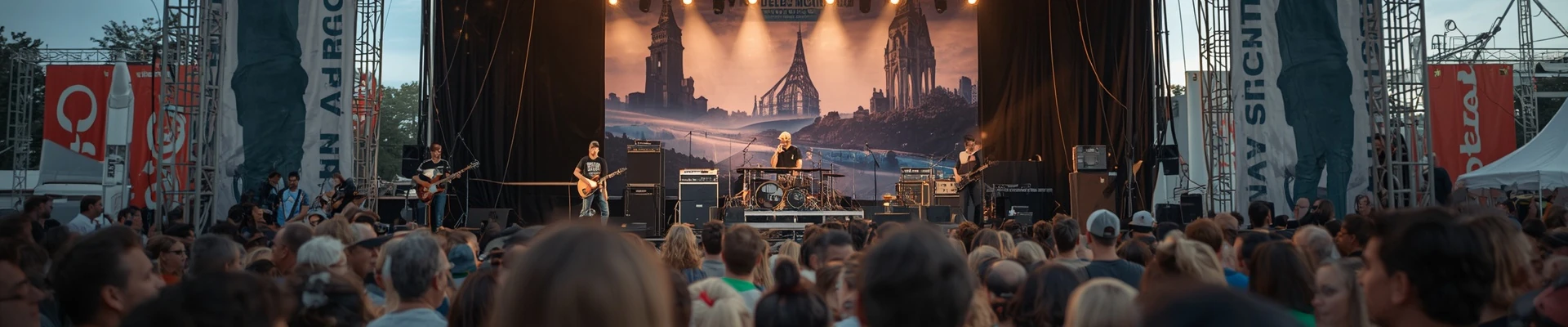
Hillside Festival (July, Guelph Lake Island) is the defining event — founded 1987, cooperative-model organization, three stages, camping, programming spanning folk, roots, indigenous, world, and indie music. The island setting on Guelph Lake, accessible only by footbridge during the festival, creates the contained, communal feeling that the Hillside community has sustained for nearly four decades. The Guelph Jazz Festival (September) programs free and experimental improvisation across eight or more days of performances at indoor and outdoor venues, with a Hillside-style free outdoor Hillside Stage component and ticketed shows at River Run Centre and downtown venues. Guelph Musicfest programs live music in Riverside Park through the summer with free outdoor concerts. Culture Days Guelph programming through September includes music alongside visual art and community events. The University of Guelph's Macgill Hall Concert Series presents classical programming through the academic year. Frost Week and Homecoming programming at UofG drives significant local bar and venue programming twice annually. The SpiritFest Indigenous Arts Festival presents Indigenous music, dance, and ceremony.
What ties it together
Guelph's musical identity is rooted in a specific tension: it is close enough to Toronto to be part of the national music economy but far enough away, and culturally coherent enough, to sustain its own scene on its own terms. The Guelph Jazz Festival's commitment to free improvisation alongside Hillside's folk cooperative model and the indie rock circuit's productivity have created a city where musical ambition and community rootedness reinforce each other rather than competing. The River Run Centre on the Speed River, the Hillside island stage in Guelph Lake, and the DIY basement shows in The Ward all belong to the same city — a city that takes its music seriously, supports its artists with unusual loyalty, and keeps producing performers and scenes that matter well beyond its population size.