



Kingston sits at one of Canada's most consequential geographic intersections — where Lake Ontario empties into the St. Lawrence River, the Rideau Canal terminates after its 200-kilometre journey from Ottawa, and the Great Lakes watershed meets the river that carries it to the Atlantic. The city of roughly 132,000 people (with the Census Metropolitan Area approaching 175,000) occupies a limestone shelf on the northeastern shore of Lake Ontario, 265 kilometres east of Toronto and 290 kilometres west of Montreal. It is the largest city between those two metropolitan poles along Highway 401, and its position has made it a waypoint — culturally and economically — for as long as Europeans have been moving along this stretch of the continent.
The Limestone City is its enduring nickname, earned by the 19th-century buildings constructed from the pale Frontenac County limestone quarried from the surrounding Canadian Shield. Fort Henry, City Hall, Queen's University, and block after block of downtown buildings are made from the same pale stone, giving Kingston a visual coherence that few Canadian cities of its size can match. The presence of Queen's University (founded 1841), Royal Military College of Canada (founded 1876), and St. Lawrence College puts more than 30,000 students in a city of 132,000 — a ratio that shapes everything from the rental housing market to the live music economy.
A brief history
The territory around Kingston has been inhabited for thousands of years. The Haudenosaunee (Iroquois Confederacy) — particularly the Cayuga and Onondaga nations — and the Anishinaabe (Ojibwe) used the region as a seasonal gathering place, fishing the river mouth and the lake shore. Cataraqui (the Haudenosaunee name for the site) was an important meeting and trading location long before French contact. The French established Fort Cataraqui in 1673 under the Sieur de La Salle, later rebuilt as Fort Frontenac, which became a key node in the French fur trade network until its destruction by British forces in 1758 during the Seven Years' War.
The British rebuilt the site as Kingston following the American Revolution, and in 1841 — when the Province of Canada was united under the Act of Union — Kingston served briefly as the capital of the new province before the seat of government moved to Montreal and eventually to Ottawa. The abrupt loss of capital status deflated Kingston's early ambitions, and the city never grew into the metropolis its founders imagined. Instead it stabilized as a garrison town, university city, and regional centre — identities that have endured ever since.
The Rideau Canal, completed in 1832 by Lieutenant Colonel John By as a military supply route from Ottawa to Kingston, remains one of the most significant engineering projects of 19th-century Canada. It is now a UNESCO World Heritage Site and transforms Kingston's inner harbour into a recreational waterway each summer. The Kingston Penitentiary (opened 1835, closed 2013) was Canada's oldest federal penitentiary, a presence that gave the city a particular institutional gravity and shaped its cultural self-image — Kingston has always been a city of institutions: the university, the military college, the prison, the hospital, the courthouse. That institutional weight coexists with the perpetual youth of the student population and the bohemian energy that universities generate.
Music identity
Kingston's most internationally consequential contribution to music is beyond debate: it is the birthplace and home of The Tragically Hip, one of the most celebrated bands in Canadian history. Formed in Kingston in 1983 — vocalist Gord Downie, guitarist Rob Baker, guitarist Paul Langlois, bassist Gord Sinclair, and drummer Johnny Fay were all raised in Kingston or arrived at Queen's University — the Hip spent decades encoding Canadian geography, history, and mythology into rock music in a way no Canadian act had done before. Songs like "Wheat Kings", "Grace, Too", "Bobcaygeon", "Ahead by a Century", and "New Orleans Is Sinking" are woven into the national cultural fabric. The band's final concert in Kingston on August 20, 2016 — after Downie's terminal brain cancer diagnosis — was broadcast live to 11.7 million Canadians, roughly one-third of the country. The Rogers K-Rock Centre (now Leon's Centre), where the final show was performed, became a pilgrimage site overnight. Kingston has not recovered from being The Tragically Hip's hometown — it has doubled down on it.
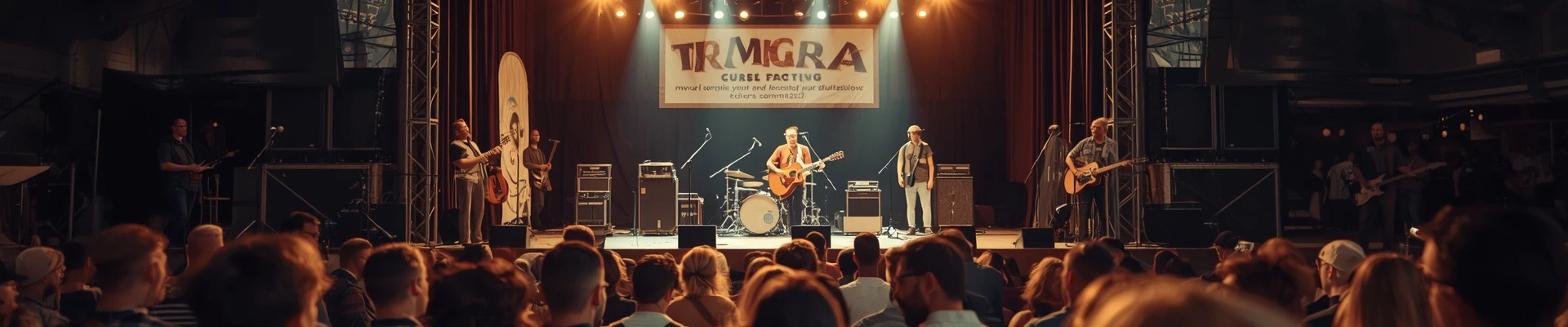
The Hip emerged from Kingston's university-bar circuit, the same circuit that has launched or sustained dozens of Canadian acts across the decades. The Grad Club (Queen's University's graduate student pub), The Mansion, The Ale House, Stages Nightclub, and a rotating set of venues along Princess Street — Kingston's main commercial corridor — have constituted the working ecosystem. Kingston's geography between Toronto and Montreal means that national touring acts moving between the two cities stop here regularly; the city has always been a touring node as well as an originating one.
Before the Hip, Kingston's most significant musical figure was Chalmers "Chalky" Daly and the generation of blues and R&B musicians who worked the bar circuit through the 1960s and 1970s. Doug Riley — the Toronto jazz and session pianist who became one of the most recorded musicians in Canadian history — was born in Kingston. Ken Tobias, the singer-songwriter who scored the 1973 Canadian hit "I Just Want to Make Music," came out of the Kingston folk circuit. The Glorious Sons — one of Canada's most successful rock acts of the 2010s and 2020s — are Kingston natives, carrying the city's hard-rock guitar tradition forward into the streaming era. Their 2017 album The Union and 2019 album A War on Everything demonstrated Kingston's continued ability to generate commercially credible rock music rooted in the same guitar-forward aesthetic the Tragically Hip made famous.
The Queen's University campus sustains a perpetually renewing folk, indie, and singer-songwriter circuit. CFRC 101.9 FM — the Queen's University student radio station, one of the oldest campus radio stations in Canada (broadcasting since 1923 in various forms) — has been a career-launching platform for Kingston musicians and a national tastemaker in Canadian indie and alternative for decades. Campus radio and the university pub circuit are the entry points: young musicians from Kingston and the surrounding region form bands, play the Grad Club and the Ale House, get aired on CFRC, and either stay in the city or take the Highway 401 to Toronto.
Kingston's folk and roots tradition runs through the Limestone City Blues Festival and the broader singer-songwriter culture that the university environment cultivates. The folk revival of the 1960s and 1970s left a lasting imprint — Kingston's position between Toronto (Yorkville scene) and Montreal (Place des Arts circuit) put it on the route of folk acts moving across Ontario and Quebec. Dan Hill performed on the Kingston circuit before his 1977 hit "Sometimes When We Touch" broke nationally. The broader folk infrastructure — open mics, listening rooms, acoustic clubs — has never entirely disappeared.
The Indigenous music of the surrounding Tyendinaga Mohawk Territory — a Haudenosaunee (Six Nations) reserve 40 kilometres west of Kingston — contributes traditional Haudenosaunee music and contemporary Indigenous artists to the regional cultural landscape. Murray Porter, the Mohawk musician and activist from Tyendinaga, is one of the most respected Indigenous songwriters in Ontario. His work blends traditional Haudenosaunee themes with roots rock and country in a way that has made him a significant figure in Canadian Indigenous music beyond the region.
Kingston's jazz scene is modest but sustained by the university population and a handful of dedicated venues. The Jazz Kingston organization programs live jazz through the city's clubs and concert halls, and the Kingston Jazz Festival has presented local, regional, and national jazz acts in the summer season. The Isabel Bader Centre for the Performing Arts — a 565-seat concert hall on the Queen's University waterfront campus, opened in 2014 — is the city's most sophisticated performance space, programming classical, jazz, world music, and chamber ensembles alongside theatrical events.
Venues and neighborhoods
Kingston's venue geography is compact, oriented around the Princess Street corridor and the downtown waterfront. Leon's Centre (9,000 capacity) — formerly the Rogers K-Rock Centre — is the city's arena, hosting the OHL's Kingston Frontenacs and major touring concerts. It became permanently embedded in Canadian cultural mythology after The Tragically Hip's final show there in 2016. The Isabel Bader Centre for the Performing Arts on the Queen's waterfront handles classical, jazz, and theatrical programming with exceptional acoustics. The Grand Theatre (downtown, 800 seats) programs mid-size touring acts and theatrical productions.
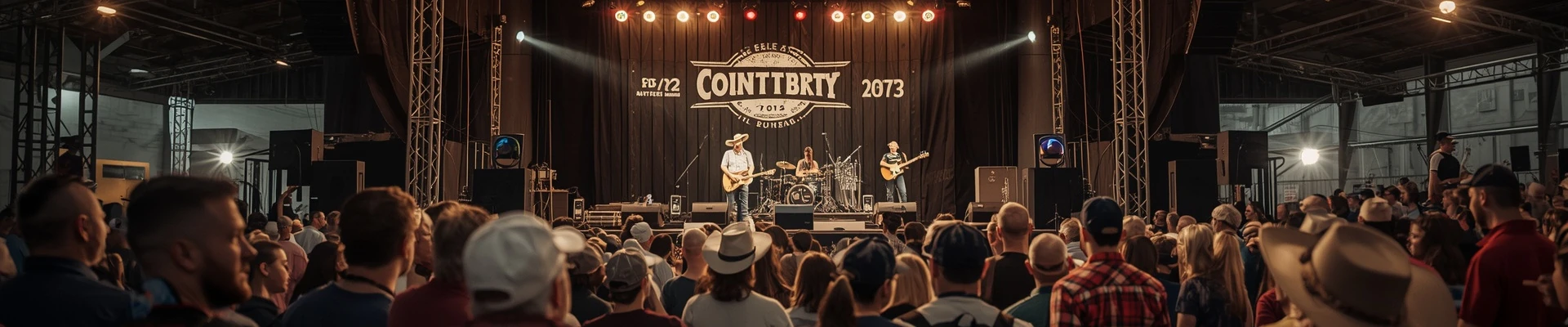
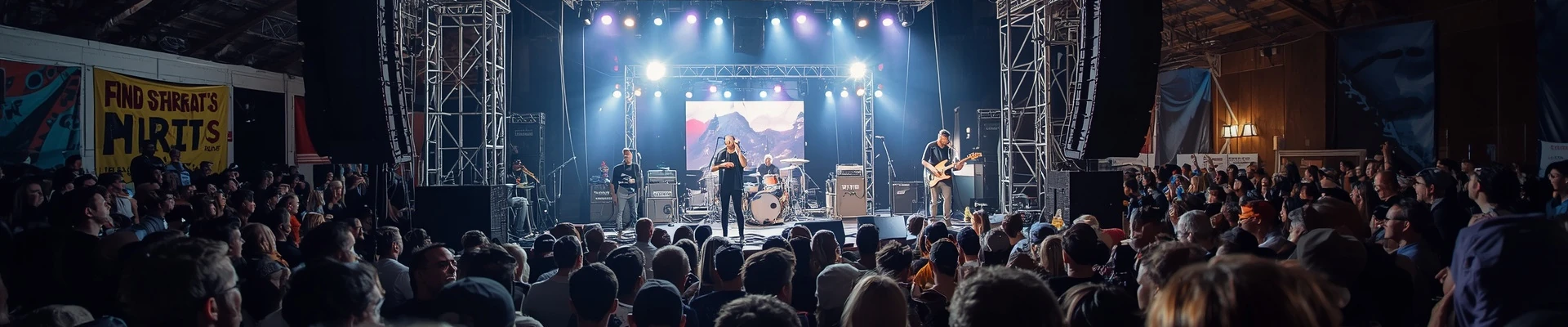
The club and bar tier runs along Princess Street from downtown toward the university. The Grad Club (Queen's University, 200 capacity) has been the original proving ground for Kingston bands for decades — it's where the Hip played early shows, where the Glorious Sons built their first audience, and where every succeeding Kingston band gets its first real test. The Ale House (Princess Street) operates as a lively live music bar. Stages Nightclub programs electronic and dance music for the university crowd. The Mansion has cycled through several incarnations as a live music and events venue. The Tir Nan Og (an Irish pub) sustains a folk and trad session circuit on the weekends.
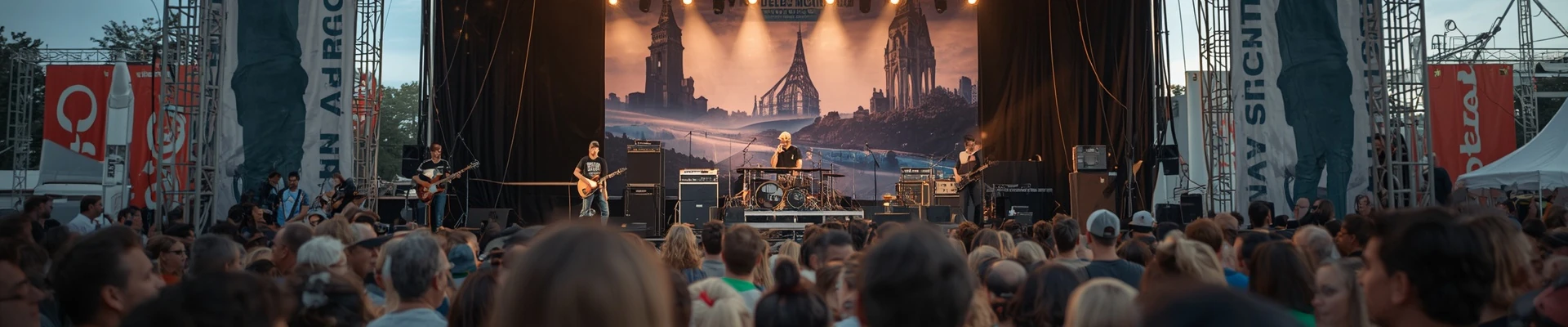
The downtown waterfront — Confederation Basin, City Park, and the harbour between the Rideau Canal mouth and the St. Lawrence — hosts outdoor programming through the summer, including the Limestone City Blues Festival and various civic events. The Skeleton Park Arts Festival (held in McBurney Park, also called Skeleton Park for its 19th-century cemetery origins) programs indie and folk music in a community festival context. Portsmouth Village — the western waterfront neighbourhood near the Olympic Harbour — sustains a quieter arts community with studio spaces and gallery programming.
Festivals and signature events
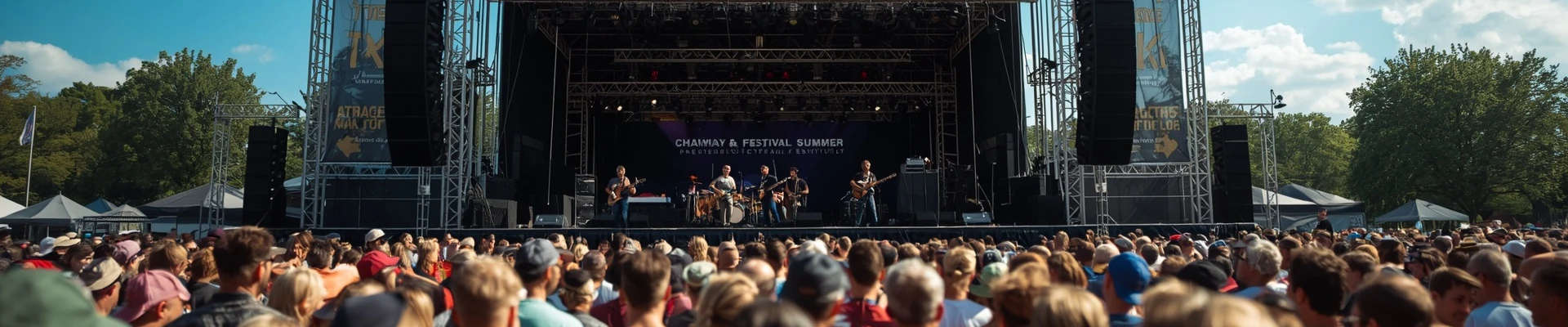
The Limestone City Blues Festival — held over the August long weekend at Springer Market Square and the waterfront — has become Kingston's signature outdoor music event, drawing national blues, roots, and Americana acts alongside regional performers. Jazz Kingston programs a jazz festival through the summer season. The Kingston Canadian Film Festival programs live music alongside its film screenings. The Kingston Buskers Rendezvous — one of Canada's longest-running street performance festivals — fills Princess Street and Market Square with buskers, street musicians, and performers for a week in August, giving emerging musicians a public audience.
The Queen's University Homecoming weekend (annually in October) functions de facto as a music festival — bars across Princess Street book live music, bands play campus venues, and the city's live economy spikes sharply. The AMS (Alma Mater Society) concert programming at Queen's University brings national touring acts to campus through the academic year. The Frontenac County Folk Music Society programs acoustic and folk music through the year in smaller venue contexts.
What ties it all together
Kingston's musical signature is guitar rock and folk storytelling — music that takes geography, community, and history seriously. The Tragically Hip wrote songs about Canadian rivers, hockey players, painters, and towns that most people had never heard of, and made them into anthems. The Glorious Sons write about working-class Ontario with the same sense of place. CFRC 101.9 has been transmitting the music of a mid-sized limestone city between two great metropolises for over a century. The Isabel Bader Centre sits on the same waterfront where Frontenac County limestone was once loaded onto barges. The Grad Club is two blocks from the same Princess Street where Queen's students have been going out since the 1840s. In Kingston, the institutions endure and the students pass through, and the music — rootsy, wordy, guitar-forward, and proud of its postal code — keeps coming.