

Nepean, Ontario
Nepean occupied the western and southwestern approaches to Canada's capital, bounded roughly by the Ottawa River to the north, the Rideau River and Rideau Canal to the east, and the green belt and Rideau Valley to the south. For roughly two decades — from its incorporation as a city in 1978 until its absorption into the amalgamated City of Ottawa on January 1, 2001 — Nepean was one of Canada's fastest-growing municipalities, swelling from a semi-rural township into a city of nearly 200,000 people on the strength of federal-government employment, high-technology sector growth, and relentless suburban development. The city's communities — Barrhaven, Bells Corners, Craig Henry, Skyline, Qualicum, and the older inner suburbs near Baseline Road — gave Nepean its patchwork character: parts bedroom community, parts small-town main street, parts corporate office park.
Economically, Nepean depended on the federal public service and the emerging technology corridor along the Ottawa–Carleton Research Park and Nortel Networks' sprawling Carling Avenue campus, which employed tens of thousands at its peak. The Merivale Road commercial strip served as the city's informal main street, lined with restaurants, big-box retailers, and the entertainment venues that shaped after-dark life for residents who might otherwise have made the twenty-minute drive into downtown Ottawa.
Music History and Identity
Nepean did not produce a singular sound the way cities like Seattle or Detroit defined their musical generations, but it contributed meaningfully to the National Capital Region's (NCR) broader music ecosystem. The city's proximity to Ottawa — whose Barrymore's Music Hall on Bank Street, The Rainbow Bistro, and Zaphod Beeblebrox on York Street were the anchors of the capital's live scene — meant that Nepean musicians trained and gigged in one of Canada's more active mid-sized music markets.
The NCR's folk revival, which ran hotly through the 1970s and into the 1980s, found adherents in Nepean community halls and church basements. The Ottawa Folk Festival (founded 1994, held annually at Britannia Park on the western Ottawa riverbank just north of Nepean) drew heavily on local and regional talent, and Nepean residents formed a significant part of both its audience and its volunteer base. Artists including Lynn Miles — whose Americana and country-folk career earned her multiple Juno nominations — built their early reputations in this overlapping NCR folk circuit.
The rock and alternative scene in Nepean expressed itself most visibly through arena rock and junior-hockey culture. The Nepean Sportsplex on Woodroffe Avenue — a multi-pad arena that opened in 1975 and became the city's largest public gathering space — hosted concerts and community events alongside hockey, and the junior hockey scene (the Nepean Raiders) created a social infrastructure that incubated local bands playing covers of Bryan Adams, The Tragically Hip, and Bachman-Turner Overdrive for post-game crowds in the sportsplex's lounge and at nearby bars.
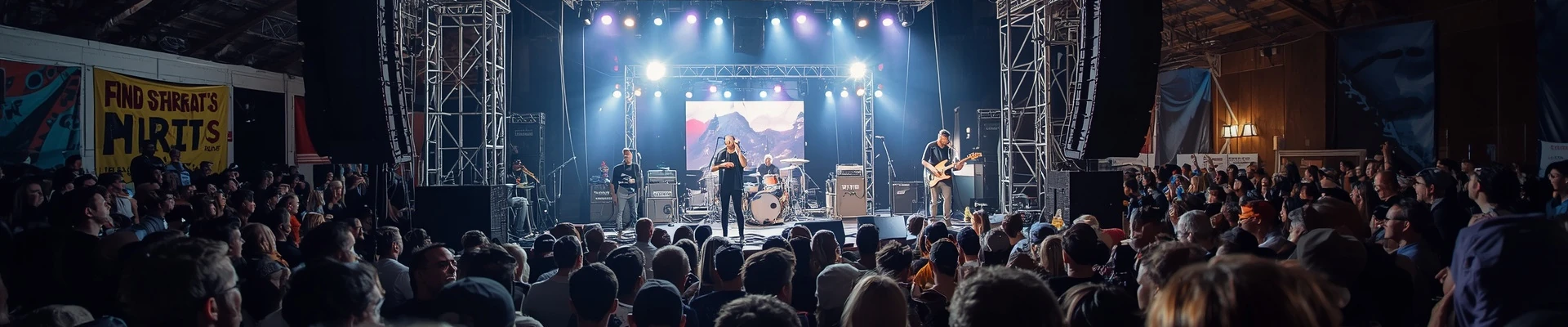
The Merivale Road entertainment strip in the 1980s and early 1990s included bars and nightclubs that booked local and regional rock acts. The Ritz nightclub and several other venues along that corridor gave working bands a circuit outside the downtown core. By the time grunge arrived, Nepean had its own cluster of basement rehearsal spaces and independent recording rooms feeding into Ottawa's broader alternative scene.
Festivals and Events
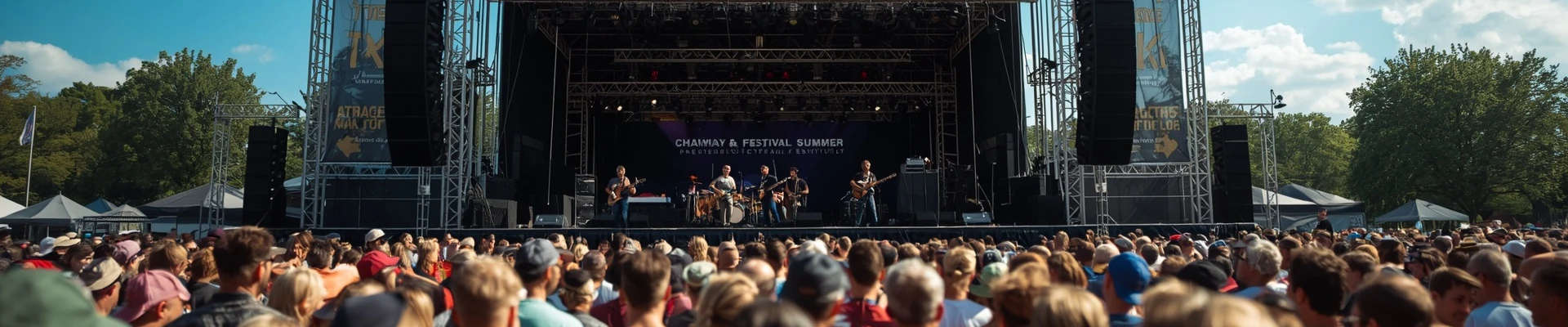
Nepean's most significant recurring musical event was its integration into the Ottawa Bluesfest orbit — one of Canada's largest outdoor music festivals, held annually at LeBreton Flats in Ottawa, whose audience and performer pipeline extended into all of the NCR's constituent communities. Nepean residents frequently headlined community festivals in their own neighborhoods: Barrhaven's Canada Day celebrations on Cedarview Road grew into one of the region's larger free outdoor concerts, drawing local acts and occasional regional names.
The Centrepointe Theatre — Nepean's premier performing-arts venue, opened in 1988 inside the Centrepointe Community Centre on Centrepointe Drive — became the city's most important cultural institution and hosted touring folk, jazz, and classical acts alongside theatrical productions. After amalgamation it became the City of Ottawa's Centrepointe Theatre and retains that role today, programming a mix of genres for an audience that still draws heavily from former Nepean communities.
Neighborhoods and Their Scenes
Barrhaven, in Nepean's south, was and remains one of the fastest-growing suburban communities in Ontario — a car-dependent grid of subdivisions that gave rise to an active home-recording culture as young musicians without downtown connections built studios in garages and finished basements. The evangelical and mainline church communities in Barrhaven and Craig Henry sustained a parallel contemporary-Christian music scene with its own recording ambitions and cross-denominational concert circuit.
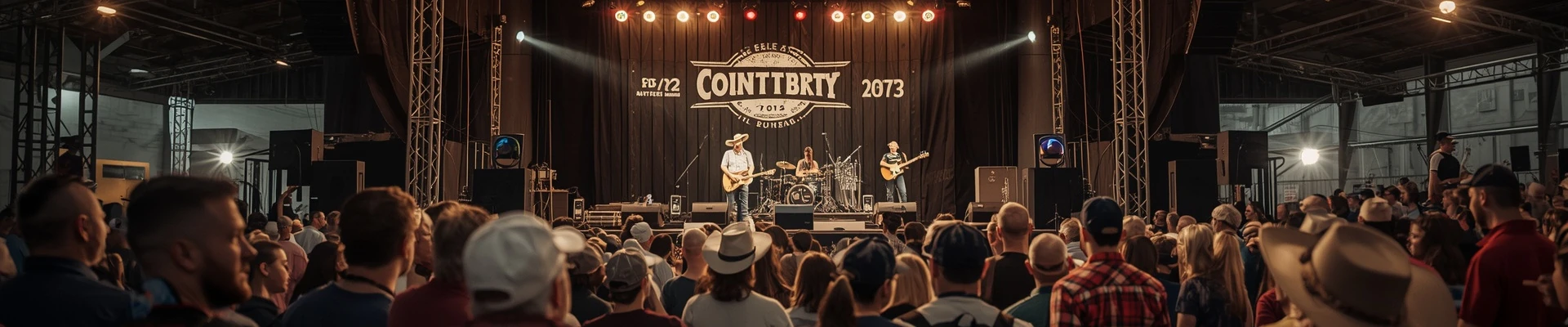
Bells Corners, an older commercial node at the junction of Robertson Road and Moodie Drive in Nepean's northwest, had a more working-class character that translated into a bar-band culture oriented around classic rock and country. Several clubs in Bells Corners booked live music regularly through the 1980s and provided steady income for covers bands anchored in the NCR session circuit.
The inner suburbs near Baseline Road and Merivale, closer to Ottawa proper, blended more easily into the broader Ottawa alternative and indie scenes of the 1990s. Musicians from these neighbourhoods walked the same circuit as their counterparts in Centretown and the Glebe — attending shows at Zaphod Beeblebrox (run by former Ottawa Rough Riders defensive back Mike Sherwood), recording demos at studios in the Hintonburg and West Wellington corridor just over the Nepean–Ottawa boundary.
Legacy After Amalgamation
The 2001 amalgamation dissolved Nepean as a legal entity, folding its communities into the new City of Ottawa. For the music scene, the practical effect was minimal — musicians had always moved fluidly across municipal lines — but the loss of Nepean's separate cultural and recreational funding stream eventually reduced the community-based programming that had sustained the Centrepointe Theatre's more adventurous bookings. Several Nepean-based music organizations merged with Ottawa counterparts or ceased independent operations.
What persists is the Barrhaven and Bells Corners local identity: community concert series, church and school performance programs, and a dense home-studio ecosystem that feeds into Ottawa's recording infrastructure. The Ottawa–Carleton District School Board schools in former Nepean communities — A.Y. Jackson, Colonel By, Merivale, and Bell — produced a steady output of musicians who went on to play in Ottawa bands, study at the Carleton University and University of Ottawa music programs, and record in the capital's mid-size studios.
What Ties It All Together
Nepean's musical identity was always relational rather than autonomous: a city defined by its proximity to and participation in Ottawa's cultural life rather than by a sound or scene it exported to the wider world. Its contribution was infrastructural — the hockey rinks and community centres and church halls and suburban garages where Canadian musicians learned their craft before heading downtown or west to Toronto. Centrepointe Theatre remains its most durable cultural institution, a mid-capacity performing-arts room that still represents Nepean's aspiration to be more than a commuter suburb. In a region where the federal government sets the cultural agenda and the Juno Awards have stopped by multiple times, Nepean played the essential role of sustaining the audience that made Ottawa's music ecosystem viable.