
Niagara Falls, Ontario sits at one of the most dramatic geographic intersections on the continent — the point where the Niagara River, draining Lake Erie toward Lake Ontario, plunges over a dolerite escarpment in three cascades: the Horseshoe Falls (the Canadian side, 57 metres tall and 670 metres wide), the American Falls, and the narrow Bridal Veil Falls. The city — population roughly 100,000 within city limits, part of the Regional Municipality of Niagara with 475,000 people — faces Niagara Falls, New York across the river, with the Rainbow Bridge and Whirlpool Bridge connecting the two countries. The Queen Elizabeth Way (QEW) links the city to Hamilton (68 km northeast) and Toronto (130 km northeast); the Niagara Falls Bridge Commission routes cross-border traffic to Buffalo, New York (30 km southwest). The falls are the most powerful waterfall in North America by flow volume, making Niagara Falls one of the most visited destinations on Earth, drawing roughly 14 million tourists per year to a corridor of casinos, hotels, restaurants, and attractions along Clifton Hill and Fallsview Boulevard.
History and character
The Haudenosaunee (Iroquois Confederacy) — particularly the Neutral Nation who occupied the Niagara Peninsula before European contact, and the Seneca of the Haudenosaunee — held this territory for centuries before French explorers arrived in the late 1600s. Father Louis Hennepin, a Recollect friar, became the first European to publish a description of the falls in 1683. The British gained control after the Seven Years' War, and the region became a focal point of the War of 1812, with battles at Queenston Heights, Lundy's Lane, and Fort George taking place within kilometres of the falls.
The 19th century transformed Niagara into a tourist destination: Clifton House (the first luxury hotel, 1833), the Maid of the Mist boat tour (operating since 1846), and the arrival of the Great Western Railway in 1853 brought honeymooners, dignitaries, and thrill-seekers from across North America and Europe. Frederick Law Olmsted and Calvert Vaux (who designed Central Park) successfully advocated for Queen Victoria Park (1887) to protect the Canadian shoreline from commercial overdevelopment — one of the first instances of government intervention to preserve a natural wonder. The International Railway (electric interurban) connected Niagara Falls to Buffalo, Lockport, and Lewiston, sustaining a dense cross-border economy through the early 20th century.
The 20th century brought Brock University (in nearby St. Catharines, 1964), Casino Niagara (1996), and Fallsview Casino Resort (2004) — the two large casinos that now anchor the city's tourism economy alongside the falls themselves. The post-industrial decline of the manufacturing sector (once anchored by chemical plants, abrasives, and hydroelectric industries along the Niagara River) has left the city with a dual identity: a glittering tourist strip visible from across the border, and a working-class residential city grappling with the consequences of deindustrialisation.
Music identity
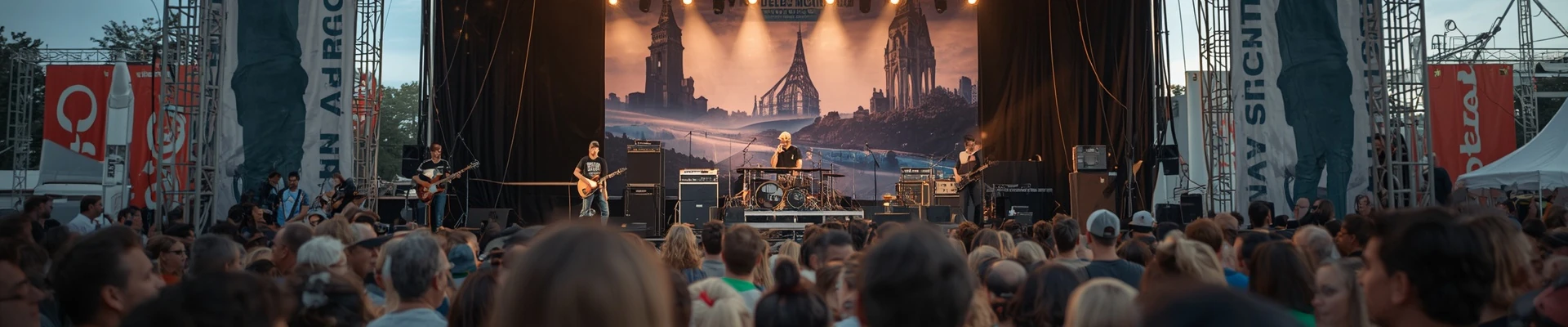
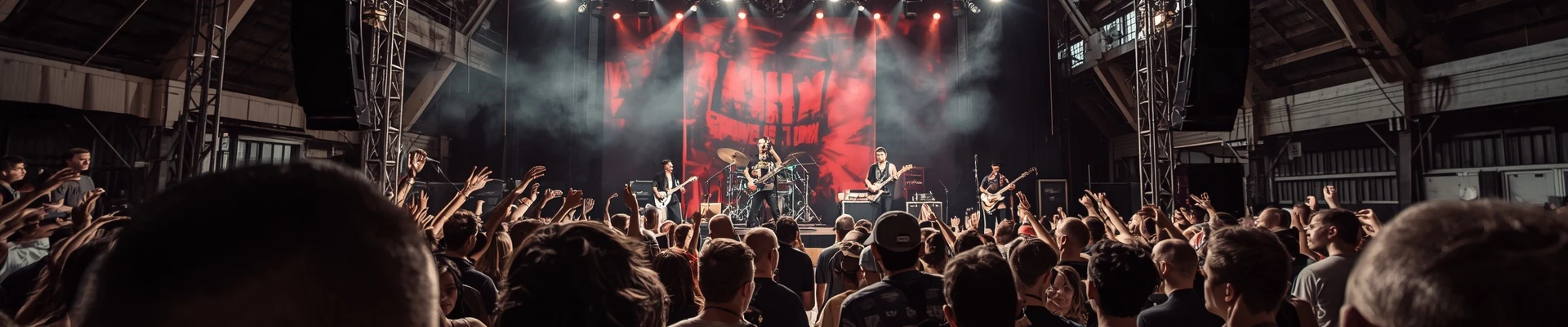
Niagara Falls does not have a globally recognized genre or scene in the way that Hamilton has its steel-town rock, or Toronto has its hip-hop ecosystem. What it has is a music scene shaped by three forces: its border geography (constant cross-pollination with Buffalo's rich music history), its tourist economy (a large supply of cover-band, tribute-act, and casino-entertainment work that has paradoxically supported working musicians for decades), and its working-class community (which has sustained punk, metal, country, and rock scenes rooted in the Niagara Peninsula's industrial past).
The Buffalo connection is foundational. Buffalo is one of the great American music cities — birthplace of Rick James, home of The Goo Goo Dolls, Ani DiFranco, The Trammps, and a deeply entrenched blues, R&B, and rock scene. Niagara Falls musicians have always drawn from and contributed to that Buffalo ecosystem; the Rainbow Bridge is a 10-minute drive, and bands from both sides of the border have played each other's clubs, shared bills, and cross-pollinated continuously. The Buffalo-Niagara region functions as a single music market in many practical respects.
The Hamilton connection is more recent but equally important. Hamilton's explosion as one of Canada's most vital music cities — built around This Ain't Hollywood, The Casbah, and a remarkable density of original bands — has sent musical energy down the QEW. Niagara Falls bands increasingly look toward Hamilton (and through it to Toronto) as their natural circuit.
Local artists of note include Moist bassist Jeff Pearce, who has Niagara Peninsula connections; Mialanie Holden (folk/roots singer-songwriter active out of the Niagara region); and a broader community of working musicians who have sustained original scenes at venues throughout the city. The Niagara Falls Music Scene Facebook community — several thousand members — documents a constant stream of original performances, open mics, and small festivals that tourist Niagara tends to obscure.
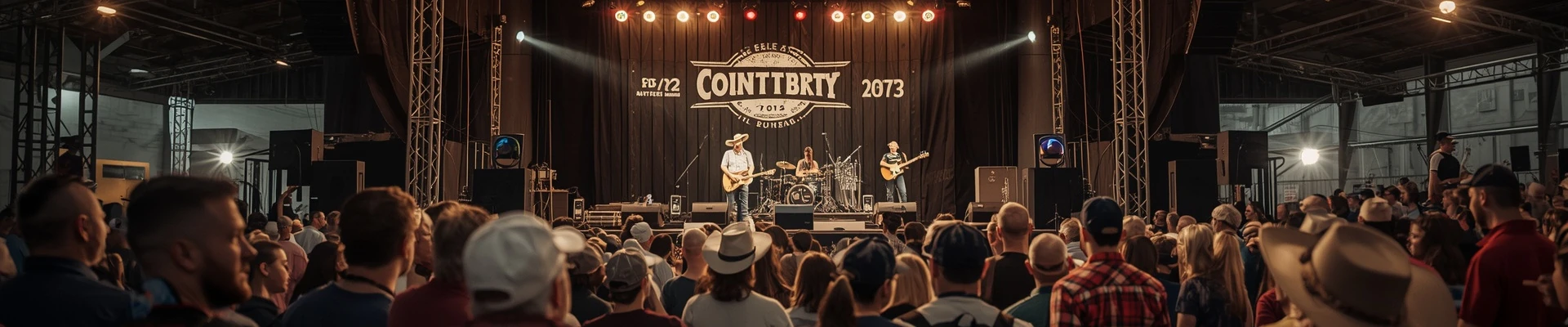
The casino entertainment ecosystem has its own internal logic. Fallsview Casino Resort and Casino Niagara together program hundreds of entertainment acts per year — tribute bands, cover acts, and occasional original touring artists — through their performance venues. Avalon Ballroom Theatre at Fallsview (1,500 capacity) and The Exchange at Casino Niagara both host ticketed concerts. This infrastructure has made Niagara Falls a destination for mid-tier touring acts who might not otherwise stop in a city of 100,000.
The punk and hardcore community has roots in the broader Niagara Peninsula. The Flatliners (a major Canadian punk band, Oshawa-formed but with deep Ontario connections and significant Niagara-area fan base), and the broader Ontario punk circuit have run through Niagara clubs for decades. metal and hard rock have sustained scenes at venues like the Mansion House and various warehouse shows. The country and roots community reflects the rural Niagara Peninsula hinterland — farms, orchards, vineyards, and small towns stretching south toward the Niagara Escarpment wine country.
The Niagara wine country connection has also produced a growing music-and-wine tourism economy. The Niagara-on-the-Lake wine region (30 km north) has drawn jazz, classical, and roots acts to winery concerts and the Shaw Festival theatre complex. The Niagara Jazz Festival (centered in Niagara-on-the-Lake but drawing Niagara Falls audiences) programs high-calibre jazz acts in vineyard settings.
Venues and neighborhoods
The venue landscape divides sharply between the tourist strip and the residential city. Along Clifton Hill and Fallsview Boulevard, entertainment is relentlessly commercial — wax museums, IMAX theatres, the Skylon Tower (with its revolving restaurant), mini-golf, and chain restaurants — with music programming filtered through casinos and hotel bars. Fallsview Casino's Avalon Ballroom Theatre (1,500 seats) is the city's largest dedicated concert room and the anchor for touring acts. Casino Niagara programs smaller shows.
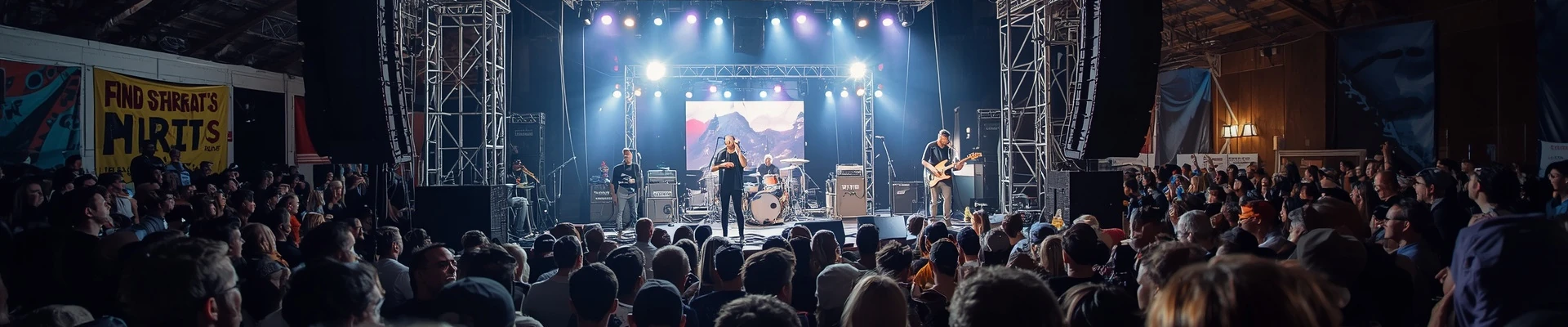
Away from the strip, the residential city sustains a different ecosystem. The Mansion House (on Victoria Avenue, one of the longest-running rock and metal bars in Niagara) has been a cornerstone of original music for decades. The Library Bar hosts regular live music. Patrick Sherlock's (an Irish pub) programs acoustic and folk nights. Club 82 has been a hip-hop and R&B venue. The Seneca Niagara Resort & Casino (on the American side, accessible from downtown via the bridge) draws some cross-border music audiences.
Niagara Falls City Hall and Gale Centre (the community arena) host occasional large events. Kingsbridge Park on the riverfront provides outdoor festival space. Fallsview Boulevard has a concentration of hotel bars and lounges with nightly entertainment — the functional equivalent of a club row, diffused through dozens of properties.
The city's neighborhoods reflect its dual character. The tourist strip along Clifton Hill and the falls is globally recognized; the residential northwest (around Morrison Street and Lundy's Lane) is working-class suburban Niagara; Chippawa in the south is a quieter village; Stamford is suburban; the Stanley Avenue corridor anchors industrial southeast Niagara.
Festivals and signature events
Canada Day at the Falls (July 1) is one of the largest Canada Day celebrations in Ontario, with fireworks over the gorge, outdoor stages, and crowds of hundreds of thousands along the riverfront. New Year's Eve at Niagara Falls is similarly massive — the city programs one of Ontario's largest New Year's celebrations, with fireworks and outdoor concerts.
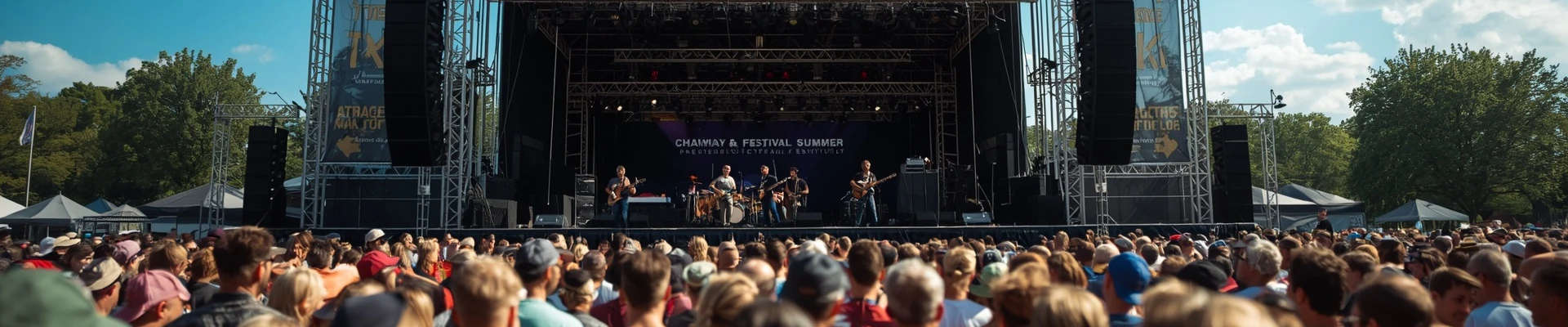
Niagara Falls Elvis Festival (summer) celebrates Elvis Presley's 1957 visit to the falls with tribute performances, competitions, and a full weekend program that draws Elvis fans from across North America. Niagara Music & Food Fest programs roots, folk, and regional acts through the summer. Ribfest Niagara combines competitive BBQ with live music. Niagara Jazz Festival (based in Niagara-on-the-Lake but drawing from across the region) programs jazz through the wine country in summer.
The Winterlights season — when the falls are illuminated with LED light shows through the winter months — draws a different audience and has increasingly included music and entertainment programming. The Table Rock Welcome Centre and the Journey Behind the Falls attraction anchor year-round tourism, and the casinos program entertainment through all seasons.
What ties it all together
Niagara Falls, Ontario is a city living in the paradox of extraordinary natural wealth and extraordinary economic pressure — the most-visited natural wonder in North America generates enormous tourism revenue, but relatively little of it filters into the residential community or the local music economy. The falls are simultaneously the city's greatest asset and an economic monoculture that has made diversification difficult. Yet the music scene that has persisted here is real: it runs through the casino ballrooms, the working-class rock bars on Victoria Avenue, the border-crossing connections to Buffalo and Hamilton, and the broader Niagara Peninsula community that sustains country, folk, metal, and punk in a landscape of orchards and escarpments. What makes Niagara Falls musically distinctive is not any single exported sound but the friction between its global tourist identity and its deeply local community — a friction that has produced, over decades, a scene of working musicians who have learned to navigate both worlds, playing tribute sets for tourists at the casino one night and original music for each other at the Mansion House the next.