

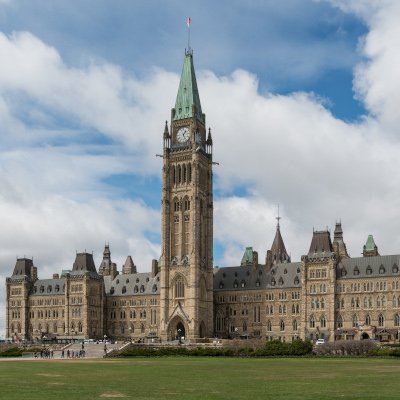
Ottawa is the capital of Canada and the fourth-largest metropolitan area in the country, with roughly 1.02 million residents inside the city limits and more than 1.5 million across the surrounding National Capital Region, which spans the Ottawa River into the Québec city of Gatineau. Sitting at the confluence of the Ottawa, Rideau, and Gatineau rivers, ringed by the Gatineau Hills and the rolling farmland of eastern Ontario, it is at once a federal capital, a tech corridor (built around the post-Nortel cluster of telecom and software companies in Kanata), and a deeply bilingual city — roughly 37% of residents speak French at home, and the federal civil service operates in both official languages. Ottawa's musical identity reflects that mix: a long folk and singer-songwriter tradition tied to the Ottawa Folk Festival and the Bluesfest era, a serious indie and post-rock scene, a thriving punk and hardcore lineage, and a steadily growing hip-hop, R&B, and West African and Caribbean music ecosystem.
A brief history
The land at the meeting of the Ottawa, Rideau, and Gatineau rivers was Algonquin Anishinaabe territory for thousands of years before French traders and Catholic missionaries arrived in the 17th century. The town of Bytown was founded in 1826 to support the construction of the Rideau Canal, a 202-kilometer military waterway built by Lieutenant-Colonel John By to provide a secure shipping route between Montréal and Kingston after the War of 1812. Bytown was renamed Ottawa in 1855 and was chosen as the capital of the Province of Canada by Queen Victoria in 1857 — a compromise capital between the rival cities of Toronto, Montréal, Québec City, and Kingston. After Confederation in 1867, Ottawa became the permanent capital of the new Dominion of Canada, and the federal civil service has been the city's defining employer ever since. The 19th-century lumber industry along the Ottawa River, the post-WWII expansion of the federal bureaucracy, the 1990s telecom boom around Nortel, JDS Uniphase, and Mitel, and a steady stream of immigration from francophone Canada, the Caribbean, the Horn of Africa, the Levant, and South Asia have built a city that is unusually polyglot for its size.
Music identity
Ottawa's most internationally famous musical export is Alanis Morissette, who was born and raised in the city, performed on the children's TV show You Can't Do That on Television (filmed in Ottawa) and the local pop circuit through her teens, and broke globally with Jagged Little Pill in 1995 — one of the best-selling albums of all time. Less famously, Paul Anka, born in Ottawa in 1941, was one of the first Canadian teen-pop superstars and one of the most successful songwriters of the 20th century ("Diana," "Puppy Love," "My Way," the Tonight Show theme). Bryan Adams lived in Ottawa as a teenager. Bruce Cockburn, the singer-songwriter and political folk icon, came up through the Ottawa coffeehouse scene in the late 1960s and early 1970s. Kathleen Edwards, raised in Ottawa, has built one of the most respected catalogs in modern Canadian alt-country and roots music; her Quitters café in nearby Stittsville has become a cultural hub. Lynn Miles, Lynne Hanson, Amanda Rheaume, Kelly Prescott, and a deep singer-songwriter circuit through venues like the National Arts Centre Fourth Stage, Irene's Pub, and the Black Sheep Inn in Wakefield (just across the river in Québec) keep the folk tradition central to civic life.
The 2000s and 2010s extended the lineage in every direction. The Acorn, the indie-folk project led by Rolf Klausener, became one of the city's most acclaimed indie bands. Kalle Mattson, Hilotrons, The Wooden Stars, Bonjour Brumaire, and a thriving Ottawa indie scene built around venues like Babylon, Zaphod Beeblebrox, and the Black Sheep Inn turned the National Capital Region into one of Canada's most underrated indie incubators. City and Colour (Dallas Green's solo project) recorded portions of his catalog at Ottawa-area studios. Kathleen Edwards's collaborations with Bon Iver's Justin Vernon, Lindi Ortega's Ottawa ties, and the Ottawa Folk Festival (now folded into Bluesfest) anchored the modern roots scene.
Ottawa's punk, hardcore, and metal lineage is unusually strong for a capital city. Furnaceface, the United Steel Workers of Montreal, and a generation of 1990s bands gave way to a serious 2000s and 2010s scene around the now-closed Gabba Hey! all-ages venue, the Manx Pub, and Ottawa's community of straight-edge, post-hardcore, and screamo bands. Annihilator, the long-running thrash-metal band led by Jeff Waters, formed in Ottawa in 1984 and built one of the largest international fan bases of any Canadian metal act. Blessed Are the Meek's descendants, Iron Tusk, and a robust extreme-metal scene continue at venues like Mavericks and House of TARG (a pinball-and-pierogi venue that doubles as one of the city's best small concert rooms).
The 21st century has remade the city again. Ottawa's hip-hop and R&B scene, anchored by artists like Night Lovell (the Ottawa-raised cloud rap and trap pioneer who broke internationally on SoundCloud and YouTube), Belly (Palestinian-Canadian rapper raised in Ottawa, longtime collaborator with the Weeknd), Massari, Tre Mission, A!sh and a current generation of trap and drill artists, has become one of the most-watched in Eastern Ontario. The city's vast East African community — one of the largest Somali, Ethiopian, and Eritrean populations in Canada — fuels a thriving Habesha, Somali, and Afrobeats scene through community halls, churches, and event spaces in Ledbury–Heron Gate, Vanier, and the west end. Caribbean music — Jamaican, Trinidadian, and Haitian — runs through the Carivibe Festival and a long lineage of soca and dancehall events. Latin music has homes at clubs across downtown and the ByWard Market. Francophone music — both chanson québécoise from across the river in Gatineau and a smaller franco-ontarien tradition — runs continuously through bilingual venues, festivals, and radio. The Ottawa Symphony Orchestra, the National Arts Centre Orchestra (Canada's resident NAC ensemble), and Opera Lyra Ottawa's successors anchor the classical tradition; the Ottawa Jazz Festival and clubs like Café Paradiso keep jazz alive.
Venues and neighborhoods
Ottawa's venue ecosystem is well-developed. At the top sit the Canadian Tire Centre in Kanata (home of the Senators and the city's largest concerts), TD Place at Lansdowne Park, the National Arts Centre complex (housing Southam Hall, the Babs Asper Theatre, and the Fourth Stage), and the Bronson Centre Theatre. The midsize tier includes the Bronson Centre, Ottawa Senators' arena concerts, Algonquin Commons Theatre, the Bayview Yards, and the Aberdeen Pavilion for festival programming. Beneath them is a deep club layer — Bronson Centre, Mavericks, Babylon Nightclub, the 27 Club, House of TARG, Irene's Pub, Café Dekcuf, the Rainbow Bistro (the long-running blues bar in the ByWard Market), the Brass Monkey, and a network of bars and DIY rooms across Centretown, Hintonburg, the ByWard Market, and Wellington West. The Black Sheep Inn in Wakefield, just across the river in the Gatineau Hills, has been one of the most respected small concert rooms in the country since the 1980s and is functionally part of the Ottawa music ecosystem. Latin and Caribbean music have homes at clubs across the ByWard Market and Vanier.
Different neighborhoods carry different musical identities. Centretown, Hintonburg, and Wellington West anchor the indie rock and DIY scenes. The ByWard Market anchors the bar and club circuit and the city's blues, jazz, and Caribbean music venues. Vanier, just east of downtown, is heart of the city's francophone, East African, and Caribbean communities. Heron Gate, Ledbury, and Hunt Club support the city's largest Somali, Ethiopian, and Eritrean scenes. Kanata, the western tech suburb, hosts the Canadian Tire Centre and a smaller club circuit. Gatineau, across the river in Québec, supports a francophone bar and club ecosystem that runs continuously into Ottawa's.
Festivals and signature events
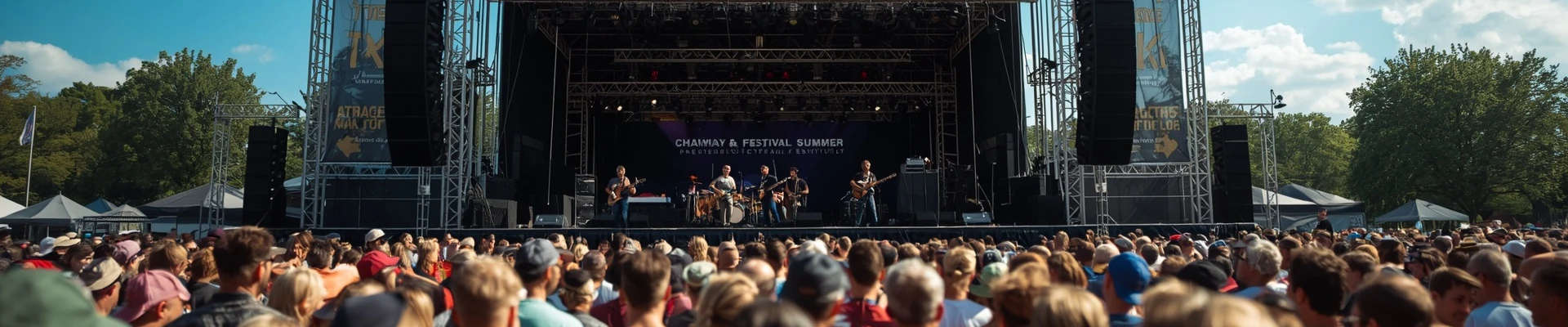
The festival calendar reflects the city's range. Ottawa Bluesfest in mid-July is one of North America's largest summer music festivals, drawing more than 300,000 attendees over 10 days at LeBreton Flats Park with a lineup that has long since outgrown the festival's blues origins to span hip-hop, pop, country, indie, and electronic music. Ottawa Jazz Festival at Confederation Park in late June draws major international jazz, world music, and pop acts. CityFolk (which absorbed the Ottawa Folk Festival) anchors the roots and singer-songwriter circuit each September. Escapade Music Festival at Lansdowne is the city's flagship electronic event. RBC Bluesfest's off-season programming, Festival franco-ontarien, Carivibe in the Gloucester area, Capital Pride, Glowfair, Westfest in Westboro, and Canada Day on Parliament Hill (the country's largest annual civic music event) keep the calendar full. Black History Ottawa, Ethiopian and Eritrean cultural festivals, Ottawa Ribfest with country and rock programming, and the Ottawa Asian Fest add cultural and community programming. Gatineau Hot Air Balloon Festival across the river anchors a Québec-side music programming track each Labour Day weekend.
What ties it all together is the city's combination of bilingualism, capital-city stability, immigrant diversity, and proximity to both Montréal (just two hours east) and Toronto (just four hours west). Ottawa musicians grow up in a city where Parliament Hill, the Canadian War Museum, and the National Arts Centre share a downtown with Habesha-music house parties, francophone open mics, hardcore basement shows, and the largest blues festival in the world. It is younger and less canonized than Canada's larger music capitals — but, increasingly, that is its strength.