


Richmond Hill is a town in York Region, Ontario, sitting directly north of Toronto between Markham to the east and Vaughan to the west — part of the densely populated suburban ring that has grown into one of the most ethnically diverse corridors in Canada. With roughly 202,000 residents and a rapidly expanding population, Richmond Hill sits on the Oak Ridges Moraine, a glacial landform that runs east–west across Southern Ontario and creates the headwaters of both Lake Ontario and Lake Simcoe drainage systems. The Don River's West Branch originates in the hills here, and the Moraine gives the town some of the only elevated topography in the otherwise flat GTA sprawl. Economically it is a prosperous residential and commercial community — high-income households, a large professional class, significant retail corridors along Yonge Street and Highway 7, and a growing tech and life-sciences employment base. It is neither a canonical music capital nor a city with a single defining sound, but its extraordinary cultural diversity and its physical position as a GTA satellite — 45 minutes by GO Train from downtown Toronto — have made it a significant feeder into the city's music industry and a city with multiple thriving community music scenes in its own right.
A brief history
The land at the headwaters of the West Don River was Haudenosaunee, Anishinaabe, and Huron-Wendat territory before European settlement. Quaker settlers arrived in the late 18th century, establishing farms along Yonge Street — one of the longest streets in the world, running unbroken from downtown Toronto north to Barrie. The village of Mount Pleasant and then Richmond Hill were platted in the early 19th century, named after the Duke of Richmond, the Governor General of Canada at the time. The town grew slowly as a farming and milling community through the 19th century and a sleepy bedroom community through most of the 20th. The GO Train service launched in 1978 transformed Richmond Hill into a commuter suburb for Toronto professionals. The transformative demographic shift came in the 1990s and 2000s — Hong Kong immigration before and after the 1997 handover, followed by waves of mainland Chinese, Taiwanese, South Korean, and Iranian immigration, then subsequent arrivals from India, the Philippines, and Sri Lanka, turned Richmond Hill from a predominantly Anglo-European town into one of the most culturally diverse communities in Canada. By the 2020s, roughly 60% of residents identified as visible minorities, with Chinese-Canadians comprising the largest single community followed by South Asian, Korean, and Persian-Canadian populations.
Music identity
Richmond Hill's most visible musical contribution to the broader Toronto ecosystem is through its Chinese-Canadian and Korean-Canadian communities, which have built two of the most active cultural music scenes in the suburban GTA. The town's T&T Supermarket corridor on Highway 7, the Times Square shopping complex, the First Markham Place and Hillcrest Mall districts, and the Korean commercial corridor along Yonge Street host a continuous stream of Mandopop, Cantonese pop, K-pop, and Korean indie artists on tour — making Richmond Hill a required stop for any East Asian touring act visiting Canada. The Richmond Green Sports Centre and David Dunlap Observatory grounds have hosted community music programming, and the town's network of Chinese-language community centres, Buddhist temples, Korean churches, and Iranian cultural centres program regular live music, choir, and ensemble performances year-round.
Richmond Hill feeds the Toronto music industry primarily through proximity and infrastructure rather than through an identifiable Richmond Hill "sound." Dozens of active Toronto-based musicians grew up in Richmond Hill and commuted into the city's clubs, studios, and record labels. Choclair, one of the foundational figures of Canadian hip-hop, has ties to the broader Scarborough–North York–York Region corridor that includes Richmond Hill. Jazz Cartier's collaborators, artists in the XO Records constellation around The Weeknd, and a significant number of Toronto R&B and hip-hop producers have Richmond Hill and York Region roots — proximity to Vaughan (home to significant Italian-Canadian music scenes) and Markham (arguably the most economically successful Chinese-Canadian suburb in North America) shapes the context. The town's Cantonese, Mandarin, and Korean-pop home recording studios — an informal network of bedroom producers and basement arrangers working across Mandopop, K-pop interpolation, and East Asian indie genres — represent a significant but largely uncredited layer of the GTA music economy.
The Iranian-Persian community, one of the largest in the GTA, fuels a thriving Persian pop, classical Persian music, and contemporary Iranian-Canadian fusion scene. Richmond Hill and nearby Thornhill together constitute the informal centre of Persian cultural life in the GTA — nicknamed "Tehrangeles North" by community members in reference to the Iranian diaspora hub in Los Angeles. Persian-language radio, satellite TV, and community events program Persian pop (Googoosh, Dariush, Ebi, and current-generation diaspora artists), Persian classical (santur, tar, setar, kamanche), and Persian fusion acts constantly through the town's event spaces, restaurants, and cultural venues. Aria's Supper Club and Bar, Chelo Persian Restaurant live music nights, and the network of Persian wedding and event halls along Yonge Street and Highway 7 give the scene a concrete institutional footprint.
The South Korean-Canadian community has built a K-pop and Korean indie scene that is unusually active for a city of Richmond Hill's size. Korean-language churches, the Hannam Supermarket corridor, and the Korean cultural centres along Yonge Street program Korean choirs, classical ensembles, K-pop cover groups, and a steady stream of visiting Korean artists. Korean-Canadian singer-songwriters working in English and Korean simultaneously — a genre sometimes labelled "K-indie Canada" — have emerged from the town's music programs and church youth groups. The Richmond Hill Korean Canadian Cultural Association programs regular Korean traditional music events, and Korean drumming (janggu, buk) and gayageum ensembles have a presence in the town's schools and cultural centres.
Richmond Hill's Western popular music scene is a function of its position as a prosperous Toronto suburb with active high school programs, a strong piano and classical conservatory tradition, and constant access to the Toronto touring circuit. The Richmond Hill Philharmonic Orchestra is a community orchestra with roots going back decades. The Academy of Music and a dense network of private music schools serving the town's achievement-oriented parent demographic produce a steady stream of classically-trained musicians who subsequently enter the Toronto pop, indie, and classical sectors. Country and folk have a smaller but real presence in the moraine's rural interface communities to the north. The Richmond Hill Centre for the Performing Arts, a 630-seat venue opened in 2009 as part of the Performing Arts Centres of York Region cluster, hosts touring classical, theatre, and pop acts year-round and provides the town with one of the strongest performing-arts infrastructure per capita in the suburban GTA.
Venues and neighborhoods
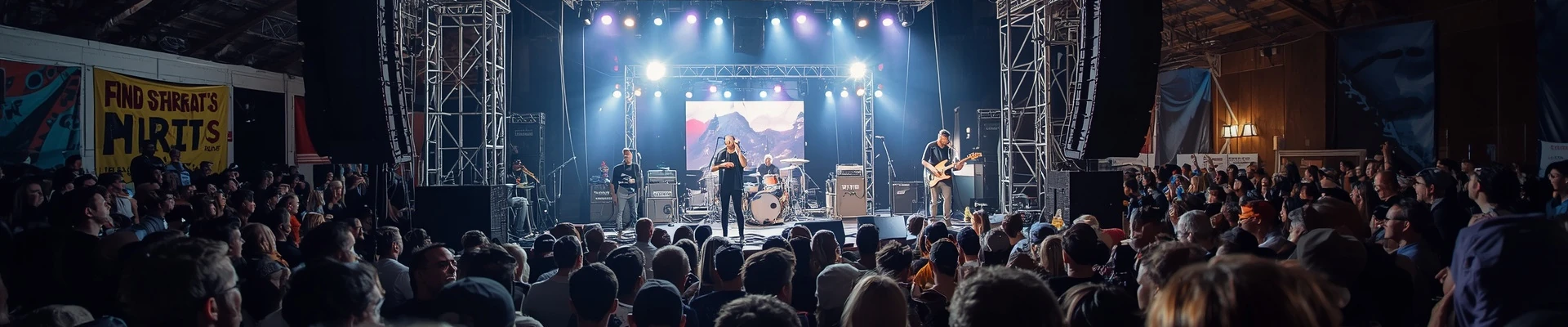
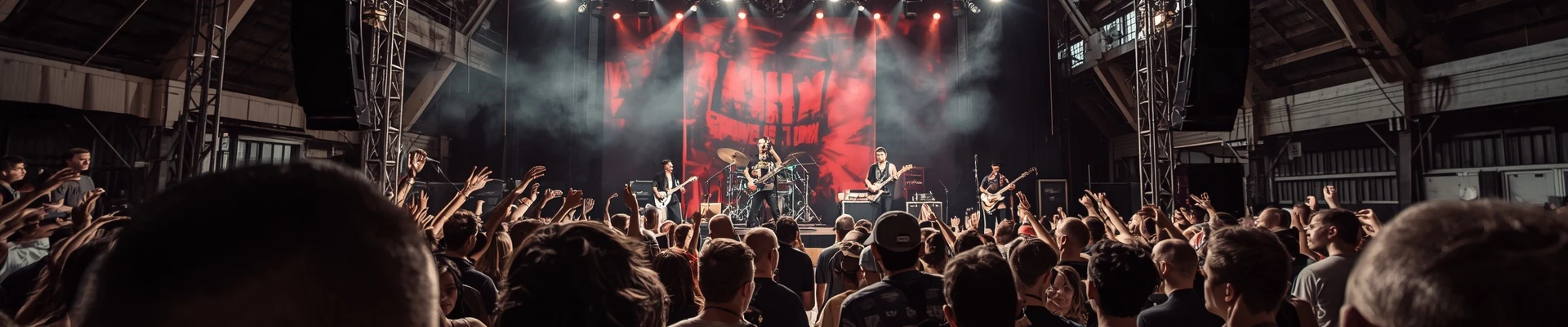
The venue ecosystem is shaped by Richmond Hill's suburban geography and its community-centre model. The Richmond Hill Centre for the Performing Arts is the flagship — a 630-seat main hall and black-box space with programming ranging from internationally touring chamber ensembles to Mandopop and Persian pop acts. The Meadowbrook Community Centre, Elgin Barrow Arena, Richmond Green Sports Centre, and the network of York Region community halls supplement for community programming. Hillcrest Mall and the retail corridors along Yonge Street, Highway 7, and Bayview Avenue contain bars and restaurants with regular music programming. The Sutton and Mount Albert areas north of Richmond Hill have country bars and rural community events that connect to the broader York Region rural circuit. The town's most active live-music businesses are its banquet halls and event centres — The Manor, Crystal Fountain Event Venue, Paradise Banquet and Convention Centre, Eden Event Centre, and a long list of Persian, South Asian, Korean, and Chinese reception venues that program live wedding bands, classical trios, and touring pop acts from their respective diaspora communities year-round.
Geographically, the Yonge Street corridor running north from the Toronto boundary through the town centre is the spine of Richmond Hill's commercial and cultural life. The Highway 7 / Bayview Avenue node has the densest concentration of East Asian restaurants, shops, and event spaces. Thornhill — split between Richmond Hill and Vaughan along Steeles Avenue — is the heart of the Jewish-Canadian and Persian-Canadian cultural corridors. The Oak Ridges Moraine communities in the north of the municipality, including Oak Ridges itself, have a more rural and country/folk character. Milliken Mills and the southern corridors blend into the Markham Chinese-Canadian cultural ecosystem.
Festivals and signature events
Richmond Hill's annual events reflect its diversity. The Richmond Hill Family Fun Fair (summer) programs multicultural music across several stages. Diwali in Richmond Hill at the Performing Arts Centre and in public spaces is one of the largest South Asian celebrations in York Region. Richmond Hill Lunar New Year celebrations at community centres and the Performing Arts Centre are among the largest Chinese New Year events outside Toronto proper. Persian New Year (Nowruz) events in March fill the town's banquet halls and Persian community spaces. Korean Chuseok and Korean independence day events at Korean churches and community centres program Korean traditional and pop music. The Richmond Hill Jazz and Blues Festival has been programmed at various intervals, drawing regional acts. Canada Day at Richmond Green is one of the larger suburban GTA Canada Day celebrations with a concert stage. The North York and York Region choral festival circuit, Performing Arts Centres of York Region programming, and the Richmond Hill Philharmonic Orchestra's annual season round out the formal calendar.
What ties Richmond Hill together musically is its identity as a place of quiet, community-embedded musical production — where concert pianists emerge from private conservatory programs, Persian classical ensembles rehearse in community halls, K-pop cover groups perform in Korean church basements, Cantonese choirs rehearse for festivals at Buddhist temples, and South Asian wedding bands practice in garage studios — all within a 45-minute train ride from one of the most active music industries in North America. Richmond Hill does not produce a single definable sound, but it produces musicians, audiences, cultural institutions, and infrastructure in quantities that far exceed what its suburban geography suggests. For a generation of Korean, Chinese, Iranian, and South Asian Canadians growing up in the GTA's northern ring, Richmond Hill is where music is learned, practiced, and first performed — and Toronto is where it goes next.