


Huntsville is the largest city in Alabama by population and one of the largest by land area in the American Southeast, with roughly 215,000 residents inside the city limits and more than 500,000 across the Huntsville–Decatur–Albertville Combined Statistical Area. Sitting on the Tennessee River in Madison County in the northern Alabama Tennessee Valley, at the southern edge of the Cumberland Plateau foothills, Huntsville is Alabama's fastest-growing major city and one of the fastest-growing metro areas in the American South. The city is known worldwide as the "Rocket City" for hosting NASA's Marshall Space Flight Center — the birthplace of the Saturn V rocket that carried Apollo astronauts to the Moon — and the adjacent US Army Redstone Arsenal, which together give Huntsville the largest concentration of engineers and scientists per capita of any American city outside certain Silicon Valley corridors. Huntsville is home to the University of Alabama in Huntsville (UAH), Alabama A&M University (the historically Black university in the northwest of the city), and Calhoun Community College. The city's economy is anchored by aerospace and defense: Boeing, Lockheed Martin, Northrop Grumman, Raytheon, Dynetics, SAIC, and dozens of federal contractors surround Redstone Arsenal. The median household income in Huntsville is among the highest in the South, and a substantial tech-industry workforce has driven a sustained wave of restaurants, arts venues, and live music infrastructure over the past fifteen years.
A brief history
The land in the Tennessee Valley was Cherokee and Creek territory before Euro-American settlement. Huntsville was founded in 1805 by John Hunt and incorporated in 1811 — the first incorporated city in Alabama — and grew as an antebellum cotton center, one of the wealthiest small cities in the pre-Civil War South. The Big Spring at the city's center provided water for early settlers and remains a downtown landmark. After the Civil War — during which Huntsville changed hands multiple times and was occupied by Union forces early in the conflict — the city rebuilt as a textile and agricultural hub. The transformation came after World War II: in 1950, the US Army brought Wernher von Braun and his team of German rocket scientists (the Peenemünde group, resettled in America under Operation Paperclip) to Redstone Arsenal, where they developed the Redstone missile and then the Saturn rocket family for NASA. Marshall Space Flight Center was formally established in 1960. The 1960s Apollo program made Huntsville a household name worldwide — von Braun's team in Huntsville built the engines that took humanity to the Moon. The US Space & Rocket Center — which houses an actual Saturn V rocket on outdoor display — remains one of Alabama's most-visited attractions. Huntsville's population has grown in virtually every decade since the 1950s, accelerating dramatically in the 2010s and 2020s as Redstone Arsenal's workforce expanded, cyber and intelligence agency presence grew, and tech companies including Intuitive Machines, Blue Origin, and numerous defense-tech startups opened regional offices.
Music identity
Huntsville's musical identity is rooted in country, gospel, blues, and Southern rock — the bedrock sounds of the Tennessee Valley — while a contemporary layer of indie rock, folk, Americana, and hip-hop has grown rapidly alongside the city's tech-era population boom. The city's most important musical geography is its proximity to Muscle Shoals, roughly 70 miles to the west in the Shoals region — one of the most storied recording locations in American music history. FAME Studios and Muscle Shoals Sound Studio recorded Aretha Franklin, Wilson Pickett, the Rolling Stones, Lynyrd Skynyrd, Paul Simon, and hundreds of others; the Shoals region's soul, country, and R&B tradition flows through the entire Northern Alabama cultural ecosystem that Huntsville sits within.
Within the city's own musical history, Oakwood University (the HBCU in northwest Huntsville, founded in 1896 as an Adventist institution) carries one of the most nationally prominent gospel music programs in the American South. The Oakwood University Aeolians choral ensemble has performed at Carnegie Hall and released nationally distributed recordings — a Huntsville gospel institution with a century-long lineage. The broader gospel tradition runs through dozens of historically Black churches across north and west Huntsville.
The country tradition runs deep. The Northern Alabama honky-tonk and country circuit has sustained continuous activity through dance halls and country radio since the postwar era. Stan Hitchcock, the early 1960s Nashville country act, is from Huntsville. The broader Tennessee Valley country tradition — running from Nashville through the Shoals — has always passed through Huntsville venues and radio.
The contemporary scene has expanded dramatically since 2010. Lowe Mill ARTS & Entertainment — a converted 1920s cotton mill in southwest Huntsville that reopened in 2009 as the largest privately-owned arts facility in the United States — anchors the city's indie arts ecosystem. Lowe Mill houses more than 200 artists' studios, galleries, theaters, and performance spaces, including StephenHaus Music, which programs regular concerts from local and touring indie, folk, and Americana artists. Microwave (the post-hardcore band from Huntsville who signed to Pure Noise Records and released Stovall in 2016) is the city's highest-profile contemporary indie rock export, carrying the Huntsville flag on national touring circuits.
The hip-hop and R&B scene has grown alongside demographic diversification. Huntsville's historically Black communities — concentrated in Triana, Terry Heights, and the north Huntsville corridor — sustain a continuous gospel, R&B, and hip-hop presence. Local acts perform regularly at clubs along University Drive and in the evolving downtown bar district. WLRH (the NPR affiliate at UAH) programs folk, classical, and Americana alongside public radio news programming.
Venues and neighborhoods
The anchor of Huntsville's venue ecosystem is the Von Braun Center — the downtown performing arts and convention complex named for the city's most famous resident. It houses Propst Arena (capacity approximately 10,000 for concerts, the city's largest indoor venue), the Mark C. Smith Concert Hall (the 2,200-seat main hall, home of the Huntsville Symphony Orchestra and major touring performers ranging from Broadway touring productions to jazz headliners), and the Playhouse. The Von Braun Center is Huntsville's most versatile major venue, programming the full range from arena country and rock to classical to theatre.
The 2022 opening of the Orion Amphitheater — an 8,000-capacity outdoor amphitheater near Providence Main, designed by architect David Schwarz — has been widely praised as one of the finest new outdoor venues in the American South. Rolling Stone highlighted the Orion for its intimacy and acoustics, and it has rapidly become a destination stop on touring routing from Nashville.
The midsize and club tier runs through Lowe Mill ARTS & Entertainment (multiple performance spaces and StephenHaus Music anchor the singer-songwriter and folk circuit in the converted cotton mill), Campus No. 805 (the brewery and event space in a converted school in northwest Huntsville), Sidetracks Music Hall (the long-running downtown club programming indie rock, Americana, and touring acts), Yellowhammer Brewing, Straight to Ale, and the growing cluster of bars along Clinton Avenue West and Washington Street downtown. MidCity — the mixed-use entertainment district along the Highway 72 corridor — has emerged as a secondary hub with live music programming in bars and restaurants.
Neighborhoods carry distinct identities. Downtown anchors the Von Braun Center circuit and the Clinton Avenue bar scene. Lowe Mill and the adjacent Five Points district anchor the indie arts community. South Huntsville (along the Research Park and Madison Pike corridors) anchors the tech-worker residential population and has produced a brewpub and restaurant scene with regular live music. North Huntsville anchors the historically Black community and its gospel, R&B, and hip-hop traditions. MidCity and the Highway 72 corridor anchor suburban entertainment programming.
Festivals and signature events
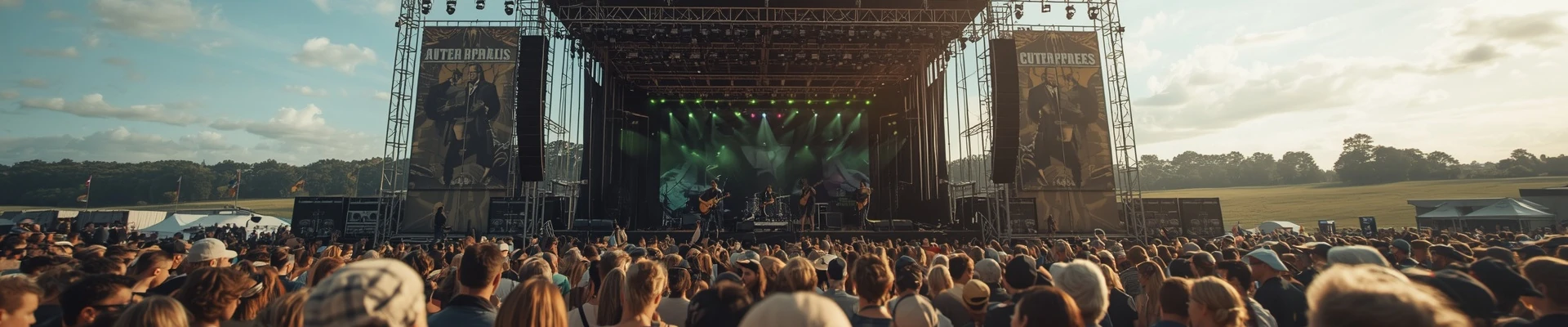
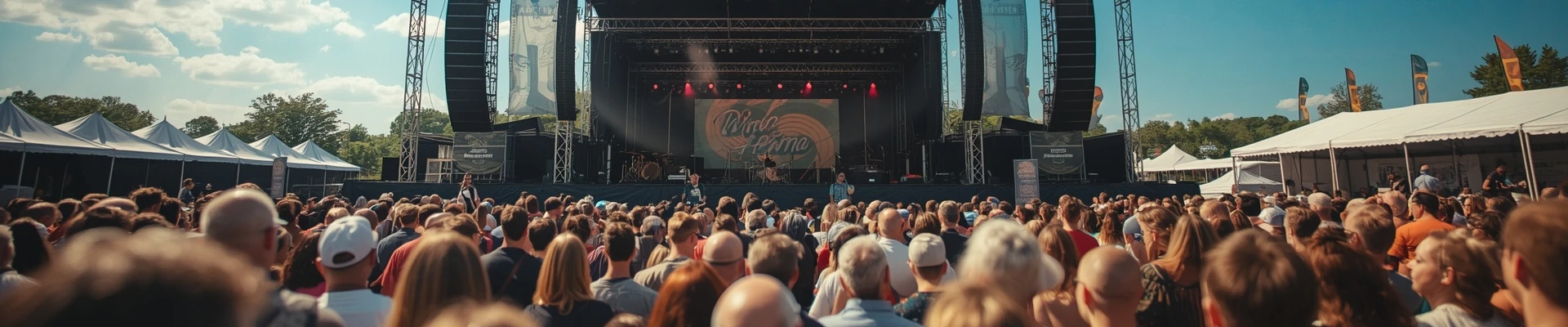
Panoply Arts Festival — the three-day outdoor festival in Big Spring International Park each April, running since 1982, one of the Southeast's longest-running community arts festivals — is Huntsville's signature cultural event, with stages programming local and regional musicians alongside visual arts and performance. The Orion Amphitheater summer season anchors the major touring circuit from spring through fall. Rock the South — the multi-day country festival in nearby Cullman (roughly an hour south) drawing 40,000+ — is the region's biggest country event. MidCity Live programming, Concerts on the Rover along the Rotary Trail greenway, the Huntsville Botanical Garden outdoor concert series, Lowe Mill's rotating concert and gallery programming, Huntsville Oktoberfest, the Oakwood University Aeolians concert season, and the Huntsville Symphony's pops series round out the annual calendar. Burg Fest in nearby Guntersville and a network of Tennessee Valley folk and bluegrass events extend the regional circuit.
What ties it all together
What defines Huntsville musically is the coexistence of Deep South tradition and an internationally cosmopolitan engineering workforce — a combination unlike any other Southern city. The Oakwood University Aeolians carry gospel heritage with Carnegie Hall credentials a few miles from where Saturn V engineers once ran trajectory calculations. The Von Braun Center's concert hall stages the Huntsville Symphony across the street from the US Space & Rocket Center's Saturn V display. The Orion Amphitheater — already one of the architecturally acclaimed outdoor venues in the South — hosts touring country and rock acts in the city where the Moon rockets were designed. Lowe Mill buzzes with indie artists, folk singers, and Americana acts in a converted cotton mill a mile from a Northrop Grumman campus. Huntsville is the Rocket City: launched into modernity by von Braun's team in the 1950s, rooted in the Tennessee Valley's gospel and country soil since long before that, and accelerating toward a future where tech-industry growth and Deep South cultural identity create something genuinely original. That particular gravitational pull — high-tech ambition crossed with Southern music tradition — gives the Rocket City its singular sound.