
Chandler is the fourth-largest city in Arizona and one of the fastest-growing cities in the United States, with roughly 261,000 residents in a municipality that has expanded dramatically from a small cotton-farming town into a significant technology and semiconductor hub in the span of a single generation. Situated in the southeastern corner of Maricopa County, it borders Mesa to the north, Gilbert to the east and west, and Tempe to the northwest, placing it at the heart of the East Valley cluster of cities that together form one of the largest metropolitan areas in the American Sun Belt. Chandler sits at an elevation of about 369 metres, on the flat desert plain that was once cotton fields irrigated by the Gila River canal network, and its geography is defined by the suburban grid of wide arterial roads, planned residential communities, massive semiconductor fabrication plants, and a small but increasingly lively downtown arts and entertainment district.
A brief history
Chandler takes its name from Dr. Alexander John Chandler, an Arizona Territory veterinary surgeon and land speculator who purchased 18,000 acres of desert land from the Gila River Indian Community in 1891, developed an elaborate irrigation system drawing on the ancient Hohokam canal network, and established the town in 1912 — the same year Arizona achieved statehood. The early economy was built entirely on cotton and alfalfa agriculture, irrigated by canal water from the Salt and Gila Rivers, and the town grew slowly through the early 20th century as a quiet farming community. The San Marcos Hotel, opened by Chandler in 1913, became one of the great resort destinations of the early American Southwest — a Spanish Colonial Revival landmark that attracted wealthy Easterners fleeing winter, celebrities, and eventually baseball teams (the Chicago Cubs held spring training there). It still stands, now a boutique hotel in the heart of downtown, as the oldest continuously operated resort hotel in Arizona.
The mid-20th century brought the military and aviation industries that transformed the entire Valley: Williams Air Force Base (now Phoenix-Mesa Gateway Airport) trained tens of thousands of American and Allied pilots during World War II and the Korean War, drawing military families into Chandler's orbit. The base's closure in 1993 was a blow, but the land's conversion into an industrial park and eventually a commercial airport created new economic anchors. The true transformation came in the 1980s and accelerated through the 1990s and 2000s: Intel chose Chandler for its major Arizona fabrication campus, opening Ocotillo in 1980 and expanding it repeatedly — it is now one of the largest chip fabrication complexes in the United States and the single largest private employer in the city. Wells Fargo, Microchip Technology, PayPal, Amazon, Northrop Grumman, and dozens of other technology companies followed, creating the Silicon Desert corridor that now runs through Chandler and Gilbert. The result is a city with a uniquely bifurcated identity: a Mexican-American agricultural and working-class history in the older western and southern neighborhoods, and a highly educated, transient tech-industry professional class in the newer planned communities.
Music identity
Chandler does not have a single internationally famous musical identity the way Phoenix has the Meat Puppets or Mesa has Jimmy Eat World — but it has a deep, active, and musically diverse local scene shaped by its demographics. The city is roughly 30% Hispanic, with Mexican-American communities concentrated in the West Chandler and South Chandler areas that predate the tech-boom suburban buildout. These neighborhoods sustain a continuous regional Mexican, norteño, banda sinaloense, cumbia, and corridos circuit through clubs, dance halls, quinceañeras, and community events. The Latin urban, reggaeton, and trap en español scenes have grown substantially in the 2010s and 2020s, driven by a younger second- and third-generation Mexican-American population and recent immigration from throughout Latin America and Central America.
Chandler's country music scene is one of the most active in the East Valley. The city's large working-class white, military-family, and transplant population — many from Texas, Oklahoma, and the rural Midwest — has sustained a robust country honky-tonk and live music circuit through venues along the Dobson Road and Arizona Avenue corridors. Country Thunder (held in nearby Florence) is the major festival draw for the broader East Valley country audience, and Chandler musicians feed that circuit. The Chandler Center for the Arts — the city's flagship performing arts complex at 250 North Arizona Avenue, with a 1,529-seat main hall and a 185-seat smaller theatre — books a consistently ambitious mix of touring country, pop, Latin, and classical acts that serves the entire East Valley. Since opening in 1991 it has been one of the most programmed mid-size performing arts venues in the metropolitan area.
The rock and alternative circuit in Chandler runs through the downtown entertainment district and a cluster of bars and live music rooms along San Marcos Place and Arizona Avenue. The Ostrich Festival (see Festivals) has historically booked major touring rock, country, and pop acts; more regularly, the downtown district hosts local and regional rock, punk, and indie bands through The Shady Park (a Chandler-adjacent outdoor entertainment venue) and the broader downtown bar circuit. Post-hardcore, metalcore, and punk bands from Chandler and the broader East Valley have fed the Phoenix metro underground scene for decades through basement shows, church parking lots, and small venue circuits.
The Christian music ecosystem — through the city's large evangelical and non-denominational megachurch network (Elevate Life Church, Lifequest Church, The Church at Litchfield Park-area spillover) — programs contemporary Christian music, worship rock, and CCM acts regularly. Chandler's LDS community (the city has a significant Mormon population tied to neighboring Mesa's LDS infrastructure) contributes to the broader choral and Christian music circuit.
Hip-hop and R&B scenes have grown through Chandler's younger African-American and biracial communities, concentrated in parts of north and west Chandler. Local hip-hop artists from Chandler and the broader East Valley circulate through Phoenix-area radio, streaming, and venue circuits, feeding into the broader Arizona hip-hop scene.
Venues and neighborhoods
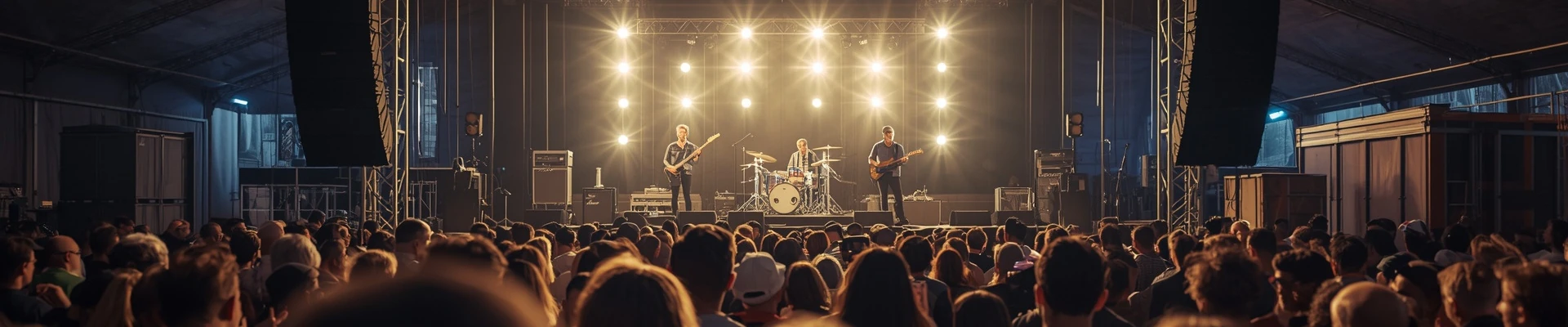
The Chandler Center for the Arts at 250 North Arizona Avenue is the city's cultural anchor — opened in 1991 and drawing mid-tier national and international touring acts in country, Latin, classical, jazz, pop, and comedy across its 1,529-seat main theatre. The COME Comedy Club, Whiskey Row Chandler, and a cluster of bars along San Marcos Place and the Dr. A.J. Chandler Park entertainment district (particularly active during the Ostrich Festival season) define the city's live music club tier. The Shady Park — an outdoor bar and event venue in the Chandler/Tempe border area — has become one of the most active venues for local and regional rock, electronic, and indie acts. Ostrich Festival grounds along Wild Horse Pass Boulevard host major touring acts for the March festival; the rest of the year, a network of bars, restaurants, and private event venues across the suburban grid carry the live music load.
The downtown Chandler corridor — bounded roughly by Arizona Avenue, Chandler Boulevard, and Dr. A.J. Chandler Park — is the densest concentration of entertainment venues in the city. The San Marcos Hotel remains a social hub with live music in its bar and courtyard spaces. The rapid commercial development along Gilbert Road, Price Road, and the Price Freeway corridor has added restaurant and bar venues programming live music in the newer northern and eastern parts of the city. West Chandler and South Chandler support the Latin music and norteño circuit through bars and social clubs that rarely appear in tourism materials but form the backbone of the city's working-class music life.
Festivals and signature events
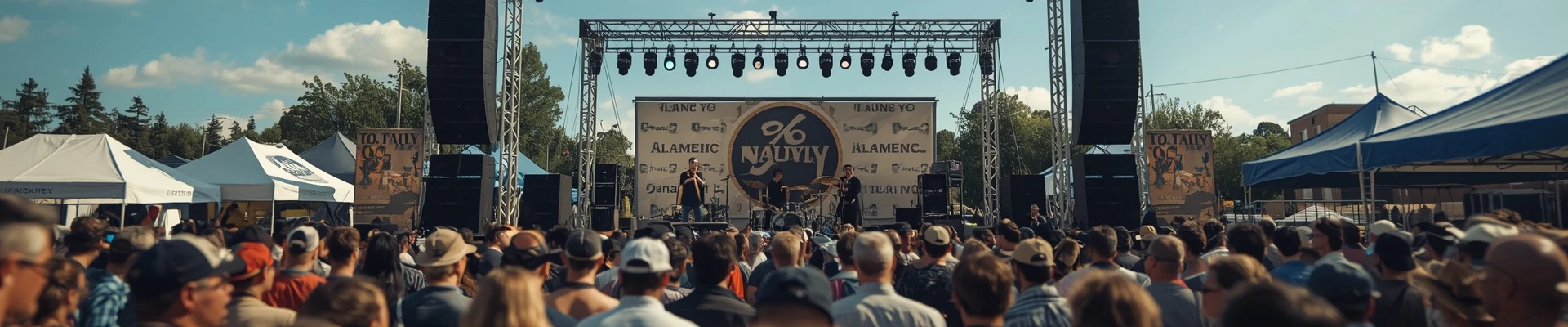
The Chandler Ostrich Festival is the city's most famous annual event — a three-day festival held every March at the Tumbleweed Park grounds, drawing 100,000+ attendees and featuring a major headliner concert stage that has hosted acts like Blake Shelton, Dierks Bentley, Nelly, The Chainsmokers, and Pitbull alongside the ostrich races, carnival, and food vendors. It is one of the largest festival events in the entire Southwest. The Chandler Jazz Festival in downtown Chandler's Dr. A.J. Chandler Park programs local and regional jazz acts across multiple stages in spring. Chandler Multicultural Festival celebrates the city's significant Latino, South Asian, and African immigrant communities with music and cultural programming. Rock the Park is the city's annual summer outdoor concert series in Tumbleweed Park. The Chandler Symphony Orchestra programs a full classical season through the Chandler Center for the Arts. Downtown Chandler Community Partnership events — First Friday-style monthly arts walks, Chandler Craft Spirits Festival, and holiday programming — incorporate live music programming regularly through the downtown district. The Silicon Desert Startup Circuit's tech events have increasingly incorporated live music and DJ programming, reflecting the demographics of Chandler's tech workforce.
What ties it all together is Chandler's position as one of the most rapidly grown cities in the American Southwest — a place that was a quiet farming town of 30,000 people in 1980 and is now a quarter-million-strong technology hub, carrying within it the compressed layers of a Mexican-American agricultural past, a military-family midcentury present, and a tech-industry 21st century. The music culture reflects all three strata: norteño and banda in the western neighborhoods, country and Christian rock in the evangelical and military-family suburbs, hip-hop and alternative rock in the younger professional communities around the downtown corridor. The Chandler Ostrich Festival pulls them all into the same field every March, making it one of the few events in the Valley that genuinely cuts across the city's fractured demographic geography. That layered coexistence — across genre, language, and neighborhood — is the defining characteristic of Chandler's musical life.