
Glendale is a city of roughly 240,000 people in Maricopa County, Arizona, sitting immediately northwest of Phoenix and forming one of the core municipalities of the Phoenix metropolitan area — the fifth-largest metropolitan region in the United States. Bordered by Peoria to the north, Phoenix to the east and south, and Avondale and Surprise to the west, Glendale occupies a central position in the sprawling West Valley suburban corridor that has been one of the fastest-growing regions in North America over the past three decades. The city is best known nationally for State Farm Stadium — home of the Arizona Cardinals NFL franchise and a perennial host of Super Bowls, college football championship games, and some of the largest touring concert productions in the American Southwest. The adjacent Westgate Entertainment District gives Glendale an entertainment infrastructure far exceeding what a city of its size would normally support on its own. Economically the city is shaped by its sports-and-entertainment complex, a major healthcare sector anchored by Banner Thunderbird Medical Center, a significant retail corridor along Bell Road and the Arrowhead area, and an increasingly diversified residential economy. Glendale's population is roughly 40 percent Hispanic or Latino, which gives the city a musical cultural depth that extends well beyond the arena-scale entertainment economy into norteño, banda, regional Mexican, and cumbia scenes sustaining hundreds of thousands of listeners in the West Valley.
A brief history
The land that became Glendale was Sonoran Desert farmland irrigated by the Arizona Canal when the town was formally platted in 1892 by developer William John Murphy as a temperance colony — no saloons allowed. The agricultural economy grew around citrus, lettuce, and alfalfa operations, and the town incorporated in 1910. Through the early 20th century Glendale was a quiet agricultural satellite of Phoenix, separated from the state capital by miles of irrigated farmland. The post-World War II suburban boom connected Glendale to Phoenix's expanding grid, and from the 1950s through the 1980s the city grew steadily as a working-class and middle-class residential community with an economy tied to retail, light industry, and agriculture. The character shift came in the 1990s and 2000s with two transformative developments: the construction of what is now State Farm Stadium (opened in 2006 as Cardinals Stadium, later University of Phoenix Stadium) and the accompanying Westgate Entertainment District, and the rapid growth of Glendale's Latino population — both recent arrivals from Mexico and Central America and longtime Chicano families from the broader Phoenix basin. By the 2010s Glendale had become one of the most prominent entertainment destinations in the Southwest and one of the most culturally Latino cities in Arizona.
Music identity
Glendale's music identity operates on two parallel tracks that rarely intersect but together give the city a musical life far richer than its suburban reputation suggests.
The first track is arena-scale and touring-act entertainment. State Farm Stadium is one of the most important large-venue concert destinations in the American Southwest, with a retractable roof and full-capacity interior seating for 63,000 that makes it one of the few venues in the region capable of hosting the largest stadium concert tours. Artists from Taylor Swift to The Rolling Stones to U2 have played the stadium on major tours. The adjacent Gila River Arena (renamed Desert Diamond Arena in 2022) — a 17,125-capacity NHL arena — is the home of the Arizona Coyotes (now relocated to Tempe) and the primary mid-sized touring concert venue for the West Valley, with a booking history spanning country, rock, pop, R&B, hip-hop, and metal. The Westgate Entertainment District surrounding both arenas includes multiple live music bars and venues that program local and regional acts alongside the arena touring calendar.
The second track is regional Mexican and norteño music. Glendale's large and deep-rooted Latino community sustains a thriving ecosystem of norteño, banda, cumbia, and regional Mexican music that operates largely outside the mainstream touring economy but represents one of the most active live music scenes in the West Valley. The Southside and older central Glendale neighborhoods, along with commercial corridors on 67th Avenue, Camelback Road, and Bethany Home Road, anchor Mexican restaurants, cantinas, and event halls that program weekend norteño and banda performances. Quinceañera and wedding circuit performers are consistently active, and regional touring acts from the Mexican regional circuit — bands and artists on labels associated with Fonovisa, Universal Music Latino, and regional independent houses — pass through Phoenix-Glendale regularly. The Fiestas Patrias celebrations in September anchor an outdoor music calendar that draws major regional Mexican acts.
Beyond these two principal scenes, Glendale has produced and shaped artists across country, hard rock, and indie contexts. The broader Phoenix music ecosystem has always incorporated Glendale — the West Valley feeding artists into the same bar circuits, recording studios, and label infrastructure as the East Valley and central Phoenix. Peoria, Surprise, and Glendale artists have moved fluidly through the Phoenix rock and country scenes for decades, with clubs in the Arrowhead area and along Bell Road programming country, classic rock, and cover bands to large suburban audiences. The DIY and indie-rock scenes centered in Historic Downtown Glendale — the preserved historic commercial district around 58th Avenue and Glendale Avenue — provide a smaller-scale counterpoint, with the corridor supporting coffee shops, galleries, and boutique venues that book acoustic, folk, and indie acts.
Glendale's contribution to American recorded music is less about individual landmark artists than about scale of throughput — the city's arena and mid-size venues have functioned as essential stops on every major touring circuit for twenty years, and the norteño and regional Mexican circuit has sustained an entirely separate, equally active live music economy below the radar of mainstream entertainment coverage.
Venues and neighborhoods
The venue ecosystem scales across an unusually wide range. At the top, State Farm Stadium — 63,000 capacity, retractable roof, one of the most technically advanced stadium venues in North America — sits off the Loop 101 freeway at Cardinals Drive and anchors a cluster of entertainment infrastructure that also includes Desert Diamond Arena (the former Gila River Arena, 17,125 seats) and the Westgate Entertainment District. Westgate's bars and restaurants — including The 501 Club, West Gate Entertainment District branded venues, and various gastropubs — program live music on nights when the arenas are dark, giving the area a year-round entertainment draw.
At the mid-size level, Glendale Arena programming has historically covered country, rock, pop, and R&B touring acts. The Arizona Broadway Theatre (a dinner-theatre that programs Broadway musical productions and occasional concert events) operates in Glendale's Peoria Avenue corridor. Cerreta Candy Company hosts community events with music programming. The emerging Historic Downtown Glendale corridor — centered on Catlin Court and the antique district around Glendale Avenue and 58th Avenue — has several coffee shops and small venues that book local and regional acoustic, folk, and indie acts.
The norteño and banda circuit operates through cantinas and event halls distributed across central Glendale and the southern end of the city: venues on 67th Avenue, Camelback Road, Northern Avenue, and the commercial strip near the Maryvale area of adjacent west Phoenix are all part of the same circuit. The annual Fiestas Patrias outdoor event in September programs major regional Mexican touring acts at outdoor festival scale.
Westgate is the primary music-adjacent neighborhood — a purpose-built entertainment district dense with restaurants, bars, and arena infrastructure. Historic Downtown Glendale (the Catlin Court antique district) is the city's arts and local-culture neighborhood. The Arrowhead area in northern Glendale anchors the suburban country and classic rock bar scene. South Glendale and the Maryvale-adjacent corridor along 67th Avenue anchor the norteño and regional Mexican live music ecosystem.
Festivals and signature events
The signature event is the Super Bowl — State Farm Stadium has hosted Super Bowl XLII (2008), Super Bowl XLIX (2015), and Super Bowl LVII (2023), each of which brings a massive ancillary concert economy to the city, with the NFL Experience, official Super Bowl concerts, and thousands of unofficial parties and private performances generating more music programming in a single week than most cities see in a year. Beyond the Super Bowl cycle, the College Football Playoff National Championship has been hosted at State Farm Stadium twice, bringing similar entertainment infrastructure.
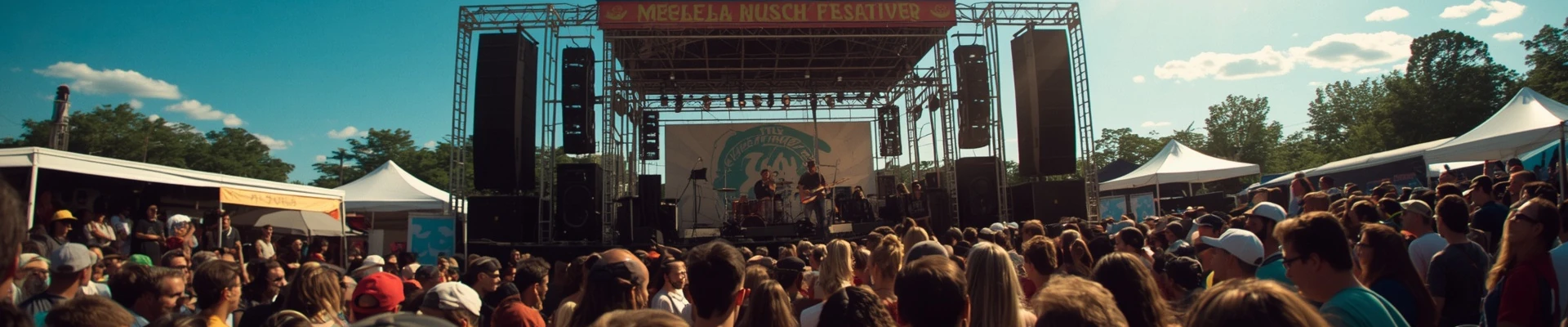
The Glendale Glitters holiday light festival programs outdoor live music through December. Glendale Chocolate Affaire (February) and Glendale Jazz & Blues Festival (spring) program local and regional acts at outdoor festival scale. The Arizona State Fair in nearby Phoenix draws the city's entertainment energy in October. Fiestas Patrias — the Mexican Independence Day celebration in September — is the primary cultural festival for Glendale's Latino community and programs regional Mexican touring acts. Glendale's Downtown Artwalk programmed music alongside gallery events before evolving into the broader Historic Downtown event calendar.
What ties it all together is the collision of scales. Glendale is the city where 60,000 people watch Taylor Swift in a retractable-roof stadium and, a mile away, a norteño quartet plays a quinceañera reception for 300 in a banquet hall that has hosted the same type of event every weekend for thirty years. State Farm Stadium and Westgate put Glendale's name on the global touring map; the norteño and banda circuit along 67th Avenue and Camelback sustains an entirely parallel live music economy that is just as culturally meaningful. The Historic Downtown corridor and its emerging small-venue scene add a third dimension — local and indie acts in a human-scale neighborhood that predates all the arena development by a century. Glendale's music story is ultimately about the West Valley's capacity to hold all of this at once: stadium spectacle, regional Mexican folk tradition, and neighborhood-scale indie culture within the boundaries of a single city.