
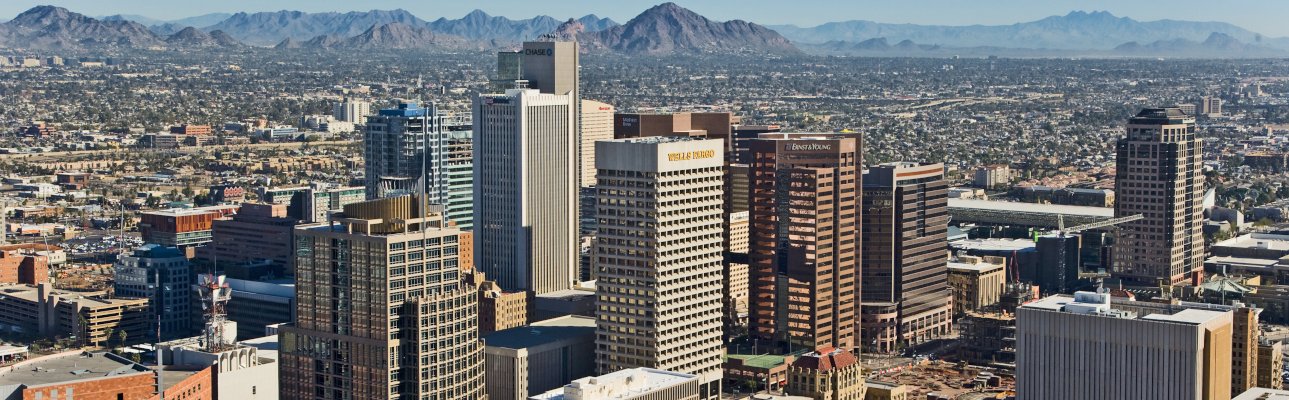
Phoenix is the capital of Arizona and the fifth-largest city in the United States, with roughly 1.65 million residents inside the city limits and nearly 5 million across the surrounding Valley of the Sun metropolitan area, which also includes Mesa, Scottsdale, Tempe, Glendale, Chandler, and Gilbert. Sprawled across more than 1,340 square kilometers of low Sonoran Desert basin, ringed by the South, Phoenix, McDowell, and White Tank mountain ranges, it is one of the largest, hottest, and fastest-growing cities in North America. Phoenix's musical history reflects that geography and demography: a meeting point of Indigenous Sonoran cultures, Mexican and Mexican-American music, white country and rockabilly traditions migrating in from Texas and Oklahoma, and a long lineage of desert rock, punk, and indie scenes that have produced an outsized share of American alternative music.
A brief history
The Salt River Valley was home to the Hohokam civilization for more than a thousand years, sustained by an extensive network of irrigation canals carved across the desert. After the Hohokam culture declined around 1450, the Akimel O'odham (Pima) and Tohono O'odham, along with Yavapai and Apache peoples, lived in the valley until Spanish missionaries and Mexican settlers arrived in the 17th and 18th centuries. The territory passed to the United States through the 1848 Treaty of Guadalupe Hidalgo and the 1854 Gadsden Purchase. Jack Swilling's reactivation of the Hohokam canals in 1867 made modern agriculture possible in the valley, and Phoenix was named — for a city rising from the ashes of the Hohokam world — in 1868. Arizona became the 48th state in 1912 with Phoenix as its capital. Air conditioning, the federal water projects of the 1930s and 1940s, World War II–era military bases, and postwar Sun Belt migration turned the city from a small agricultural town of 65,000 in 1940 into a metropolitan region of nearly 5 million today. Successive waves of migration — from Mexico, Sonora, Sinaloa, and Chihuahua; from the Dust Bowl states; from California; from the Midwest; and more recently from Central America, the Philippines, India, and Eastern Europe — have built a city that is roughly 43% Latino and increasingly multilingual.
Music identity
Phoenix's modern musical history begins with the Mexican and Mexican-American traditions that predate the city itself. Mariachi, norteño, banda, conjunto, and the broader regional Mexican repertoire have run continuously through Phoenix since the 19th century, sustained today by a vast network of dance halls, restaurants, radio stations, and labels across South and West Phoenix, Maryvale, and Mesa. Phoenix is one of the largest regional Mexican markets in the United States, and the Spanish-language radio dial dominates much of the broadcast landscape. The Latin Grammy and Premios Lo Nuestro circuits routinely route through the city's arenas, and a generation of regional Mexican stars — from earlier eras through artists like Los Tucanes de Tijuana, Banda MS, and current corridos tumbados acts — fill venues like the Footprint Center and Talking Stick Resort Amphitheatre.
The Anglo side of the city's history runs through country, rockabilly, and rock and roll. Marty Robbins — the El Paso cowboy-balladeer who grew up in Glendale and recorded for decades from Phoenix studios — is one of the most important country songwriters to emerge from the Southwest. Waylon Jennings, though Texas-born, lived and recorded in Phoenix in the late 1950s and early 1960s and helped make the city a node of the early outlaw country sound. Duane Eddy, the architect of twangy guitar instrumental rock and roll, recorded his early hits at Audio Recorders of Arizona on Seventh Street, and Lee Hazlewood's production work in Phoenix laid template for what would later become his collaborations with Nancy Sinatra and his European exile records. Stevie Nicks, raised in Phoenix and Paradise Valley, has stayed publicly tied to the city for decades. Alice Cooper, who grew up in north Phoenix and attended Cortez High School, took the cabaret-glam-shock-rock invented in Detroit and continues to maintain his Cooperstown restaurant and a deep public profile in the valley.
In the 1970s and 1980s the city produced a remarkable run of left-field rock. The Meat Puppets, three brothers and friends from Tempe and Phoenix, recorded a string of SST Records albums that fused hardcore punk, country, psychedelia, and desert weirdness; their Meat Puppets II (1984) is one of the foundational documents of American indie rock and was directly canonized by Nirvana's MTV Unplugged covers. JFA (Jodie Foster's Army), the Feederz, and a thriving skate-punk and hardcore scene around the Sun Club and Mason Jar turned Phoenix into one of the most fertile early-1980s punk cities in the West. The Gin Blossoms, who emerged from Tempe's Mill Avenue in the late 1980s, broke nationally with New Miserable Experience (1992) and helped define college and alternative radio for a half-decade; The Refreshments ("Banditos," "King of the Hill") and their successor band Roger Clyne and the Peacemakers built a southwestern, tequila-soaked rock catalog rooted in Tempe and Sonora. Jimmy Eat World, also from Mesa, became one of the most successful emo and pop-punk bands of the 2000s with Bleed American and Futures. The Maine continued the Phoenix pop-punk lineage into the 2010s and 2020s and built 8123 Fest as a fan-driven Phoenix music event.
The 21st century has brought a steady cross-pollination. Calexico, though Tucson-based, is closely tied to the broader Arizona desert-rock and Latin alternative tradition. Authority Zero, Doll Skin, Wyves, Phoenix Afrobeat Orchestra, and a deep indie scene around venues like Crescent Ballroom and the Rebel Lounge have kept the city's rock circuit healthy. Hip-hop has its own Arizona lineage — Hot Dolla, MC Magic of NB Ridaz fame, Drunken Tiger's Arizona ties, Futuristic, and a mixtape and battle-rap circuit that crosses Spanish and English. Latin urban, reggaeton, dembow, and trap en español scenes have boomed through clubs and warehouse parties across the West Side. Tohono O'odham, Akimel O'odham, Navajo, and Apache musicians from across Arizona feed an active Indigenous music scene with ties to the Native American Music Awards and to the Western Music Association's circuits.
Venues and neighborhoods
The Phoenix venue ecosystem stretches across the entire valley. At the top sit the Footprint Center (home of the Phoenix Suns and the city's largest arena concerts), State Farm Stadium in Glendale, Talking Stick Resort Amphitheatre in west Phoenix, Desert Diamond Arena in Glendale, the Arizona Financial Theatre (formerly Comerica), Mesa Amphitheatre, Phoenix Symphony Hall, Orpheum Theatre, and Herberger Theater Center. The midsize tier includes the Marquee Theatre in Tempe, the Van Buren in downtown, Celebrity Theatre, Madison Live, and Linger Longer Lounge. Beneath them is a deep club layer — Crescent Ballroom, Valley Bar, the Rebel Lounge, Yucca Tap Room, Last Exit Live, Pub Rock Live, Nile Theater in Mesa, the Lunchbox, the Sail Inn's legacy, Tempe Center for the Arts, and Walter Studios. Latin music has homes at Talking Stick Resort Arena and a deep network of dance halls, quinceañera venues, and night clubs across South and West Phoenix and Maryvale. Indigenous and traditional music run through the Heard Museum, Steele Indian School Park, and tribal community centers across the valley.
Different neighborhoods carry different musical identities. Downtown Phoenix and Roosevelt Row anchor the indie rock and DIY scenes. Tempe, anchored by Arizona State University and the historic Mill Avenue, remains the spiritual home of Phoenix-area indie and alternative rock through the lineage of the Meat Puppets, Gin Blossoms, Jimmy Eat World, and the Maine. Mesa and Chandler host their own pop-punk and hardcore scenes. South Phoenix, Maryvale, and West Phoenix are heart of regional Mexican, banda, norteño, and Latin urban music. Scottsdale anchors the city's high-end nightclub and country-pop circuits. Glendale is the city's biggest concert footprint thanks to the State Farm Stadium / Desert Diamond Arena cluster.
Festivals and signature events
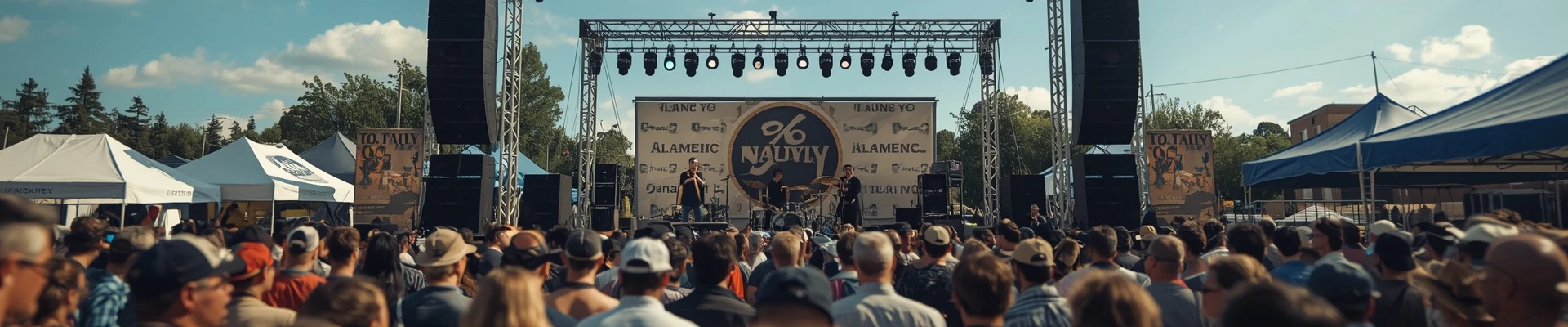
The festival calendar reflects the city's range. M3F Fest (formerly McDowell Mountain Music Festival) at Margaret T. Hance Park is a long-running indie and electronic festival whose proceeds go entirely to charity. Innings Festival at Tempe Beach Park during MLB spring training, Lost Lake Festival's legacy, Decadence AZ for electronic music on New Year's, Goldrush for EDM, Phoenix Lights, and Crush AZ keep the dance and rock circuits running. Country Thunder Arizona in Florence is one of the largest country festivals in the West. The Arizona State Fair programs major touring acts each fall. Latin music is anchored by Fiesta Patrias celebrations across Phoenix, Glendale, and Mesa for Mexican Independence Day, Cinco de Mayo events, and a thriving regional Mexican concert circuit at the Footprint Center, Talking Stick, and State Farm Stadium. 8123 Fest (organized by the Maine), Apache Lake Music Festival, Tempe Music Festival's legacy, Phoenix Pride, Indigenous Peoples' Day programming, and the Heard Museum Guild Indian Fair & Market add cultural and community programming throughout the year.
What ties it all together is the desert: the long drives, the warehouse spaces with their giant cooling units, the open-air amphitheaters that work nine months of the year, the Mexican and Mexican-American culture that predates the United States, and the pop-up scenes that keep emerging from the suburbs as the valley sprawls outward. Phoenix is at once a regional Mexican capital, an alt-rock hometown for some of the most-streamed bands of the past 30 years, and one of the fastest-growing music markets in the United States.