
Scottsdale sits at the eastern edge of the Phoenix metropolitan area in south-central Arizona, bordered by the McDowell Mountains to the east, Tempe and Mesa to the south, Paradise Valley to the west, and the Salt River Pima-Maricopa Indian Community to the southeast. With around 237,000 residents inside its city limits, Scottsdale is modest in population relative to its national profile — it is best understood as the cultural and commercial crown jewel of the greater Phoenix metro, a metro of more than five million people that is the fifth-largest in the United States. The city's geography is defined by the Sonoran Desert: low scrub, saguaro stands, and the McDowell Mountain regional park to the north, giving way to dense resort and entertainment corridors along Scottsdale Road and through Old Town at the city's southern end. Scottsdale is wealthy by almost every metric — median household income, per-capita spending, hotel-room luxury tier — and the live-music and entertainment infrastructure reflects that: the city hosts some of the most polished mid-size and amphitheater-scale music venues in the Southwest, a festival calendar built around spring and fall shoulder seasons, and a nightclub corridor that has shaped the career trajectories of multiple nationally significant artists.
A brief history
The land that became Scottsdale was Hohokam territory for more than a thousand years before Spanish colonizers arrived in the 17th century. The US–Mexico War and the Gadsden Purchase (1853) brought the region into American hands, and Anglo-American settlement of the Salt River Valley began in the 1860s and 1870s — the same era that produced the Phoenix townsite. Scottsdale was established as a separate community in 1888 by Army chaplain Winfield Scott, who homesteaded 160 acres and promoted the area's agricultural potential. The community remained small through the early 20th century, incorporated as a town in 1951 with just 2,000 residents, and then urbanized rapidly alongside Phoenix during the post-war Sun Belt boom. The arrival of the Frank Lloyd Wright-designed Taliesin West complex in 1937 — Wright's winter home and architecture school, still a functioning architectural campus — positioned Scottsdale as an arts-and-architecture destination separate from Phoenix's commercial identity. By the 1980s and 1990s, Old Town Scottsdale had evolved from an arts-and-galleries district into a nightlife destination, and the development of resort corridors along Scottsdale Road and the emergence of WestWorld of Scottsdale as a major events venue brought large-scale festivals and events to the city. Spring training for multiple Major League Baseball teams — including the San Francisco Giants at Scottsdale Stadium and later teams consolidating around the Cactus League — made Scottsdale a seasonal destination that feeds the live-entertainment economy every February and March.
Music identity
Scottsdale's music identity is inseparable from its role as a destination city within the Phoenix metro. Unlike Phoenix itself, which has deep roots in country, post-punk, and hip-hop going back to the 1970s, Scottsdale's music culture is largely shaped by its resort and nightlife infrastructure — the city serves as the metro's premium entertainment district, drawing touring acts and sustaining a club scene that has produced nationally significant hip-hop, EDM, and country artists.
hip-hop has been Scottsdale's most internationally consequential export. Wale has strong Scottsdale connections, and the city's affluent club scene of the mid-2000s incubated a style of aspirational, luxury-oriented rap that fed into what became dominant currents in national hip-hop aesthetics. More directly, the Kottonmouth Kings (the California-based rap-punk collective) had significant following and touring presence in the Scottsdale–Phoenix corridor, and the rise of the Arizona rap scene through artists like Doja Cat (who spent formative years in the Phoenix metro) and Chris Brown touring runs through Scottsdale's club circuit mark the city's place in the broader Southwest hip-hop map. Bone Thugs-n-Harmony, Tech N9ne, and the full roster of national hip-hop touring acts have made Scottsdale's club venues — including the legendary Old Town corridor clubs — regular stops.
In country, Scottsdale's proximity to Nashville touring circuits and its large transplant population from across the South and Midwest has sustained a continuous country scene. Scottsdale's Talking Stick Resort Arena (technically in Phoenix but functionally the Phoenix-Scottsdale metro arena) and the Rawhide Western Town & Steakhouse complex in nearby Gilbert have hosted major country touring acts for decades. Scottsdale Stadium and the surrounding spring training infrastructure make country music a natural fit for the March entertainment economy.
The city's most specific musical contribution may be in EDM and electronic dance music. The resort club scene — anchored by Maya Day + Nightclub, The Mint (now closed), Suede Scottsdale, Riot House, and a succession of high-end nightclubs along the Old Town corridor — incubated a premium EDM booking culture in the 2000s and 2010s that was among the most active in the Southwest. Acts like Tiësto, Deadmau5, Zedd, and Calvin Harris treated Scottsdale as a regular destination, and a generation of local promoters and DJs built careers in and around the Scottsdale club circuit. The proximity to Phoenix — which has its own deep electronic music scene rooted in the Four Peaks warehouse and underground club culture — means that Scottsdale functions as the premium end of a broader Phoenix-metro electronic music economy.
Rock and alternative have a continuous presence through the Old Town venue circuit and through the broader Phoenix suburban scene. The Marquee Theatre in Tempe (immediately adjacent) and The Van Buren in Phoenix proper function as the primary mid-size rock venues for the Scottsdale-metro crowd, while Scottsdale's own venues tend to skew toward country, EDM, and pop. Wax Trax (the famous record store and label of the same name had a loyal following in the Scottsdale–Phoenix market), and the indie and alternative scenes centered in Tempe's Mill Avenue district and ASU's Tempe campus bleed into the Scottsdale market consistently.
Venues and neighborhoods
The architectural heart of Scottsdale's music and nightlife geography is Old Town Scottsdale — the historic district at the city's southern tip, bounded roughly by Indian School Road to the north, Camelback Road to the south, Scottsdale Road to the west, and Hayden Road to the east. Old Town's Saddlebag district, Fifth Avenue boutique corridor, and the Scottsdale Entertainment District along Scottsdale Road between Camelback and Thomas constitute the highest-density entertainment corridor in the Phoenix metro for premium nightlife.
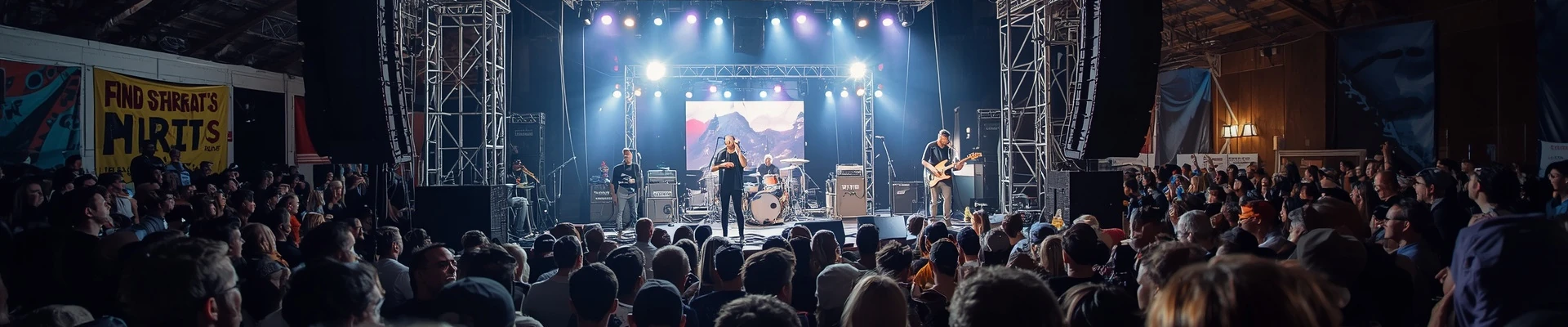
Key venues include Scottsdale Center for the Performing Arts (the city's flagship performing-arts venue, operating a mid-size auditorium and outdoor amphitheater with a strong jazz, folk, and world-music booking calendar), WestWorld of Scottsdale (a massive convention and event complex that hosts Barrett-Jackson auto auctions, Spring Training Fan Fest, and large-scale concert and festival events including the Country Thunder Arizona nearby), Talking Stick Resort (the Salt River Pima-Maricopa Indian Community's casino resort on Scottsdale's southern border, with a large indoor entertainment venue), and the constellation of Old Town clubs — Bottled Blonde, Riot House Scottsdale, Suede Scottsdale, Dierks Bentley's Whiskey Row (the country star's honky-tonk bar chain, with a Scottsdale location that has become a pillar of the city's country bar scene), and the Old Town Scottsdale Entertainment District cluster.
For mid-size live music, Scottsdale's Civic Center and the Scottsdale Amphitheater at Civic Center Park host outdoor concerts and the Scottsdale Arts Festival each spring. The Musical Instrument Museum (MIM) in north Scottsdale — one of the most extraordinary music museums in the world, housing more than 7,000 instruments from nearly 200 countries — operates a 300-seat concert hall (the MIM Music Theater) that books intimate performances across all genres, from West African kora to bluegrass to classical.
North Scottsdale — the wealthier residential zone beyond the Loop 101 — anchors a separate entertainment economy around DC Ranch, Scottsdale Quarter, and the resort corridors along Frank Lloyd Wright Boulevard, where The Venue and Maya Day + Nightclub have hosted premium DJ bookings.
Festivals and signature events
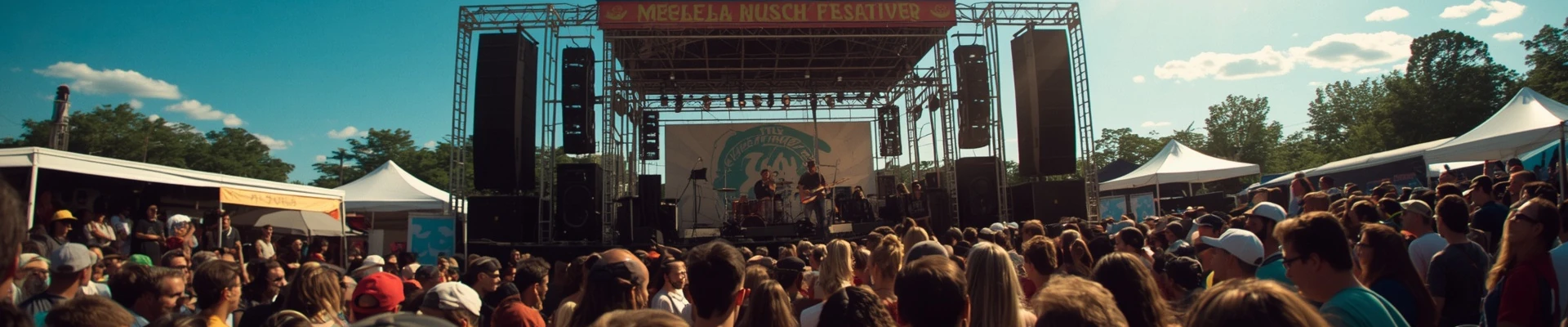
Country Thunder Arizona has historically been held in the nearby town of Florence, but its Phoenix-metro reach makes Scottsdale the primary hotel and accommodation hub, and the economic and cultural footprint lands squarely on the Scottsdale entertainment ecosystem. Scottsdale Polo Championships at WestWorld (held annually each October) integrate music acts alongside the polo competition. Barrett-Jackson Scottsdale Auction (January) anchors the automotive-culture economy and brings large concert bookings to WestWorld. Scottsdale ArtWalk (every Thursday evening year-round along the Fifth Avenue and Main Street galleries), while primarily visual art, sustains a continuous live-music calendar in Old Town galleries and bars.
The Scottsdale Arts Festival at Civic Center each March is a major outdoor arts-and-music event drawing 30,000+ attendees over three days. Spring training (February–March, with Scottsdale Stadium hosting San Francisco Giants games) brings tens of thousands of visitors per week to the Old Town hotel and nightlife corridor, generating one of the Southwest's most reliable seasonal entertainment economies. Scottsdale Culinary Festival at Salt River Fields, the Bentley Scottsdale Polo Championships, and the SXSW-adjacent spillover events that have begun appearing in Scottsdale during March (parallel to Austin's SXSW, as Phoenix-area promoters capitalize on the same spring shoulder season) round out the calendar.
Innings Festival at Tempe Beach Park (immediately adjacent to Scottsdale) books major rock and alternative acts around the spring training calendar, with Scottsdale serving as the primary accommodation and pre/post-festival entertainment hub for attendees.
What ties it all together
Scottsdale is defined by the paradox at the center of its music identity: the city itself has produced fewer landmark artists than its metro prominence might suggest, but it has sustained one of the Southwest's richest live-music ecosystems through resort infrastructure, a premium nightlife circuit, and the extraordinary gravitational pull that comes from being the entertainment crown of the Phoenix metro — the fifth-largest in the United States. The Musical Instrument Museum is a world-class institution that no other city in the Americas can match. Dierks Bentley's Whiskey Row, Talking Stick Resort, and the Old Town club corridor are major national anchors for country, EDM, and hip-hop touring. Country Thunder, Innings Festival, and spring training create an annual festival season that draws hundreds of thousands of visitors across three months. And the desert setting — the saguaro-lined mountains, the permanent blue sky, the winter warmth — makes Scottsdale one of the most genuinely appealing live-music destinations in North America for both artists and audiences. When Scottsdale is at its best, the music and the landscape amplify each other: there are few better places in the world to hear a country set at dusk, a DJ at midnight, or a kora master at the MIM on a winter afternoon.