


Surprise occupies the northwestern edge of the Phoenix metropolitan area in Maricopa County, Arizona, sitting roughly 40 kilometres northwest of downtown Phoenix at the foot of the White Tank Mountains. The city spans approximately 286 square kilometres of Sonoran Desert terrain — wide arterial boulevards lined with stucco subdivisions, strip retail, and the occasional palm-planted roundabout — at an elevation around 362 metres above sea level. With a population that crossed 143,000 in the early 2020s, Surprise is one of the fastest-growing cities in the United States by percentage, a distinction it has held intermittently since the early 2000s when the Phoenix West Valley transformed from agricultural hinterland into one of the most intensively suburbanised landscapes in North America.
Geography and framing
The city sits in the broad Sonoran Desert floor between the White Tank Mountains to the west and the sprawl of the greater Phoenix grid to the east. The Agua Fria River forms part of the city's natural geography, though it runs dry for most of the year. Summer highs regularly exceed 43°C; winters are mild enough that the area has been a destination for retirees and winter visitors — known locally as snowbirds — for decades. The desert landscape beyond the developed grid remains dramatic: saguaro cacti, creosote, and the rugged volcanic ridgelines of the White Tanks visible from most elevated points in the city.
Surprise was platted in 1938 by Homer Curtis Martin, who named it — according to local tradition — because he would be "surprised" if it ever amounted to anything. It incorporated as a town in 1960 with a population of around 300. For the first four decades after incorporation it remained a quiet agricultural community and retirement enclave on the far fringe of Phoenix. The transformation came in the late 1990s and accelerated dramatically through the 2000s, when the Valley's development engine pushed west along Bell Road, Greenway Road, and the Loop 303, turning farmland into master-planned communities at a pace that left the city's civic infrastructure perpetually struggling to catch up.
History
The modern Surprise was assembled from ranch land and citrus groves largely owned and developed by the Del Webb Corporation, the company most associated with the Sun City retirement community immediately to the city's south (Sun City itself is an unincorporated community, not part of Surprise). Del Webb's influence on the broader West Valley — planned, amenity-rich communities marketed to retirees and later to families — defined the aesthetic and demographic logic of the area. Surprise absorbed that logic: orderly streets, homeowners associations, community recreation centres, large-lot housing, and a civic culture oriented around amenities rather than urban density.
The city's major civic investment has been Surprise Stadium, a 10,000-seat spring training facility that opened in 2003 and became the shared home of the Texas Rangers and the Kansas City Royals for Cactus League spring training. The stadium is genuinely important to the city's identity and economy — spring training draws tens of thousands of fans from across the country each February and March, filling hotels, restaurants, and bars in a city that otherwise lacks major tourist draws. Surprise Recreation Campus, the adjacent multi-field practice complex, supports the teams' workouts and minor league operations during the training window.
The broader economy is suburban-service: retail, healthcare, construction, logistics, and public employment. The city's proximity to the Luke Air Force Base (in neighbouring Glendale) means a significant military and veteran population, an influence visible in the demographics of many West Valley communities.
Music identity
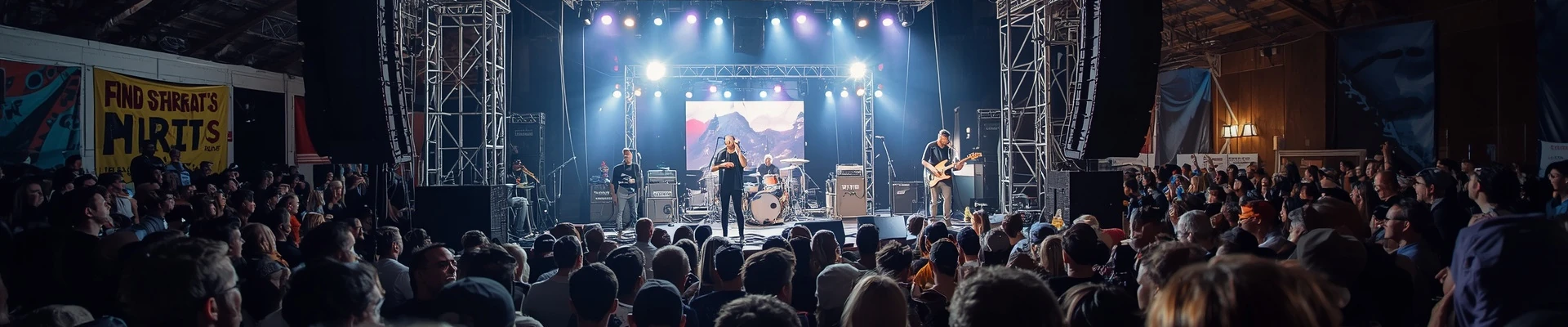
Surprise does not have a distinct music scene in the sense that Nashville, Detroit, or even Tucson does. It is a suburban city without the density, nightlife infrastructure, or artistic community concentration that generates scenes. What it has is a live music ecosystem built around bars, restaurants, and event spaces that programme live entertainment for a population that skews toward country, classic rock, Southern rock, and the country-pop mainstream — genres that reflect the backgrounds of the transplants from the Midwest, South, and rural West who make up a significant share of the city's population.
The country music tradition is the most visible thread. BJ's Bar & Grill, Saddle Ranch Chop House, and several other West Valley establishments programme local and regional country acts. The country bar circuit of the Phoenix West Valley — stretching from Surprise through El Mirage, Peoria, and Glendale — supports a cohort of working country bands that play the dance-hall and bar circuit, mixing originals with covers of artists like Luke Combs, Morgan Wallen, Cody Johnson, and the Texas-country contingent (Cody Jinks, Aaron Watson, Josh Abbott Band) that has found particular resonance in the Southwest.
Classic rock is equally embedded. The suburban bar circuit that runs through the West Valley programs classic rock cover bands consistently — Led Zeppelin, Eagles, Tom Petty, Fleetwood Mac tributes and covers are standard weekend fare at the city's larger sports bars and restaurant venues. The demographic that built Surprise during the 2000s growth surge — families relocating from Midwest and Mountain West states — brought those tastes with them, and the entertainment economy has followed.
A handful of local original artists have emerged from Surprise and the broader West Valley. Arizona's country music scene more broadly — centred on Phoenix and the Scottsdale bar circuit — produces working artists who may live anywhere in the metro, including the West Valley. The city does not have recording studios of note or indie labels based locally; those functions are handled by Phoenix-area operations. The Peoria and Glendale arms of the West Valley support somewhat denser live music infrastructure, but the proximity means Surprise-area musicians and audiences circulate across the same circuit.
The city's Latino population — concentrated in the older, more affordable eastern neighbourhoods near the city limits — sustains regional Mexican, norteño, and banda music in informal settings: quinceañeras, family celebrations, and smaller bars along the older commercial corridors. The norteño and banda scenes, like those throughout the Phoenix metro, are largely self-contained within their communities and rarely cross over into the broader Anglo music circuit.
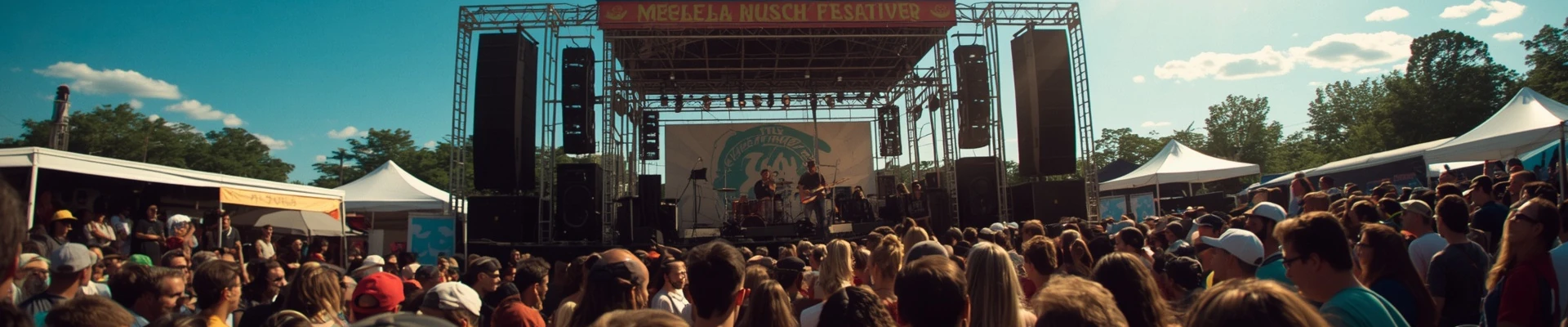
Reggae and reggaeton have a footprint in the Phoenix metro's younger, more diverse demographic, and events drawing from that audience occasionally programme in the West Valley. The spring training season itself brings a different temporary music culture — outdoor concerts and sponsored events at and around Surprise Stadium that lean toward mainstream country and rock acts programmed to entertain out-of-town baseball fans.
Venues and neighbourhoods
Surprise's live music infrastructure is distributed across a suburban grid rather than concentrated in a walkable entertainment district. The city lacks the equivalent of Scottsdale's Old Town, Tempe's Mill Avenue, or even Gilbert's Heritage District — areas where bars, restaurants, and music venues cluster into something like a scene corridor.
Surprise Stadium and its surrounding parking lots host occasional concerts and events, particularly during spring training. The stadium's 10,000-seat capacity makes it one of the larger performance spaces in the city, though it functions primarily as a baseball venue.
Surprise Community Park and the city's Recreation Campus have hosted outdoor events and concerts as part of civic programming. The Surprise Farms Loop area — one of the newer commercial and retail developments in the northeast part of the city — has some restaurant and bar programming that includes live music.
The Bell Road corridor, the major east-west commercial artery running through the older middle section of the city, concentrates much of the restaurant and bar infrastructure. Chain restaurants with bar programmes that book live entertainment — Chili's, Buffalo Wild Wings, Cheddar's — sit alongside locally owned establishments. Surprise Marketplace and Prasada (the newest major retail district, in the far northwest) are drawing new restaurant tenants, some of which include live music in their programming.
The neighbourhoods of Surprise divide primarily by age: the older sections near the original town centre along Litchfield Road and Bell Road are more affordable and more demographically diverse; the newer master-planned communities in the northwest — Marley Park, Asante, Estrella (in neighbouring Goodyear, though the corridor blurs) — are newer, more affluent, and more uniformly family-oriented.
Festivals and signature events
The Surprise Spring Training season (February through March) is the city's most significant recurring event, and while it is not a music festival, concerts and entertainment events around the stadium programming are part of the experience. The Kansas City Royals and Texas Rangers both draw sizable fan contingents that animate the local hospitality economy for six weeks.
Movies in the Park and similar outdoor community event series organised by the City of Surprise Parks, Recreation & Community Services occasionally include live music components. The city has experimented with street festivals and community celebrations — Surprise Jazz & Art Splash was a recurring event for several years — but large-scale independent music festivals have not taken root as permanent fixtures.
The White Tank Mountain Regional Park, operated by Maricopa County just west of the city, hosts occasional outdoor events, and the desert landscape itself has been used for event programming in the cooler months. Thunderbird Conservation Park in neighbouring Glendale provides similar outdoor space adjacent to the Surprise market.
Residents access the Phoenix metro's broader festival ecosystem with ease — the Lost Lake Festival (formerly Phoenix Lights), Country Thunder Arizona (in Florence, east of Phoenix), and the Phoenix concert circuit at venues like Footprint Center, Talking Stick Resort Amphitheatre, and the Van Buren are all within a 45-minute drive.
What ties it all together
Surprise is the quintessential Sun Belt boom city: rapid, car-dependent, demographically varied, built for families and retirees rather than artists and night-owls. Its music scene is not a scene in any conventional sense but a service — live entertainment calibrated to the tastes of a transplant population that carries its regional musical loyalties with it from Minnesota, Missouri, Oklahoma, and Texas. Country and classic rock dominate because those are the genres the people who built the city brought with them. The spring training window injects a brief seasonal pulse of nationally-programmed entertainment. The Latino communities sustain their own parallel musical life in norteño and banda that runs independently of the broader civic culture. What Surprise lacks in musical history and original scene-making it compensates for with accessibility — it is one large Phoenix metro, and the concerts, studios, and record shops of Scottsdale, Tempe, and downtown Phoenix are never more than forty minutes away. For a city that did not exist in any meaningful sense thirty years ago, that proximity to one of the West's most active music cities is its defining musical advantage.