


Tempe is a fully incorporated city of roughly 175,000 residents seated at the geographic heart of the Phoenix metropolitan area, in Maricopa County, Arizona. It is bounded by Phoenix to the north and west, Mesa to the east, and Chandler to the south, with Tempe Town Lake — a dammed stretch of the Salt River — forming its northern shoreline and providing the city with a rare waterfront amenity in an otherwise arid landscape. The Salt River valley sits at roughly 335 metres above sea level, enclosed by desert mountain ranges that hold heat long into the night. Tempe covers approximately 172 square kilometres, making it one of the most densely populated cities in Arizona outside central Phoenix itself. The economy is built around Arizona State University (ASU) — one of the largest public universities in the United States by enrollment, with more than 80,000 students on its Tempe campus alone — alongside technology companies, hospitality, healthcare, and the sprawling retail and entertainment corridor of Mill Avenue.
Geography and urban character
The city's personality is split cleanly between its two dominant zones. Downtown Tempe and Mill Avenue occupy the narrow strip along the west bank of the Salt River, where a dense grid of bars, restaurants, music venues, galleries, and the ASU campus create a walkable urban core that stands in sharp contrast to the low-rise suburban sprawl surrounding it. This corridor — running from Apache Boulevard in the south toward the lakefront in the north — has been the social and musical centre of Tempe since the 1970s, cycling through generations of venues and scenes without ever fully losing its status as the liveliest strip in the East Valley. ASU's Tempe campus, immediately adjacent to Mill Avenue, generates a constant influx of students, artists, musicians, and touring acts, and the university's Gammage Auditorium — designed by Frank Lloyd Wright and completed in 1964 as one of the last major commissions of his career — anchors the southern end of the strip as a landmark performing arts venue. The rest of Tempe is largely residential and commercial, dotted with neighbourhood parks and a network of bike paths that make it unusually bikeable for a Sun Belt city. The Tempe Marketplace and Arizona Mills mall anchor the retail economy to the east, but musically, the city's identity belongs entirely to the Mill Avenue corridor.
A brief history
Tempe was founded in 1871 by Charles Trumbull Hayden, who established a ferry crossing, flour mill, and trading post at the Salt River ford. The name — proposed by Darrell Duppa, a well-travelled English adventurer who noted the valley's resemblance to the Vale of Tempe in ancient Greece — stuck, and the settlement grew around agriculture, the ferry trade, and the eventual arrival of the railroad. Arizona Normal School was established in Tempe in 1885 — the institution that would grow into Arizona State University. The city incorporated in 1894 and for much of the first half of the twentieth century it remained a modest agricultural and university town, largely overshadowed by Phoenix. The postwar population boom that transformed all of the Valley of the Sun hit Tempe hard through the 1950s and 1960s, converting farmland to subdivisions at speed and swelling ASU's enrollment. By the 1970s the university and the bars along Mill Avenue were generating a nightlife economy, and by the early 1980s a cluster of music venues had coalesced along the strip — Long Wong's, Bash on Ash, Gibson's — that would become the incubators for one of the most discussed regional scenes in American alternative rock.
Music identity
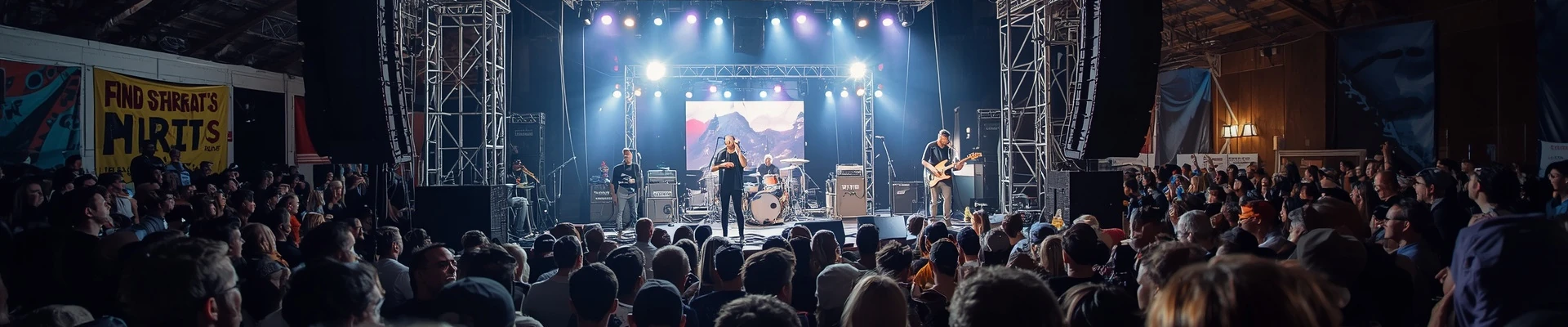
Tempe's most consequential contribution to American popular music arrived in a concentrated burst between roughly 1987 and 1996, when a web of bands rehearsing in apartment complexes off Rural Road and playing the same half-dozen bars on Mill Avenue produced a sound — jangly, melodic, rooted in classic rock craft but leavened with college-radio angst — that attracted national attention and major-label deals in rapid succession. The epicentre of that scene was Long Wong's, a low-ceilinged bar on Mill Avenue that became, in local mythology, the Tempe equivalent of Liverpool's Cavern Club: the room where careers were made and the community that sustained them was tightest.
The Gin Blossoms are Tempe's most internationally recognisable export. The band formed in 1987 around guitarist and principal songwriter Doug Hopkins, whose melodic instincts and dark personal lyricism shaped the group's first two records. Their 1992 major-label debut New Miserable Experience — released on A&M Records — contained "Hey Jealousy," "Found Out About You," and "Until I Fall Away": three songs that received sustained MTV rotation and defined a generation's understanding of what a Tempe band sounded like. Hopkins was forced out of the band before the record's commercial peak and died in 1993, lending the group's success a long shadow of tragedy. Their 1996 follow-up Congratulations I'm Sorry produced additional hits, including "Follow You Down" and "As Long as It Matters." The Gin Blossoms' sound — clean Fender jangle, close harmonies, anthemic choruses, lyrics caught between hope and hangover — is the template against which all subsequent Tempe bands have been measured.
The Refreshments reached the Gin Blossoms' level of national exposure with their 1996 debut Fizzy Fuzzy Big & Buzzy and its lead single "Banditos," a slouching, Spanish-tinged rocker that became one of the more unlikely MTV hits of that year. Fronted by Roger Clyne and guitarist P.H. Naffah, the Refreshments had a harder edge than the Gin Blossoms — rawer production, blunter humour, a debt to Tex-Mex border music alongside the standard Tempe jangle — but they emerged from the same Mill Avenue network. The band dissolved in 1998 after label difficulties, and Clyne regrouped as Roger Clyne and the Peacemakers, who have maintained a devoted regional following in the Southwest for more than two decades since, playing annual concerts on both sides of the Mexico border and remaining one of the most durable live acts produced by the Tempe scene.
Dead Hot Workshop were the scene's most critically admired underground proposition — a band frequently cited as influences by acts that achieved greater commercial success, known for tightly wound guitar arrangements and lyrical density. They released several records on independent labels and maintained a long residency in the Mill Ave venue circuit without the major-label breakthrough their admirers felt they deserved. Satellite and The Pinheads were among the other acts that filled out the scene's mid-tier. The 1990s Tempe ecosystem also overlapped with the broader Phoenix area's contributions to punk and hardcore, with Meat Puppets — one of the most idiosyncratic and influential American punk-to-country-noise bands of the 1980s — operating out of Phoenix proper while sharing stages and rehearsal spaces with the Mill Ave crowd.
Beyond the 1990s scene, Tempe and its immediate neighbours have produced or hosted a remarkable range of artists across decades. Alice Cooper — the theatrical shock-rock pioneer — grew up in Phoenix and spent formative years in the Valley before departing for Los Angeles and Detroit, but the region claims him as its own. Jimmy Eat World, the emo and alternative rock band whose 2001 album Bleed American (rereleased as Jimmy Eat World after September 11) produced the enduring "The Middle" and "Sweetness," are from Mesa, immediately east of Tempe, and the Mill Avenue venue circuit was integral to their early touring life. The Format and fun. (whose co-founder Nate Ruess is a Tempe native and University of Arizona alum) add further weight to the Valley's pop and indie-pop credentials.
Venues and the live music infrastructure
Long Wong's has operated under various ownerships and formats over the decades but remains the symbolic heartland of Tempe live music — the name alone carries totemic significance in local music history. The Marquee Theatre, located at 730 N. Mill Avenue, is the city's primary mid-capacity venue, holding approximately 1,200 standing, and has served as the default room for national touring acts that fall between club and arena size. ASU Gammage presents touring Broadway productions, orchestral performances, and occasional major pop concerts in a 3,017-seat Frank Lloyd Wright-designed theatre that is one of the most architecturally distinctive concert halls in the American Southwest. Sun Devil Stadium — ASU's on-campus football stadium, capacity approximately 53,000 — hosts stadium-scale concerts; acts from U2 to The Rolling Stones to Taylor Swift have played the stadium on Southwest legs of arena and stadium tours. Marquee at Mountain America (now rebranded from various previous names) fills the mid-tier just below arena scale.
The record retail ecosystem was sustained for decades by Stinkweeds Records, which opened on Camelback Road in Phoenix in 1987 and became the Valley's premier independent record shop — a community hub, show tip source, and early connector between local bands and the national indie distribution network. Though technically in Phoenix rather than Tempe, Stinkweeds was integral to the Mill Avenue scene's identity and survival.
Festivals and annual events
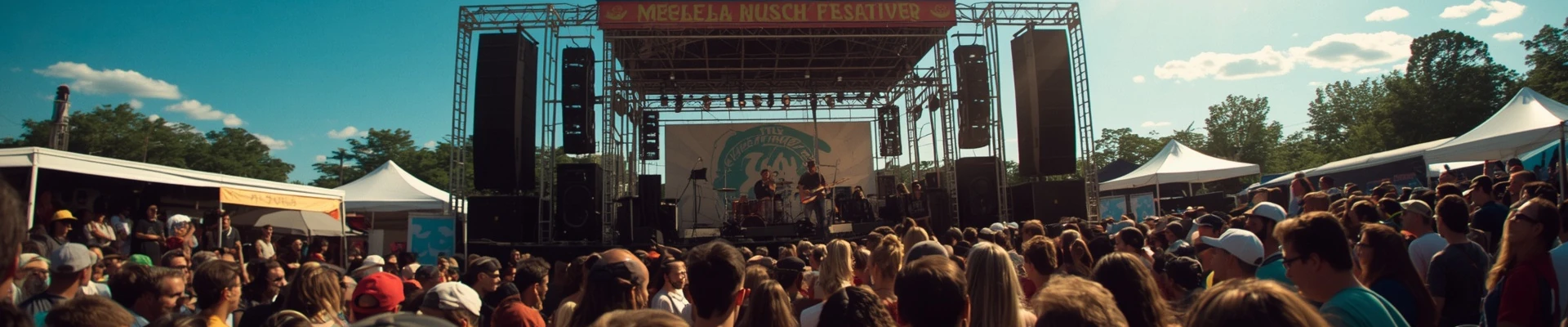
The Tempe Festival of the Arts is the city's largest outdoor cultural gathering, held twice annually — in late March and late November — along Mill Avenue and the lakefront, drawing significant crowds and incorporating live music across multiple outdoor stages. The lakefront setting against the backdrop of Tempe Town Lake creates one of the more visually distinctive festival backdrops in the Southwest. Tempe's Fourth Avenue Street Fair equivalent draws additional crowds through the spring season. The ASU Gammage Broadway Season and the university's internal concert programming sustain a year-round performing arts calendar that far exceeds what most cities of Tempe's size can offer.
Demographics and community
Tempe's population skews young — ASU's enrollment of more than 80,000 students on the Tempe campus ensures a median age substantially below the national average — and is ethnically diverse: approximately 57% white, 24% Hispanic or Latino, 5% Black or African American, 7% Asian, and smaller proportions of Indigenous and multiracial residents. The O'odham and Piipaash peoples have historical ties to the Salt River Valley; the Salt River Pima-Maricopa Indian Community occupies land immediately adjacent to Tempe's eastern boundary and operates Talking Stick Resort, a venue complex that includes amphitheatre and arena capacity used for major touring concerts. The Hispanic and Latino community sustains norteño, regional Mexican, and cumbia scenes in the East Valley that are largely invisible to mainstream coverage but represent significant music economies in their own right.
The ASU campus sustains an active jazz program, a world music faculty, an electronic music and new media arts department, and several annual student-run music festivals. The Herberger Institute for Design and the Arts at ASU positions Tempe as a serious node in the American art-music academic world alongside its commercial popular music history.
What ties it all together
Tempe's musical identity is inseparable from a specific geography — a three-block stretch of Mill Avenue, a handful of low-ceilinged bars, and the proximity of a massive university that replenished the audience every fall. The Tempe Sound of the early 1990s — melodic, guitar-driven, emotionally direct, rooted in classic songcraft rather than avant-garde experimentation — was the right music for its moment, and the commercial success of the Gin Blossoms and the Refreshments briefly made Tempe one of the most-watched mid-market scenes in American rock. That moment passed, as such moments do, but the infrastructure the scene built — the venue relationships, the indie-label savvy, the culture of songwriting rigor — persists. Tempe remains a city where a band can play every weekend for a year, build an audience, and attract attention. That is not a small thing.