


Tucson is the second-largest city in Arizona and the 33rd-largest in the United States, with roughly 543,000 residents inside the city limits and more than 1 million across the surrounding metropolitan area. Sitting in the Sonoran Desert at roughly 730 metres above sea level, ringed by five mountain ranges — the Santa Catalinas to the north, the Rincons to the east, the Santa Ritas to the south, the Tucson Mountains to the west, and the Tortolitas to the northwest — and located just 100 km north of the U.S.–Mexico border at Nogales, it is one of the most dramatically sited major American cities. Tucson is the home of the University of Arizona (UA), a major research and athletics institution of nearly 50,000 students, and the city's musical identity reflects that university-town character: a deep, independent, and idiosyncratic indie rock and alt-country scene built around long-running local institutions; one of the most consequential Indigenous (Tohono O'odham, Akimel O'odham, Yaqui) music ecosystems in the Southwest; a deep Chicano and Mexican-American border-music tradition; and a growing modern hip-hop and Latin urban scene.
A brief history
The land in the Santa Cruz Valley was Hohokam and later Sobaípuri O'odham territory for thousands of years before Spanish missionaries built the Mission San Xavier del Bac (still standing and still active, one of the finest examples of Spanish Colonial architecture in North America) in 1699. The Presidio San Agustín del Tucson was established in 1775, and the settlement passed from Spain to Mexico in 1821 and to the United States in the 1853 Gadsden Purchase. Tucson served as the capital of the Arizona Territory from 1867 to 1877. The 1880 arrival of the Southern Pacific Railroad and the 1885 founding of the University of Arizona (the territory's first university) built the modern city. Through the 20th century Tucson grew as a military, research, and university hub, anchored by Davis-Monthan Air Force Base and the UA's expanding research programs. The city has long attracted artists, writers, and musicians drawn by cheap rents, brilliant light, and proximity to the Mexican border.
Music identity
Tucson's most internationally acclaimed musical export of the modern era is Calexico, the desert-rock and border-Americana duo of Joey Burns (born in Albuquerque, raised partly in Tucson) and John Convertino (a Los Angeles native, Tucson-based). Formed in the mid-1990s from the ashes of Giant Sand, Calexico built one of the most distinctive American indie catalogues of the past 30 years — fusing Southwestern landscapes, Mexican brass, dub, jazz, country, and indie rock into a sound that is now routinely called the definitive musical voice of the U.S.–Mexico borderlands. The Black Light (1998), Hot Rail (2000), Feast of Wire (2003), and Garden Ruin (2006) are Tucson albums in the same way that Van Morrison's Astral Weeks is a Belfast album.
The broader Tucson indie scene has been anchored since the late 1980s by Giant Sand, the project of Howe Gelb — one of the most prolific and idiosyncratic American singer-songwriters of the past 40 years. Gelb's desert-lo-fi-country-rock has influenced nearly every indie act that has passed through Tucson. Victoria Williams, Neko Case's UA-era recordings, The Sidewinders (later known as Sand Rubies), Friends of Dean Martinez (Bill Elm, now a celebrated composer), Naked Prey, the Rainer Maria-adjacent bands passing through UA, Barbara K!, Yard Dogs Road Show, Colt 45 (the Tucson hip-hop-punk fusion group), Wooden Indian Burial Ground, and a deep current generation of indie and alt-country acts have sustained the scene for decades. The Rialto Theatre (a 1920 downtown movie palace turned concert venue) and the Club Congress (in the landmark 1919 Hotel Congress downtown, where John Dillinger was captured in 1934) anchor the live music circuit and have hosted nearly every significant touring act through the Southwest since the 1980s.
Tucson's Indigenous music lineage is one of the most consequential in the United States. The Tohono O'odham Nation — whose reservation is the second-largest in the country, stretching from Tucson to the Mexican border — has sustained an ancient ceremonial music tradition, including the waila (chicken scratch) dance music developed from Spanish mission-era polkas and mazurkas blended with O'odham sensibility, performed at feast days and community gatherings across the nation. Waila has been called the "chicken scratch" by outsiders and runs through accordions, drums, and saxophones in a sound utterly unlike anything else in American music. Molina Familia, the Tohono O'odham waila group, has been one of the most recorded in the genre. The Yaqui (Pascua Yaqui Tribe) community in Tucson sustains its own deer-dancing and ceremonial music traditions at Pascua Village on the city's west side. O'odham himdag (way of life) runs through the cultural programming of the Tohono O'odham Cultural Center and Museum in Sells, an hour southwest.
Tucson's Mexican-American and border music tradition runs continuously from the Spanish mission era to the present. Mariachi — some of the most acclaimed and educational programs in Arizona are anchored at UA's Fred Fox School of Music and at Tucson high schools — fills weddings, quinceañeras, and festivals across the city. Norteño, banda, regional Mexican, and corridos tumbados scenes run through clubs along South Tucson's 4th Avenue and the South Tucson municipal enclave (a one-square-mile independent city completely surrounded by Tucson, with one of the densest concentrations of Mexican-American businesses and restaurants in the Southwest). Linda Ronstadt, born and raised in Tucson in a family with deep roots in Sonora, Mexico, built one of the most commercially successful careers in American pop and country and returned, late in her career, to the Mariachi and Mexican music of her childhood; her Canciones de Mi Padre (1987) was one of the best-selling Spanish-language albums in American history. Her Tucson roots — and her family's Ronstadt Hardware store, still operating — remain central to the city's identity.
The 21st century has brought a serious modern hip-hop and Latin urban wave. Ugly Kid Joe's Tucson-area ties (briefly), Calexico's younger-generation collaborators, Tucson Hip Hop's growing scene through artists like Serene Green, Brother Ali's Tucson tour stops, and a current generation of trap and indie hip-hop artists fill the city's clubs. Electronic and psychedelic scenes run through clubs and art spaces across downtown and the 4th Avenue corridor. Jazz runs through UA's music program, the Jazz at the Mercado series, and a deep small-venue circuit.
Venues and neighborhoods
Tucson's venue ecosystem is well-developed. At the top sit Tucson Arena (formerly the Tucson Convention Center Arena, the city's largest indoor venue), the Kino Veterans Memorial Stadium, Rillito Park (host of outdoor festivals), the Tucson Music Hall at the convention center, and the Centennial Hall at UA. The midsize tier includes the Rialto Theatre (the city's most beloved concert venue), Hotel Congress / Club Congress, and the Fox Tucson Theatre (a 1930 Art Deco movie palace). Beneath them is a deep club layer — Club Congress, the 191 Toole (the long-running indie rock club), Rialto Theatre, the Che's Lounge, IBT's (the long-running LGBTQ bar with live music), Plush (the East Tucson indie bar), Sky Bar, Tap & Bottle downtown, and a network of bars and DIY rooms across downtown, 4th Avenue, and the University District. 4th Avenue is Tucson's defining bar and music corridor, running from downtown to the UA campus, dense with venues, record stores, and bookshops.
Different neighborhoods carry different musical identities. Downtown and the Congress Street corridor anchor the indie rock, alt-country, and arts scenes. 4th Avenue anchors the student, punk, and bar circuit. South Tucson (the independent municipal enclave) anchors the deepest Chicano and Mexican-American music scenes. The UA campus area supports the college and indie scenes. Pascua Village on the west side anchors the Yaqui ceremonial music tradition. The Tohono O'odham Nation, an hour southwest, anchors the waila and traditional O'odham music.
Festivals and signature events
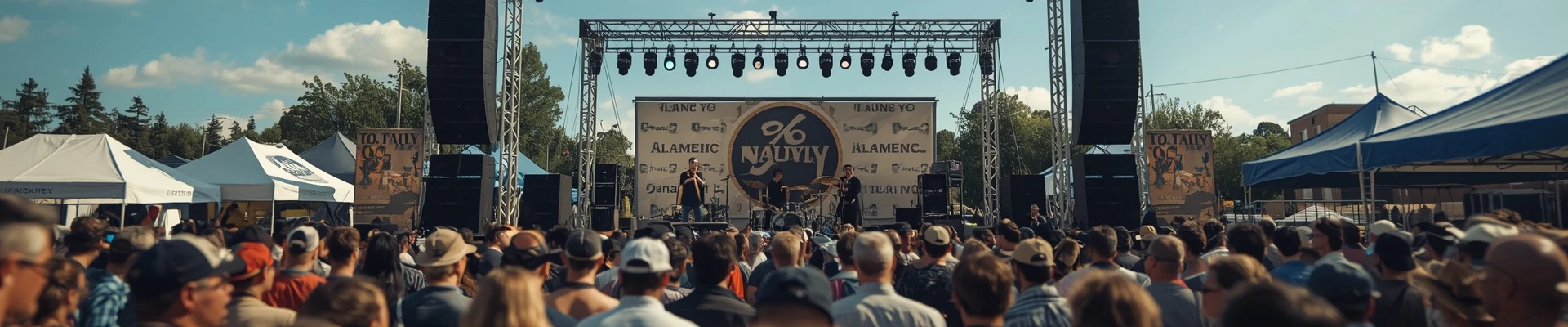
The festival calendar reflects the city's range. Tucson Folk Festival at Armory Park each May is one of the largest free folk festivals in the Southwest. Gem, Mineral & Fossil Showcase's music programming, La Fiesta de los Vaqueros Rodeo each February (one of the largest outdoor rodeos in the United States, with country music programming), Tucson Jazz Festival in January, Día de los Muertos at the Mercado San Agustín and throughout the city, Tucson Pride, All Souls Procession (a beloved annual folk-art procession with live music through downtown each November), Flycatcher Music Festival, the Tucson International Mariachi Conference (one of the most respected mariachi education and performance events in North America, held each spring), and Tucson Arena's year-round programming round out the calendar. Desert Daze (held in California but drawing on the broader Tucson psych orbit) and Levitation's Tucson stops draw on the city's psych-rock audience.
What ties it all together is the city's combination of desert solitude, university-town creative ferment, and deep border identity. Tucson is the city where Calexico and Giant Sand built the definitive musical voice of the American Southwest, where Linda Ronstadt grew up in a Sonoran Mexican family and eventually returned to the mariachi music of her childhood, where the Tohono O'odham waila tradition runs unbroken at feast days across the nation, where the Rialto and Club Congress have been anchoring the live music circuit since the movie-palace era, and where the proximity to Nogales and the broader Sonoran borderlands feeds a continuous musical exchange between the United States and Mexico.