


Yuma is a small city of roughly 96,000 residents in the far southwest corner of Arizona, positioned at the confluence of the Colorado River and the Gila River — the exact point where Arizona, California, and the Mexican state of Sonora meet. The city sits on the floor of the Sonoran Desert at roughly 43 metres above sea level, perennially baking under the sun: Yuma holds the Guinness World Record for the sunniest city on Earth, averaging more than 4,000 hours of sunshine per year and more than 300 sunny days. In summer, daytime highs routinely exceed 40°C (115°F). In winter, mild temperatures — rarely below 10°C — draw an enormous seasonal migration of snowbirds (retirees from cold northern states and Canada) who swell the effective population by as much as 100,000 additional residents from October through April, transforming Yuma's economic and entertainment calendar. Yuma sits on Interstate 8, 100 km east of the California border crossing at El Centro and 360 km west of Tucson; it is the principal city of Yuma County, and one of the fastest-growing regions in the United States through the early 2000s. The economy rests on three pillars: agriculture (the Yuma Valley and surrounding desert, fed by Colorado River irrigation, produces roughly 90% of all leafy-green vegetables grown in North America during winter — lettuce, broccoli, cauliflower, spinach), military (Marine Corps Air Station Yuma, one of the busiest military air-traffic facilities in the United States, and the U.S. Army Yuma Proving Ground, the largest military installation in the country by area, a massive weapons testing facility in the desert north of town), and retail and tourism (cross-border shopping from Mexico, RV tourism, and the snowbird economy).
A brief history
The Yuma Crossing — the most reliable ford of the lower Colorado River — has been inhabited and contested for millennia. The Quechan Nation (also called the Yuma people, from whom the city takes its name) has occupied the river confluence since time immemorial. Spanish explorers crossed here in the 1540s; Franciscan missionaries established Fort Yuma on the California bank in the 1780s before the Quechan destroyed it in a celebrated resistance in 1781. American forces established a permanent military presence at the crossing after the Mexican-American War (1848), and the Colorado River Indian crossing became a strategic link for westward migration — tens of thousands of forty-niners crossed here during the California Gold Rush. The Southern Pacific Railroad arrived in 1877 and made Yuma a significant rail junction. The Territorial Prison at Yuma (1876–1909) — known as the "Hell Hole" — housed some of the most notorious outlaws of the frontier West and is today a state park and one of Arizona's most-visited historic sites. Yuma remained a small agricultural and military town through the 20th century, growing steadily after World War II with the expansion of MCAS Yuma and the Colorado River irrigation infrastructure that made the desert bloom. Population grew sharply from the 1970s through the 2000s, fed by agricultural labour migration from Mexico and internal American migration drawn by affordable land and warm winters.
Music identity
Yuma's music identity is defined above all by its border geography and demographics. Roughly 60% of Yuma's population is Hispanic, the majority of Mexican or Mexican-American heritage — many with roots on both sides of the border, with family ties extending into Sonora's San Luis Río Colorado (a city of 200,000 immediately across the border from Yuma's sister community of San Luis, Arizona). This demographic has sustained a deep and continuous Norteño and regional Mexican music culture. The accordion-driven corrido and norteño tradition — shaped by artists like Los Tigres del Norte, Banda El Recodo, and Los Yonics — runs through Yuma's bars, restaurants, quinceañera halls, and outdoor events year-round. Regional Mexican touring acts route through Yuma consistently, with the city serving as a key stop on the circuit that connects Phoenix and Tucson to the Mexican border. Banda sinaloense, cumbia, ranchera, and Duranguense all have active local scenes. The annual San Luis Fiestas Patrias celebrations — Mexican Independence Day in September, drawing crowds across the border — are among the largest cultural music events in the region.
The city's non-Latino music scene is modest but genuine. Country music has deep roots in the agricultural and military community — the combination of farm workers, Marines, and snowbirds creates a reliable audience for classic and contemporary country. The local country circuit runs through bars and honky-tonks on the edge of town. Classic rock and blues sustain a small-venue weekend circuit popular with the snowbird demographic during winter season. The Yuma Blues & Jazz Festival was a long-running winter event that drew national touring acts to Yuma's Centennial Plaza during peak snowbird season — one of the few events in Arizona to program jazz and blues at a regional scale in a city this size.
Yuma has not produced major nationally-known musical artists, and that honesty matters. Its most consequential musical connection is geographic: the city is a significant node on the border touring circuit linking Phoenix to Mexicali, Tijuana, and Hermosillo, making it a regular stop for Mexican regional touring acts who play for audiences that straddle both sides of the international line. Quechan tribal music — the ceremonial and social music of the Indigenous Quechan Nation, whose reservation (the Fort Yuma Indian Reservation) straddles the California bank of the Colorado River — represents the region's deepest musical tradition, rooted in song cycles, bird songs, and ceremonial dances tied to the Colorado River and the desert landscape.
The city's military music connection runs through the MCAS Yuma Air Show — one of the premier military air shows in the western United States, held annually and typically featuring musical entertainment. The Blue Angels and other precision flight teams perform here regularly. Military bands and patriotic music programming mark community events throughout the year.
Venues and neighborhoods
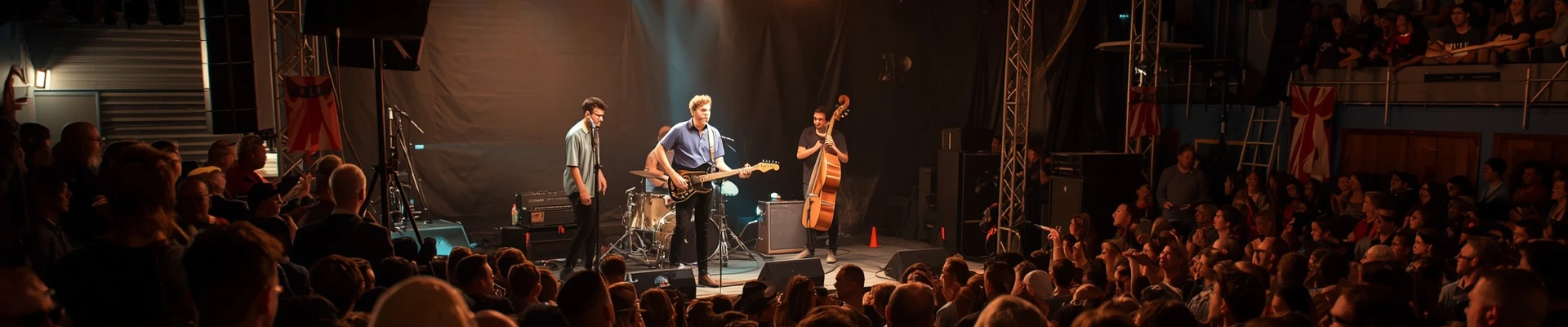
Yuma's venue ecosystem is small-city compact. The largest outdoor venue is Centennial Plaza in downtown Yuma, the city's principal outdoor event and concert space, which has hosted the blues festival and other outdoor music events. The Yuma Civic Center serves as the city's primary indoor event facility. Convention Center events draw regional touring acts and tribute bands during the winter snowbird season, when demand for live entertainment spikes. A cluster of bars and restaurants along South Main Street and East 16th Street in the historic downtown area host weekend live music. The Sun Ridge entertainment district and a handful of honky-tonks and sports bars on the outskirts serve the country and classic rock crowds.
The border town dimension adds a layer of music geography that the city limits don't capture. San Luis, Arizona (the border crossing community 45 minutes south) and San Luis Río Colorado, Sonora (across the border) are effectively part of Yuma's musical orbit — quinceañera venues, cantinas, and outdoor stages on both sides of the line host regional Mexican music events that Yuma residents participate in freely.
The Fort Yuma Indian Reservation (Quechan lands on the California bank, directly adjacent to downtown Yuma) anchors the Indigenous cultural calendar, with the Quechan Nation's annual bird song festivals and tribal events that draw participants from across the lower Colorado River Nations.
Festivals and signature events
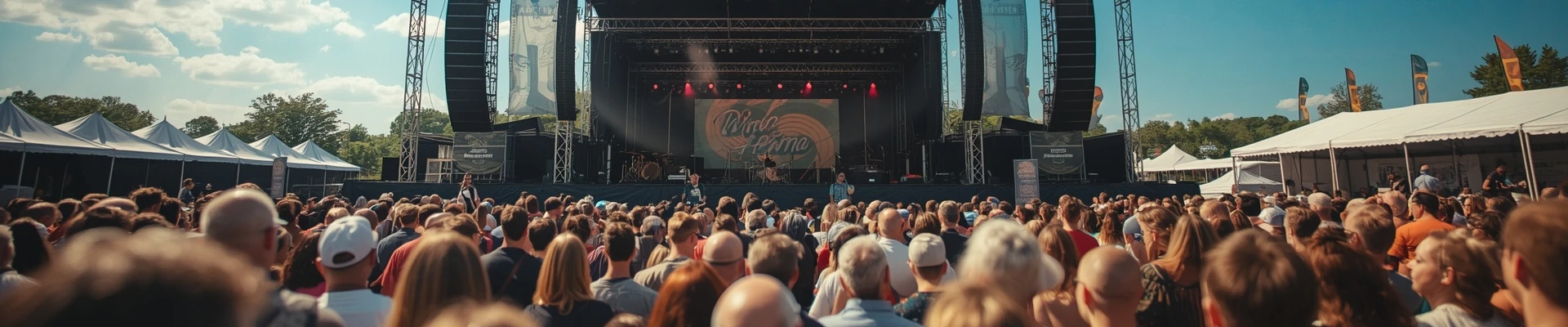
The Yuma Blues & Jazz Festival — typically held in February during peak snowbird season at Centennial Plaza — has been one of Arizona's longest-running outdoor music festivals for its genre, programming B-list and regional touring acts in an intimate outdoor setting. The Yuma County Fair in March programs country and regional music acts on its outdoor stage. San Luis Fiestas Patrias in September brings Mexican Independence Day celebrations with regional Mexican music, dance, and cultural programming that draws thousands across the border. The MCAS Yuma Air Show (typically held in spring) pairs military flight demonstrations with live entertainment. The Yuma Lettuce Days agricultural festival celebrates the winter harvest season with community music programming. During the snowbird season (November through March), the Yuma RV & Camping Show and various snowbird community events at Foothills and outside the city program live country and classic rock entertainment at RV parks and retirement community venues — a significant, if informal, circuit of winter-season music.
What ties it all together
What defines Yuma's musical character is the border — in every sense. It is a border city geographically, demographically, and musically: a place where Norteño meets honky-tonk, where bird songs from the Quechan ceremonial tradition coexist with country bar bands entertaining Marines and retirees, where regional Mexican touring acts pull audiences from both sides of the international line, and where the winter snowbird influx briefly transforms a compact desert town into a market that can sustain more live entertainment than its permanent population alone could support. Yuma will never be a music-industry city. But for the communities that live here — the Mexican-American farmworkers whose families span the border, the Quechan Nation whose music reaches back through millennia, the Marines rotating through MCAS Yuma, the snowbirds seeking warm-weather entertainment — the city sustains a music life that is genuinely its own.