
Bakersfield is the largest city in the southern San Joaquin Valley and the ninth-largest in California, with roughly 374,000 residents inside the city limits and more than 916,000 across Kern County. Sitting at the southern end of California's vast Central Valley, with the Sierra Nevada rising to the east and the Tehachapi Mountains to the south, 180 km north of Los Angeles, Bakersfield is the agricultural and oil capital of southern California's interior. The city sits in one of the most agriculturally productive regions in the United States — Kern County leads California in agricultural output, with grapes, citrus, almonds, pistachios, and dairy dominating — and one of the largest oil-producing regions outside Texas. Kern County is the third-largest oil-producing county in America, and the Kern River Oil Field has been continuously productive since 1899. Bakersfield is roughly 50% Hispanic, 5% Black, and 6% Asian, with a long-established Mexican-American population (much of it dating from the Dust Bowl era and earlier waves of agricultural migration), a substantial Filipino-American community, and historic Black, Punjabi-Sikh, and Basque populations that have shaped the city's distinctive cultural character. Above all, Bakersfield is one of the most musically consequential American cities of the past 75 years — the home of the Bakersfield Sound and one of the two centres of post-war American country music alongside Nashville.
A brief history
The land in the southern San Joaquin Valley was Yokuts territory before Spanish missionaries and Mexican rancheros arrived in the 18th and 19th centuries. The town of Bakersfield was founded by Colonel Thomas Baker in 1869 and grew through agriculture, the 1885 Kern River Gold Rush, and the 1899 oil discoveries. The 1930s Dust Bowl migration brought tens of thousands of Oklahoma, Arkansas, and Texas migrants — the "Okies" — to the Central Valley to pick crops. They settled heavily in Bakersfield and the surrounding Kern County agricultural towns, bringing their country, gospel, and honky-tonk music with them. The 1940s and 1950s saw the rise of the Bakersfield Sound as these Dust Bowl families and their children built a distinctive country music scene that would soon rival Nashville's. Through the late 20th century the city's economy diversified into oil, agriculture, and logistics, and a substantial Hispanic agricultural workforce reshaped the cultural landscape.
Music identity — The Bakersfield Sound
Bakersfield's musical contribution to American popular culture is immense. The Bakersfield Sound emerged in the late 1950s and 1960s as a Telecaster-driven, electric, honky-tonk-rooted reaction against the smooth string-laden Nashville Sound that was dominating country music at the time. The Bakersfield style was harder, twangier, faster, and rooted in the working-class honky-tonks of Kern County's oil and agricultural economy.
Buck Owens and the Buckaroos built the Bakersfield Sound's commercial breakthrough — Buck's 1963-1969 string of #1 country hits ("Act Naturally," "Together Again," "I've Got a Tiger by the Tail," "Crying Time," "Streets of Bakersfield") made him the most commercially successful country artist of the mid-1960s and put Bakersfield on the country music map. Lead guitarist Don Rich's Telecaster work with Buck created one of the most distinctive and copied guitar sounds in country music history. Buck went on to co-host Hee Haw (1969-1986), and his Buck Owens' Crystal Palace — the Buck Owens-built museum, restaurant, and concert hall in Bakersfield — opened in 1996 and remains one of the most beloved country music landmarks in the western United States. Buck died in 2006 after a final dinner at the Crystal Palace.
Merle Haggard is Bakersfield's other towering musical figure. Born in nearby Oildale in 1937 to Dust Bowl Okie parents who had fled Oklahoma to Kern County in 1934, Haggard grew up in a converted boxcar, served time at San Quentin (where he saw Johnny Cash perform), and built one of the greatest songbooks in American music — "Mama Tried," "Okie from Muskogee," "Working Man Blues," "If We Make It Through December," "Sing Me Back Home," "Today I Started Loving You Again," and dozens more. Haggard's 38 #1 country hits and his deeply autobiographical songwriting made him perhaps the most respected country songwriter of his generation. He died in 2016, and his legacy is everywhere in Bakersfield — at the Kern County Museum, on the Highway 99 that he sang about, and in the broader Kern County country tradition that he embodied.
The broader Bakersfield Sound included Wynn Stewart (Buck's mentor), Tommy Collins, Bill Woods, Red Simpson (the truck-driving country specialist), Ferlin Husky, Dallas Frazier, and the network of musicians who played the legendary Blackboard Cafe and the honky-tonks of Edison Highway. Dwight Yoakam — though Kentucky-born — built his entire 1980s and 1990s career as the most prominent revivalist of the Bakersfield Sound, recorded extensively with Buck Owens, and made Bakersfield culturally relevant to a new generation. Brad Paisley, Vince Gill, Toby Keith, and the contemporary country mainstream owe direct debts to the Bakersfield Telecaster lineage.
Other Bakersfield music
Beyond country, Bakersfield is also the birthplace of Korn — the band whose 1994 self-titled debut launched nu-metal as a genre. Jonathan Davis, James "Munky" Shaffer, Brian "Head" Welch, Reginald "Fieldy" Arvizu, and David Silveria all grew up in Bakersfield, and the band's early years working out of the city's small clubs and rehearsal spaces produced one of the most commercially successful and influential heavy bands of the late 1990s and 2000s. Korn's 1998 Follow the Leader and 1999 Issues sold tens of millions of copies and turned the band into one of the defining acts of the era. Bakersfield's legacy as the unlikely birthplace of nu-metal sits alongside its country tradition as one of the more striking musical contradictions in American popular culture.
The city's Mexican-American music scene is one of the most active in the agricultural Central Valley — norteño, banda, mariachi, and contemporary regional Mexican music run through clubs and dance halls across the city, and the Mexican Independence Day and Cinco de Mayo events at the Kern County Fairgrounds draw substantial crowds. The Filipino-American community runs traditional and contemporary music programming through community centres. The historic Basque community — Bakersfield has one of the largest Basque-American populations in the United States — sustains traditional Basque music through restaurants like Wool Growers and the Noriega Hotel.
Venues and neighborhoods
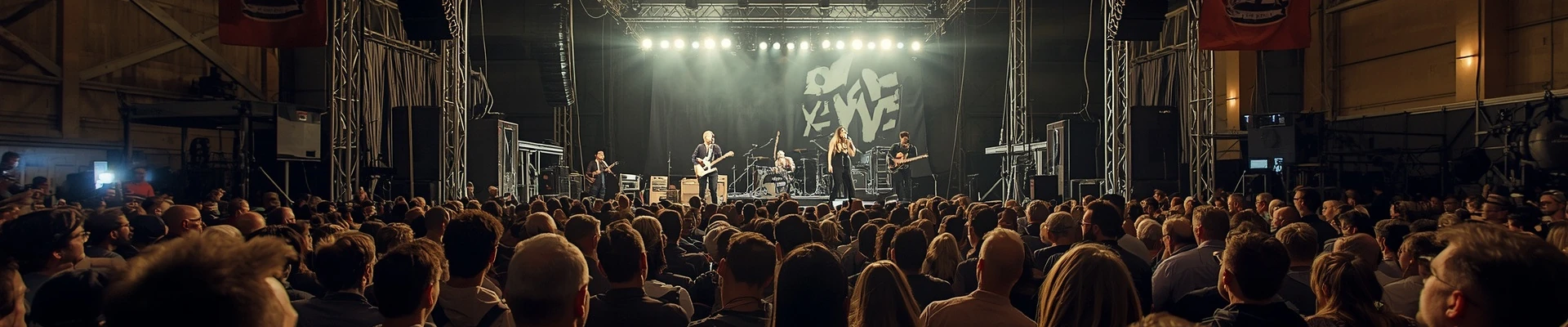
Bakersfield's venue ecosystem is well-developed. At the top sit Mechanics Bank Arena (formerly Rabobank Arena, the 11,000-capacity downtown arena that hosts the city's largest concerts), Mechanics Bank Theater (the 3,000-capacity performing arts venue), and the Kern County Fairgrounds. The historic centerpiece is Buck Owens' Crystal Palace (the 550-capacity museum-restaurant-concert venue that Buck built in 1996, programming his old Buckaroos rotation, country touring acts, and tribute shows continuously since opening). The midsize tier includes The Dome (the legendary Bakersfield rock venue), the Fox Theater Bakersfield (the 1,500-capacity restored 1930 movie palace), and Temblor Brewing. Beneath them is a club layer running through Downtown Bakersfield — including B Ryder's Sports Bar & Grill, Cadet Bar, and a network of smaller venues. The Edison Highway corridor — the historic honky-tonk strip — sustains the Bakersfield country tradition. The Kern County Fairgrounds' grandstand programs major country and Latin acts each September.
Different neighborhoods carry different musical identities. Downtown Bakersfield anchors the major venue circuit and indie scene. Oildale (the working-class neighborhood north of the river, Merle Haggard's birthplace) anchors the historic country and honky-tonk tradition. East Bakersfield anchors the Mexican-American music corridor. Northwest Bakersfield anchors the suburban country and contemporary Christian scenes. The broader Edison Highway corridor anchors the historic honky-tonk legacy.
Festivals and signature events
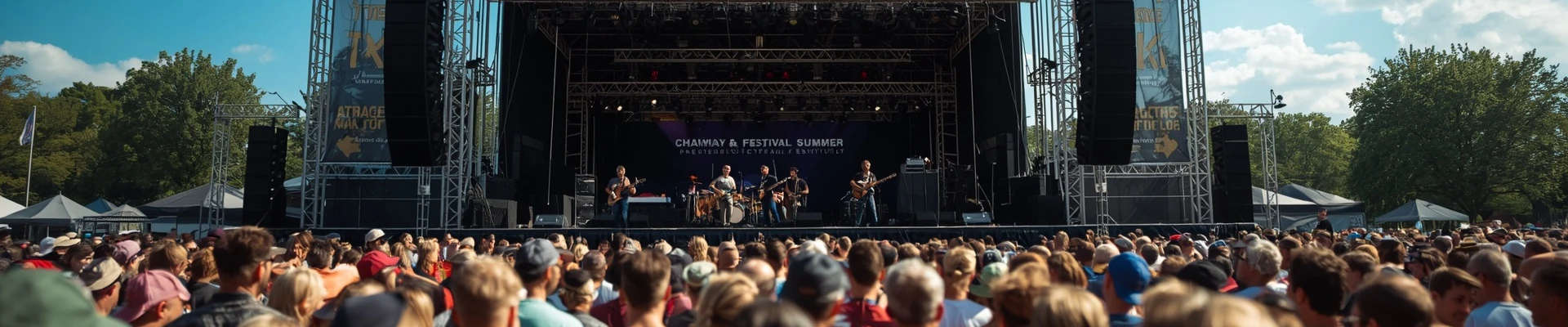
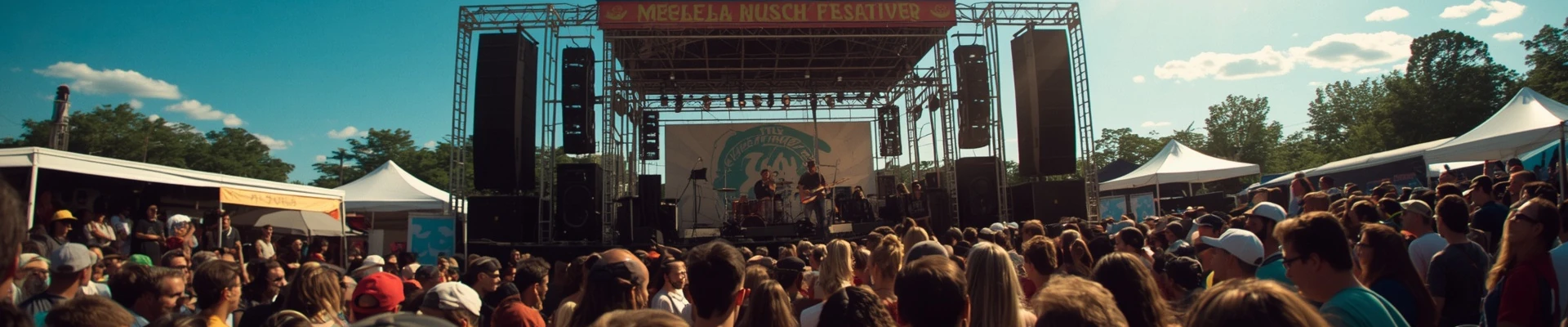
The festival calendar reflects the city's range. Kern County Fair (the major September fair at the fairgrounds, programming country, Latin, and rock acts at the grandstand), Bakersfield Music Hall of Fame programming, Buck Owens Birthday Bash at the Crystal Palace each August, Merle Haggard Tribute events, Cinco de Mayo and Mexican Independence Day celebrations, Bakersfield Pride, Basque Festival at Tehachapi, Kern River Festival's music programming, Kern County Wine and Food Festival, and the Bakersfield Jazz Festival at CSUB round out the calendar. Stagecoach Festival (the major California country festival in nearby Indio) and the broader Coachella Valley festivals are major Bakersfield-audience events.
What ties it all together is Bakersfield's combination of Dust Bowl Okie heritage, oil-and-agriculture economy, Mexican-American demographics, and the Telecaster-driven country sound that the city forged in the honky-tonks of Edison Highway. Bakersfield is the city where the Dust Bowl migration brought Oklahoma honky-tonk to California, where Buck Owens and the Buckaroos turned the Bakersfield Sound into a #1-hit machine that rivaled Nashville, where Merle Haggard turned his San Quentin sentence and his Okie childhood into one of the great American songbooks, where Dwight Yoakam revived the Bakersfield Sound for a 1980s generation, where Korn improbably invented nu-metal in the same town, and where the Crystal Palace continues to programme the Bakersfield Sound for new audiences every week.