

Chico is the county seat of Butte County and the largest city in California's northern Sacramento Valley, with roughly 121,000 residents inside the city limits — a population anchored substantially by California State University, Chico (Chico State), which enrolls around 17,000 students and has been a defining force in the city's culture since 1887. Situated in the foothills of the Sierra Nevada at an elevation of about 200 feet, Chico lies 90 miles north of Sacramento and 170 miles northeast of San Francisco, at the edge of agricultural flatlands that transition east into forested mountains. The city is ringed by almond orchards, rice paddies, and olive groves — the Sacramento Valley is one of the most productive agricultural corridors in the United States — and the land's history runs through the Mechoopda Maidu people, whose ancestors inhabited the Chico area for thousands of years before Spanish and Mexican ranching reshaped the landscape. Bidwell Ranch, established by General John Bidwell in the 1840s, became Bidwell Park — a 3,670-acre municipal park considered one of the largest city parks in the United States — and that green infrastructure has shaped Chico's identity as an outdoors-oriented, walkable, and livable mid-size city. The local economy is built around education, healthcare, agriculture, and a growing craft-industry sector, the most globally visible expression of which is Sierra Nevada Brewing Company, founded in Chico in 1980 by Ken Grossman, which grew from a homebrewing operation into one of the most recognized craft breweries in the world and — crucially for the city's music story — into one of the region's finest outdoor concert destinations.
A brief history
The Bidwell family's presence shaped Chico's early decades: John Bidwell platted the city in 1860 and donated land for Chico State, the park, and several churches, establishing a civic culture that leaned toward education and public space. The Western Pacific Railroad and later Southern Pacific made Chico a regional agricultural shipping hub. The city's population grew steadily through the early 20th century, and the proximity of Chico State — which expanded dramatically in the postwar decades — brought successive waves of student population that reshaped the city's culture. By the 1970s, Chico had developed a reputation as a party-forward college town that paradoxically also had a serious outdoor-recreation culture and a genuine arts scene. The 1980s saw both the founding of Sierra Nevada Brewing and the emergence of a live-music scene robust enough to sustain a circuit of downtown bars and small venues. The Camp Fire of November 2018 — the deadliest and most destructive wildfire in California history, which destroyed the neighboring town of Paradise and forced the relocation of roughly 50,000 displaced residents into Chico — fundamentally changed the city's demographics, housing market, and social fabric, adding urgency to a city already wrestling with affordability, homelessness, and the strains of rapid population growth.
Music identity
Chico's music identity is not built around a single internationally recognized genre or city-defining sound, but around something rarer: a broad, deep, and durable local scene that has sustained itself across genres — indie rock, folk, Americana, jam, country, punk, and hip-hop — through the mechanism of a large university, affordable rent, and a downtown entertainment district that actually sustains live music economically. The result is a city where an unusually high proportion of the population plays or actively attends live music, and where the concert infrastructure per capita rivals cities three times Chico's size.
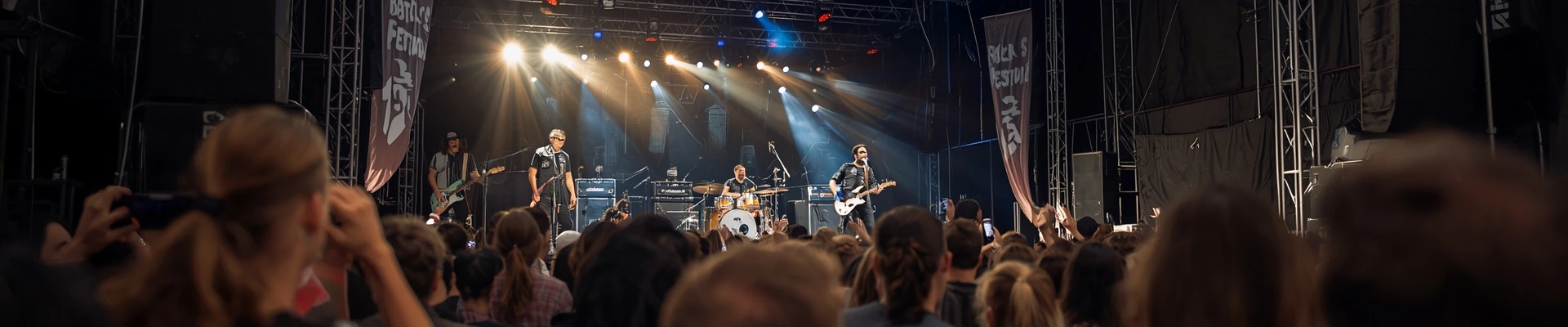
The single most consequential music infrastructure contribution Chico has made to Northern California — and to American craft-brewing/music culture generally — is Sierra Nevada Brewing Company's outdoor Harvest Stage and the brewery's Big Room concert venue. Sierra Nevada has programmed music at its Chico campus since the 1990s, and the combination of the outdoor festival grounds, the taproom, and the annual Harvest Festival (which draws major touring acts to a setting that is simultaneously a working brewery and a world-class outdoor venue) has made the brewery one of the essential concert stops for touring folk, Americana, and rock acts in Northern California. Artists including Wilco, Neko Case, The Avett Brothers, Old Crow Medicine Show, Nathaniel Rateliff & the Night Sweats, Drive-By Truckers, and dozens of other Americana and alt-country headliners have played the Sierra Nevada grounds, and the programming quality has been consistently recognized as exceptional for a market of Chico's size.
Chico's jam band and psychedelic folk scenes are rooted in the city's proximity to the Northern California festival circuit — the same geography that produced the Grateful Dead and the culture surrounding High Sierra Music Festival (held annually in Quincy, 90 miles east). Chico bands and fans have been a constant presence in this circuit, and the city has produced its share of jam-oriented acts that tour the festival circuit. The String Cheese Incident — while based in Colorado — developed a significant Chico following, and the overlap between Chico State's outdoor culture and the Northern California jam-festival scene has made the city a natural hub.
In country and Americana, Chico occupies an interesting position as a city at the edge of California's agricultural heartland. The Sacramento Valley's ranching and farming culture sustains genuine country music fandom, and Chico's country bars and honky-tonks have historically drawn from both the college population and the region's working-class base. Acts in the Red Dirt and Bakersfield Sound traditions have found consistent audiences here, and local acts have built careers on the Northern California country circuit.
Chico's indie rock and punk scene has been active since the 1980s. The city's university population creates a reliable demand for all-ages and 21+ indie shows, and Chico State's music programs (including the respected Department of Music) produce a steady supply of technically accomplished musicians who often stay in the city for years after graduation. The LaSalles bar complex — a multi-room entertainment venue on the central downtown strip — has been the anchor of the Chico live-music circuit for decades, programming local and regional acts nightly across genres. The Graduate (named with obvious reference to the Chico State demographic it serves), now operating in various forms on Esplanade, has been another consistent live-music room.
Hip-hop in Chico operates through open mics, the university, and a small but committed community of local producers and MCs. The presence of a significant Latinx community in Chico and Butte County — centered in neighborhoods near the university and in the agricultural worker communities of the broader valley — sustains regional Mexican, cumbia, and banda scenes alongside the dominant rock/folk/country orientation of the entertainment corridor. The Mechoopda Maidu community's cultural presence includes traditional music and ceremony that, while not commercial music in the conventional sense, is part of Chico's cultural fabric.
Chico's relationship to the broader Northern California counterculture — through Chico State, through the surrounding mountain and festival culture — has produced generations of musicians who fed into the jam, folk, and Americana circuits. Acoustic Americana acts including Whitmore have drawn critical attention with roots in the Chico scene, and the city has contributed figures to the indie-folk sphere. The Enloe Jazz Ensemble and Chico State's jazz program sustain a jazz performance tradition distinct from the commercial music scene.
Venues and neighborhoods
The venue landscape is organized around the Downtown Entertainment District and the Sierra Nevada Brewing Company campus.
Downtown, LaSalles (on Broadway, Chico's main entertainment strip) operates as a multi-room complex with nightly live music spanning genres — its configuration of bars, dance floors, and stages makes it the highest-volume live-music space in the city for local and touring acts at the bar/club level. The Senator Theatre — the 1942 downtown movie palace that has been repurposed for live events — adds a seated theatre-scale room (roughly 700 capacity) for touring acts that have outgrown bar venues but aren't ready for an arena. Duffy's Tavern on Salem Street is one of Chico's longest-running dive-bar music rooms, programming rock, punk, and alternative acts. Madison Bear Garden in the university-adjacent district programs live music alongside its outdoor beer garden format. Pageant Theatre and the various venue configurations on Wall Street and the side streets of downtown round out the small-club tier.
The Sierra Nevada Brewing Company campus on East 20th Street includes the Big Room (indoor, standing, medium capacity) and the outdoor Harvest Stage area used for festival-scale programming. The brewery grounds double as a concert destination that draws from the entire region — Northern California jam/Americana fans will drive two or three hours for a Sierra Nevada show in a way they might not for a comparable club. The campus also programs the Harvest Festival, a multi-day music event held in October that has become one of the premier Americana/folk outdoor festivals in Northern California.
CSU Chico's Bell Memorial Union and the Harlen Adams Theatre on the Chico State campus program university-facing music events and some touring acts through the student activities office. The university's Laxson Auditorium (capacity around 1,200) adds classical, jazz, and world music programming to the city's cultural calendar.
Bidwell Park and various outdoor spaces program the Concerts in the Park summer series, which draws large audiences for free outdoor music across genres. The City Plaza in downtown Chico serves as an outdoor performance space for community events.
Neighborhoods define scenes: Downtown Chico — the grid around Broadway, Main Street, and Wall Street — is the commercial and entertainment core. The University District drives student-oriented programming and cheaper-rent rehearsal spaces. The East Side connects the brewery circuit to the city's live-music ecosystem.
Festivals and signature events
Chico's festival calendar is anchored by the Sierra Nevada Harvest Festival, held in October at the brewery grounds, which programs two to three days of Americana, folk, and roots music with the craft beer and food infrastructure of a world-class outdoor destination. The Chico World Music Festival has programmed international and domestic world-music acts. The Concerts in the Park summer series in Chico City Plaza offers free weekly music across folk, rock, jazz, and Latin genres.
The National Yo-Yo Contest, held annually at the Chico State Bell Memorial Union since 1993, is a quirky but genuine cultural institution that draws competitors from around the world and has become a piece of Chico's civic identity. While not strictly a music festival, it reflects the city's culture of organized community enthusiasm.
ChicoFest and university-adjacent events (including Pioneer Days, before its discontinuation following incidents in 2012) historically drew massive crowds to downtown Chico and generated significant local music programming. The post-Pioneer Days regulatory environment pushed Chico's entertainment culture toward ticketed indoor events and managed festival programming, which has generally strengthened venue quality.
What ties it all together
Chico's music identity emerges from the intersection of three forces that rarely coexist in a city of 120,000: a large, music-hungry university population; an unusually high-quality piece of infrastructure in Sierra Nevada's concert grounds; and a geographic position in the Northern California festival corridor that connects the city to the jam-band, Americana, and folk traditions of the Sacramento Valley, the Sierra foothills, and the Bay Area. The result is a city where the ratio of live-music venues to residents is genuinely exceptional, where a touring Americana act can draw a serious crowd on a Tuesday, and where the brewery has become as famous for its stage as for its pale ale. Chico doesn't have a single defining sound — it has a culture of showing up, of making music a central part of daily life in a way that larger cities achieve only in their most concentrated neighborhoods. That culture, sustained by the university, the park, the beer, and the mountains, is what makes Chico's scene worth knowing.