
Modesto is the county seat of Stanislaus County and the largest city in California's northern San Joaquin Valley, with roughly 211,000 residents inside city limits and more than 500,000 across the broader metropolitan area. Sitting at about 25 metres above sea level on the west bank of the Tuolumne River, flanked by the Sierra Nevada to the east and the Diablo Range to the west, Modesto is an agricultural-industrial hub in the heart of California's Central Valley — the most productive farming region on earth. Stanislaus County specializes in dairy, almonds, poultry, walnuts, peaches, and wine grapes; Modesto is where much of that industry converges for processing, shipping, and distribution. The city is also the headquarters of E. & J. Gallo Winery, the largest family-owned winery in the world, whose vast blending and bottling facilities dominate a chunk of the city's industrial west side. Modesto's musical identity is shaped by its agricultural working-class character, its large and deep Mexican and Mexican-American community, its country and blues traditions inherited from the Dust Bowl migrants who flooded the Valley in the 1930s, and its proximity to Stockton, Turlock, and Fresno — a dense Central Valley corridor where musical influences travel quickly. It is also the city that gave George Lucas his teenage cruising circuit, which he immortalized in American Graffiti (1973) and which made Modesto the most famous car-culture city in California for a generation.
A brief history
The Miwok and Yokuts peoples inhabited the Tuolumne and San Joaquin Valley for thousands of years before Spanish missionaries arrived in the late 18th century. American settlement accelerated after the 1849 Gold Rush, when the Central Valley began to be subdivided for agriculture. Modesto was founded in 1870 as a stop on the Central Pacific Railroad — its name reputedly derived from an act of modesty, when a prominent local businessman declined to have the town named after him and the word modesto (Spanish for modest) was suggested instead. The city grew rapidly as a railhead for agricultural produce. The 1930s brought an enormous influx of Dust Bowl migrants — primarily from Oklahoma, Arkansas, and Texas — who transformed the cultural character of the San Joaquin Valley. The Okies and their descendants brought country music, honky-tonk, gospel, and blues traditions that took deep root in Modesto and the surrounding towns, feeding a country bar scene that persisted well into the late 20th century. World War II military expansion and postwar suburbanization filled the city's housing tracts; by the 1960s Modesto was a prosperous small city with a strong car culture, thriving main-street commerce, and a downtown cruise strip along McHenry Avenue and 10th Street that George Lucas would later use as the template for American Graffiti. Through the 1970s and 1980s Mexican and Central American immigration deepened, particularly in the agricultural workforce; today Modesto is majority-Hispanic and one of the most Latino cities in California by proportion.
Music identity
Modesto's most culturally consequential contribution to music is indirect but enormous: George Lucas grew up here, spent his teenage years cruising McHenry Avenue, and built American Graffiti (1973) around the city's car-culture ritual — a film whose entire soundtrack is the rock and roll and soul radio of 1962, curated by Wolfman Jack, and which played a major role in the 1970s nostalgia boom that reshaped popular music's relationship to the 1950s and early 1960s. The film's influence on the mythology of American teenage music culture — cruising, AM radio, parking lot dances, drive-in diners — radiated far beyond Modesto, but the city owns the template.
Modesto's own musical exports are more modest but real. Doobie Brothers co-founder and lead vocalist Tom Johnston grew up in Modesto and attended Downey High School; the Doobie Brothers formed in San Jose but Johnston's Modesto roots are documented. The band's blues-rock, country-rock, and soul-inflected sound — Listen to the Music (1972), Long Train Runnin' (1973), China Grove (1973), Black Water (1974), What a Fool Believes (1979) — made them one of the most commercially successful American rock bands of the 1970s. Johnston's departure from the band in 1977 (due to ulcers) and eventual return tracked the Doobies' stylistic evolution from roadhouse blues-rock to smooth yacht rock, but his signature gritty vocal and rhythm guitar contributions are the sound most associated with their classic period.
Blink-182 drummer Travis Barker grew up in Fontana (Southern California) but spent formative touring years playing the Central Valley circuit including Modesto; more directly, The Matches, the Oakland-area pop-punk band, frequently cited the Central Valley scene in interviews. The Central Valley corridor — Modesto, Stockton, Turlock, Merced — has been a consistent proving ground for California punk and alternative bands routing between the Bay Area and Southern California.
Modesto's country and honky-tonk tradition is deep. The Dust Bowl migration that brought hundreds of thousands of Okies and Arkies to the San Joaquin Valley in the 1930s created a country music culture in the Central Valley that rivals anything in the South. Modesto had a dense network of Basque hotels, country dance halls, and honky-tonk bars through the mid-20th century. Buck Owens (the Bakersfield Sound architect) and Merle Haggard (a Bakersfield native) both toured Modesto constantly; their Bakersfield Sound — raw, twangy, deliberately anti-Nashville — grew from exactly the same Dust Bowl working-class California country tradition. Modesto's country scene in the 1970s and 1980s fed suburban honky-tonks and dance halls across Stanislaus County. The tradition has thinned with suburban sprawl but survives in bars across north Modesto and in the surrounding agricultural towns.
Modesto's Hispanic music ecosystem is one of the most developed in the Central Valley. Norteño, banda, cumbia, corridos, and corridos tumbados (the narco-corrido subgenre) fill clubs, quinceañera halls, and outdoor fiestas across the city's east and south sides. Mariachi music anchors community events and church fiestas across the Mexican-American barrios. The city's Hispanic population — now the majority — has sustained a continuous and evolving music culture from traditional folk forms through Mexican urban pop, reggaeton, and Latin trap. Club La Boom, El Rodeo, and a network of cantinas and dance clubs across the south and east sides programme norteño and banda acts year-round.
Modesto's hip-hop and R&B scene grew through the 1990s and 2000s in conversation with both Bay Area hyphy culture and Central Valley street rap. The city's Black and Latino youth communities built a local scene that is less visible nationally than Fresno or Stockton but serious. Central Valley rap — raw, low-key, unglamorous — runs through Modesto in connection with Stockton's scene (which produced Mozzy, Nef the Pharaoh, and a generation of California street rappers). Local hip-hop nights at clubs downtown and in Turlock have maintained a circuit. The hyphy movement of the mid-2000s — ghost riding, thizz culture, E-40 and Mac Dre's Bay Area rap — washed through Modesto the way it washed through every Central Valley city.
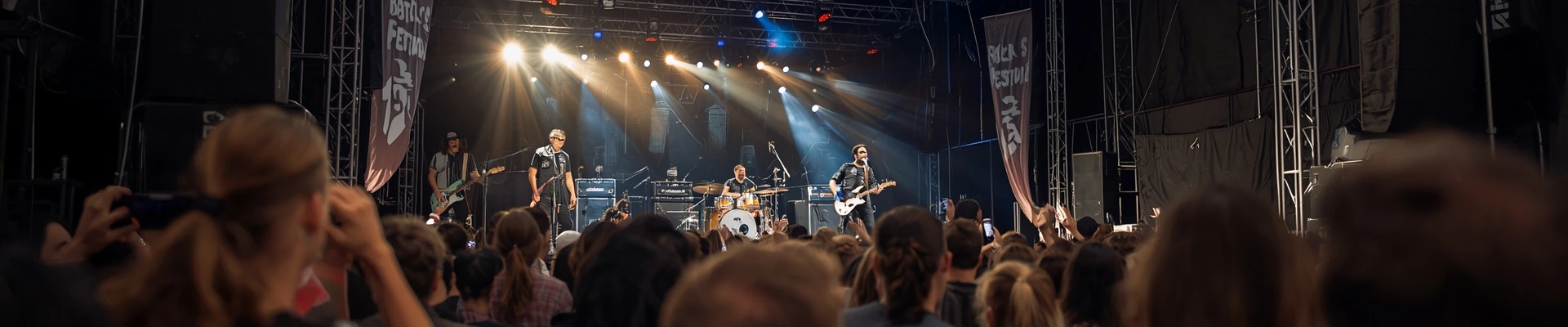
Modesto's rock and alternative underground has been consistent if not nationally prominent. The city's proximity to the Bay Area means Bay Area touring bands have always played Modesto; DIY venues and bars across downtown and the Midtown corridor have hosted punk, metal, indie, and emo acts. Turlock (immediately south, home of California State University Stanislaus) adds a college-town music economy to the greater Modesto area. The Gallo Arts Center and the State Theatre have anchored the larger concert and theatrical programming.
Venues and neighborhoods
Modesto's venue landscape is anchored by the Gallo Center for the Arts — a 1,248-seat and 426-seat two-hall performing arts facility that opened in 2007, programming Broadway, orchestral, country, and pop acts. The State Theatre (a 1937 Art Deco movie palace on 10th Street, now a live music venue and events space) is the city's most storied venue and the centre of its alternative and touring concert scene. The Modesto Centre Plaza hosts larger outdoor events and fairs. Below them is a working club scene: Barkin' Dog Grill, Prospect Bar & Grill, Blues City Café (blues and R&B programming), and a scatter of bars and restaurants with live music across the downtown grid. The Stanislaus County Fair at the Fairgrounds programs country and Latin acts each summer. Turlock's bars and the CSU Stanislaus campus add a secondary circuit immediately south.
Downtown (10th Street, J Street, and the McHenry corridor) anchors the main-street bar and venue scene. East Modesto and South Modesto hold the largest Hispanic communities and the norteño and banda club circuit. North Modesto holds suburban country bars and the wine country corridor extending toward Ripon and Escalon. Ceres and Turlock to the south and Riverbank and Oakdale to the east extend the music economy across the agricultural suburbs.
Festivals and signature events
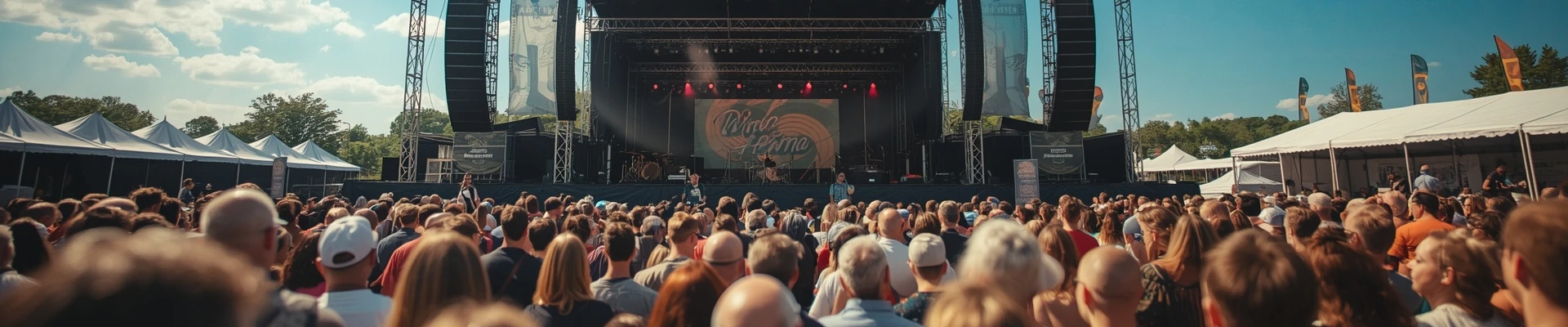
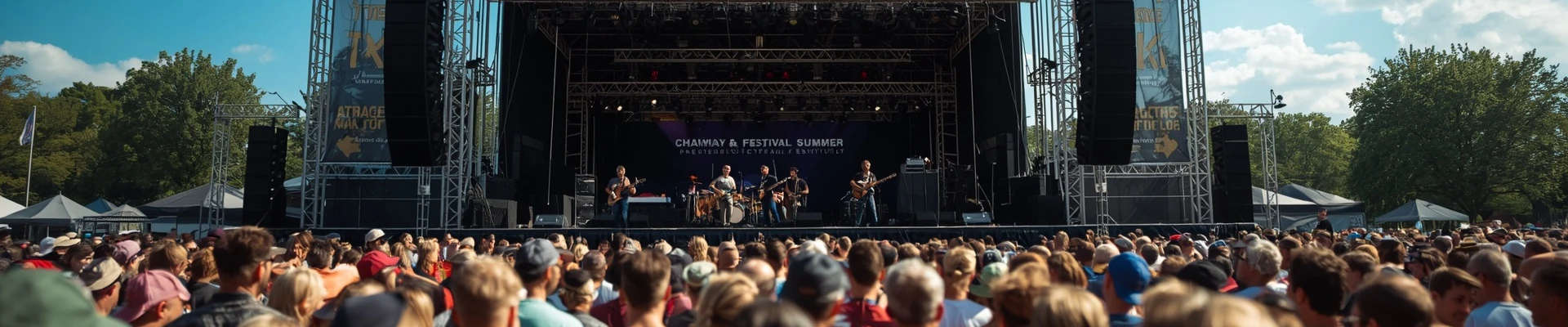
Modesto's Graffiti Summer — held annually in June — is the city's signature event: a George Lucas–branded celebration of American Graffiti and car culture, featuring a cruise night, a classic car show, and music programming oriented toward 1950s and 1960s rock and roll. The event draws tens of thousands of visitors and is the single largest annual music-adjacent event in Stanislaus County. The Stanislaus County Fair (late July/early August) programs country, Latin, and mainstream pop acts on its outdoor stage. Cinco de Mayo celebrations across south and east Modesto are large, spanning multiple days of live Latin music. Modesto Art Walk, Modesto Performing Arts events, the Gallo Center concert series, and the El Camino Blues Festival (a periodic blues programming event at various downtown venues) fill out the calendar. Turlock's Street Faire and Oakdale's Chocolate Festival extend the regional circuit.
What ties Modesto together musically is a Central Valley pragmatism: this is a city where music serves community before it serves commerce, where a norteño band in a south-side cantina and a country act at the Stanislaus Fair and a punk show at the State Theatre all co-exist without needing to be a "scene" in the branded sense that larger coastal cities project. The Doobie Brothers — Tom Johnston's band — took their sound from the roadhouse tradition of working-class California and made it into something tens of millions of people loved. George Lucas — who grew up on the cruise circuit — understood that music is the architecture of memory, the track behind the experience, the thing that tells you where you are and when. Modesto made that insight into a film, and the film made that insight into a cultural fact. That is Modesto's particular contribution: not a named sound, but an understanding that music is what makes a place feel like a place.