

Roseville sits at the base of the Sierra Nevada foothills in Placer County, California, approximately 16 miles northeast of Sacramento along Interstate 80. With a population of roughly 130,000 within the city limits — and well over 500,000 across the broader Sacramento–Roseville–Folsom metropolitan area — Roseville is the largest city in Placer County and one of the fastest-growing communities in California. The city occupies a transitional landscape: the flat Sacramento Valley floor to the west gives way to rolling oak-covered hills to the east, with the granite peaks of the Sierra Nevada visible on clear days. The Bear River and Dry Creek drain through the city's eastern and southern districts. This foothills geography, with its mild-to-warm summers, cold but mostly snow-free winters, and proximity to both the Sierra Nevada and the Sacramento urban core, shapes Roseville's character as a city that is neither quite suburb nor quite mountain town — a place with genuine roots that has been dramatically transformed by population growth.
A brief history
The land around Roseville was home to the Nisenan people — a branch of the Southern Maidu — for thousands of years before European contact. Spanish missionaries encountered Nisenan communities along the foothills in the early 19th century, and the Gold Rush of 1849 brought a catastrophic influx of miners and settlers that shattered Nisenan society within a generation. The town of Roseville itself grew out of the junction point of the Central Pacific Railroad (later absorbed into the Southern Pacific) in the 1860s. The railroad was everything to early Roseville: the town's reason for existence, the source of its employment, and the engine of its commerce. The Southern Pacific Railroad Yard — at its peak one of the largest switching yards on the West Coast — anchored the local economy for nearly a century. Workers who maintained the locomotives, coupled the freight cars, and ran the dispatching operations lived in neighborhoods within walking distance of the yard.
The rail economy sustained Roseville through the early 20th century alongside the growth of a significant fruit-packing industry: the Newcastle fruit district to the east was one of California's premier peach and pear growing regions, and Roseville's ice-plant and packing facilities shipped refrigerated carloads to markets across the country. The Placer County Courthouse and the Maidu Regional Park — on the site of an ancient Nisenan village — are reminders of those deeper histories. The post-World War II decades brought the first wave of suburban growth, and the construction of Interstate 80 through the city accelerated the transformation. By the 1990s, Roseville was growing at a rate that made it one of California's fastest-expanding cities, driven by an exodus of Sacramento-area residents seeking larger homes, better schools, and lower land costs in the foothills. The Westfield Galleria at Roseville — one of the largest malls in the region — became a regional commercial anchor. The Sutter Roseville Medical Center and a cluster of major distribution and technology employers further consolidated the city's role as a key node in the Sacramento metro economy.
Music identity
Roseville's music identity is inseparable from the Sacramento corridor — the 80-mile stretch of Interstate 80 and the Sacramento Valley that has functioned as one of California's most consistently productive rock music environments since the 1970s. The Sacramento metro area produced Deftones (one of the defining alternative metal bands of the 1990s and 2000s), Tesla (the hard rock band from Sacramento), Papa Roach (formed in nearby Vacaville, heavily embedded in the Sacramento circuit), Death Angel (the Bay Area thrash band with deep Sacramento connections), and Cake (the sardonic, brass-inflected alternative band from Sacramento). Roseville musicians and venues fed directly into this regional scene — the city's position as a large suburb with a young population, affordable rehearsal space, and a cluster of active live music rooms made it a natural incubator for bands that went on to play the Sacramento venue circuit.
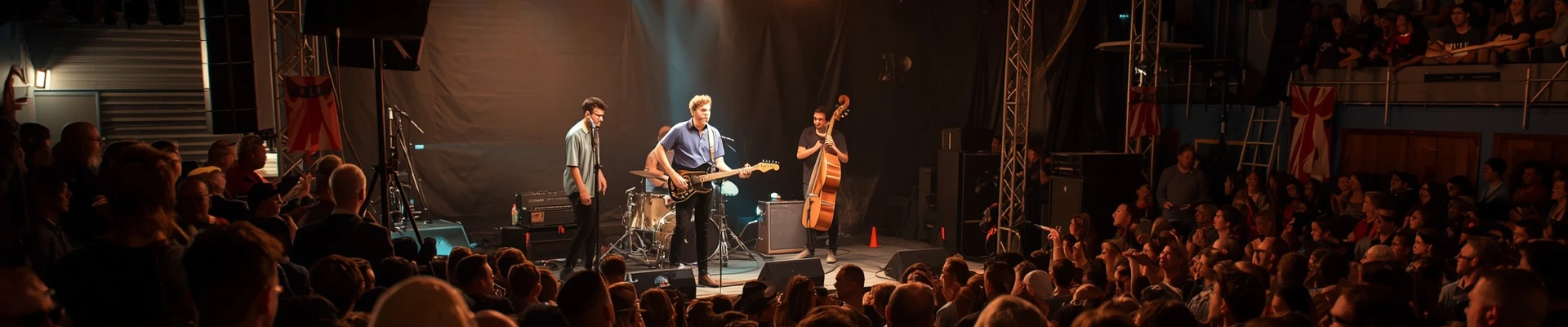
The dominant sounds in Roseville's local music history have been rock, punk, and heavy music in various configurations. The city's proximity to Sacramento's Midtown district — one of California's most active DIY music neighborhoods — gave Roseville bands easy access to the Boardwalk (a Sacramento mid-size venue), the Assembly Music Hall, the Harlow's Restaurant and Nightclub, and the network of Midtown bars and clubs that booked original music seven nights a week. Roseville itself developed a cluster of live music venues from the 1990s onward that hosted local original acts, regional touring bands, and the occasional national act on a secondary market routing.
Country and Americana have a sustained presence in Roseville, reflecting both the city's foothills location and the deep roots of California Central Valley country music culture. The influence of the Bakersfield Sound — the hard-edged country style pioneered by Buck Owens and Merle Haggard in the 1950s and 1960s — has always been audible in the greater Sacramento region, and Roseville's country scene operates through a set of dedicated honky-tonk bars and dance venues that draw both older working-class audiences and younger alt-country fans.
The city also has a meaningful hip-hop presence driven by its proximity to Sacramento's thriving rap scene. Sacramento produced Brotha Lynch Hung (one of the most influential West Coast horrorcore rappers), Blackalicious (the acclaimed underground hip-hop duo of Gift of Gab and Chief Xcel), and a generation of Sacramento-adjacent rappers who shaped the city's identity as a hip-hop city with a distinctly non-Los Angeles perspective. Roseville's hip-hop community overlaps substantially with Sacramento's — artists move freely between venues in both cities.
Christian rock and worship music have a significant footprint in Roseville, consistent with the city's demographics and the presence of multiple large evangelical churches in Placer County. Several regional Christian music acts with national followings have roots or strong connections to the Roseville–Rocklin corridor.
Venues and neighborhoods
The venue landscape in Roseville sits in the mid-size-to-small tier, with the biggest regional shows anchored by two facilities that serve both Roseville and the broader Sacramento metro.
Thunder Valley Casino Resort in Lincoln (12 miles north of Roseville) is the most important concert facility in the area — a tribal gaming resort operated by the United Auburn Indian Community that books national touring acts across rock, country, hip-hop, and pop in its outdoor amphitheatre and indoor entertainment venues. Thunder Valley has hosted Tom Petty and the Heartbreakers, George Strait, Bruno Mars, Metallica, The Who, and dozens of other major acts in the outdoor pavilion setting.
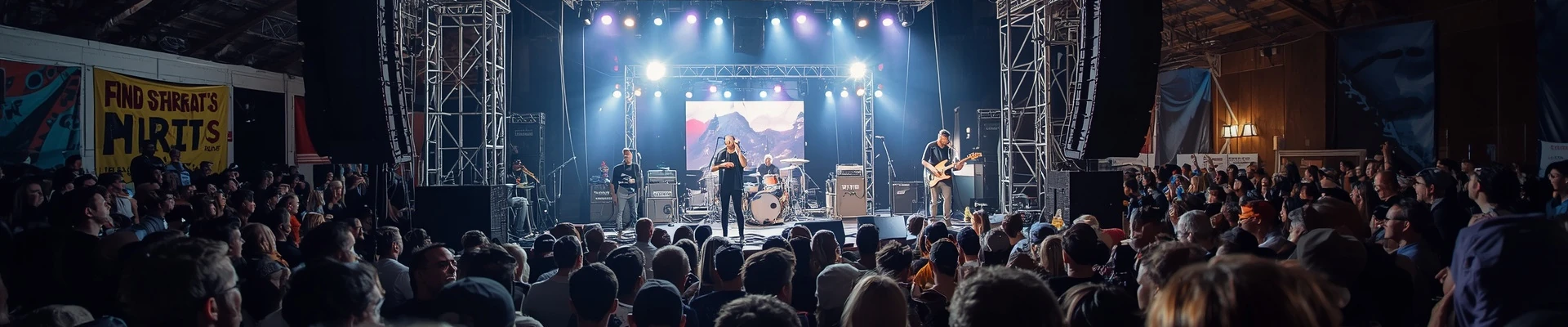
In Roseville proper, The District at Roseville and the surrounding commercial corridors along Douglas Boulevard and Sunrise Avenue host the primary cluster of live music bars. The Mellow Mushroom (the pizza-and-live-music concept) and several locally operated sports bars on the Douglas Boulevard corridor maintain live music calendars of local and regional acts. The Boardwalk in Sacramento — the mid-size venue at the northern end of Sacramento's entertainment district — is close enough that it effectively serves the Roseville market for 500–2,000 capacity shows.
Royer Park and Mahany Park host outdoor concert series in the summer months — free or low-cost community events that draw strong attendance from Roseville's family-oriented population. The William Hughes Park Amphitheater has been used for seasonal programming.
The city's geographic and social neighborhoods roughly map onto its music scene geography: Historic Old Town Roseville (along Vernon Street) sustains a cluster of restaurants and bars with acoustic and small-group live music. The Galleria-area commercial district is dominated by retail and chain dining, but the density of traffic generates bar business with live music adjacency. The Creekside and Blue Oaks residential areas to the east are largely residential, but their proximity to the city's commercial corridors keeps them connected to the venue ecosystem.
Festivals and signature events
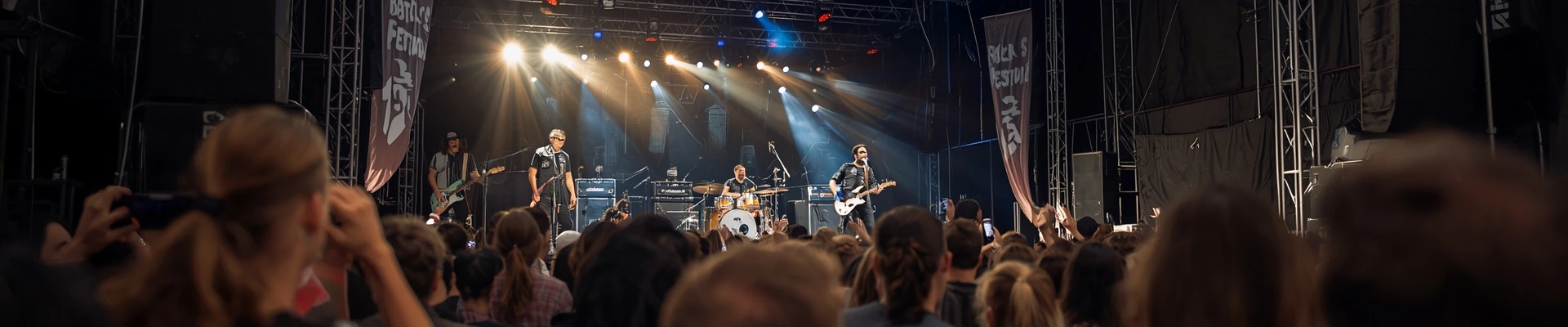
The regional festival calendar for Roseville is anchored by events that draw from across the Sacramento metro. Thunder Valley Casino's outdoor summer concert series is the largest regularly occurring concert programming in the immediate area. The Western Placer Unified School District and the city's parks department operate annual arts and music events — the Roseville Arts Festival in Mahany Park brings performing arts alongside visual arts programming. Old Town Roseville's community events calendar includes summer concerts on Vernon Street and holiday programming with live music components.
Sacramento's festival ecosystem is accessible to Roseville residents as a practical matter: WestFest (Sacramento's LGBTQ+ pride festival, which programs a significant music stage), the Sacramento Music Festival (the long-running traditional jazz and Dixieland festival), Sol Collective's community music events, and Sacramento's monthly Midtown street festivals all draw Roseville audiences within a 25-minute drive.
The Gold Country to the east — Auburn, Grass Valley, Nevada City — runs its own festival season through the summer and fall: Nevada City's Concerts on the Green, the Grass Valley Veterans Memorial Theatre programming, and various Gold Rush Days events weave Roseville into a broader foothills entertainment region.
Demographics and community music
Roseville's demographics have diversified rapidly with its population growth. The city is majority non-Hispanic white but has seen substantial growth in its Hispanic, South Asian, and East Asian communities through the 2000s and 2010s. The city's Sikh community — part of a broader Northern California Punjabi diaspora — has established community temples (gurdwaras) in the area, bringing with it the tradition of Shabad Kirtan (devotional Sikh music) and Bhangra and Bollywood music events. The Filipino-American community, one of the larger immigrant populations in the Sacramento metro, has a presence in Roseville through community organizations and cultural events that program Filipino music and performance traditions.
The Nisenan Cultural Center project — an effort by descendants of the original Nisenan inhabitants to establish a cultural presence in Placer County — has advocated for the inclusion of Nisenan music, language, and cultural practice in the region's public life. The effort represents one of the most active Indigenous cultural recovery initiatives in the Northern California foothills.
What ties it together
Roseville's music story is the story of a Sacramento suburb that never quite left the Sacramento orbit, musically or culturally. The city is large enough to sustain its own scene — its own venues, its own bands, its own local radio presence on KSFM, KRXQ "Rock 98.5", and KWOD — but its most consequential musicians have always moved freely between Roseville and Sacramento's Midtown, building careers on the full regional circuit rather than any single city. The rail yard that built Roseville is largely gone, replaced by distribution centers and tech company offices, but the energy of a working-class city that has always had to make its own entertainment runs through the local music culture. Punk bands rehearsing in garage studios off Cirby Way, country singers working the honky-tonk bars on Douglas Boulevard, hip-hop producers in home studios in the Blue Oaks tract developments — Roseville's music scene is unpretentious, prolific, and quietly connected to a regional network that has produced some of California's most original rock music over the last five decades.