
Stockton sits at the head of the San Joaquin Deep Water Channel in California's Central Valley, roughly 140 kilometres east of San Francisco and 85 kilometres south of Sacramento. The city proper holds about 320,000 residents — the county seat of San Joaquin County and the 13th-largest city in California — within a metropolitan area of nearly 800,000 that stretches from the Delta lowlands west to the Sierra Nevada foothills east. It is a city defined by water, by agriculture, and by successive waves of immigration that have made it one of the most ethnically diverse cities in California. It is also a city that the mainstream music industry has mostly overlooked while producing some of the most influential hip-hop, Latin, and diasporic music anywhere in the state.
A brief history
The territory around the confluence of the San Joaquin River and the Calaveras River was home to the Me-Wuk (Miwok) and Yokuts peoples for thousands of years. The Spanish colonial presence established ranchos across the valley in the late 18th and early 19th centuries, and the ranching economy that followed shaped the landscape that would become Stockton. The city was formally established by Charles Maria Weber in 1849 — a German-American entrepreneur who arrived via the Santa Fe Trail, founded the settlement he named after Commodore Robert Stockton, and secured the city's role as the supply depot for the southern mines during the Gold Rush. The city's location on the navigable San Joaquin River, linked by the Deep Water Channel (dredged repeatedly through the 20th century and capable of handling oceangoing vessels), made it California's only inland seaport — a distinction it still holds.
The late 19th and early 20th centuries brought Chinese laborers (reclaiming tule marshes for agriculture), Japanese truck farmers, South Asian Sikhs from the Punjab (arriving between 1900 and 1920 as farm laborers, establishing one of the oldest Sikh communities in North America), Filipinos (recruited aggressively by canneries and farms after the 1934 Tydings–McDuffie Act restricted other immigration, making Stockton's South Asian and Filipino communities among the oldest in California), and waves of Dust Bowl migrants in the 1930s. The Bracero Program and subsequent immigration from Mexico and Central America built the city's largest demographic group. By the 2020 census, Stockton is roughly 42% Hispanic, 21% Asian (including large Filipino, South Asian, and Southeast Asian populations), and 11% Black — a genuinely majority-minority city.
Stockton's 21st-century history was marked by fiscal crisis — the city declared Chapter 9 municipal bankruptcy in 2012, the largest municipal bankruptcy in U.S. history at that time, a consequence of the 2008 housing collapse hitting a city where subprime lending had been weaponized against exactly the immigrant and working-class communities that built it. The city emerged from bankruptcy in 2015 and launched a nationwide conversation about Universal Basic Income through its SEED program (Stockton Economic Empowerment Demonstration), piloting direct cash payments starting in 2019. That conversation — about poverty, about precarity, about what cities owe their working-class residents — runs directly through Stockton's music too.
Music identity
Stockton's most internationally consequential musical export is Mozzy (Timothy Patterson), who was born in Sacramento but raised in Stockton's Oak Park and other South Side neighborhoods and has always claimed the city as his own. Mozzy emerged in the mid-2010s with a style that blended raw street narrative, melodic hooks, and the Bay Area's tradition of slick production — his mixtape Pain Language (2014) and breakthrough Bloccumentary (2016) established him as one of the most distinctive voices in West Coast hip-hop. His collaboration with Ty Dolla Sign, his features on projects by YG, Wiz Khalifa, and Tee Grizzley, and his major-label work with EMPIRE and RCA built a national profile while his content remained rooted in the specific geography of the Central Valley streets. Mozzy is the clearest case of Stockton producing a nationally significant artist whose artistic identity is inseparable from the city.
Tone Lōc (Anthony Terrell Smith) was born in Los Angeles but spent significant time in Stockton during his formative years, and the city claims him alongside LA. His 1989 hit "Wild Thing" — produced by the Dust Brothers and featuring a riff from Van Halen's "Jamie's Cryin'" — became the first rap single to reach number one on the Billboard Hot 100, making it one of the most commercially decisive moments in the transition of hip-hop from underground to mainstream. "Funky Cold Medina" (1989) followed immediately, cementing his place in the first generation of commercially dominant West Coast rap.
Stockton's hip-hop ecology runs deeper than its two most famous exports. Stevie Stone, the Sacramento/Stockton rapper signed to Strange Music (Tech N9ne's Kansas City-based label), built a national following with his aggressive, melodic style. Ya Boy (Quadree Henderson), Nef the Pharaoh's Delta connections, and a steady current of Stockton artists on Bay Area labels and independent releases constitute a scene that has remained prolific despite little media attention. The city's hip-hop production scene has fed Bay Area labels, Central Valley distributors, and the independent streaming ecosystem continuously.
Stockton's Filipino-American music community is one of the oldest and most deeply rooted in North America. The city's Little Manila district — concentrated on Lafayette Street in South Stockton — was historically the largest Filipino settlement outside the Philippines in the early 20th century, and the music of that community (rondalla ensembles, kundiman ballads, Filipino pop and OPM, and later Filipino hip-hop and R&B) has run through community halls, churches, and cultural centers continuously. The Little Manila Foundation works to preserve that cultural history, including its musical dimension. Contemporary Filipino-American artists in Stockton connect directly to the broader Bay Area Filipino-American music scene — artists like Ruby Ibarra, who grew up between Stockton and Union City and whose hip-hop practice is explicitly rooted in her Filipino-American identity, trace their roots through communities like this one.
The South Asian Sikh and Punjabi music community in Stockton and the surrounding San Joaquin Valley is among the oldest in North America. The gurdwaras established by early 20th-century immigrants sustain kirtan (devotional singing), and the community's engagement with bhangra and contemporary Punjabi pop connects Stockton to the global South Asian diaspora. The Yuba City Sikh Parade — the second-largest Sikh parade in the world outside of India — draws from the Stockton community and represents the density and cultural vitality of this scene. Bhangra teams, Punjabi music nights, and a growing desi DJ circuit operate across the Central Valley and specifically through Stockton.
The Mexican and Central American music ecosystem is arguably Stockton's most commercially active scene, running through the city's majority-Hispanic South Side neighborhoods. Norteño — the accordion-driven, polka-inflected dance music rooted in northern Mexico — is the soundtrack of Stockton's taquerías, quinceañeras, and community celebrations. Banda — the brass-heavy Sinaloan style that has become the dominant genre in Southern California and spread north — fills clubs and festivals. Corridos and the newer, harder corridos tumbados connect Stockton's youth to the Peso Pluma–era Mexican regional music that has become a dominant force in global streaming. Mariachi — played live at restaurants, parties, and the annual Stockton Mariachi Festival — keeps the traditional forms active alongside the newer genres. The venues along Charter Way, El Dorado Street, and through the Boggs Tract and East Stockton neighborhoods support this scene continuously.
Stockton's R&B and soul tradition runs through the city's Black communities in the Oak Park area and through a gospel ecosystem centered in historically Black churches. The regional R&B circuit — connecting Stockton to Fresno, Modesto, Sacramento, and the Bay Area — has moved through the city's clubs and theaters for decades. Gospel is active across dozens of churches, and the Stockton area produces choir directors, musicians, and vocalists who feed into the broader Bay Area Black church and gospel music ecosystem.
Venues and neighborhoods
Stockton's flagship performance space is the Bob Hope Theatre (originally the Fox California Theatre, opened in 1930 in the Spanish Colonial Revival style, restored and reopened in 2004 as a 2,500-capacity venue for Broadway touring productions, concerts, and community events). The Stockton Arena — a 10,000-capacity indoor arena that opened in 2005 and is home to the AHL's Stockton Heat — handles the largest concerts when touring productions hit the city. Banner Island Ballpark (capacity ~5,000), the home of the Single-A Stockton Ports, hosts occasional outdoor concerts and events. The Weber Point Events Center on the waterfront is an outdoor amphitheatre overlooking the Deep Water Channel.
Below these rooms, Stockton's club tier is modest but real. The Blackwater Café has operated as a roots music and acoustic room. The Vault has hosted hip-hop nights and live events. Restaurants and bars along Pacific Avenue (Stockton's main midtown corridor), in the Miracle Mile district, and through the Waterfront area support live music on a smaller scale. The Little Manila district's cultural spaces host Filipino music events. The gurdwaras of Stockton and nearby Lodi host kirtan and Punjabi cultural events. The city's Mexican venues — ballrooms, banquet halls, and clubs through South Stockton — sustain the norteño and banda circuit.
North Stockton — the newer, more affluent residential corridor — has chain restaurants and bar strips with weekend live music. Downtown Stockton — long blighted by disinvestment but the focus of redevelopment efforts since the mid-2010s — holds the Bob Hope Theatre, City Hall, and a growing cluster of restaurants and event spaces. South Stockton — the densest, most diverse, and most economically challenged part of the city — holds the cultural infrastructure that has sustained Stockton's immigrant communities for a century: the Filipino halls, the Mexican clubs, the Black churches, the Southeast Asian restaurants and community centers.
Festivals and events
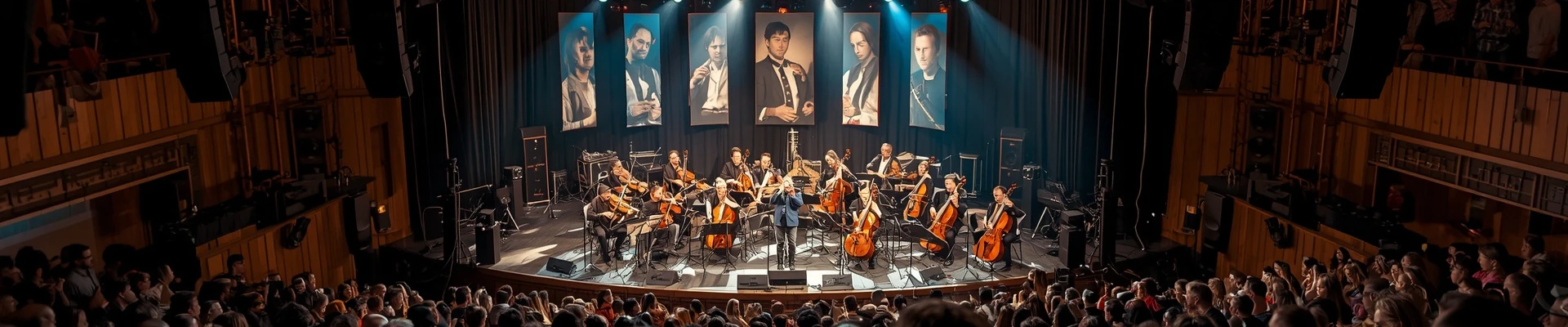
The Stockton Asparagus Festival (held annually in Stockton's downtown waterfront, though not primarily a music festival) draws tens of thousands to a community celebration that includes live music across multiple stages — the kind of Central Valley civic festival that keeps regional country, norteño, oldies, and pop acts working year-round. The Mariachi Festival de Stockton celebrates the city's Mexican-American musical heritage. The Stockton Film Festival and Stockton Symphony season bring cultural programming that includes live orchestral performance. The Hmong New Year celebration — drawing from the San Joaquin Valley's growing Hmong community — includes traditional and contemporary Hmong music alongside cultural events.
The Stockton area's fair circuit — the San Joaquin County Fair (held annually in Stockton) — provides a major platform for regional country, Latin pop, and oldies acts, with a grandstand concert series that has brought acts of the caliber of Lynyrd Skynyrd, REO Speedwagon, and La Mafia through the city. These county fair bookings are a critical part of the regional touring economy for mid-size acts working the Central Valley.
What ties it all together
Stockton is a city where music has served primarily as community infrastructure rather than commercial product — where the norteño at the quinceañera, the kirtan at the gurdwara, the gospel at the Black Baptist church, and the hip-hop coming out of car speakers on Hammer Lane are all doing the same essential work of making a hard city livable. The overarching sound of Stockton is the sound of a genuinely diverse working-class city that has never had its own music industry to commodify its culture, and so its music has remained embedded in community life more durably than in cities with larger entertainment economies. When Mozzy raps about Stockton, he's not romanticizing — he's reporting from a city whose beauty and brutality are inextricably connected, and whose music tells a story the city's bankruptcy filings and UBI experiments only begin to capture.