

The Valley Floor
Visalia sits at the southern end of California's San Joaquin Valley, roughly midway between Fresno and Bakersfield, at an elevation of about 330 feet above sea level. The Sierra Nevada rises dramatically to the east — the entrance to Sequoia and Kings Canyon National Parks is less than an hour's drive — while flat, irrigated farmland stretches in every other direction. Tulare County, of which Visalia is the county seat, is routinely among the top agricultural counties in the United States by gross farm receipts, producing citrus, table grapes, dairy, almonds, cotton, and tomatoes on a scale that shapes everything about the city: its demographics, its economy, its workforce, and its music.
With a population around 130,000, Visalia is the largest city in the tri-county Southern San Joaquin Valley region, and it functions as the de facto commercial, legal, and entertainment hub for a rural catchment that extends to Porterville, Hanford, and Tulare. The city's economy rests on agriculture, healthcare (Kaweah Health is the dominant employer), and retail services that draw from the surrounding smaller towns. It is a city that many Californians associate primarily with produce warehouses and the freeway interchange on Highway 99 — but that misses a cultural fabric that is more layered and more musical than the flyover reputation suggests.
Roots in Country and Western Swing
Visalia's music identity begins with the same foundational current that runs through the entire San Joaquin Valley: country music and its precursor, Western swing. The valley has always been a receiving ground for migrants from the Dust Bowl South and Great Plains — the Okies and Arkies who arrived in the 1930s carried fiddles and guitars and a taste for honky-tonk that took deep root in the Central Valley soil. Bakersfield, sixty miles south, formalized that inheritance into the Bakersfield Sound — the harder-edged, Telecaster-driven answer to Nashville's strings — and Visalia participated in the same regional culture even without producing a defining named scene of its own.
Local honky-tonks and dance halls kept country music alive through the postwar decades, and the tradition persists today. Country radio stations serve the valley with outsized reach, and local acts regularly draw capacity crowds to venues that would be considered mid-tier elsewhere. The agricultural calendar — harvest season, fair season, rodeo season — has always generated reliable demand for live country performances, and Visalia's County Fair at the Tulare County Fairgrounds has brought national country acts to the region for generations.
Regional Mexican: The Valley's Dominant Sound
The more consequential musical story of modern Visalia is the rise of regional Mexican music as the city's dominant popular genre. Tulare County's Latino population — predominantly Mexican and Mexican-American, concentrated in agricultural labor communities — has grown steadily since the mid-20th century and now represents the majority of the county's residents. With that demographic shift has come a profound reorientation of Visalia's entertainment landscape.
Banda sinaloense, norteño, cumbia, corridos, and increasingly corridos tumbados (the narco-inflected hybrid popularized by artists like Natanael Cano and Peso Pluma) dominate the playlist at dance halls, restaurants, and radio stations throughout the valley. Visalia's downtown and surrounding neighborhoods support multiple venues that program regional Mexican acts exclusively, drawing audiences from a broad geographic radius. Weekend shows at these venues regularly sell out, often outpacing attendance at comparable events in larger California cities.
The regional Mexican scene in Visalia is less a scene of local origin than a scene of passionate reception — the major acts are based in Sinaloa, Jalisco, or Los Angeles, but they tour the Central Valley circuit consistently because the demand is real and the crowds are large. What Visalia contributes is audience energy, a network of promoters who understand the market, and a growing number of local bands — norteño combos, cumbia groups, youth-oriented bands blending regional Mexican with hip-hop — that play the circuit of quinceañeras, weddings, and smaller club dates that keep the tradition living and evolving at the community level.
The Fox Theatre and the Downtown Corridor
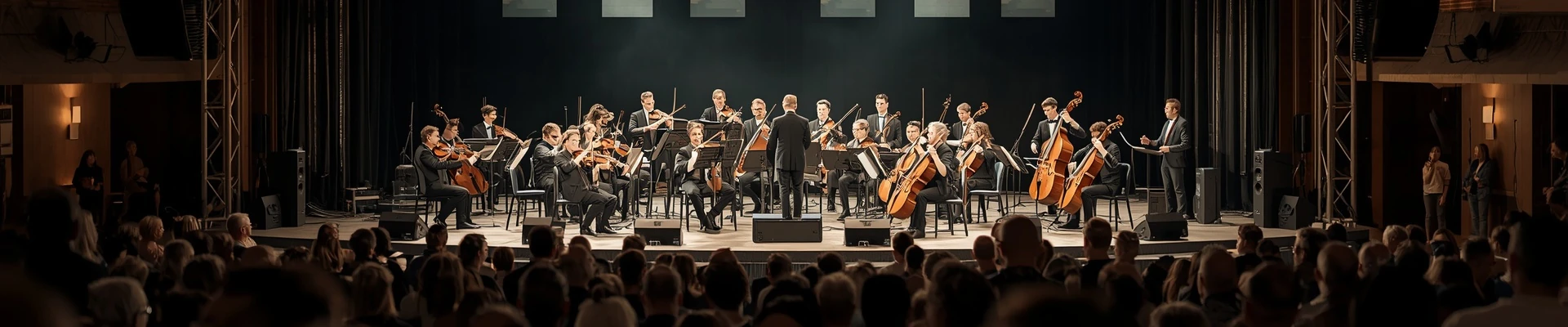
The anchor of Visalia's mainstream live-music infrastructure is the Fox Theatre, a restored 1930 Spanish Colonial Revival movie palace on Main Street that was converted to a performing arts center after a major renovation. With roughly 1,200 seats, it is the city's primary mid-size venue and the room that brings national touring acts — spanning country, Americana, classic rock, Latin pop, and occasional hip-hop — to a valley audience that would otherwise drive ninety minutes to Fresno or two hours to the Bay Area. The Fox's architectural grandeur and acoustic warmth make it one of the genuinely beautiful performance rooms in the Central Valley, and its programming has grown more ambitious over the years as the downtown corridor around it has developed.
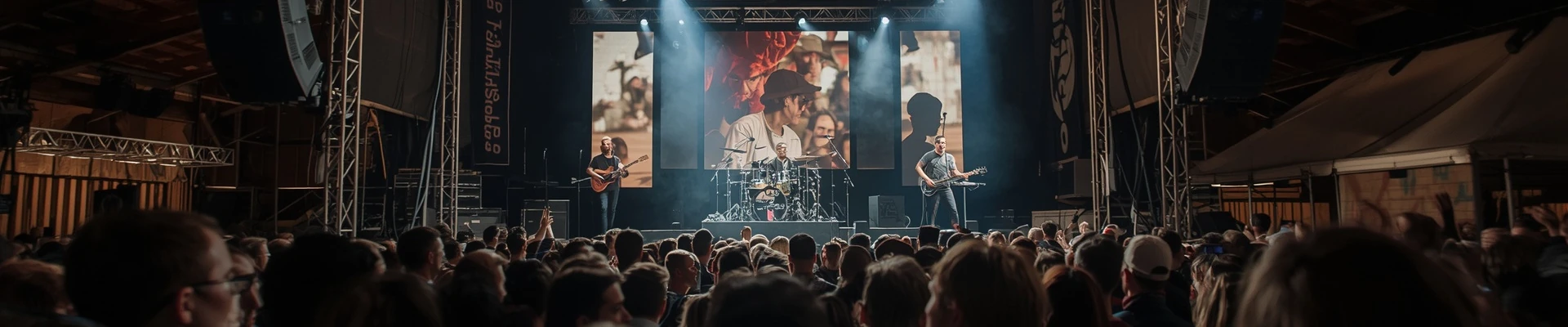
The Gateway District, Visalia's designated entertainment zone along Acequia Avenue and the adjacent blocks, holds most of the city's bars and smaller clubs. It is a modest corridor by comparison to larger city entertainment districts — a few dozen establishments rather than a few hundred — but it sustains a consistent weekend scene of cover bands, tribute acts, country-leaning originals, and DJs. Local rock and alternative acts play bars like The Pour House and Cellar Door, while the larger dance venues in the district handle the regional Mexican programming that drives the highest attendance numbers.
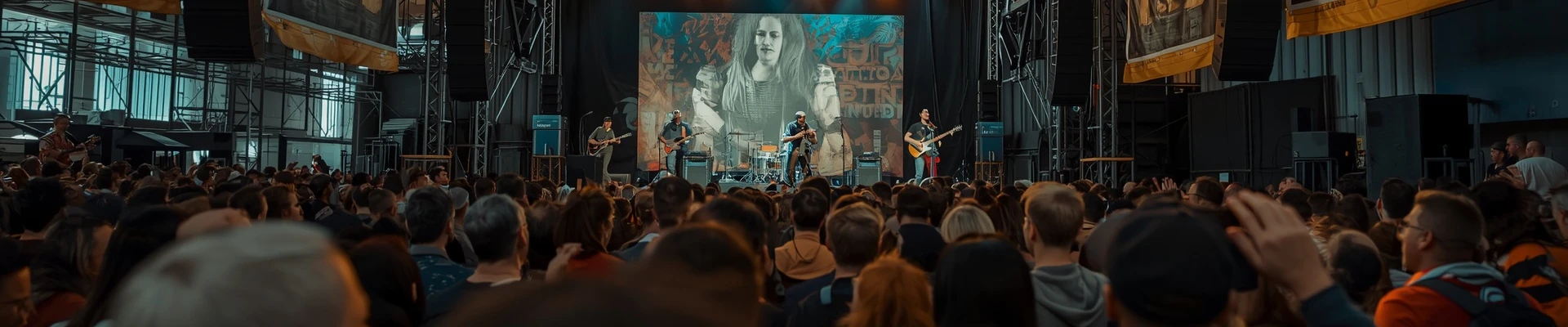
Linwood Winery and several other valley wineries within the Visalia radius have developed outdoor concert series that bring regional and national Americana, folk, and country acts to agricultural settings — a format that has proven enormously successful across the Central Valley and blurs the line between wine tourism and music programming.
Gospel and Church Music
A dimension of Visalia's music culture that operates largely outside the commercial entertainment economy is the city's strong gospel tradition. The large African-American community rooted in the Goshen neighborhood and surrounding areas — descendants of families who migrated from the South during the WWII-era defense industry boom — sustains a robust church choir and gospel ensemble culture. Annual gospel events draw participants from across the valley and beyond. The congregation-based music tradition here is not primarily oriented toward the wider public, but it is musically serious, well-attended within the community, and represents a living form of sacred music that has produced vocalists who have gone on to careers in gospel recording and performance.
Education, Youth, and Emerging Scenes
College of the Sequoias, a community college with a strong performing arts program, functions as one of Visalia's more consistent incubators of musical talent. The college's music department trains instrumentalists and vocalists who feed both the local performing scene and transfer programs at Cal State Fresno and other four-year institutions. The school's performance hall hosts student concerts and occasional community programming that provides a lower-pressure alternative to the commercial venues downtown.
The city's youth music scene has also been shaped by the broader California public school music infrastructure — band programs, mariachi programs (several Visalia-area schools have established formal mariachi ensembles in response to community demand), and choir programs that funnel talented students toward either formal musical education or informal band-starting. The result is a steady supply of young musicians entering the local scene, even if many of the most ambitious eventually migrate to Fresno, Los Angeles, or beyond.
Festivals and Annual Events
The Tulare County Fair, held annually in late September and early October at the Tulare County Fairgrounds, is the largest recurring entertainment event in the region. The fair's grandstand hosts nationally known country, regional Mexican, and oldies acts across its run, and it functions as the de facto "festival" experience for much of the tri-county population. Acts that might not otherwise route through a city of Visalia's size will play the fair because the guaranteed attendance justifies the stop.
The Visalia International Film Festival is a newer cultural event that has gradually incorporated live music performances as ancillary programming, particularly around its evening screenings and opening/closing events. While primarily a film event, it has helped establish a precedent for multi-day cultural programming in the downtown corridor.
Cinco de Mayo and Fiestas Patrias celebrations in September are among the most heavily attended civic events of the year, with live regional Mexican acts performing at civic plazas and fairgrounds-adjacent venues. These are genuinely large community events that would dwarf comparable celebrations in most American cities of comparable size — a reflection of the demographic reality that regional Mexican culture is not a niche here, it is the mainstream.
What Ties It All Together
Visalia's music scene is fundamentally a scene of convergence: agricultural migrants from the American South and Mexico, settled over a century of valley history, brought their musical traditions to the same flat, sun-baked ground, and those traditions have evolved side by side rather than merging completely. Country and Western swing, banda and norteño, gospel and soul, and now corridos tumbados and regional hip-hop all coexist in a city that is too pragmatic and too working-class to curate its cultural identity for outside audiences. The Fox Theatre on Main Street is the civic emblem — a beautifully preserved room that programs whatever the audience will actually show up for — and that eclecticism is perhaps the most honest description of Visalia's musical character. It is a city that listens to what it loves rather than what it is supposed to love, and in the San Joaquin Valley, those are rarely the same thing.