
Pueblo sits at the confluence of the Arkansas River and Fountain Creek on the high plains of southern Colorado, roughly 180 kilometres south of Denver and 95 kilometres north of the New Mexico border. The city proper holds approximately 109,000 residents, making it the ninth-largest city in Colorado, and the wider Pueblo metropolitan area adds another 50,000. At an elevation of about 1,432 metres (4,695 feet) — lower than Denver and far drier — Pueblo occupies a climatic pocket that gives it more days of sunshine and milder winters than the Front Range cities to the north. The economy was defined for a century by steel: the Colorado Fuel and Iron (CF&I) steelworks, which operated from 1881 until its final decline in the 1990s, once employed a third of the city's workforce and shaped every dimension of local culture. Today Pueblo has diversified into healthcare, education, retail, and a small manufacturing base, while tourism linked to the Historic Arkansas Riverwalk, the Pueblo Reservoir, and the Colorado State Fair sustains the service sector. It is a city with a working-class character, a pronounced sense of local pride, and a music culture built on deep ethnic roots rather than industry-manufactured cool.
A brief history
The confluence of the Arkansas and Fountain Creek was a Ute and Jicarilla Apache crossing long before European-Americans arrived. El Pueblo, a fortified trading post, was established in 1842 by trappers and traders — including figures from the broader New Mexico hispano ranching tradition — and became a hub for the Santa Fe Trail trade. The post was destroyed in the Pueblo Massacre of 1854, when a Ute and Jicarilla Apache raid killed most of its occupants. The current city was incorporated in 1870, and the arrival of the Denver and Rio Grande Railroad in 1872 and the Atchison, Topeka and Santa Fe Railway in 1876 established Pueblo as a major rail junction for the region.
The founding of the Colorado Coal and Iron Company — later reorganised as Colorado Fuel and Iron in 1892 — launched the industrial era that defined Pueblo for the next century. CF&I's furnaces drew waves of immigrant labour from Mexico, Italy, Slovenia, Croatia, Czech Republic (then Bohemia and Moravia), Greece, and a dozen other countries, creating one of the most diverse working-class populations between Chicago and Los Angeles. The Bessemer neighbourhood south of downtown became the primary steelworker district, and the cultural diversity embedded in those streets — Catholic churches, ethnic mutual-aid societies, polka halls, and tortillerías — persists in diluted form to this day.
The Great Pueblo Flood of 1921 — caused by a cloudurst over the Greenhorn Mountains that sent a wall of water down Fountain Creek — killed more than 100 people, destroyed the downtown commercial district, and set back the city's growth by a generation. The rebuilt city leaned harder into steel and rail; by the mid-20th century CF&I employed roughly 10,000 workers and Pueblo had a reputation as a tough, productive industrial city. The steel decline of the 1980s — accelerated by global competition and shifts in American manufacturing — cost thousands of jobs and began a long period of economic stagnation. The Steelworks Center of the West (the preserved CF&I site, now a museum) is the city's most significant heritage landmark and a testament to the industrial era that shaped its character.
The city's majority-Hispanic identity is a product of two overlapping histories: the original New Mexico hispano settlement tradition that predates American statehood, and the 20th-century Mexican immigrant steelworker community that arrived through the CF&I recruitment networks. Pueblo's Hispanic population — now approximately 45 percent of the city — has made it culturally distinct from both Denver and the rural Colorado surrounding it.
Music identity
Pueblo's music scene is smaller than its history and character might suggest, but its roots run deep. The most consequential musical thread is the New Mexico–influenced ranchera, norteño, and Tejano tradition woven through the city's large Hispanic community. The Eastside and older central neighbourhoods have sustained a continuous Spanish-language music culture — dance halls, quinceañera bands, conjunto ensembles, and mariachi groups — that reflects the city's connection to the broader Southwest Mexican-American musical world. This tradition intersects with the national corrido and cumbia scenes that sweep through the region seasonally, and with regional Mexican pop touring acts that route through the Pueblo Convention Center.
The steelworker immigration left a second, largely forgotten musical legacy in Czech, Slovenian, Croatian, and Italian community music. The polka tradition — specifically the Slovenian-style polka brought by steelworkers from the old Austro-Hungarian Empire — had a genuine foothold in Pueblo through the mid-20th century, with fraternal hall dances and community bands sustaining it into the 1970s. Czech and Slovenian Catholic parishes in Bessemer and the surrounding districts maintained choral and instrumental traditions alongside the polka scene. This layer of Pueblo's music history has largely faded but is remembered by older residents and documented in the Steelworks museum's community archives.
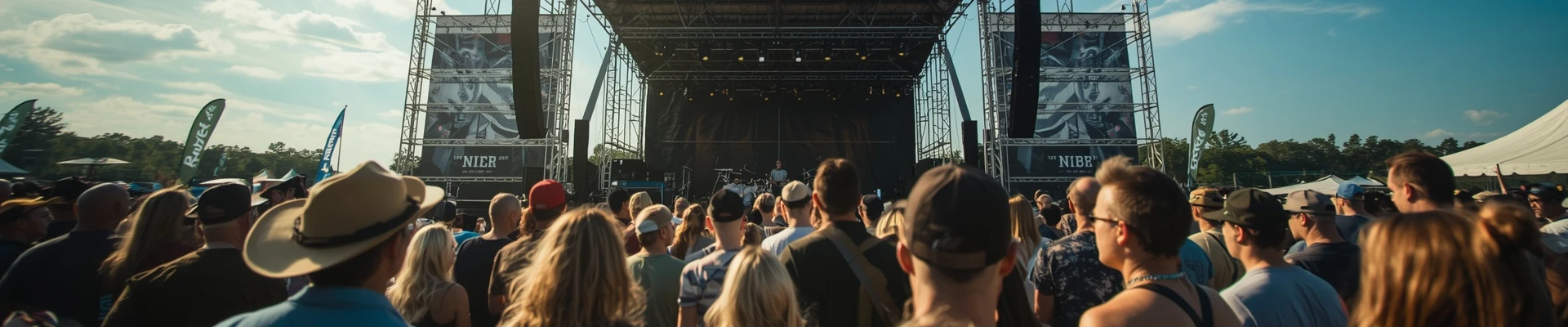
The city's country and Western tradition reflects its position between the ranching cultures of southern Colorado and northern New Mexico. Pueblo has long been a natural touring stop on the circuit between Albuquerque and Denver, and the Colorado State Fair — held annually at the Pueblo State Fairgrounds in late August and early September — has been a major country music booking destination for decades. Acts including Waylon Jennings, Willie Nelson, Merle Haggard, George Strait, Reba McEntire, Darius Rucker, Blake Shelton, and many others have headlined the fair's outdoor concert series. The fair's grandstand shows are the single biggest music events in Pueblo's annual calendar and draw audiences from across southern Colorado and northern New Mexico.
The city's hard rock and metal scene — modest by national standards but real — has produced working bands that circulate through the Front Range club circuit. The industrial character of the city, the economic hardship of the post-steel era, and the broader working-class aesthetic have made Pueblo a natural fit for heavy music. Local acts have cycled through venues along Union Avenue and into Denver's club scene. The city has no nationally famous hard rock export to its name, but the scene sustains itself through regional touring and local venues.
Blues has a quiet but persistent presence rooted partly in the African American community that settled in Pueblo during the CF&I era (the city had a small but historically significant Black neighbourhood on the Eastside) and partly in the broader American roots-music influence on the region. Local blues acts and occasional national touring blues artists appear at smaller venues and the fair. The Union Avenue Historic District — Pueblo's revitalised downtown entertainment corridor — has anchored a cluster of bars and small venues that program blues, jazz, and acoustic acts alongside country and rock.
Venues and neighbourhoods
The largest music venue in Pueblo is the Pueblo Convention Center (approximately 3,200 seated or 5,000 standing), which hosts mid-size touring acts, regional country shows, and the occasional national pop or rock act. The Colorado State Fairgrounds (the 100,000-square-foot grandstand, outdoor stages, and arena grounds) is the city's primary large-event infrastructure, used intensively during the state fair but also for occasional standalone concerts and festivals. The Historic Arkansas Riverwalk provides outdoor event space for summer concerts, festivals, and cultural events along the revitalised river corridor through downtown.
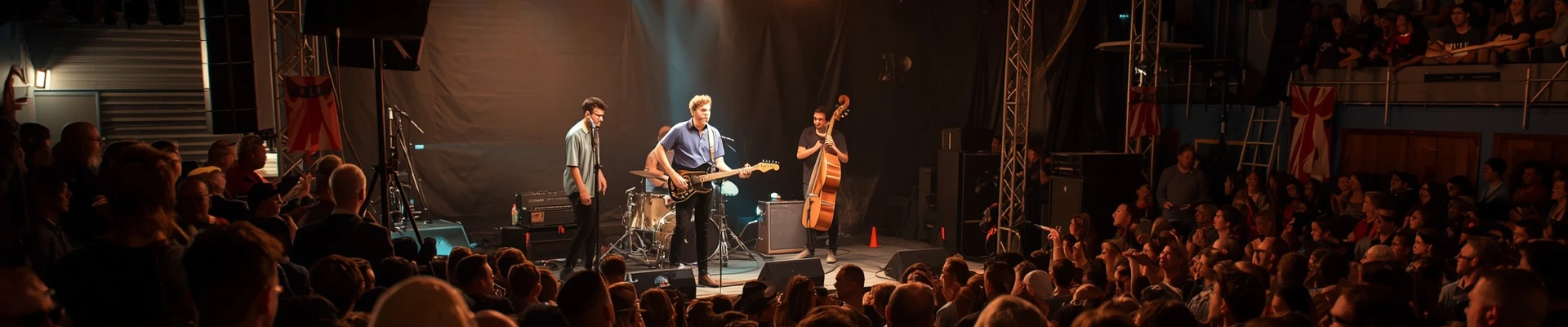
The small-venue layer runs through Union Avenue Historic District, where bars and restaurants including Gus's Place, the Neon Goose (a long-running local rock venue), and a cluster of other establishments program live music on weekends. The CSU Pueblo (Colorado State University Pueblo) campus provides a student-audience base and occasional concert programming. Beyond these anchor venues, the city's music life runs through church halls, community centres, and private events — quinceañeras, weddings, and community dances — that sustain the Spanish-language and immigrant-community music scenes that are less visible to outsiders but more central to daily life.
The Bessemer neighbourhood (south of downtown) retains its historic character as a dense working-class district with a mix of Hispanic residents and older Eastern European-descended families — it is the neighbourhood most closely connected to the steelworker-era cultural traditions. The Eastside anchors the African American and Hispanic community music scenes. Pueblo West, the sprawling suburban development west of the city, is primarily residential with little music infrastructure of its own but feeds audiences into the downtown and fairgrounds venues.
Festivals and signature events
The Colorado State Fair (late August through early September, 11 days) is Pueblo's defining annual event and one of the oldest state fairs in the American West — it has run continuously since 1872, making it among the longest-running state fairs in the country. The fair's grandstand concert series books genuine national headliners: country, pop, hip-hop, and Latin acts rotate through, with the grandstand holding 8,000 to 10,000 fans per show. Recent headliners have included Pitbull, Darius Rucker, Vanilla Ice (a recurring nostalgia favourite), Midland, Lonestar, and dozens of country and Americana acts. The fair is the largest annual gathering in southern Colorado.
The Chile & Frijoles Festival (September, along the Historic Arkansas Riverwalk) celebrates Pueblo's famous Mirasol green chile — a distinctive locally-grown pepper that has become a regional culinary identity marker — with live music, food, and cultural programming. Music at the festival leans toward Latin, country, and regional acts. The Riverwalk Holiday Lights celebration in December incorporates community musical performances. Cinco de Mayo celebrations and Mexican Independence Day events program ranchera, norteño, mariachi, and regional Mexican pop acts through the Eastside and downtown. The Pueblo Arts Festival programs community arts and music alongside visual arts. Juneteenth celebrations on the Eastside mark the African American community's cultural calendar.
What ties it all together
What binds Pueblo's music life is the city's working-class, majority-Hispanic character and its position at the crossroads of the Southwest and the Mountain West. Pueblo is not a city that has produced internationally famous musicians in large numbers — it is a city where music is woven into community life rather than industry life. The ranchera and norteño traditions rooted in New Mexico hispano culture predate the steel era; the polka halls of Bessemer are living memory for older residents; the country acts that have been playing the State Fair grandstand since 1872 reflect Pueblo's deep ties to the ranching and agricultural world of southern Colorado. The Colorado State Fair is the city's biggest annual musical moment — and the fact that it has been running continuously since the year the railroad arrived says something about the durability of Pueblo's cultural institutions. The city's music scene is modest, honest, and deeply local — more focused on dance halls, community events, and fair-ground headliners than on club scenes or national tastemaker validation. That is precisely what makes it distinctively Pueblo.