
Bridgeport, Connecticut
Bridgeport sits at the mouth of the Pequonnock River on the northern shore of Long Island Sound, roughly 60 miles northeast of New York City and 17 miles southwest of New Haven. It is Connecticut's most populous city and has been, for most of its modern history, one of the most densely settled and ethnically diverse communities in New England. The city covers about 43 square kilometers and rises from a narrow waterfront to gently rolling residential hills, with Long Island Sound framing the southern edge and the Pequonnock and Yellow Mill rivers threading inland. The Merritt Parkway and I-95 pass through or near the city, making Bridgeport a genuine crossroads — close enough to New York to absorb its cultural currents while operating with a distinctly independent civic identity shaped by factory work, immigration, and the long, uneven effort to reinvent itself after deindustrialization.
The city's economy was built on manufacturing. Through the late 19th and early 20th centuries, the Remington Arms plant, Dictaphone, General Electric, and Sikorsky Aircraft (founded in Stratford, immediately adjacent) gave Bridgeport one of the densest concentrations of industrial employment in New England. That manufacturing base drew waves of immigrants from Italy, Poland, Hungary, and, most consequentially for the city's musical character, Puerto Rico. By the 1990s Bridgeport had one of the largest Puerto Rican populations in the northeastern United States outside of New York City, a demographic shift that has defined the city's sound ever since.
Music Identity: Latin Soul, Hip-Hop, and the Sound of the 203
Bridgeport's music identity is not built around a single iconic genre export in the way that Detroit has techno or Seattle has grunge, but it is unmistakably real — a layered urban sound shaped by Puerto Rican salsa and merengue traditions, the street-level hip-hop that emerged from the Park City's housing projects and bodegas in the late 1980s, and the gospel and R&B that anchor its African American community centered in the East Side and East End neighborhoods.
The Latin side of Bridgeport's scene runs deep. The East Main Street corridor and the neighborhoods surrounding Seaside Park and St. Raphael Church in the South End have supported salsa orchestras, merengue DJs, and Latin jazz combos for decades. Local promoters at venues like Las Brisas (a long-running Latin nightclub on the East Side) drew crowds for regional touring acts from New York and Puerto Rico throughout the 1990s and 2000s. The tradition continues in annual cultural events like the Puerto Rican Day Parade, which doubles as a citywide music showcase drawing local bands and sound systems.
Bridgeport's hip-hop and R&B scene gained national attention through a handful of key figures. Blahromy, a Bridgeport-raised MC, built credibility in the mid-2000s Connecticut rap underground at a time when the state's scene was largely overshadowed by New Haven and Hartford. More significantly, Wiz Khalifa — though primarily associated with Pittsburgh — briefly lived in Bridgeport early in his career, and the city contributed to the formative network of artists around the Atlantic Records and Grand Hustle spheres that helped shape East Coast-influenced rap in the 2000s. The rapper and producer Cali Swag District affiliate YoungBlood Priest came up through Bridgeport's South End, and the broader Nutmeg State hip-hop scene (a term increasingly used to describe Connecticut rap) counts Bridgeport as one of its foundational nodes alongside Waterbury and New Haven.
R&B has deep roots in the city. The Persuasions, the celebrated a cappella gospel-R&B group, had strong ties to Bridgeport's African American community and performed regularly in the city during their peak years in the 1970s and 1980s. Locally, church choirs and gospel quartets have long fed singers into the secular R&B scene, a pipeline that continues to surface talent in regional talent showcases and open-mic circuits.
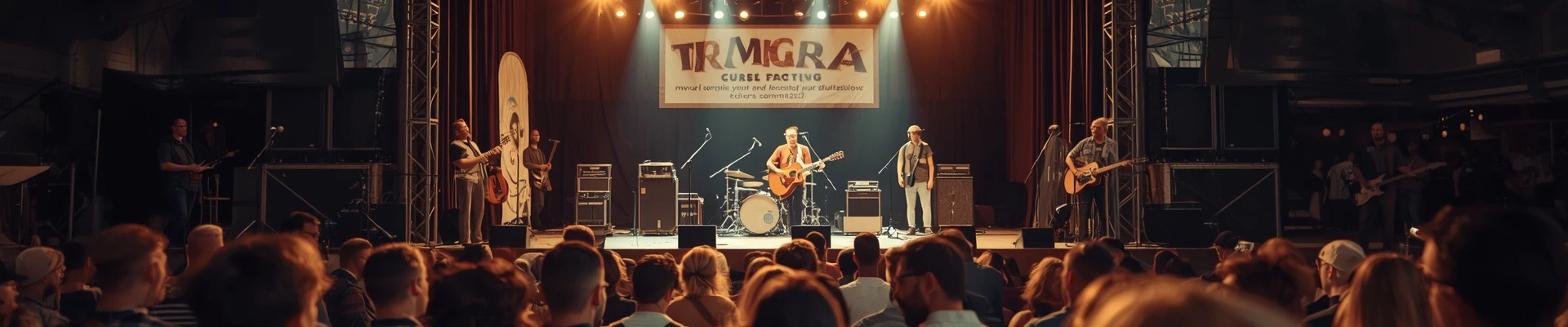
On the rock and alternative side, Bridgeport has historically punched above its weight in the New England indie circuit. The acoustic and folk scene that runs through coffeehouses in the Brooklawn and Black Rock neighborhoods has produced singer-songwriters who cycle through the New Haven and New York showcases. The Klein Memorial Auditorium, a 1,400-seat landmark on Golden Hill Street, has hosted acts spanning orchestral performances, Broadway tours, and rock concerts for decades, serving as the city's primary mid-size concert venue.
P.T. Barnum and the Spectacle Tradition
No account of Bridgeport's cultural life omits P.T. Barnum, who made Bridgeport his home and is buried at Mountain Grove Cemetery. His legacy as the architect of American popular spectacle — the circus, the freak show, the deliberately outrageous promotional stunt — resonates in the city's relationship with performance. The Barnum Museum on Main Street celebrates his legacy, and the city's annual Barnum Festival (held each summer) incorporates music, parade floats, and pageantry that channel the showman's love of spectacle. The tradition of marching bands and brass-led pageantry in Bridgeport's parades is partly a legacy of the Barnum era, when large public spectacles were central to the city's civic identity.
Venues and Neighborhoods
Klein Memorial Auditorium (Klein Arts & Entertainment) on Golden Hill Street anchors the city's mid-scale concert and performing arts life. Seating roughly 1,400, it hosts everything from the Greater Bridgeport Symphony to touring blues and R&B acts. For decades it served as the premiere room for artists who could fill larger than club-scale rooms but weren't booking the Webster Bank Arena — the 10,000-capacity sports and entertainment arena adjacent to Harbor Yard that hosts the Bridgeport Islanders (AHL) and brings in national touring acts from hip-hop to country to arena rock.
Black Rock is Bridgeport's most active neighborhood for live music. The Black Rock neighborhood bar circuit along Fairfield Avenue includes rooms like Acoustic Cafe and The Warehouse (Black Rock), venues that have hosted local and touring indie, rock, jazz, and acoustic acts for well over a decade. Black Rock's gentrification — driven partly by proximity to Fairfield and the commuter rail — has brought a wave of restaurant-bar hybrids with live entertainment, creating a dense walkable strip on Fairfield Avenue.
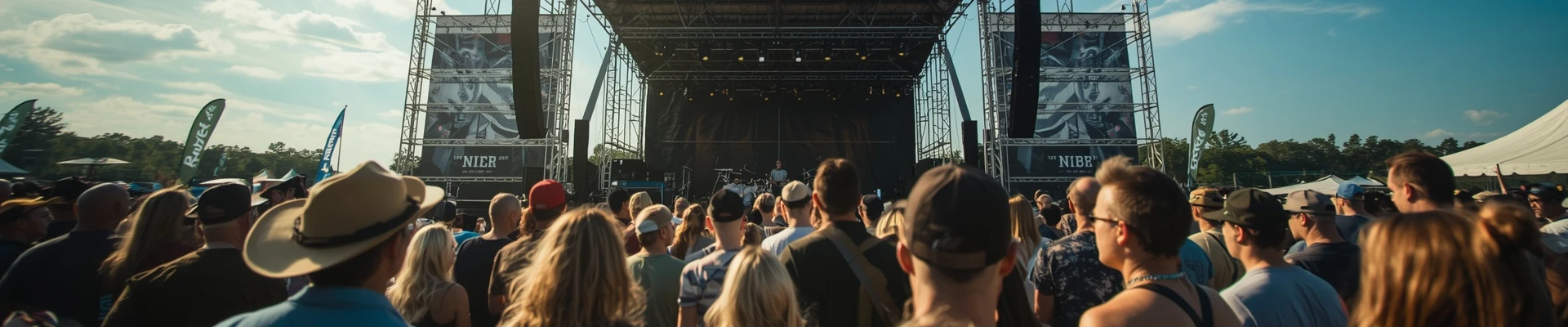
The South End neighborhood, heavily Puerto Rican and Central American, contains the Latin club circuit that feeds salsa, bachata, and reggaeton nights. Seaside Park — a Frederick Law Olmsted-designed waterfront park donated to the city by P.T. Barnum himself — hosts summer concerts and outdoor festivals that skew heavily Latin, drawing crowds from across the region.
Steelpointe Harbor, the redeveloped waterfront on the East Side, has emerged as a summer event space with outdoor concerts and festivals tied to the ongoing mixed-use development of the former industrial waterfront. Bass Pro Shops and marina facilities share the waterfront with pop-up event infrastructure that hosts Latin music festivals and summer concert series.
Downtown Bridgeport's State Street corridor and the area around the Bluefish Stadium (the former baseball park, now used for events) add to the city's mid-size event infrastructure. The Bijou Theatre, a renovated vaudeville and movie palace on Fairfield Avenue, has been used for performing arts and live entertainment in various configurations over the years.
Festivals and Signature Events
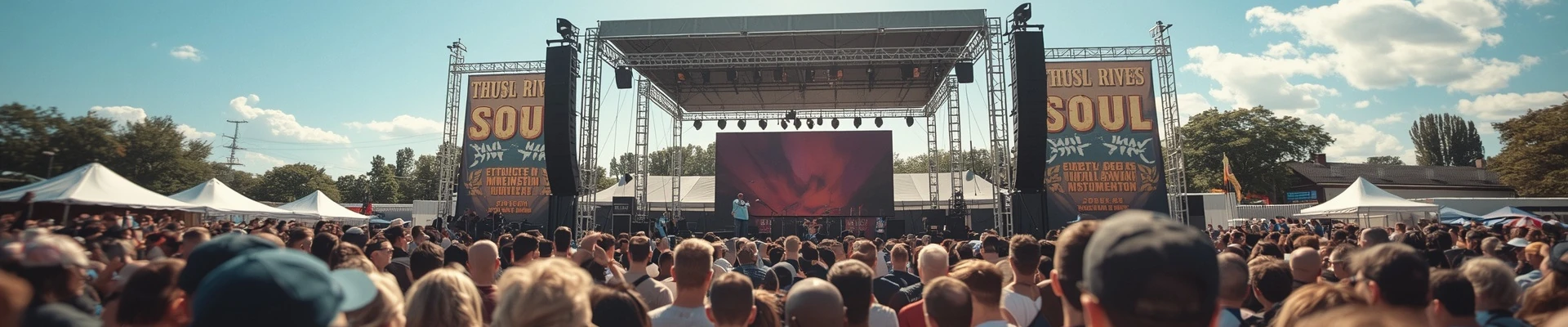
The Puerto Rican Day Parade and Festival is the city's largest annual cultural event, drawing tens of thousands of attendees to the South End and downtown and featuring live salsa, merengue, and reggaeton performances from local and regionally touring Latin bands. It is one of the most prominent Puerto Rican cultural celebrations in New England.
The Barnum Festival (summer) incorporates a concert series and parade that blends nostalgia with contemporary popular music, typically including local jazz and rock acts.
Downtown Thursdays and related downtown revitalization programming have included outdoor concert series on State Street during summer months, creating free public music events that draw a mix of Latin, R&B, and pop programming.
The Greater Bridgeport Symphony holds its season at Klein Memorial Auditorium and represents the city's classical tradition. Founded in 1945, it is one of the region's older regional orchestras and maintains a programming calendar that includes pops concerts alongside standard repertoire.
University of Bridgeport (now part of the Goodwin University consortium) and nearby Sacred Heart University in Fairfield contribute student-driven music programming, open-mic nights, and small-venue performances that feed into the local indie scene.
Demographics and the Music They Sustain
Bridgeport is a majority-minority city — roughly 40 percent Hispanic (predominantly Puerto Rican), 35 percent African American, and the remainder a mix of non-Hispanic white residents, Caribbean immigrants, and recent arrivals from Central America and West Africa. This demographic reality means the music that actually fills the city's bars, church halls, parks, and clubs is emphatically Latin, Black gospel, hip-hop, and R&B — not the folk and country sounds of the Connecticut suburbs. The disconnect between Bridgeport's sound and Connecticut's general cultural image is part of what gives the city its creative tension.
The Haitian community in the East End neighborhood contributes kompa dance nights and Caribbean diaspora festivals that occasionally spill into the concert calendar. Central American communities in the South End support cumbia and regional Mexican nights alongside the dominant Puerto Rican salsa circuit.
Gospel music is institutionally anchored by large African American congregations including Greater Refuge Temple and First Baptist Church of Stratfield, whose choirs have produced regional gospel recording artists and whose annual events function as de facto concerts for hundreds of attendees.
What Ties It Together
Bridgeport's defining musical signature is the intersection of Puerto Rican Latin traditions and African American urban music against a backdrop of post-industrial working-class life — a sound that is simultaneously local and diasporic, neighborhood-specific and globally connected. It is a city that has never needed to fabricate a music scene because it has always had one, driven by the energy of communities that brought music with them from the island and from the South and from the church and from the street corner. The 203 area code (shared with greater southwestern Connecticut) has become a loose signifier of pride for Bridgeport artists; the city's hip-hop generation identifies with it the way Detroit artists claim the 313. What Bridgeport has not yet exported at scale, it sustains locally with remarkable density — in bodegas blasting reggaeton, in gospel services rattling the rafters of East End churches, in salsa orchestras playing Seaside Park as the Sound glitters in the background, and in the indie bars of Black Rock where the next Connecticut songwriter is working out their set.