
Hartford is the capital of Connecticut and the county seat of Hartford County, situated on the western bank of the Connecticut River in the heart of the Hartford–New Britain metropolitan area — a region of roughly 1.2 million people. The city proper holds around 121,000 residents, making it one of the smallest state capitals by population in the United States, but it punches far above its size in cultural weight. Hartford sits 38 miles north of New Haven, 110 miles northeast of New York City, and 100 miles southwest of Boston, occupying the geographic center of the Hartford–Springfield Knowledge Corridor — a binational arc of universities, insurance companies, and manufacturing heritage that stretches north through Springfield, Massachusetts. The city is famous as the "Insurance Capital of the World," home to global carriers including Aetna, Hartford Financial Services Group, The Hartford, and dozens of others whose neo-Gothic and modernist towers define the downtown skyline. Hartford is also one of the oldest continuously inhabited European settlements in the United States, incorporated as a town in 1784 and as a city in 1784, with roots stretching back to the Dutch House of Hope trading post established in 1633.
A brief history
The land along the Connecticut River belonged to the Saukiog people — a band of the Pequot Nation — before Dutch traders established a fur-trading outpost in 1633, followed by English Puritan settlers from the Massachusetts Bay Colony in 1635 and 1636. Thomas Hooker led one of the founding parties from Newtown (Cambridge) to the Connecticut River valley, and Hartford quickly became the capital of the Connecticut Colony. The Fundamental Orders of Connecticut (1639), often cited as the first written constitution in American history, were drawn up in Hartford, earning the state its "Constitution State" nickname. Through the 18th and 19th centuries, Hartford grew as a river-trade hub and then a manufacturing center — Colt's Manufacturing Company (founded by Samuel Colt in Hartford in 1836) made the city the center of American firearms production and pioneered modern assembly-line manufacturing techniques. Mark Twain lived in Hartford from 1874 to 1891, writing Adventures of Tom Sawyer, Adventures of Huckleberry Finn, and A Connecticut Yankee in King Arthur's Court in the elaborate Victorian mansion in Nook Farm — now preserved as the Mark Twain House & Museum. The insurance industry took root in the mid-19th century, and by the 20th century, Hartford's insurance and financial sectors had made it one of the wealthiest cities per capita in the country — a status that coexisted, with deep irony, with some of the most concentrated urban poverty in New England, particularly in the predominantly Puerto Rican and Black neighborhoods of Frog Hollow, Clay-Arsenal, and North End.
Music identity
Hartford's music identity is shaped by three intersecting forces: the XL Center arena that has made Hartford one of the Northeast's most important large-venue concert markets for five decades; the Puerto Rican community that has made the city one of the most significant Latin music cities in New England; and a persistent rock, punk, and alternative scene that flourished along the Hartford–New Haven corridor and produced a number of nationally recognized artists.
The city's most important structural contribution to American music is the XL Center — the 15,500-capacity arena on Trumbull Street in downtown Hartford, opened in 1975 as the Hartford Civic Center and rebranded several times before settling on its current name. The XL Center's booking history reads as a chronicle of American popular music: every major touring act from Led Zeppelin and The Rolling Stones in the 1970s through Bruce Springsteen, U2, Metallica, and Madonna in the 1980s and 1990s, through Beyoncé, Taylor Swift, and Ed Sheeran in the contemporary era has played Hartford on major North American tours. The arena's position 110 miles from New York and 100 miles from Boston — too far for either city's market to swallow Hartford's regional audience — made it a permanent fixture on the Northeast routing. Hartford has consistently ranked among the highest-grossing arena markets per capita in the country, a fact that surprises outsiders but makes complete sense to anyone who has watched 15,000 Connecticut residents treat an arena show as their primary access point to major touring acts.
Michael Bolton — the platinum-selling pop-rock vocalist behind How Am I Supposed to Live Without You and When a Man Loves a Woman — was born Michael Bolotin in New Haven and built his early career on the Connecticut circuit that treated Hartford as one of its essential regional markets. A generation of 1980s pop and rock acts used the Hartford–New Haven–Bridgeport corridor as a proving ground before breaking nationally.
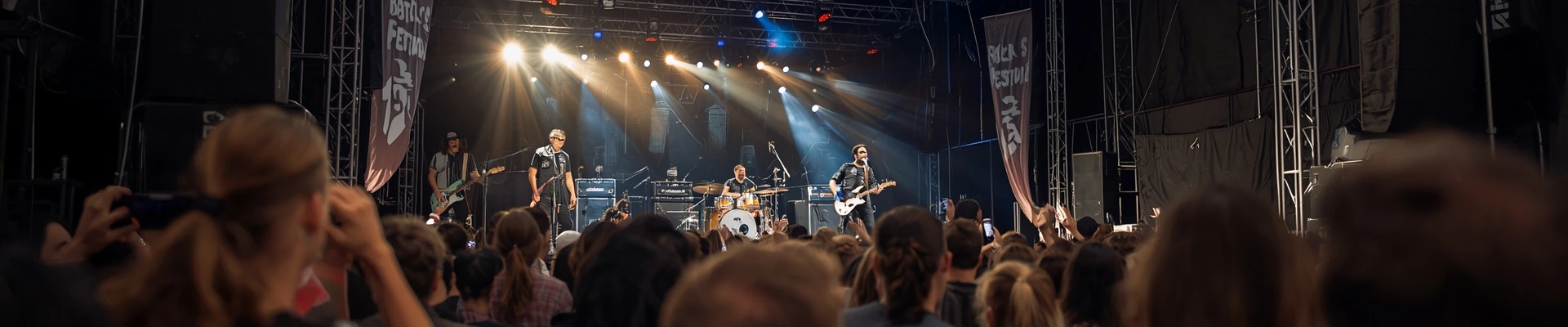
Hartford's punk and hardcore scene was active from the late 1970s onward, closely linked to the New Haven hardcore scene and the broader Boston–New York corridor. The city's Webster Theater — a storied venue that operated through multiple configurations on Webster Street — was one of the Northeast's essential mid-size rock and alternative venues through the 1990s and 2000s, presenting acts ranging from regional hardcore to national indie rock and hip-hop. The venue's programming history encompassed punk, metal, electronic, and hip-hop bookings, and it served as the entry-level arena for touring acts that weren't yet XL Center scale.
The Puerto Rican community of Hartford — concentrated in Frog Hollow, Parkville, and Clay-Arsenal — is one of the most significant in the United States: Hartford has one of the highest concentrations of Puerto Rican residents per capita of any mainland American city, a community that dates to migration patterns beginning in the 1950s and accelerated through the 1960s and 1970s. The neighborhood of Frog Hollow along Park Street is one of the most culturally vibrant Puerto Rican corridors on the East Coast, with restaurants, social clubs, and live music venues presenting salsa, merengue, reggaeton, bomba, and plena continuously. The Puerto Rican Day Parade and its associated musical programming has been one of Hartford's largest annual events for decades. The local Latin music scene has produced DJs, producers, and performers who operate in both the regional Latin circuit and the New York–Hartford–Springfield axis. Hartford's Latin radio tradition (through stations serving the Spanish-language community) has been a significant platform for regional Latin artists.
Hartford's jazz history runs through the city's African American community in Blue Hills, Asylum Hill, and the North End. The Hartford Jazz Society has supported jazz performance and education for decades, and major figures including Charlie Parker, Dizzy Gillespie, and Count Basie played Hartford's mid-century jazz club circuit. The community's musical contribution extends to gospel — several Hartford churches maintain choirs of regional significance — and to R&B and hip-hop that emerged from North End neighborhoods through the 1980s and 1990s, connecting to the broader Connecticut hip-hop tradition shared with New Haven.
Venues and neighborhoods
Infinity Music Hall — the 500-capacity intimate concert hall on Trumbull Street in downtown Hartford — is the city's premier mid-size live music room, programming national touring singer-songwriters, jazz, blues, folk, and alternative acts in an acoustically refined environment. The room opened in 2012 and has quickly established itself as one of Connecticut's essential listening rooms, with a programming philosophy that emphasizes artistry over volume. The sister venue in Norfolk, Connecticut (capacity ~300) established the brand's reputation before the Hartford location.
The Webster (later known as Webster Underground, operating at various points as the Webster Theater) on Webster Street in the North End has been Hartford's essential mid-size rock and alternative venue — the room where national touring acts from punk, metal, indie rock, and hip-hop have played for Hartford audiences who want more than an arena and less than a dive bar. Its history tracks the touring circuits of the 1990s and 2000s precisely.
The XL Center (15,500 capacity, Trumbull Street) remains the city's dominant venue for major touring acts, sports events, and large-scale productions. Despite its aging infrastructure, it has been renovated incrementally and continues to book nearly every significant touring act that comes through the Northeast.
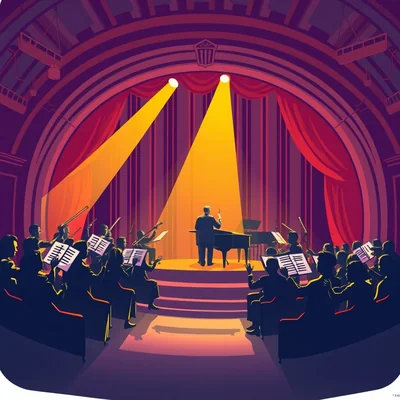
The Bushnell — the Mortensen Hall and Belding Theater complex at 166 Capitol Avenue — is Hartford's premier performing arts center, programming the Hartford Symphony Orchestra, Broadway touring productions, major jazz and classical acts, and special performances. The Bushnell's Mortensen Hall (2,750 seats) is one of the finest concert halls in New England.
Real Art Ways — the long-running contemporary arts center on Arbor Street in the Parkville neighborhood — programs experimental music, avant-garde, and boundary-crossing performances alongside film, visual art, and community events. Real Art Ways is Hartford's primary venue for music that sits outside the mainstream commercial circuit, and it has been an incubator for local experimental and independent artists.
The Arch Street Tavern and Black Bear Saloon anchor the city's smaller live music bar scene in the downtown and West End neighborhoods. The Half Door and various Park Street venues serve the Latin and Caribbean music community in Frog Hollow.
Neighborhoods define musical geography: Frog Hollow (Park Street corridor) is Hartford's Latin music heart — an intense concentration of Puerto Rican culture, music, and nightlife. Parkville — the redeveloped warehouse and light-industrial district west of downtown — has become Hartford's arts neighborhood, anchored by Real Art Ways and a growing cluster of studios, bars, and performance spaces. Downtown holds the XL Center, Infinity Music Hall, and The Bushnell in a compact walkable cluster. Blue Hills and Asylum Hill are primarily residential North End neighborhoods where the city's African American musical traditions have their deepest roots. West End (around West Hartford line) sustains a more eclectic, college-adjacent music scene.
Festivals and signature events
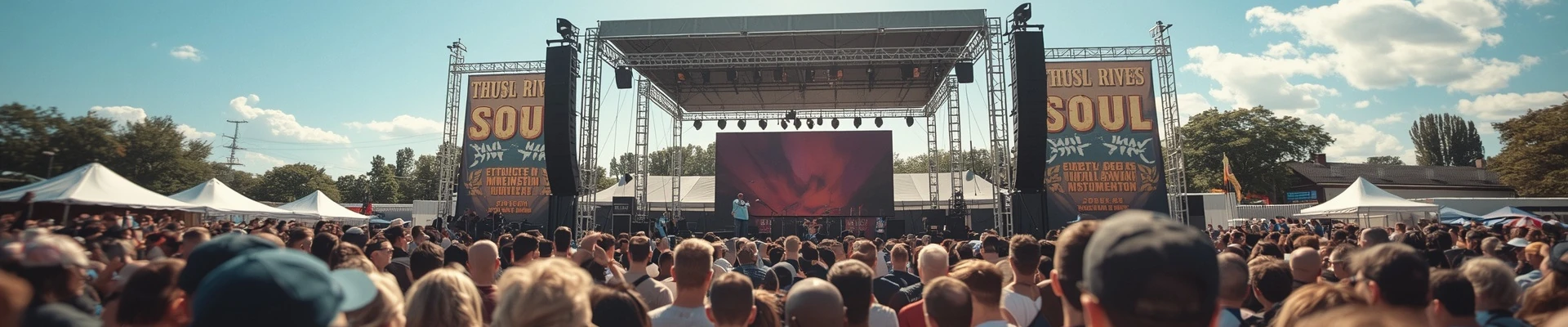
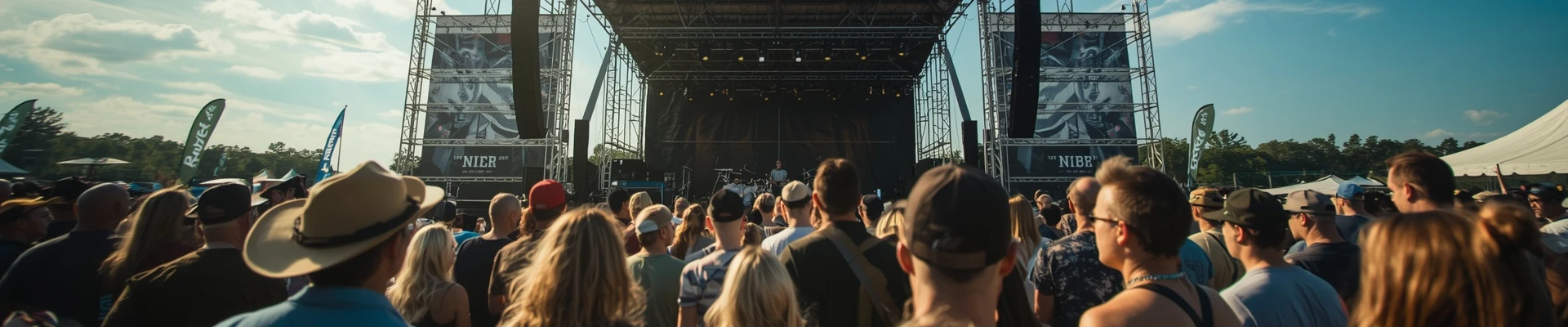
Riverfront Recapture programs outdoor concerts along the Connecticut River as part of its seasonal programming, bringing free and ticketed music events to the Huyshope Park and Mortensen Riverfront Plaza venues. The Hartford Jazz Festival — held at Huyshope Park — is one of the oldest jazz festivals in New England and draws significant regional and national jazz acts each summer. The Puerto Rican Festival of Connecticut — centered on Dillon Stadium — is one of the largest Puerto Rican cultural events in New England, featuring live salsa, reggaeton, bomba, and merengue acts alongside traditional cultural programming. Concerts on the Connecticut and Whalers on the Connecticut (tied to the arena events and river-corridor programming) have brought summer concerts to the riverfront. Hartford Flavor Company events and the Parkville Night Market incorporate live music into neighborhood programming. FirstNight Hartford programs live music across downtown venues on New Year's Eve.
What ties it all together
Hartford's musical identity is built on the paradox that defines the city itself: a small capital city with an outsized economic footprint, a major concert market trapped in an aging arena, and one of the most culturally dense Puerto Rican communities in the United States operating largely below the national radar. The XL Center has made Hartford a mandatory stop for every major North American tour since 1975, which means Hartford audiences have heard virtually every significant act in American popular music history in person — a per capita concert attendance record that rivals cities many times its size. The Puerto Rican community on Park Street has kept Hartford one of the most alive Latin music cities in New England, with salsa and reggaeton spilling from clubs and community events year-round. Infinity Music Hall has given the city a listening-room culture that complements the arena without competing with it. And the long lineage of Connecticut rock, punk, and alternative acts who built careers in the Hartford–New Haven corridor connects the city to a national indie tradition that its modest size would otherwise obscure. Hartford is a music city that works precisely because its geography forces it to be: far enough from New York and Boston to develop its own culture, close enough to both to know exactly what standard it's measured against.