
New Haven, Connecticut
New Haven sits at the mouth of the Quinnipiac and West rivers where they empty into New Haven Harbor on Long Island Sound, roughly equidistant between New York City (80 miles southwest) and Boston (140 miles northeast). Founded in 1638 as one of the original Puritan settlements of New England, it grew into a manufacturing and shipping center and became home to Yale University in 1718 — a partnership that has shaped the city's cultural DNA ever since. Today the metro area's population sits around 860,000, but the core city of 130,000 punches well above its weight in arts, culture, and music, driven by the constant churn of students, faculty, and the working-class neighborhoods that surround the Yale campus.
Economically New Haven has seen the full arc of American industrial cities: it thrived on firearms manufacturing (Winchester Repeating Arms), rubber goods, and carriage-making through the late nineteenth century; it contracted hard as those industries left; and it has spent the past four decades rebuilding around education, bioscience, and the arts. That economic complexity — the persistent coexistence of elite university culture and economically stressed Black and Latino neighborhoods — is the defining tension in New Haven's music, and it has produced some of the most interesting cross-genre collisions on the East Coast.
The New Haven Sound and Early Rock History
In the mid-1960s New Haven developed a reputation among rock cognoscenti for what observers eventually called the New Haven Sound — a raw, reverb-drenched garage rock sensibility that predated the mainstream punk explosion by nearly a decade. The scene crystallized around a clutch of clubs on Chapel Street and the collar neighborhoods, and the talent pipeline ran through regional TV shows and the cross-Long Island Sound connections to the New York scene.
The Remains — technically a Boston band formed by a Yale dropout — recorded at Trod Nossel Studio in Wallingford (the studio that would anchor Connecticut's studio culture for decades) and epitomized the high-energy sound. The Squires and The Five packed local ballrooms. Wes McGhee organized many early shows. The moment most often cited as New Haven's cultural arrival was when The Beatles played the New Haven Arena on their 1964 tour — the same arena where Jim Morrison was arrested mid-show in 1967 (the first rock musician ever arrested during a performance), an incident that made national news and cemented New Haven's place in rock mythology.
Yale School of Music and Classical/Avant-Garde Tradition
No account of New Haven's music can ignore the colossal shadow of Yale School of Music. One of the most competitive conservatories in North America, it has trained generations of orchestral musicians, composers, and conductors. Alumni include Paul Hindemith (who taught there 1940–1953 and whose influence on mid-century composition is incalculable), Ezra Laderman, and dozens of first-chair players in major symphony orchestras worldwide. The New Haven Symphony Orchestra, founded in 1894 and one of the oldest in the country, performs at Woolsey Hall — an ornate 2,700-seat hall on the Yale campus whose acoustics are celebrated worldwide.
The avant-garde thread runs through Anthony Braxton, who spent years at Wesleyan (close enough that New Haven venues hosted him regularly), and the composer Ingram Marshall, whose works blurred the line between experimental classical and ambient music. Yale's Sprague Memorial Hall and the Morse Recital Hall serve as incubators for new music, and the annual Yale in New Haven community concert series brings free performances to Wooster Square and East Rock Park.
Hip-Hop: New Haven's Most Globally Resonant Contribution
New Haven's single most internationally significant musical export is hip-hop. The city's Latino and Black neighborhoods on the Hill, Newhallville, and Dixwell Avenue produced an astonishing volume of talent relative to its size, much of it feeding into the broader New York and Connecticut rap corridor.
GZA and RZA of Wu-Tang Clan have documented connections to the New Haven scene through extended family and visits, though they came up in Staten Island. The more direct New Haven lines run through Keith Murray (Flatbush → New Haven overlap), and most significantly through De La Soul — Posdnuos (Kelvin Mercer) spent formative years in New Haven before the group formed in Amityville. The city's hip-hop community looks back on the early 1990s as a golden window when local crews were recording on cassette and selling out of car trunks.
Cozz, Ransom, and a succession of battle-rap MCs have kept the lineage alive into the 2010s and 2020s. Chino XL spent time in New Haven's orbit. The label Brick City Records helped document the late-1990s wave. Today the scene clusters around the Whalley Avenue corridor and the Hill neighborhood, with producers like Statik Selektah maintaining ties to the city's output.
Toad's Place and the Mid-Size Venue Ecosystem
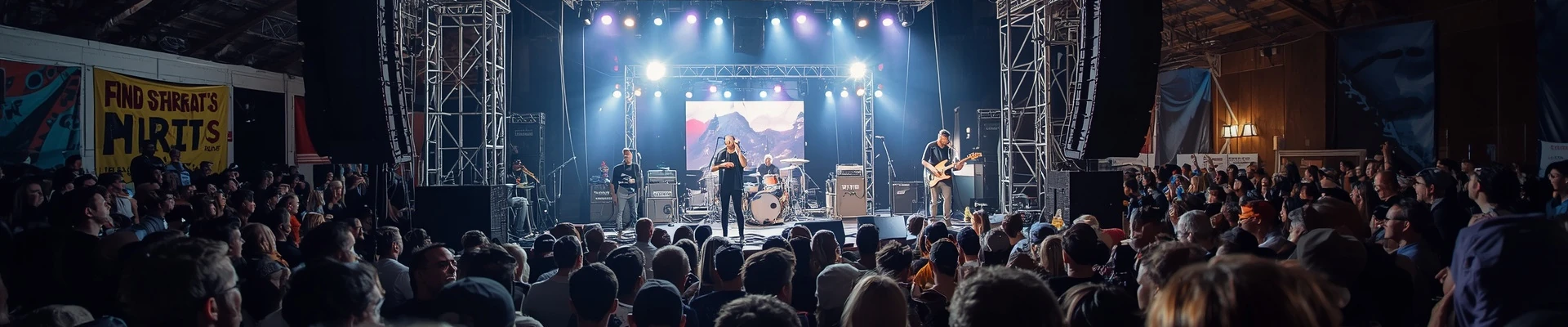
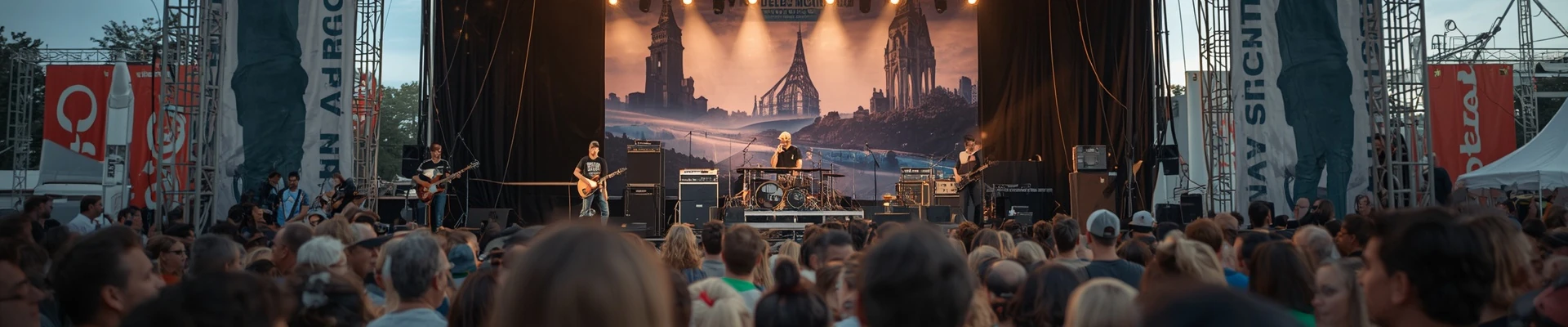
No single venue defines New Haven's live music culture more than Toad's Place on York Street, open since 1975. It holds roughly 750 people standing, and its booking record is staggering: The Rolling Stones tested material there before a 1989 tour, U2 played it early in their American run, Bob Dylan, Phish, Dave Matthews Band, Public Enemy, and literally thousands of others have appeared on its low stage. For decades it was the essential mid-size room between New York and Boston, and it remains a crucial stop for touring acts at the 500–800 capacity level.
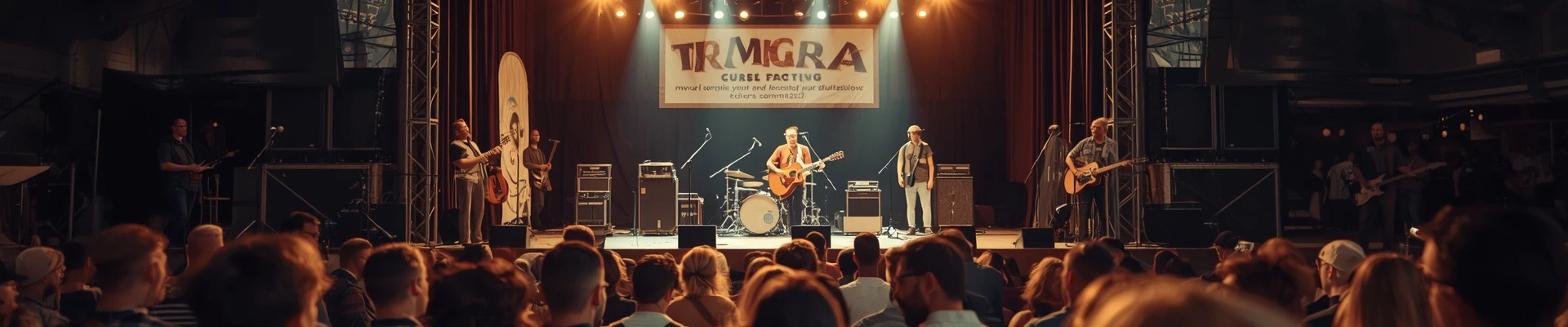
Cafe Nine on State Street is the intimate rock club of New Haven — a 200-capacity room with exposed brick, good beer, and a booking philosophy that leans toward alt-country, Americana, indie rock, and blues. It's launched dozens of local careers and remains the heartbeat of the grassroots scene. Eli Cannon's in Middletown (30 minutes away) and The State House have hosted overflow from the New Haven scene.
College Street Music Hall opened in 2014 and quickly became the city's 2,500-capacity anchor, drawing national tours that previously bypassed New Haven for Hartford or Providence. Its arrival completed a full venue ecosystem: 200 (Cafe Nine) → 750 (Toad's) → 2,500 (College Street).
For jazz, Zinc was the flagship room for years; it closed, but 168 York Bar and the Yale lounge circuit continue the tradition. The International Festival of Arts & Ideas brings world-class performances — jazz, classical, experimental, world music — to outdoor stages on the Green every June.
Indie Rock, Punk, and the DIY Underground
New Haven's indie-rock and punk scene has always thrived in the shadow of its more famous neighbors. The Normal Bob Smith zine culture, the late-1990s hardcore wave at BAR on Crown Street (also a beloved pizza-and-beer destination), and the post-hardcore scene that emerged around The Space in Hamden (a nonprofit performance space about 15 minutes north) have given generations of local bands a place to develop.
Hatchie and Palehound (Ellen Kempner is from western Connecticut) have ties to the regional circuit. Hozier played Toad's on his way up. The Yale bands — an ever-churning supply of musically trained undergraduates with time and resources — have produced surprising contributions to indie rock: Vampire Weekend drew on the New Haven musical ecosystem during Ezra Koenig's Yale years, and the Ivy-educated indie-pop polish that defines their early records owes something to that environment.
The Whitney Center and Erector Square arts complex in Fair Haven have hosted artist residencies that feed into the experimental music scene. Artspace New Haven on Orange Street has integrated sound installations and live performance into its visual art programming.
Gospel, R&B, and Church Music
The African American church tradition in New Haven is one of the oldest and most musically vital in New England. Varick Memorial AME Zion Church on Dixwell Avenue has been a center of sacred music since the nineteenth century, and the gospel choirs affiliated with the Hill and Newhallville churches have fed talent into the secular R&B and soul scenes for generations.
The soul and R&B history includes regional notables who recorded for Hartford labels in the 1960s and 1970s; many of those sessions were cut at Trod Nossel in Wallingford, which served Connecticut the way Muscle Shoals served the South — a professional studio accessible to regional artists who couldn't afford New York rates. The studio's engineer Brad Dorough was a behind-the-scenes figure for several Connecticut soul and rock acts.
Puerto Rican and Latin Music
New Haven has one of the oldest and most tightly organized Puerto Rican communities in New England, concentrated in the Fair Haven neighborhood along Grand Avenue. The Puerto Rican Cultural Center and the International Festival of Arts & Ideas have both amplified Latin music programming, and salsa, merengue, and Latin trap all have dedicated club nights and promoters in the city.
The cross-pollination between the Puerto Rican community and the hip-hop scene has been particularly generative — Latino MCs and producers feature prominently in New Haven's contemporary rap landscape, and reggaetón has deep roots in the Fair Haven corridor.
Neighborhoods and Scenes
- Chapel Street / Downtown Yale: Toad's Place, College Street Music Hall, the busking corridor, and the restaurant music scene fed by the student population.
- State Street: Cafe Nine, indie rock, Americana, and the late-night bar circuit.
- Whalley Avenue / Westville: Jazz, coffee-shop acoustic sets, and the bohemian arts spillover from the Westville arts district.
- Dixwell Avenue / Newhallville: Hip-hop, gospel, and the historically Black cultural corridor stretching from the old Arena site northward.
- Fair Haven (Grand Avenue): Latin music, salsa clubs, reggaetón, and the Puerto Rican festival circuit.
- Hamden (The Space): The nonprofit rock and punk venue that serves the full New Haven metro's DIY ecosystem.
What Ties It All Together
New Haven's music is defined by productive friction — between elite institutional training and working-class hustle, between the oldest cultural traditions in New England and some of the most forward-looking hip-hop and experimental music on the East Coast. Toad's Place is the city's most potent symbol: a room where the Stones warm up their arena show and where a local hip-hop crew plays their first real gig on the same calendar month. The Yale School of Music supplies harmonic vocabulary that trickles into every scene in town; the streets of Newhallville and Fair Haven supply the rhythmic urgency that gives that vocabulary its edge. That combination — conservatory precision meeting street-level rawness, on a harbor between New York and Boston — is what makes New Haven's music scene more than the sum of its modest size.