
Waterbury is Connecticut's fifth-largest city, with roughly 108,000 residents packed into 29 square kilometres of hilly terrain in the Naugatuck River valley, about 110 kilometres northeast of New York City and 48 kilometres southwest of Hartford. Once called the Brass City of the World, Waterbury was the global centre of brass manufacturing for much of the 19th and early 20th centuries — rolling mills, clock factories, and hardware plants that made everything from buttons and pins to shell casings and plumbing fittings. That industrial identity, and the waves of immigrant workers it drew, defined the city's demographics and culture in ways that still reverberate through its music today.
The city sits in New Haven County and anchors the Naugatuck Valley — a river-valley industrial corridor that includes Naugatuck, Ansonia, Derby, and Shelton downstream. Waterbury's terrain is marked by steep hillsides dropping toward the river, a compact downtown of 19th-century commercial brick, and residential neighborhoods spreading across the surrounding hills. The Waterbury Green at the city's core is one of the oldest public greens in Connecticut, framed by churches and civic buildings that speak to the city's once-considerable industrial wealth.
A brief history
The land along the Naugatuck was Algonquin-speaking Tunxis and Mahican territory before English settlement in 1674 under the name Mattatuck. The name was changed to Waterbury in 1686. For its first century Waterbury was a small agricultural settlement, but its fortunes changed dramatically in the 1800s when local entrepreneurs discovered that the Naugatuck River valley's water power, combined with the region's emerging metalworking expertise, was ideal for brass rolling and drawing. By the mid-19th century Waterbury was producing buttons, clocks, brass tubing, and later the pins and fittings that underpinned American industrialization. Companies like Scovill Manufacturing, American Brass, Chase Brass, and the Benedict & Burnham Manufacturing Company made Waterbury the undisputed global capital of the brass industry.
The factory system drew successive waves of immigrants — Irish in the 1840s and 1850s, Italians and Eastern Europeans in the 1880s through 1910s, and Puerto Ricans beginning in the 1950s and accelerating through the 1960s and 1970s. Each wave settled in distinct neighborhoods: the Irish on Brooklyn Hill, Italians in the Town Plot and South End, and Puerto Ricans in the North End and Brooklyn Hill — a demographic shift that fundamentally reshaped the city's cultural landscape. Today Waterbury is nearly 40% Hispanic (primarily Puerto Rican), about 20% Black, and the most diverse city in Connecticut outside of Hartford and Bridgeport. The brass industry collapse of the mid-20th century — automation, competition, and eventually offshoring — gutted Waterbury's economic base, leaving the city with the legacy of its built environment, its immigrant communities, and the tenacious working-class culture that always characterized it.
Music identity
Waterbury's musical identity is inseparable from its working-class demographics and its proximity to New York City. The city never developed the kind of celebrated singular scene associated with cities like Detroit or Seattle, but what it produced was something arguably more durable — a layered, community-rooted music culture sustained by Puerto Rican, Black, and white working-class populations who found in music a form of cultural expression that outlasted every economic downturn.
Jazz and rhythm & blues formed the foundation of Waterbury's music culture through the mid-20th century. The city's Black and Puerto Rican communities supported a network of jazz clubs, ballrooms, and social clubs through the 1950s and 1960s — the Lithuanian Club, the Club Embassy, and venues along Bank Street and East Main Street hosted travelling jazz acts and local ensembles. Jackie McLean, the bebop alto saxophonist from Harlem, had deep Connecticut connections and performed in the Waterbury area repeatedly through his decades-long association with the Hartt School in Hartford. The broad Puerto Rican community sustained a parallel salsa and Latin jazz scene — salsa dances at the Puerto Rican Cultural Center and church halls in the North End drew community members and visiting New York salsa artists through the 1970s and 1980s.
Hardcore punk was the defining underground scene of Waterbury's late 1980s and 1990s. The city's working-class geography and proximity to the larger New York and Connecticut hardcore networks made it a natural breeding ground. Youth of Today, the seminal New York straight-edge hardcore band, had connections to the Connecticut hardcore scene that encompassed Waterbury, New Haven, and Hartford, and the city's youth found in hardcore an aesthetic that matched its industrial rawness. The Brass City hardcore scene spawned bands and a DIY venue and basement-show network that persisted through multiple generations. Waterbury's basement shows were a consistent stop on the Connecticut-to-NYC hardcore touring circuit through the 1990s.
Hip-hop is arguably the most consequential musical genre Waterbury has produced in the past three decades. The city's hip-hop community is small but real, rooted in the North End and East End neighborhoods where Puerto Rican and Black communities overlap. Apathy (born Melvin Augustus Coles in Windham, CT, but deeply associated with the Connecticut hip-hop underground and connected to Waterbury's scene) is the most notable artist in the broader Connecticut underground rap orbit. More directly, the Demigodz collective — the Connecticut-based hip-hop supergroup founded by Apathy and Celph Titled — had significant influence on underground East Coast rap in the 2000s and 2010s. Waterbury's hip-hop producers and MCs have fed into the broader Connecticut-to-New York underground hip-hop pipeline, with the city's proximity to Bridgeport, New Haven, and New York facilitating constant cross-pollination.
Latin music is the living pulse of contemporary Waterbury. The city's Puerto Rican majority supports a continuous scene of salsa, merengue, bachata, reggaeton, and contemporary Latin urban music through clubs, community events, and radio. WATR and WWCO have historically served the city's Spanish-language community alongside English-language formats, and local Latin DJs and promoters bring both local and New York-based Latin artists through the city's clubs. The annual Puerto Rican Festival at Hamilton Park is the largest community celebration in the city and anchors the Latin music calendar.
Gospel runs through the city's Black and Puerto Rican Pentecostal church networks with considerable force — Trinity Church of the Nazarene, Iglesia de Dios congregations across the North End, and the broader evangelical community maintain active choir programs and gospel events.
Venues and neighborhoods
The live music infrastructure in Waterbury is modest but functional. The Palace Theater is the city's crown jewel — a restored 2,600-seat ornate cinema and vaudeville house (built 1922) that serves as the primary performing arts venue, hosting touring Broadway productions, orchestral concerts, and occasional popular music acts. The Palace anchors downtown cultural life and is the venue most likely to show up on a regional touring itinerary.
The Seven Angels Theatre in nearby Waterbury (technically located in the Plank Road area) programs theatrical productions and occasional music events. The Waterbury Symphony Orchestra performs at the Naugatuck Valley Community College performing arts center and at the Palace.
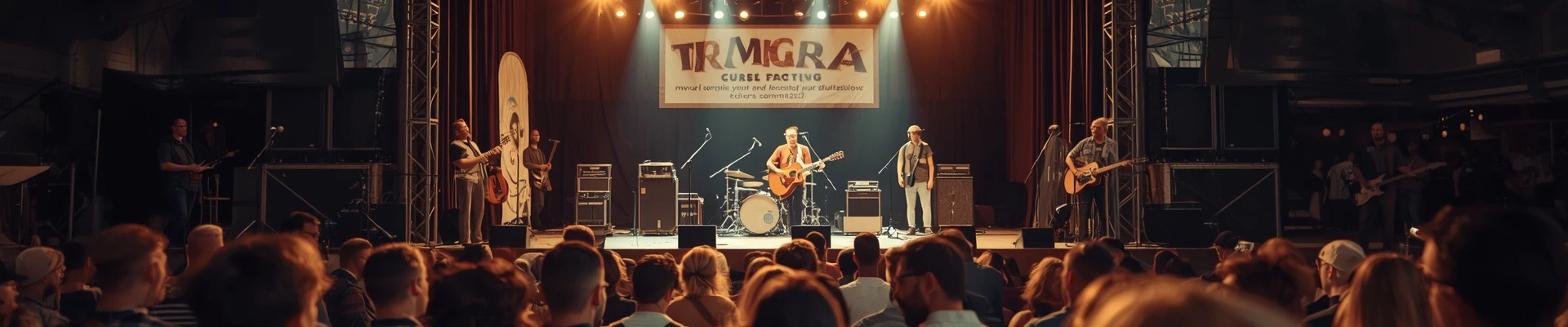
The club and bar circuit is smaller. Paparazzi Lounge, various venues along Bank Street and South Main Street, and the broader downtown bar corridor have sustained live music — rock cover bands, Latin DJs, and occasional original acts. The Elks Lodge and various Puerto Rican and Italian social clubs have historically hosted community dances and music events. The city's basement show network — inherited from the 1990s hardcore era — remains a resource for DIY punk and metal acts passing through.
The North End anchors Latin music — clubs, bodegas, and the community organizations along North Main Street sustain the salsa and reggaeton scene. Downtown anchors whatever vestige of the bar-band circuit survives. The East End has historically been home to the city's Black community and its gospel and hip-hop scenes.
Festivals and signature events
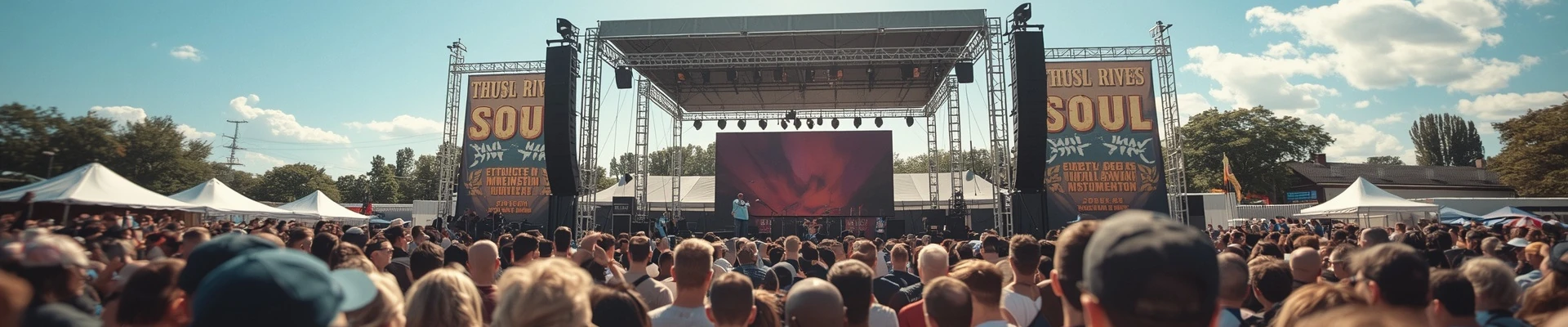
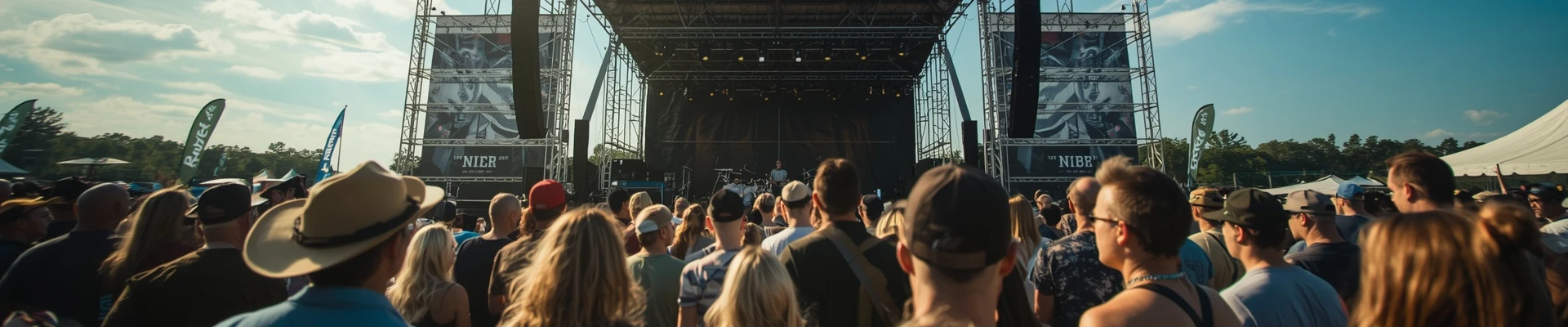
Waterbury's festival calendar is community-centred rather than destination-driven. The Puerto Rican Festival at Hamilton Park (late summer) is the city's most attended annual event — a multi-day celebration with salsa bands, reggaeton DJs, food, and community programming that draws the entire Puerto Rican diaspora from the Naugatuck Valley. Waterfest (when active) has programmed outdoor summer concerts on the Green. The Waterbury Arts Fest programs local visual art alongside music. Juneteenth celebrations and Black History Month events program gospel and R&B through community venues. The Feast of St. Anne and various Italian-American feast days bring traditional festival music and community bands to neighborhood streets in the South End and Town Plot.
The Palace Theater presents its own subscription series — Broadway touring productions, ballet, and orchestral performances — that draws the broader Naugatuck Valley audience.
What ties it all together
Waterbury is a city whose music reflects its history with unusual directness. Every wave of immigration left musical sediment — Irish traditional sessions in social clubs, Italian-American festival bands, Puerto Rican salsa in church halls, Black gospel in Pentecostal congregations, hardcore punk in basements, hip-hop in North End apartments. None of these scenes ever broke nationally in the way Hartford's or New Haven's scenes occasionally have. But all of them persist, sustained by communities with deep roots and a working-class culture that values music as something you do together, not something you consume from a distance.
The Brass City nickname carries an irony now — the mills are gone, the factories are condominiums or rubble, and the brass that made Waterbury famous is largely a museum artifact. But what replaced the economic engine is a demographic and cultural density that keeps producing musicians, dancers, and music fans in numbers disproportionate to the city's size. Apathy put Waterbury on the underground hip-hop map. The Puerto Rican Festival puts the Naugatuck Valley's Latin music culture on display annually. The Palace Theater reminds visitors that Waterbury once had the civic ambition to build a 2,600-seat ornate performance house — and still fills it. In a state dominated by the wealth of Fairfield County and the prestige of Yale, Waterbury is the city that does its music in basements and community halls and festival parks, on its own terms, without apology.