
Cape Coral sits on the southern Gulf Coast of Florida, pinched between the Caloosahatchee River to the north and a labyrinth of over 400 miles of navigable canals — a number that makes it the most canal-dredged city in the world. Incorporated in 1970 after a decade of speculative dredge-and-fill development by the Gulf American Land Corporation, Cape Coral grew from a swampy peninsula into a city of nearly 175,000, making it the largest city by area in Florida and one of the largest in the United States by land mass. The city spreads across 444 square kilometers of flat, sun-bleached terrain — neighborhoods of ranch houses and vacation condos, boat docks jutting into the canals, palm trees lining concrete streets with names like Chiquita and Trafalgar. It is a quintessentially Floridian invention: built by real estate promotion, sustained by retirees and snowbirds, and perpetually reinventing itself as younger families and Latin immigrants reshape its demographics.
Geography and the Sound of the Gulf
Cape Coral's geography — flat, sun-drenched, bisected by water — gives it a musical character rooted in outdoor leisure and the bar economy. The city is connected to Fort Myers across the Caloosahatchee by the Cape Coral Bridge and the Midpoint Memorial Bridge, and this link is culturally as important as the physical infrastructure. Fort Myers is the region's larger entertainment center, and the two cities function as a single live-music labor market, with bands, promoters, and audiences moving freely between them. Cape Coral's own scene lives primarily in a handful of concentrated corridors — Cape Coral Parkway in the downtown core, the Del Prado Boulevard commercial strip, and the waterfront marina areas where live music is ambient, seasonal, and relentless from November through April.
The seasonal rhythm is everything. During snowbird season — roughly October to May — Cape Coral's population swells, its bars fill with retirees from Ohio and Michigan and Ontario who want live music on a Wednesday afternoon, and the city's working musicians play three, four, sometimes five gigs a week. When summer arrives and the tourists and snowbirds flee the brutal heat, the circuit contracts sharply. It is a city that runs on sun and migratory economics, and its music culture bears those marks.
The Bar-Band Ecosystem
Cape Coral's primary musical infrastructure is its bar-band circuit — a network of restaurants, waterfront bars, marina lounges, and event spaces that book local and regional acts for regular live entertainment. The working musician in Cape Coral is skilled at reading a room, running a mix of classic rock, country, Jimmy Buffett-inflected Florida tropicalia, and contemporary radio hits for audiences that want familiar comfort over discovery.
The Dixie Roadhouse, located on Pine Island Road, has been one of the area's most reliable country and rock venues, booking both local acts and regional touring performers in a roadhouse format that fits Cape Coral's sprawling, drive-everywhere geography. The venue became a touchstone for fans of authentic American roots music in a region more commonly associated with yacht rock and cover bands. Its stage has hosted genuine twang alongside Florida country sounds that blend Nashville influence with Gulf Coast atmosphere.
Bert's Bar & Grille in nearby Matlacha — a scrappy, funky fishing village at the edge of Pine Island just northwest of Cape Coral — operates as a genuine live-music institution for the greater Pine Island Sound area. Bert's is the kind of place where the floor slopes, the beer is cold, and the bands play until the last fisherman goes home. Blues, Americana, and rock acts rotate through, and the venue has cultivated a fiercely loyal local following that considers Matlacha and Cape Coral a single community.
The waterfront marina bars — scattered along the canals and along Cape Coral's Gulf-access points — carry the broadest share of the city's live entertainment. Venues like Rumrunners at the Cape Coral Yacht Club and Boathouse Tiki Bar & Grill offer sunset-set live music that fuses classic rock, Jimmy Buffett, and Florida tropicana into a seamless vacation soundtrack. This is not the music of ambition or bohemia — it is the music of a city that has come to understand, very clearly, what its audience wants.
House of Rock and the Local Originals Scene
Cape Coral has not historically been known for originals-focused music in the way that Tampa, Miami, or even Fort Myers has been. But House of Rock, a venue that operated in the Cape Coral area during the 2000s and 2010s, functioned for a time as an anchor for the local rock originals scene, booking metal, punk, and alternative acts alongside the cover bands that dominate the region's economics. Small original acts from Cape Coral and Lee County used the room as a proving ground, and its presence provided an alternative to the purely tourist-facing bar economy.
The originals scene that exists in Cape Coral today is primarily a bedroom-producer and home-studio culture, with musicians who learned their craft in the area recording independently and building audiences through streaming platforms. The infrastructure that would support a thriving originals club scene — a dense young professional population, cheap rehearsal space, a university arts community — is largely absent in Cape Coral, though Florida Gulf Coast University in Fort Myers provides some of the educational pipeline for musicians who then feed into the wider Southwest Florida circuit.
Fort Myers and the Caloosa Sound Amphitheater
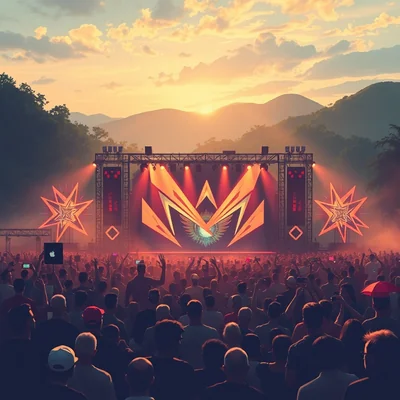
Cape Coral's cultural gravitational pull toward Fort Myers is nowhere more visible than in the Caloosa Sound Amphitheater, a 2,600-capacity outdoor venue on the Fort Myers riverfront that serves as the primary concert venue for the entire Southwest Florida region. Built as part of a broader riverfront development effort, the Caloosa Sound books mid-tier touring acts across genres — country superstars, classic rock legends, contemporary pop and hip-hop — and draws audiences from Cape Coral, Estero, Bonita Springs, and Naples. For Cape Coral residents, the Caloosa Sound is the local arena in all but name, and it reflects the region's music consumption habits: large crowds, familiar artists, a night out rather than a scene.
Fort Myers' Barbara B. Mann Performing Arts Hall at Florida SouthWestern State College seats over 1,800 and handles the region's Broadway touring productions, classical performances, and higher-tier concert events. The Sidney & Berne Davis Art Center in the Fort Myers River District books more eclectic programming — jazz, folk, world music, independent rock — and functions as the closest thing the region has to a listening room for adventurous ears.
The two cities share a radio ecosystem centered on country and classic rock formats, reflecting the demographics of the listening population. The 105.5 The Bone (classic rock) and country stations across the Southwest Florida dial map the musical identity of the area: heritage sounds for an audience that arrived already formed.
Latin Music and the Growing Southwest Florida Community
Cape Coral's demographic profile has shifted significantly in the 21st century. While the city remains predominantly white and disproportionately old compared to national averages, a substantial and growing Latino community — primarily Puerto Rican, Cuban, Mexican, and increasingly Central American in composition — has brought cumbia, bachata, reggaeton, and salsa into the city's musical life. Latin nights at bars and clubs in both Cape Coral and Fort Myers draw sizable crowds, and a number of venues have dedicated programming to Spanish-language music.
The Puerto Rican community in particular has established deep cultural roots in Southwest Florida, and the music they carry — salsa, merengue, contemporary reggaeton — has cross-pollinated with the area's country and rock bar culture in ways that are subtle but real. Fiesta Time and similar Latin-format venues in the Fort Myers–Cape Coral corridor serve this community, and the music that plays at quinceañeras, weddings, and community events in the city reflects a richness that the tourist-facing bar scene often obscures.
Blues, Soul, and the Older Traditions
Cape Coral's proximity to the Gulf Coast blues tradition — running through Tampa, Sarasota, Fort Myers, and down to Naples — means that blues acts find regular work in the area. The Lee County blues scene, while never carrying the national prominence of Tampa or Jacksonville's, has maintained a quiet vitality through local jams, blues society events, and the bar circuit's reliable demand for electric guitar music that doesn't require explaining.
Big Storm Brewing Company in Cape Coral has incorporated live music into its taproom programming, reflecting the brewery-as-venue model that has taken hold across Florida. The venue books an eclectic range of local acts, from singer-songwriters to blues combos to cover bands, and has become a gathering point for a younger, craft-beer-oriented audience that coexists with but is distinct from the snowbird circuit.
What Ties It Together
Cape Coral is not a city that generated a famous sound or launched a generation of influential artists. It is something different and, in its own way, more telling: a city whose music scene is an honest reflection of how millions of Americans actually live with music — as weekend entertainment, as the background to a boat ride, as the reason to go out on a Tuesday in February when it is cold back home. The city's working musicians are not chasing fame; they are building careers in the margins of the Florida economy, playing three sets a night for audiences that want to feel good. The snowbird circuit, the marina bars, the Latin nights, the occasional originals showcase — all of it adds up to a music scene that is practical, adaptable, and deeply embedded in the rituals of a city defined by its canals, its sunshine, and its unabashed embrace of the good life.