
Davie is a town of roughly 101,000 residents in Broward County, Florida, situated about 16 kilometres west of downtown Fort Lauderdale and 40 kilometres north of downtown Miami. It occupies a flat stretch of the Florida coastal plain at the edge of the Everglades drainage basin — drainage canals lace the town, and the western reaches shade toward Everglades conservation land. Davie is one of the more unusual municipalities in South Florida, a place where zoning ordinances have preserved the right of residents to keep horses on residential lots, where a working rodeo operates inside the town limits, where pickup trucks and horse trailers share roads with Nova Southeastern University traffic, and where the same suburban grid that covers most of Broward County is punctuated by equestrian crossings and ranch fencing. It is a town of contradictions: earnestly cowboy-culture by municipal decree, thoroughly suburban by demographic reality, and closely woven into the Fort Lauderdale and Broward County music ecosystem that makes the area one of the busiest regional markets in the American Southeast.
A brief history
The land that became Davie was part of the vast drainage project that reclaimed the Everglades' eastern fringe for agriculture in the early twentieth century. The Model Land Company — a subsidiary of Henry Flagler's Florida East Coast Railway — platted the area in 1909 as a farming community, and early settlers grew citrus, vegetables, and sugarcane on the newly drained muck soil. A Dutch immigrant named August Heid helped promote the area, and the town was incorporated in 1925. Agricultural identity ran deep through the mid-twentieth century, and when South Florida's postwar suburban expansion swept through Broward County, Davie's leaders made a deliberate choice to preserve the agrarian character. The town adopted horse-friendly zoning that has been maintained and updated ever since — commercial properties in many zones must include hitching posts, and the town actively promotes its equestrian identity through the Bergeron Rodeo Grounds, home to the Davie Pro Rodeo, one of the oldest professional rodeos in Florida. Nova Southeastern University, established in 1964 as Nova University, grew from a small graduate school into one of the largest private universities in the southeastern United States, with more than 20,000 students across its health sciences, law, business, and arts programs. NSU's presence transformed Davie's southern half and brought a sustained young professional and student population into the town.
Music identity
Davie's own music identity is inseparable from the broader Fort Lauderdale–Broward County music ecosystem, one of the most underappreciated regional scenes in the United States. The county's sonic fingerprint is drawn from several powerful sources: the massive Caribbean diaspora communities — Jamaican, Haitian, Trinidadian, Barbadian — that have made Broward County one of the largest concentrations of English- and French-speaking Caribbean Americans in the country; the hip-hop and R&B tradition fed by these communities and by a continuous chain of Black producers, MCs, and beatmakers working through the region's studios; a deep rock and metal underground tied to the South Florida DIY circuit; and the country and Americana thread that runs, improbably but genuinely, through Davie's own cowboy culture.
The most internationally consequential South Florida music moment was the rise of 2 Live Crew in the late 1980s — the Miami bass and rap group whose albums, particularly As Nasty As They Wanna Be (1989), became the center of one of the most important First Amendment battles in American music history. Though based in Miami and Broward County broadly, 2 Live Crew's work reverberates through the entire South Florida hip-hop tradition that Davie participates in. Luther Campbell (Luke Skyywalker) and the broader Miami bass scene established a regional hip-hop voice that has influenced everything from crunk to trap. DJ Khaled, born in New Orleans but raised in Orlando and deeply embedded in the South Florida music industry, has been one of the most commercially successful hip-hop producers of the 21st century. Trick Daddy, Trina, and Rick Ross — all South Florida artists — helped establish Miami and Broward County as a major force in hip-hop well into the 2000s and 2010s. Kodak Black, from Pompano Beach in northern Broward County, is the most internationally prominent rapper to emerge from the county in the 2010s.
The Caribbean diaspora communities in Broward County — and Davie is home to significant Jamaican, Haitian, and Trinidadian populations — sustain one of the most vibrant dancehall, reggae, soca, and kompa scenes in the United States. Jamaican sound system culture runs through Broward County clubs and backyards; Haitian kompa and rara have their own venue circuits; Trinidadian soca fills the county during Broward Carnival season. These scenes exist largely outside mainstream media coverage but constitute some of the most musically sophisticated and socially embedded music communities in South Florida.
Davie's rock and alternative scene, like most suburban South Florida scenes, functions as part of the broader Fort Lauderdale-Miami rock circuit. Marilyn Manson (born Brian Warner) grew up in Canton, Ohio, but formed his band in Fort Lauderdale in the early 1990s — among the most consequential rock bands to emerge from the Fort Lauderdale area. The broader South Florida metal and hardcore scene — the Culture Room in Fort Lauderdale was one of the defining rock venues in the Southeast before its closure — has produced bands that feed into the national touring circuit. The Nova Southeastern University student population sustains a small indie and DIY rock scene within Davie itself.
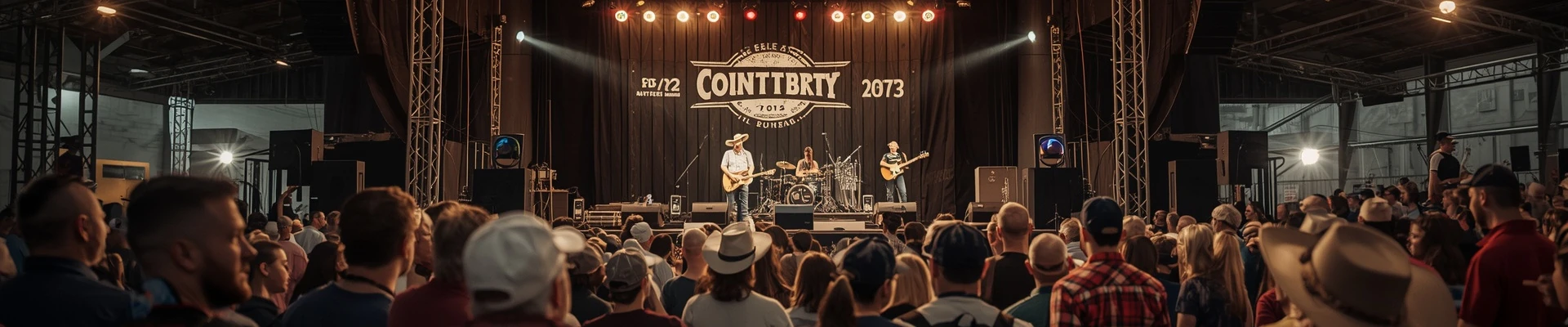
The country thread is real and specific to Davie. The Davie Pro Rodeo draws country and Western music programming; the Round-Up Country Western Night Club (operating in Davie for decades) was one of the longest-running country dance halls in South Florida, bringing national touring country acts and honky-tonk dancing to a community that genuinely embraced Western culture. The cowboy identity isn't a marketing affectation — it's embedded in zoning law and daily life.
Adjacent to Davie in Hollywood, Florida, the Seminole Hard Rock Hotel & Casino houses Hard Rock Live — a 6,500-capacity amphitheatre and premier touring venue that is one of the most important concert stops between Miami and Tampa. Hard Rock Live draws A-list touring acts across genres: hip-hop, pop, rock, Latin, EDM, and country. For Davie residents, Hard Rock Live functions as their de facto flagship venue.
Venues and neighborhoods
Davie's own venue infrastructure is modest — it is a suburban municipality, not a urban entertainment district. The Bergeron Rodeo Grounds is the town's signature event space, hosting the Davie Pro Rodeo and serving as a festival ground for outdoor concerts and community events. Nova Southeastern University's Don Taft University Center (capacity around 800 for concerts) hosts student-facing events and small touring acts. Local bars and restaurants with live music — Davie Ale House, various nightclubs along University Drive and State Road 84 — serve the student and young professional population. The most important music corridor in Davie's orbit is U.S. Route 441 (State Road 7), which runs north-south through the heart of Broward County and threads through Caribbean-owned clubs, Latin nightclubs, and music venues.
Nearby Fort Lauderdale provides the real venue infrastructure for Davie residents. The Broward Center for the Performing Arts (2,700-capacity, Fort Lauderdale's premier theatre) programs classical, Broadway, and touring pop. Revolution Live (Fort Lauderdale) is the county's flagship club venue, mid-size and booking rock, hip-hop, and electronic acts across the national touring circuit. Hard Rock Live (Hollywood, adjacent) is the major amphitheatre destination. The Parker (Fort Lauderdale) programs jazz, folk, and mid-size touring acts in a 800-capacity renovated historic theatre.
Different parts of Davie carry different musical character. The university corridor along Griffin Road and Southwest 30th Street anchors the NSU student scene. The western ranching neighborhoods hold the equestrian community and country/Western identity. The corridor along Davie Road and University Drive runs the commercial strip of bars and live music venues. Orange Drive and the southern edges of Davie blend into the Hollywood, FL entertainment ecosystem.
Festivals and signature events
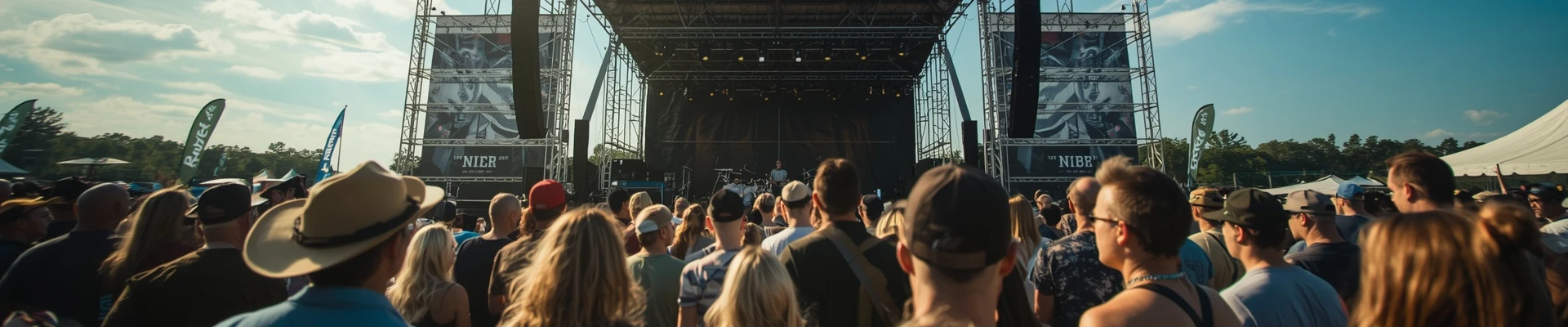
Davie Pro Rodeo — held at the Bergeron Rodeo Grounds, one of Florida's oldest professional rodeos, with country and Western music integrated into the programming. Orange Blossom Festival — the town's signature annual street festival, celebrating Davie's agricultural heritage with live music and community events. Broward County Fair — held at the Central Broward Regional Park (near Davie), drawing regional country and pop acts alongside the midway. Nova Southeastern University hosts student-facing concert programming through the academic year. The broader South Florida festival calendar — Ultra Music Festival in Miami (one of the world's largest EDM events), Broward Carnival (Trinidadian soca and Caribbean carnival), Creole Festival in Broward County (Haitian cultural celebration with kompa and rara), Reggae on the River in Fort Lauderdale — provides the festival backbone for Davie residents.
Hard Rock Live at the Seminole Hard Rock Hotel & Casino programs major touring events year-round, functioning as the area's most important recurring concert destination for residents across Broward County including Davie.
What ties it all together
Davie's musical signature is the productive tension between its earnest cowboy identity and its place inside the densely multicultural South Florida musical ecosystem. No other municipality in the United States quite replicates the combination: a working rodeo and horse-trail zoning coexisting with Haitian kompa clubs, Caribbean sound systems, hip-hop production networks, and a university population tuned to the full range of contemporary music. The cowboy culture is not a theme-park affectation — it is in the town charter, the zoning code, and the hitching posts on commercial buildings. The Caribbean community is not a footnote — it is one of the largest concentrations of English- and French-speaking Caribbean Americans in the country, sustaining musical traditions of extraordinary sophistication. The proximity to Hard Rock Live, the Fort Lauderdale club circuit, and the Miami festival calendar means Davie residents are never more than a short drive from world-class music infrastructure. What makes Davie distinctive is the commitment to being genuinely, stubbornly both things at once: Florida's horse town and a node in one of the richest multicultural music regions in the hemisphere.