
Gainesville is the largest city in north-central Florida and the county seat of Alachua County, with roughly 145,000 residents inside the city limits and about 330,000 in the metropolitan statistical area. It sits in the rolling karst terrain of north Florida — about 115 km southwest of Jacksonville and 175 km northwest of Orlando — at an elevation that gives it a climate noticeably cooler and wetter than the Florida coasts, with springs, sinks, and the limestone aquifer of the Floridan Aquifer System defining the landscape as much as any coastline. The city is dominated by the University of Florida, a flagship land-grant institution with more than 55,000 students that is the single largest employer in the region and the organizing force around which nearly all of Gainesville's cultural, intellectual, and musical life orbits. Beyond UF, Gainesville is home to Santa Fe College, one of the top-ranked community colleges in the United States, and hosts a robust health sciences sector anchored by UF Health (Shands Hospital). The city is surrounded by natural Florida — Paynes Prairie Preserve State Park to the south (a vast, biodiverse grassland with wild bison and horses), San Felasco Hammock Preserve to the north, Devil's Millhopper Geological State Park in the city itself, and the Santa Fe and Ichetucknee rivers to the north. Despite — or perhaps because of — its relative isolation from Florida's coastal tourism economy, Gainesville has developed one of the most distinctive and historically significant music scenes in the American South.
A brief history
The area was home to Seminole and earlier Native peoples for thousands of years before American settlement. The town of Gainesville was platted in 1854 and named after General Edmund P. Gaines of the Second Seminole War. It became the Alachua County seat and a modest agricultural hub in the antebellum era, sustained by Sea Island cotton and citrus. The University of Florida arrived in 1906, relocated from Lake City under the Buckman Act, and the institution's growth gradually transformed Gainesville from a county-seat market town into a university city. Through the mid-20th century Gainesville remained a small, racially segregated Florida town with a predominantly white faculty and student population and a historically Black community anchored by the Porters' Community, Newberry Road, and the Black churches and businesses of the city's western neighborhoods. The Civil Rights era brought difficult years — Gainesville's school desegregation was contested through the early 1970s — but also helped forge the community connections that would later sustain a multiracial punk and DIY scene. By the 1970s, UF's growth and the arrival of a bohemian student culture turned University Avenue into a corridor of record stores, bars, coffeehouses, and small venues. It was this environment — part Southern Gothic, part Florida heat, part university intellectual restlessness — that produced Tom Petty.
Music identity
No music scene is more central to Gainesville's identity than the one that produced Tom Petty. Petty was born in Gainesville in 1950, grew up in a working-class family near the city's western edge, and encountered rock and roll through a handshake with Elvis Presley on a film set in 1961 — an event he credited as the spark that made him a musician. He formed his first serious band, Mudcrutch, in Gainesville in the late 1960s with guitarist Mike Campbell and keyboardist Benmont Tench, both from Gainesville. After a demo deal took the band to Los Angeles in 1974, Petty regrouped and formed Tom Petty and the Heartbreakers — retaining Campbell and Tench — releasing their self-titled debut in 1976. The band went on to become one of the defining American rock acts of the late 20th century: Damn the Torpedoes (1979), Hard Promises (1981), Full Moon Fever (1989, a solo album), Into the Great Wide Open (1991), and Wildflowers (1994) are landmarks of classic rock. Don Felder, who joined the Eagles in 1974 and co-wrote "Hotel California," was also born and raised in Gainesville, where he and Petty attended the same school (though they didn't play together). Stephen Stills of Crosby, Stills, Nash & Young attended high school in Tampa but spent formative years in Florida; the broader north Florida rock lineage is deep. Tom Petty's connection to Gainesville remained intense throughout his life — he returned repeatedly, remained loyal to his childhood friendships, and described the city's heat, boredom, and restlessness as core to his songwriting. Gainesville's most celebrated cultural export is Tom Petty, full stop.
The second great wave of Gainesville music came in the 1990s punk and ska-punk explosion. By the late 1980s, the UF campus was generating a DIY punk scene organized around house shows, a handful of small bars on University Avenue, and a network of fanzines and college radio programming through WUFT (the UF public radio station) and the campus station. From this soil grew three bands that would shape American punk for a generation. Less Than Jake — formed in Gainesville in 1992 by drummer Vinnie Fiorello and guitarist Chris Demakes — became one of the most commercially successful ska-punk bands in the world, releasing Losing Streak (1996) and Hello Rockview (1998) on Capitol Records and building a devoted following through relentless touring and a genuine connection to their hometown. Fiorello ran Fueled by Ramen records (initially from Gainesville) before it grew into a major indie label. Hot Water Music — formed in Gainesville in 1993 by vocalist-guitarists Chuck Ragan and Chris Wollard — fused punk urgency with a melodic, heartfelt delivery that influenced a generation of post-hardcore and emo bands; their albums Fuel for the Hate Game (1997), No Division (1999), and Caution (2002) are essential texts. Against Me! — formed in 1997 by Laura Jane Grace (then Tom Gabel), initially as a solo acoustic project before evolving into a full band — were among the most critically admired punk bands of the 2000s. Grace's Reinventing Axl Rose (2002) and Searching for a Former Clarity (2005) established the band as righteous inheritors of folk-punk's political tradition; the band's signing to Sire Records in 2007 and Grace's public coming out as transgender in 2012 made Against Me! a cause and a touchstone far beyond music. All three bands emerged directly from Gainesville's house-show circuit and retained strong connections to the city long after their careers expanded beyond it.
The underground continued producing: Rumbleseat (Chuck Ragan's country-inflected solo project), the Grabass Charlestons, Whiskey & Co., and a steady flow of punk, folk-punk, and post-hardcore bands sustained the scene across two decades. The Fest — launched in 2002 by Tony Weinbender of No Idea Records — became the annual event that confirmed Gainesville's status as the unofficial capital of American DIY punk. No Idea Records, Gainesville's foundational underground label, issued hundreds of records by Gainesville and Florida bands from the early 1990s forward and remains one of the most respected independent labels in American punk. CMAR Records and a network of smaller imprints kept the recording infrastructure local.
Gainesville's music scene is not only punk. The university sustains a strong jazz, classical, and world music presence through the UF School of Music, which hosts the University of Florida Jazz Faculty Quartet, an annual guitar festival, and student ensembles across every tradition. The Hippodrome State Theatre hosts eclectic musical programming. Blues and R&B run through the city's historically Black west-side neighborhoods and through venues like The Bull, which hosts blues, soul, and Americana alongside indie rock. Country and roots have always had a presence in north Florida's agricultural communities, and Gainesville's college-town economics mean you'll find bluegrass, folk, and Americana nights throughout the week. There is a modest but real hip-hop and rap scene sustained by UF students and young residents from the city's east-side and west-side communities.
Venues and neighborhoods
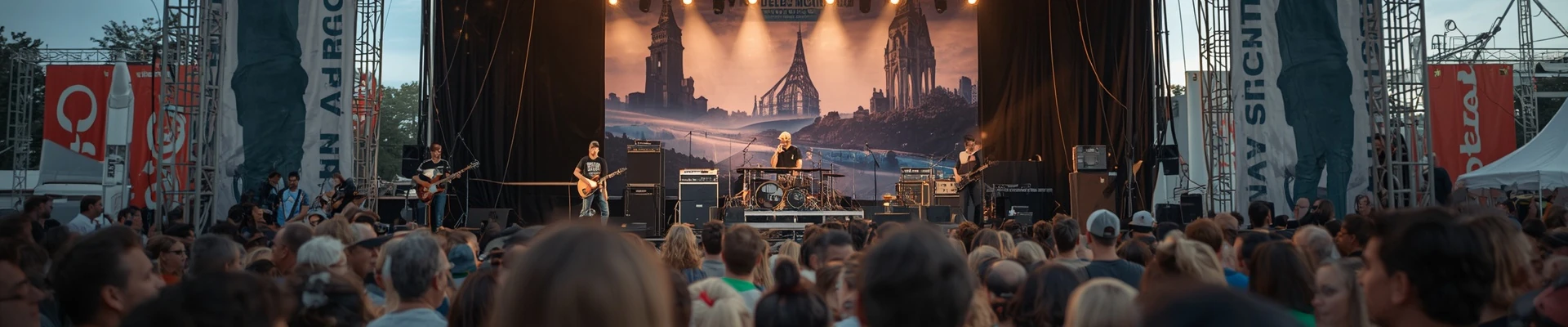
Gainesville's venue ecosystem is small but tightly organized. At the upper end, Stephen C. O'Connell Center (the "O'Dome") at UF handles arena-scale events — major touring acts and UF sports events. The historic Hippodrome State Theatre on SE Second Place, a 1911 Federal Building converted into a performing arts center in the 1970s, anchors the arts and eclectic mid-size programming. Bo Diddley Community Plaza (now Bo Diddley Plaza) — the downtown outdoor plaza named for the blues legend, who lived in Gainesville for many years — hosts free concerts, festivals, and outdoor events throughout the year. Bo Diddley himself lived and died in Gainesville (he died there in 2008), and the plaza naming is one of the more apt venue dedications in Florida.
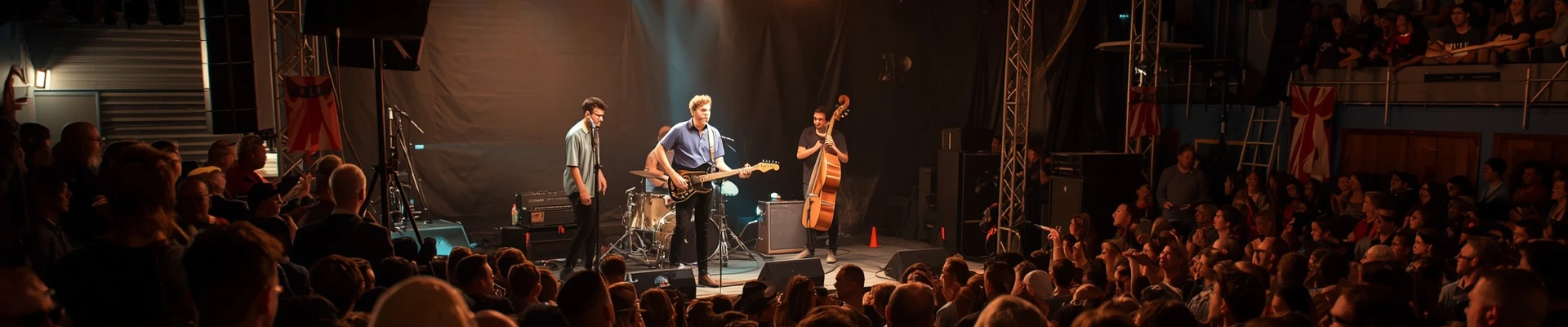
The club and bar tier runs along University Avenue and the adjacent streets of midtown Gainesville. The Atlantic is the city's premier mid-sized indoor venue for indie, punk, and rock. The Brickyard at Heartwood Soundstage is a versatile arts space with indoor and outdoor stages. Loosey's (now operating as a music venue and bar) has hosted Fest bands and indie acts. Tipsy Taco and a cluster of bars along University Avenue and SW 2nd Avenue provide the small-room infrastructure. The Gainesville DIY scene runs heavily on house shows and short-run pop-up spaces — a tradition dating to the early 1990s punk era and very much alive. The Winnjammer and Lillian's Music Store (a retail shop that doubles as a micro-venue) continue the tradition of non-traditional music spaces.
Downtown Gainesville — the Main Street and First Avenue corridor — anchors the arts-festival and outdoor-event calendar. Midtown (the University Avenue strip from roughly SW 13th Street to SW 2nd Avenue) is the bar and club core. The Duckpond neighborhood to the east, with its Victorian homes and proximity to the university, has historically anchored the folk, coffehouse, and singer-songwriter circuit. East Gainesville — historically the city's Black community, underinvested but culturally rich — is where gospel, blues, and R&B traditions run deepest, and where a new generation of community arts organizations is building infrastructure. Haile Plantation and the Tioga development to the west attract a country and Americana crowd through their community event programming.
Festivals and signature events
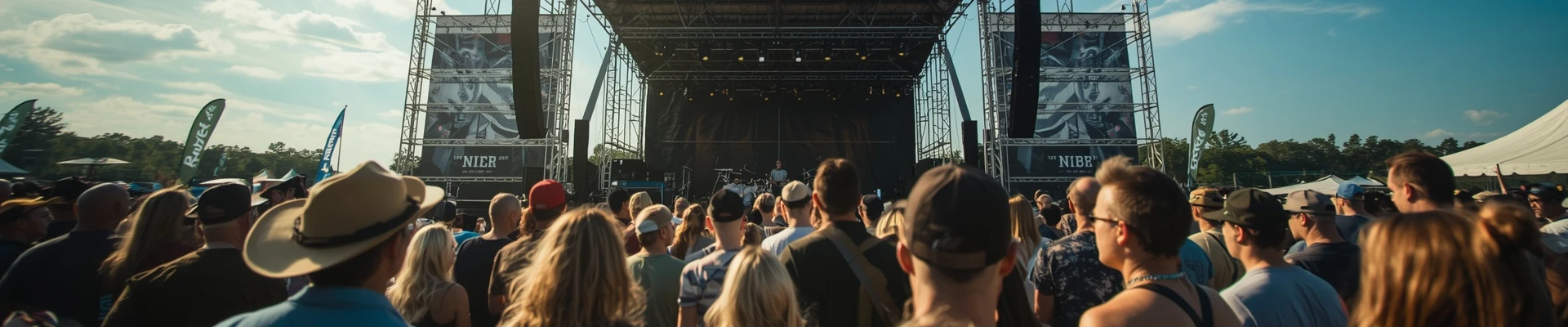
The Fest is Gainesville's signature music event and one of the most beloved annual gatherings in American underground music. Held annually in late October (usually Halloween weekend), The Fest takes over venues across downtown and midtown Gainesville — typically 60–80 venues, 300+ bands over three days — for an extraordinary concentration of punk, hardcore, folk-punk, ska, emo, and indie rock. Founded in 2002, it has grown into a pilgrimage event for the American DIY punk community, drawing thousands of attendees from across the country and internationally. No other event better illustrates the outsized importance of Gainesville to American underground music.
Gainesville's Tom Petty Tribute Night (informal, annually around his October birthday and death anniversary) draws hundreds to venues across the city for Petty tribute sets. Fall Fest at Haile Village features acoustic and folk programming. Hoggetowne Medieval Faire includes folk and period music programming. MLK Jr. Celebration in January anchors the East Gainesville cultural calendar. The Downtown Festival and Art Show in November (a major art festival that draws visitors from across Florida) features substantial live music. The Midnight Blue Blues Festival honors Bo Diddley's memory and the city's blues tradition. UF Homecoming events generate major concert programming each fall. Santa Fe College's Spring Arts Festival includes music performance programming.
What ties it all together is Gainesville's contradictory nature — a mid-sized, humid, landlocked Florida city that would seem an unlikely cradle for anything, yet has produced Tom Petty and Don Felder (two of the defining voices of American classic rock), Less Than Jake, Hot Water Music, and Against Me! (three of the defining bands of American punk and ska-punk), Bo Diddley's adopted home, The Fest, and No Idea Records. The common thread is the university, the heat, the isolation from Florida's coastal tourism economy, the affordability that lets musicians actually live and practice there, and a culture of creative boredom that has historically been very good for rock and roll. Gainesville is the city where Tom Petty learned to want something beyond the cypress and the Spanish moss — and where punks, ska kids, and folk-punk poets have been finding that same hunger ever since.