
Hollywood, Florida — The Hard Rock City on the Gold Coast
Hollywood, Florida sits at the geographic midpoint of the South Florida metroplex, wedged between Fort Lauderdale to the north and Miami to the south along the Atlantic coast. Incorporated in 1925 by developer Joseph Young, who envisioned it as a planned city modeled on Hollywood, California, it covers roughly 70 square kilometres of Broward County lowland — barrier island beaches to the east, the Everglades' freshwater edge to the west, and the Intracoastal Waterway threading through the middle. With a population nudging 150,000, Hollywood is one of the larger incorporated municipalities in Broward, though it lives in the long shadow cast by its famous neighbors. That geographic middle-child position has paradoxically become its defining asset for live music: close enough to Miami's talent pipeline and Fort Lauderdale's touring infrastructure, yet retaining its own identity rooted in sand, sun, and the colossal entertainment complex that gives the city its biggest stage.
The Seminole Hard Rock: South Florida's Concert Anchor
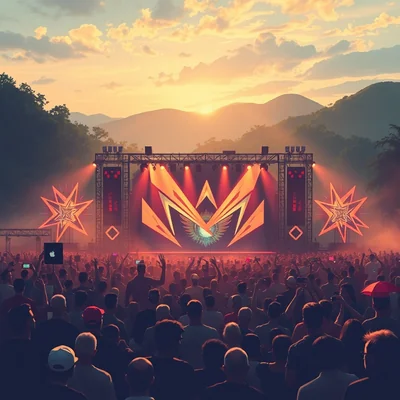
No single venue has shaped Hollywood's music profile more than the Seminole Hard Rock Hotel & Casino, opened in 2004 and expanded in 2019 into one of the most ambitious entertainment complexes in the Southeast. The campus sits on Seminole tribal land just west of the city's downtown core and includes Hard Rock Live, a 7,000-capacity arena that books a relentless calendar of major touring acts across pop, rock, hip-hop, Latin, R&B, country, and electronic music. The Hard Rock Live stage has hosted Beyoncé, Bruno Mars, Bad Bunny, Shakira, Daddy Yankee, Billy Joel, and hundreds of others — an A-list roster that a city of Hollywood's size could not otherwise command. The surrounding casino complex keeps a steady stream of entertainment flowing through its smaller lounges and poolside stages year-round, giving South Florida session musicians, cover bands, and local acts consistent employment in a market where steady gig income can be elusive.
The Hard Rock brand's decision to anchor here rather than in Miami or Fort Lauderdale proper has been the defining inflection point for Hollywood's cultural identity. The casino's infrastructure supports a hospitality and entertainment ecosystem — hotels, restaurants, nightclubs — that generates music employment at a scale disproportionate to the city's size. When touring productions roll through South Florida, many stay in Hollywood for the duration of their regional run; the city's hotel stock is extensive and the Hard Rock campus functions almost as a self-contained entertainment village.
Young Circle and the Arts District
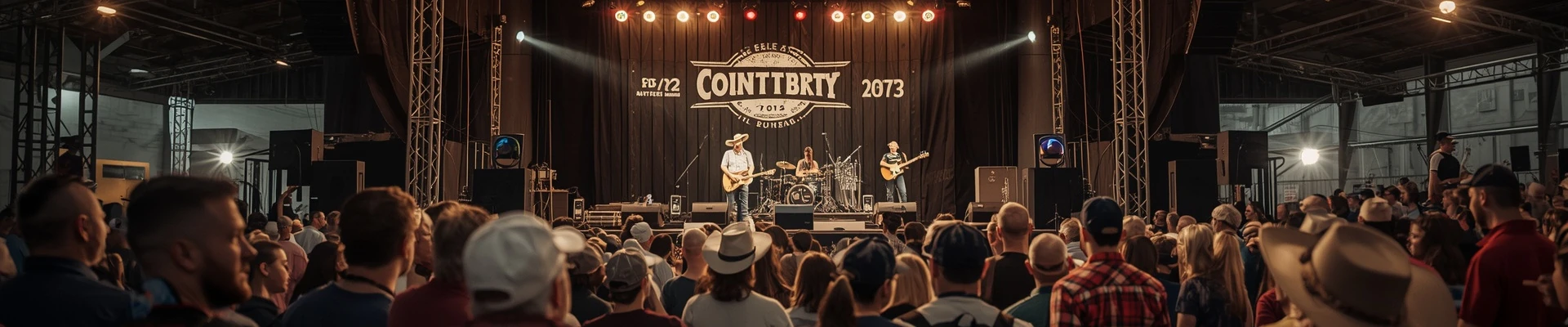
Downtown Hollywood orbits Young Circle (renamed ArtsPark at Young Circle), a roundabout-turned-public-park at the junction of Hollywood Boulevard and US-1. The circle anchors the city's walkable arts and entertainment district, a strip of bars, restaurants, small galleries, and live-music rooms stretching along Hollywood Boulevard toward the beach. The Hollywood ArtsPark Amphitheater, an open-air bandshell within the park, hosts free concerts, cultural festivals, and community events throughout the cooler South Florida months. The intimacy of ArtsPark events contrasts sharply with the Hard Rock megabox, and local musicians who would never land a Hard Rock slot play here regularly.
Along the Boulevard, independent clubs like Radio-Active Records (the legendary South Florida punk and alternative shop) and a rotating cast of bars with live-music stages have kept the local original-music scene fed for decades. The district's geography — walkable, bikeable, with outdoor seating spilling onto sidewalks — gives it a character distinct from Miami Beach's bottle-service glitz or Fort Lauderdale's college-bar strip.
Hollywood Beach and the Broadwalk
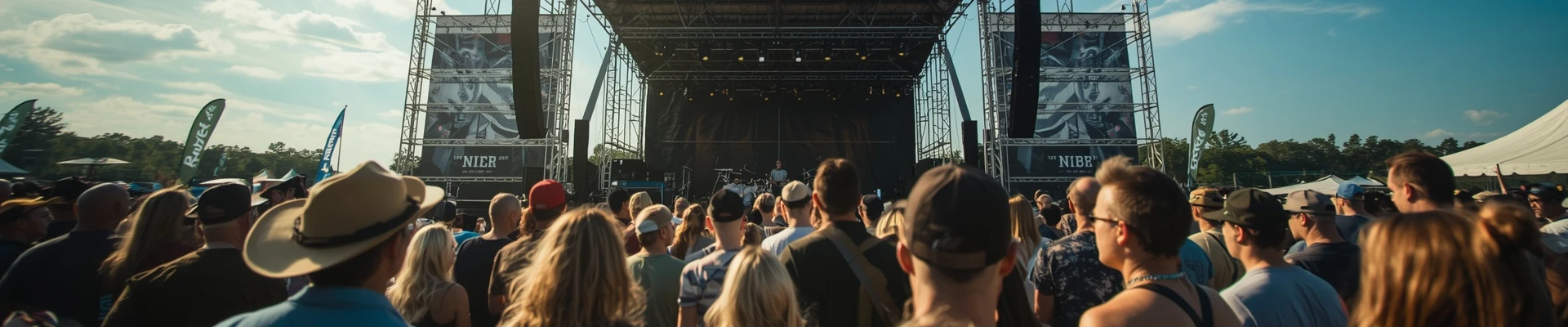
Hollywood Beach stretches roughly 3.2 kilometres along the Atlantic, and the famous Broadwalk — a wide concrete promenade for pedestrians and cyclists, no cars allowed — is among South Florida's most beloved public spaces. The Broadwalk culture is fundamentally music-suffused: buskers with amplifiers, bandstands hosting weekend performances, and the Margaritaville Hollywood Beach Resort (and its predecessor entertainment stages) providing an ongoing backdrop of live tropical rock, reggae, and pop. The annual Hollywood Beach Latin Festival transforms the Broadwalk into a Latin music celebration drawing performers and audiences from across the diaspora — Cuban son, Colombian cumbia, Dominican merengue, and Miami salsa all sharing the sand.
The beach zone's music identity leans heavily Caribbean and Latin — a reflection of the city's demographic transformation over the past four decades. Hollywood's population shifted significantly from its mid-century Jewish retiree base (Broward County's "Condo Canyon" era) toward a majority-minority composition, with large communities of Haitian, Cuban, Colombian, Jamaican, and other Caribbean and Latin American descent. That diaspora energy feeds directly into the music scene: kompa and zouk events draw Hollywood's substantial Haitian community; Colombian vallenato and cumbia nights fill Latin clubs; reggaeton and dembow pulse through beach bars catering to younger second-generation Floridians.
The South Florida Hip-Hop Pipeline
While Hollywood proper has not produced hip-hop stars at the density of Miami's Liberty City or Carol City, it sits inside the Broward County corridor that has become one of the most important nodes in American rap. Rick Ross (William Leonard Roberts II) was raised in Carol City, just south of the county line, and his label Maybach Music Group has cast a long shadow over South Florida hip-hop aesthetics — that particular brand of luxury-trap production that feels as sun-soaked as it does menacing. The Broward connection extends to Kodak Black (Bill Kahan Kapri), who grew up in nearby Pompano Beach and whose melodic, Southern-inflected trap style has made him one of the defining voices of mid-2010s Florida rap.
Hollywood itself hosts recording studios that serve the broader Broward County market, including Patchwerk South (a satellite of the Atlanta original) and various independent production suites clustered around Dania Beach and the Hollywood/Hallandale corridor. South Florida's studio economy skews toward Latin pop production — Miami is the Latin music capital of North America and its gravitational pull keeps producers and engineers flowing through Broward's more affordable studio spaces.
Latin Music and the Miami Gravity Field
Miami's dominance over South Florida's Latin music industry is inescapable, and Hollywood benefits from that proximity while developing its own character. The major Latin labels — Sony Music Latin, Universal Music Latin Entertainment, and independent powerhouses like Batuke Music — maintain their key operations in Miami, but artists and producers regularly work the Broward circuit. The South Florida Latin scene includes Brazilian axé, Haitian kompa, Honduran punta, and the full spectrum of Spanish Caribbean music, and Hollywood's demographics ensure each of those genres has an audience and a venue.
Reggae and dancehall maintain a dedicated foothold, sustained by South Florida's large Jamaican, Barbadian, and Trinidadian communities. Outdoor reggae events on the Broadwalk and in Hollywood's parks draw multigenerational crowds. The annual SunFest festival in nearby West Palm Beach and the Calle Ocho Music Festival in Miami both pull Hollywood residents and sometimes Hollywood-based performers into the regional circuit.
Jazz and the Old Hollywood Tradition
Hollywood retains traces of its mid-century supper-club heritage. The Jazz Spot and various restaurant-bars along Federal Highway and Stirling Road book local jazz quartets and trios catering to the city's older, more affluent residential base. The Hollywood Jazz Festival at ArtsPark brings regional and national jazz acts to the outdoor stage in a setting that recalls the city's original aspirations as a sophisticated resort destination. South Florida's jazz scene — anchored by Fort Lauderdale's Broward Center for the Performing Arts (which is close enough to serve Hollywood audiences) — runs a parallel track to the pop and Latin megashows at Hard Rock Live.
Demographics and Scene Diversity
Hollywood's music ecosystem maps directly onto its demographics. The city is roughly 55% Hispanic or Latino by some estimates, with significant representation of Cuban, Colombian, Venezuelan, Puerto Rican, Haitian, and Jamaican communities. Each of those communities sustains its own live-music subculture: quinceañera bands, church choirs, Haitian rara processions during Carnival season, Colombian folclórico groups, and Cuban danzón clubs. This cultural density, largely invisible to the tourist gaze that focuses on the Hard Rock and the beach, gives Hollywood one of the most genuinely heterogeneous music scenes in Florida outside Miami itself.
The Haitian-American community — among the largest per capita in the country — has particular cultural depth here. Zin (short for mizik rasin, roots music) and contemporary kompa acts perform regularly in Hollywood's Haitian social clubs and community spaces. Artists who bridge Haitian Creole tradition and American hip-hop — part of the broader Haitian-American creative surge visible in artists like Wyclef Jean (who is Haitian-American) — find audiences in Hollywood.
Connecting It All
What ties Hollywood together musically is the city's role as a South Florida crossroads. Hard Rock Live gives it marquee legitimacy on the national touring circuit. The Broadwalk gives it an outdoor performance tradition tied to the sea. Young Circle gives it a walkable arts district with room for local originality. And the city's teeming Caribbean and Latin diaspora gives it a depth of vernacular music culture that neither its tourism profile nor its casino reputation quite captures. Hollywood is not Miami and does not pretend to be — its scene is smaller, more neighborhood-scaled, more community-rooted — but it is a living piece of the extraordinary South Florida musical ecosystem, one that sustains everything from Grammy-nominated Latin pop production to Friday-night kompa dances in community halls off Pembroke Road.