
Miami is the second-largest city in Florida and the 44th-largest in the United States by city limits, with roughly 487,000 residents inside the city but more than 6.2 million across the Miami–Fort Lauderdale–West Palm Beach metropolitan area — making it the ninth-largest metro in the country. Sitting at the tip of the Florida peninsula at the edge of the Everglades, bordered by Biscayne Bay to the east and the Miami River winding through its core, it is the cultural, financial, and gateway capital of Latin America's connection to the United States. Miami is the only major American city where Spanish is spoken by more than half the population, and it is the closest American metropolis in character, commerce, and culture to a Latin American city. Its musical identity reflects that extraordinary Latin plurality: Cuban, Puerto Rican, Colombian, Venezuelan, Dominican, Haitian, Brazilian, Jamaican, and a dozen other Caribbean and Latin American traditions all run through the city simultaneously, producing a hyper-diverse soundscape unlike any other in the Americas.
A brief history
The land at the mouth of the Miami River was Tequesta and later Seminole and Miccosukee territory before Spanish missionaries and American traders arrived in the 18th and 19th centuries. The modern city was incorporated in 1896, its growth triggered by Henry Flagler's extension of the Florida East Coast Railway to Miami and his construction of the Royal Palm Hotel. Through the early 20th century Miami grew as a winter resort destination, the construction of the Overseas Highway (1938) and the wartime Naval Air Station at Dinner Key brought rapid expansion, and the postwar Sunbelt migration built the modern metropolitan area. The defining demographic transformation came with the Cuban Revolution of 1959: hundreds of thousands of Cuban exiles settled in Miami, particularly in the neighbourhood that became Little Havana, and reshaped the city's political, commercial, and cultural character permanently. Subsequent waves of immigration — from Nicaragua, Colombia, Venezuela, the Dominican Republic, Haiti (which gave Miami the largest Haitian diaspora outside Haiti), Jamaica, Brazil, Peru, and virtually every Caribbean and Latin American country — built the extraordinary polyglot metropolis Miami is today. Miami is roughly 70% Hispanic, 16% Black (including large Haitian, Jamaican, and Bahamian communities), and is home to one of the wealthiest Cuban-American communities in the world.
Music identity
Miami's most foundational musical tradition is Cuban music. The post-1959 exile community brought the full repertoire of Cuban popular music — son, mambo, cha-cha-chá, bolero, guajira, rumba, danzón — to the streets, living rooms, clubs, and radio stations of Little Havana and Hialeah. Celia Cruz, though New York–based, was a constant Miami presence throughout her career. Bebo Valdés, Israel "Cachao" López (the Cuban bassist and mambo pioneer who spent his final decades in Miami), Arturo Sandoval (the Cuban trumpet virtuoso who defected to the United States in 1990 and has been Miami-based since), and a deep Cuban jazz and Latin jazz tradition run continuously through Miami's clubs and venues. Emilio Estefan built his production and management empire — and one of the defining Latin pop careers of the 1980s and 1990s through the Miami Sound Machine and Gloria Estefan — from his Miami base; the Estefan enterprises including the Crescent Moon Studios and the Icon label have been central to Latin pop production for four decades. The Miami Sound Machine's fusion of Cuban rhythms, American pop production, and dance music helped define the first wave of global Latin crossover pop.
The city's Black music lineage runs through the predominantly Black neighborhoods of Liberty City, Overtown, Opa-locka, and Coconut Grove. Overtown — once known as "the Harlem of the South" — was from the 1930s through the 1960s one of the great Black entertainment districts on the East Coast, with venues like the Lyric Theatre (1913, one of the oldest Black performance venues in the South) hosting Count Basie, Ella Fitzgerald, Josephine Baker, Billie Holiday, Sam Cooke, and a generation of touring Black entertainers who were barred from the segregated hotels of Miami Beach. The construction of I-95 through Overtown in the 1960s destroyed much of the neighbourhood; a slow revival is ongoing. Miami bass — the booming, bass-heavy dance music developed in Miami in the early-to-mid 1980s by artists like DJ Uncle Al, 2 Live Crew (whose As Nasty as They Wanna Be, 1989, was the first album in American history to be ruled legally obscene, triggering a landmark First Amendment case), Maggotron, Gucci Crew II, MC Shy D, and Tag Team ("Whoomp! There It Is," recorded in Miami) — became a foundational influence on hip-hop and crunk through its bass-first production philosophy. Trick Daddy (Maurice Young), Trina, Rick Ross (raised in Carol City, Miami Gardens), Flo Rida (raised in Carol City), Pitbull (Armando Christian Pérez, raised in Miami), Kodak Black (raised in Pompano Beach), Denzel Curry (raised in Carol City and Opa-locka), Smokepurpp, Pouya, and a current generation of Miami hip-hop and SoundCloud rap artists continue the lineage. DJ Khaled (Khaled Mohamed Khaled), the Palestinian-American DJ, producer, and label executive who has been Miami-based for most of his career, is one of the most commercially successful music moguls of the past decade.
Miami's most consequential 21st-century musical role, however, is as the capital of Latin urban music in the United States. Reggaeton — the Puerto Rican-born, Jamaican-dancehall-rooted, Latin urban genre that became one of the dominant global music styles of the 2010s and 2020s — has its American headquarters in Miami. Daddy Yankee's Miami concerts, J Balvin's Miami base, Maluma's Miami operations, Ozuna's Miami ties, Nicky Jam's Miami recordings, and above all Bad Bunny (Benito Antonio Martínez Ocasio) — who adopted Miami as a primary base after his global breakthrough and held his World's Hottest Tour at Hard Rock Stadium in 2022 (the highest-grossing concert tour in the history of Latin music) — have made Miami the operational center of the genre. The Latin Grammy Awards were held in Miami from 2000 to 2001 and return regularly. Sony Music Latin, Universal Music Latin Entertainment, Warner Music Latina, and the major Latin digital streaming operations all have significant Miami offices. The city is also a major Colombian music capital (through the large Colombian community in Doral and Weston), a Dominican Republic music hub (merengue, bachata), a Venezuelan popular music centre (through the large exile community), a Brazilian music market, and a deep Jamaican and Haitian music city (through the Liberty City and Little Haiti communities).
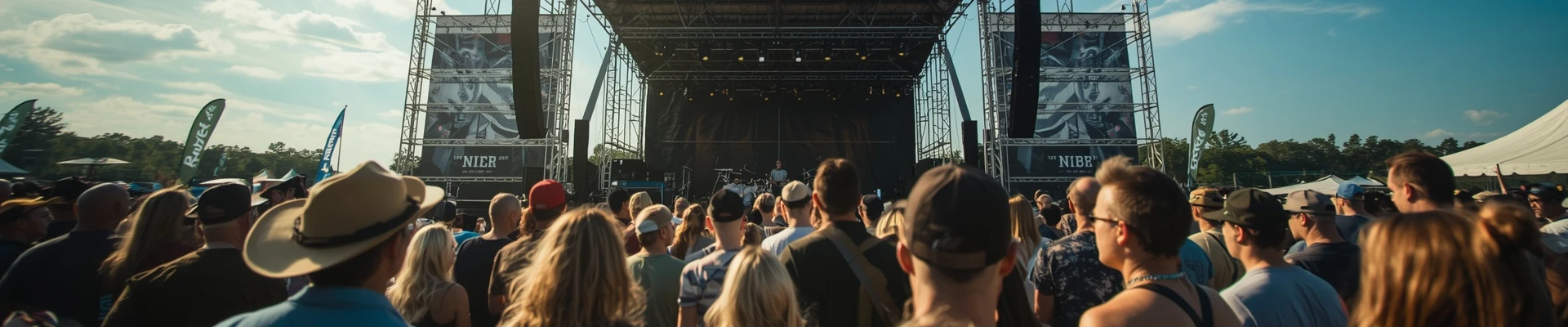
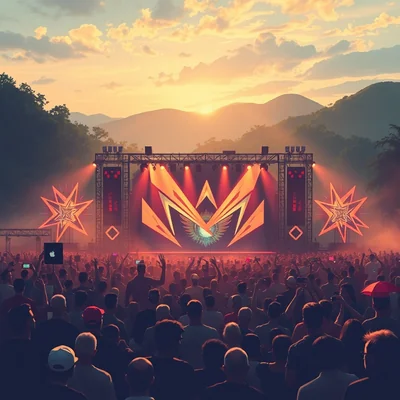
Miami's electronic and club scene is one of the most important in the world. The Ultra Music Festival, held at Bayfront Park each March, has been one of the most important electronic music events in the world since its founding in 1999, drawing more than 100,000 attendees over three days and programming the biggest DJs and producers in the world. Winter Music Conference (WMC), held simultaneously in mid-March, is the most important gathering of the international DJ and electronic music industry. Miami Music Week — the combined programming of Ultra and WMC — has made Miami in mid-March the most concentrated annual moment in global electronic music. The city's club scene — LIV at Fontainebleau Miami Beach, Story in South Beach, Club Space in downtown Miami (which runs legendary 24-hour weekend parties), E11EVEN (the 24-hour entertainment complex), do Not Sit on the Furniture in South Beach, and the historic Cameo and Warsaw Ballroom lineage — is one of the deepest and most internationally watched club ecosystems in the world.
Venues and neighborhoods
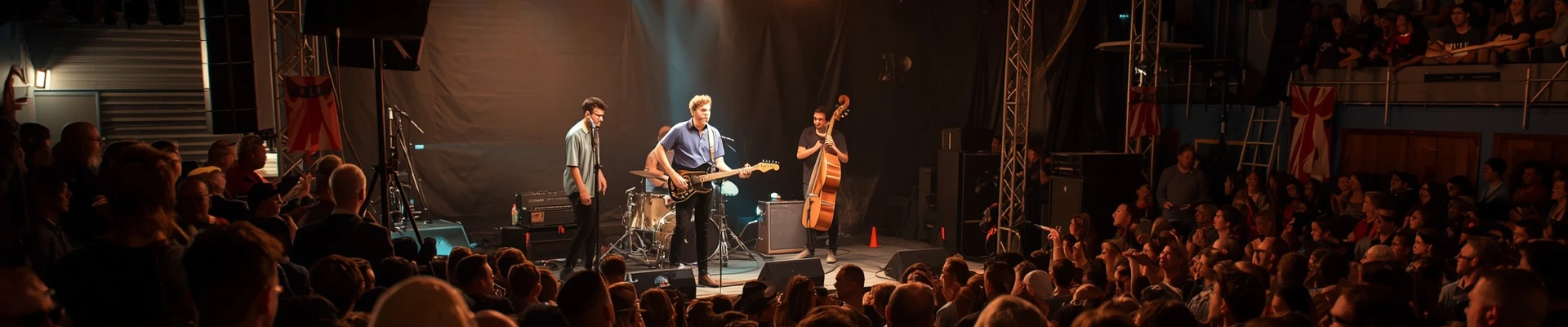
Miami's venue ecosystem is exceptional. At the top sit Hard Rock Stadium in Miami Gardens (home of the Dolphins, host of the Super Bowl and stadium-scale concerts including Bad Bunny's 2022 record-breaking run), Kaseya Center (home of the Heat and the city's largest indoor concerts), the FTX Arena's successor configurations, Bayfront Park Amphitheater (the outdoor venue on Biscayne Bay that hosts Ultra and a year-round programming schedule), Adrienne Arsht Center for the Performing Arts (the largest performing arts centre in the southeast United States, housing the Ziff Ballet Opera House — home of the Florida Grand Opera and Miami City Ballet — and the Knight Concert Hall, home of the New World Symphony and the Miami Symphony Orchestra), the James L. Knight International Center, and the Fillmore Miami Beach at the Jackie Gleason Theater (the legendary 1951 Deco showroom and Jackie Gleason TV studio, now a 2,800-seat concert venue). The midsize tier includes the Olympia Theater (a 1926 Baroque movie palace), Brickell City Centre events, Oasis at Wynwood, the Ground nightclub, and the Magic City Casino events. Beneath them is a deep club and venue layer — Club Space, LIV, Story, E11EVEN, do Not Sit on the Furniture, the Cameo complex, Ball & Chain in Little Havana (the restored 1935 jazz club), The Betsy on South Beach (boutique hotel with major music programming), Gramps in Wynwood (indie rock and dive bar), The Sylvester in Brickell, Churchill's Pub in Little Haiti (the legendary English-pub-turned-punk-and-indie venue, open since 1979), Bardot in Wynwood, and a network of bars and venues across Wynwood, Little Havana, Coconut Grove, Little Haiti, and South Beach. The Lyric Theatre in Overtown has been partially restored and continues to anchor Black cultural programming.
Different neighborhoods carry different musical identities. Little Havana along Calle Ocho anchors the Cuban and broader Latin music traditions through Ball & Chain and the Calle Ocho Festival. Wynwood has emerged as the city's arts and indie corridor through Gramps, Bardot, and Oasis. South Beach anchors the club, EDM, and Latin urban circuits through LIV, Story, and the Fillmore. Downtown / Brickell anchors the larger venue and corporate concert programming. Little Haiti anchors the Haitian music and indie punk scenes through Churchill's Pub. Overtown retains its historic Black music identity through the Lyric Theatre. Liberty City anchors the city's hip-hop and Black music scenes. Coral Gables and Coconut Grove anchor the classical, jazz, and singer-songwriter circuits. Hialeah anchors the Cuban-American and broader Latin popular music scenes.
Festivals and signature events
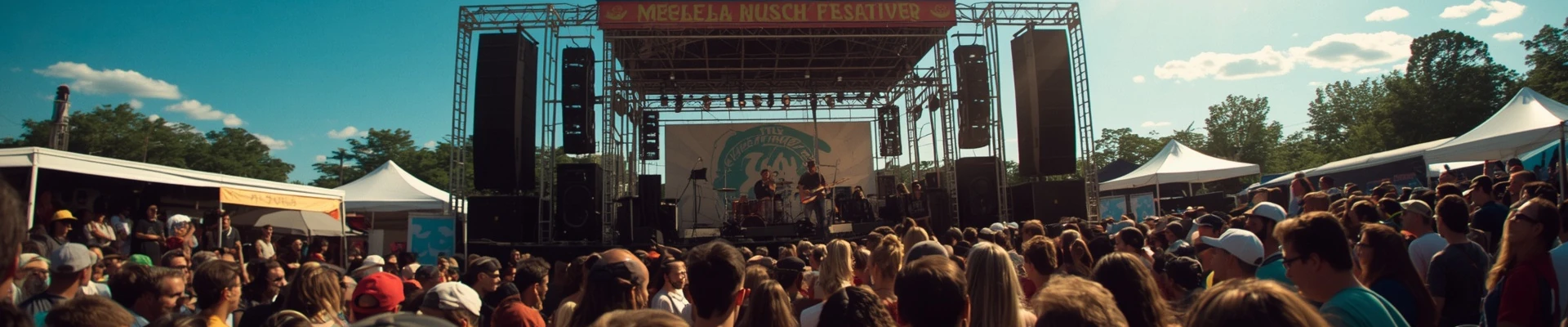
The festival calendar is anchored by Miami Music Week (Ultra + WMC) each March — one of the most important weeks in global electronic music. Calle Ocho Festival (the world's largest block party, drawing nearly a million people to Little Havana each March for Latin music, food, and dance), Carnaval Miami, Miami Open music programming at Hard Rock Stadium, Miami Art Week / Art Basel Miami Beach (the most important art fair in the Americas, held each December at the Miami Beach Convention Center, with a week of satellite events and major music programming throughout Wynwood, Wynwood Walls, Design District, and South Beach), Afropunk Miami, ONE Musicfest's Miami editions, Rolling Loud Miami at Hard Rock Stadium (one of the largest hip-hop festivals in the world), III Points Festival in Wynwood, Okeechobee Music Festival, SunFest in nearby West Palm Beach, Jazz in the Gardens at Hard Rock Stadium (the largest free jazz festival in the Southeast), Miami Jazz Fest, Goombay Festival in Coconut Grove (the longest-running Black heritage festival in Miami), Caribbean Carnival, Brazilian Carnival Miami, Colombian Day Parade, Dominican Festival, Haitian Heritage Month events, and Miami Pride round out the calendar.
What ties it all together is Miami's singular identity as the gateway between the United States and Latin America — the place where Cuban son meets Haitian konpa meets Colombian vallenato meets Jamaican dancehall meets Puerto Rican reggaeton meets Florida bass meets Miami club music at 6am on a Sunday morning at Club Space. Miami is the city where Gloria Estefan and Emilio built Latin pop's first global crossover machine, where 2 Live Crew triggered a First Amendment landmark case, where Ultra and Winter Music Conference make March the most important month in global electronic music, where Bad Bunny played the highest-grossing Latin concert tour in history at Hard Rock Stadium, where Calle Ocho gathers nearly a million people on one street, and where the mix of cultures has never stopped producing something new.